Ingredients
Method
- Cut potatoes into cubes.
- Fry until golden and crispy.
- Heat olive oil, add garlic and pepper paste.
- Add coriander and stir.
- Toss in potatoes.
- Add lemon juice and salt.
- Mix and serve immediately.
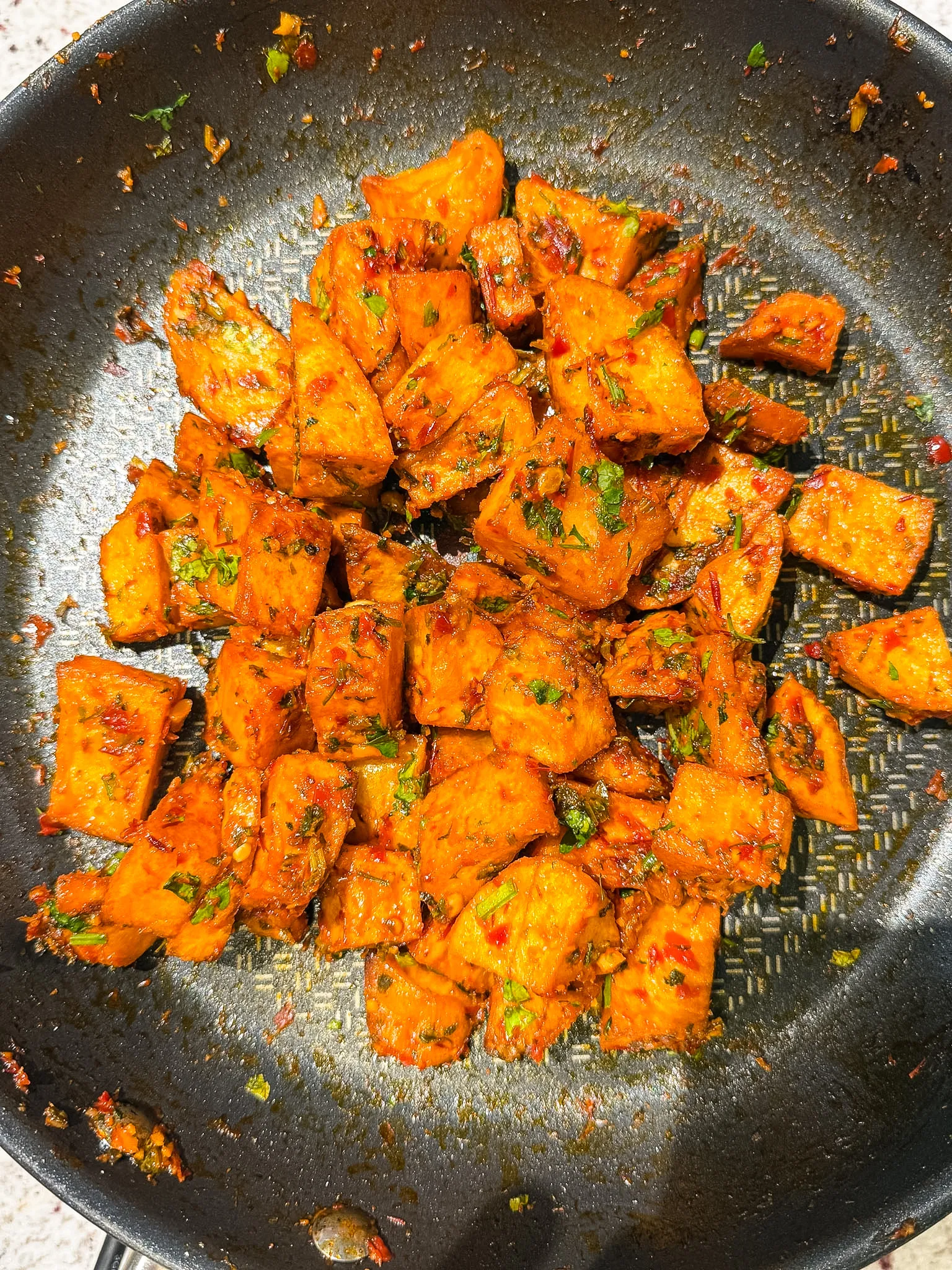
Batata harra is one of those recipes that earns a permanent place on any table the very first time it appears. If you have never made this Lebanese spicy potato dish at home, you are about to discover why it disappears faster than any other side dish at the spread. The name “batata harra” translates directly to “spicy potatoes” in Arabic, and the description is accurate — but it barely scratches the surface of what makes this recipe special.
What you actually get is crispy-edged potato cubes coated in warm, fragrant garlic, a whisper of chili heat, and a bright finish from fresh lemon juice that cuts through the richness and lifts the entire dish. It is bold, it is comforting, and it is far easier to make than the results suggest. If you already love indulgent potato preparations, you might also enjoy these CRISPY PARMESAN HASSELBACK POTATOES as another crowd-pleasing way to bring potatoes to the center of attention.
What makes a great batata harra is not a secret ingredient — it is a commitment to balance. This dish works because every element plays a defined role. The potatoes provide the starchy, satisfying base. The olive oil adds richness and carries the aromatics. The garlic delivers its signature bold punch. The chili contributes warmth without aggression. The fresh coriander adds a herbal freshness. And the lemon juice at the very end resets the palate and makes you want another bite immediately. Each of these components is essential. Leave any one out and the dish loses its character.
The crispy texture is where batata harra separates itself from every other garlic potato recipe you have tried. The goal is not just cooked potatoes — it is potatoes with golden, slightly crunchy edges and fluffy, steam-soft interiors. Achieving that contrast requires understanding a few specific techniques that most home cooks overlook. In my experience, the difference between soggy batata harra and perfect batata harra comes down to oil temperature, drying the potatoes thoroughly before cooking, and the order in which you add the garlic mixture.
This recipe uses red pepper paste as part of the flavor base, which gives the dish both depth of color and a round, mildly spicy warmth that standard chili flakes alone cannot replicate. The red pepper paste softens in the olive oil and coats the potatoes in a glossy, reddish sauce that is as visually striking as it is delicious. It is a small detail that elevates the finished dish considerably.
Good batata harra begins with choosing the right potato. You want a firm, waxy-to-medium variety that holds its shape during frying without crumbling — think Yukon gold, red potatoes, or a standard all-purpose variety. Avoid highly starchy potatoes like russets for the frying method described here, as they tend to fall apart at the edges. If you are roasting instead of frying, russets work well because the oven heat is more controlled. Cut your potatoes into uniform cubes of about 2 centimeters — even sizing ensures every piece cooks at the same rate. Uneven cuts lead to some pieces being overcooked while others are still raw inside, which ruins the texture of the dish.
Fresh garlic is non-negotiable in batata harra. Pre-minced garlic from a jar lacks the volatile compounds that give fresh garlic its sharp, immediate aroma. You want the garlic to sizzle in the hot olive oil and fill your kitchen with that unmistakable fragrance — that reaction only happens with fresh cloves. Likewise, fresh coriander (cilantro) delivers a brightness that dried coriander cannot match.
Add it toward the end of cooking, just before tossing in the potatoes, so it wilts slightly rather than turning brown and bitter. If you enjoy exploring bold, layered flavors across Middle Eastern cooking, the Baklawa Recipe on the site shows a completely different but equally satisfying example of how Lebanese cuisine balances richness and sweetness.
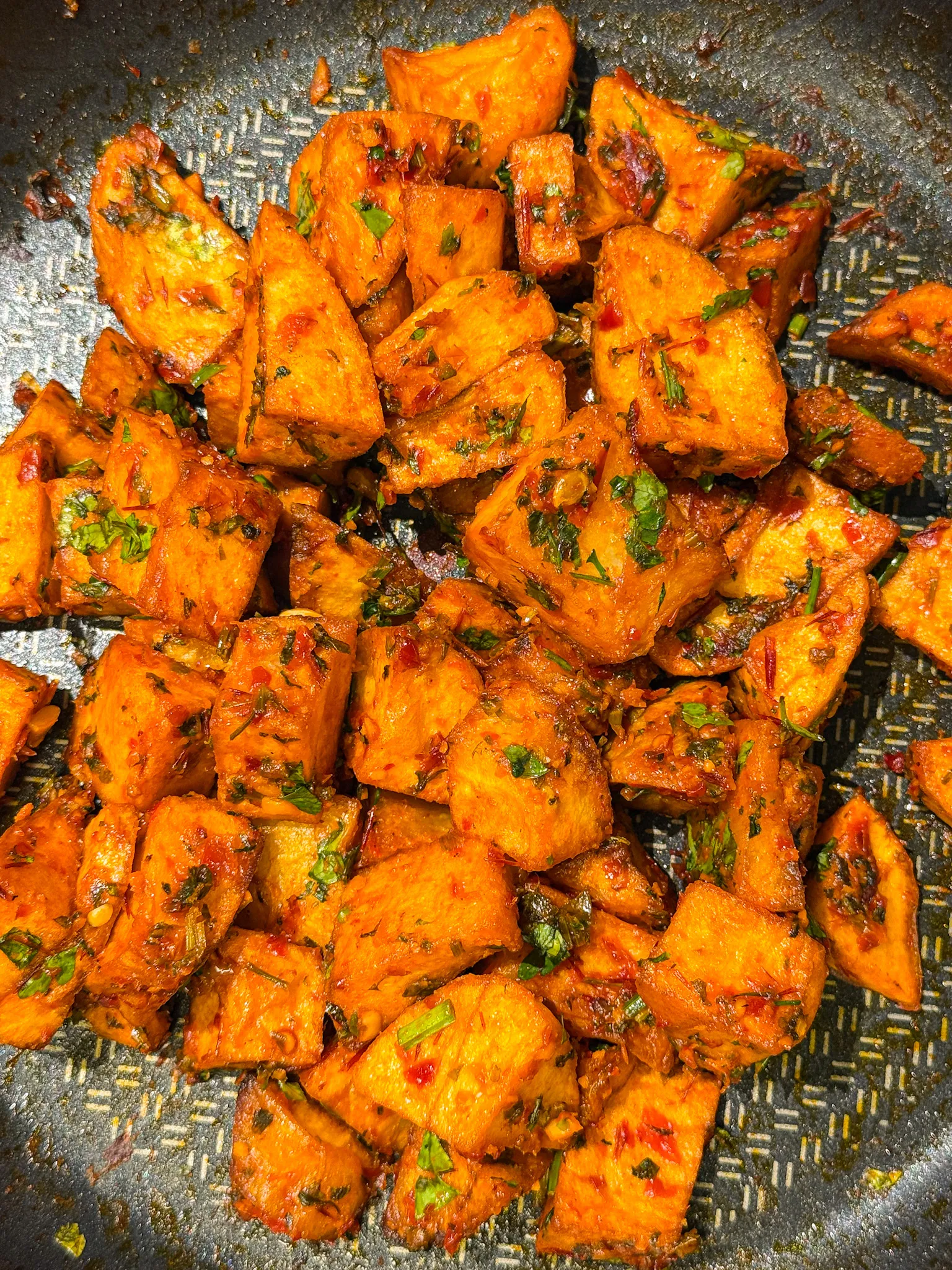
The fundamental rule of frying is that hot oil seals the outside of the potato quickly, preventing oil from penetrating into the interior. When oil is at the correct temperature — around 175 to 180 degrees Celsius — contact with the potato cube causes the surface moisture to flash-evaporate instantly, creating a barrier. This barrier is what gives you crispy edges.
If the oil is too cool, the surface moisture evaporates slowly, the potato absorbs oil instead of repelling it, and the result is greasy and soft rather than crisp and golden. In my testing, starting with properly heated oil and frying in small batches (rather than crowding the pan) is the single biggest factor in crispy batata harra.
Moisture is the enemy of crispiness. Raw potato cubes contain surface water that, if not removed before frying, will steam the potato rather than fry it. After cutting your potatoes, spread them on a clean kitchen towel or paper towels and pat them firmly dry. This takes about two minutes and makes a significant difference in the final texture. Some cooks also soak the cut potatoes in cold water for 15 to 20 minutes to draw out excess starch, then dry them thoroughly. The water-soaking step is optional but produces an especially crisp result because it reduces the starchy coating on the surface that can make potatoes stick together during frying.
Garlic burns very quickly and develops a harsh, bitter taste when exposed to high heat for too long. In batata harra, the potatoes are fully crisped first in hot frying oil, then removed. The garlic and aromatics are cooked separately in olive oil over gentle heat, just long enough to release their fragrance without burning. The crispy potatoes are then added to this aromatic mixture and tossed to coat. This sequence — crisp first, flavor second, combine last — is what keeps the garlic sweet, fragrant, and pleasantly sharp rather than acrid and bitter.
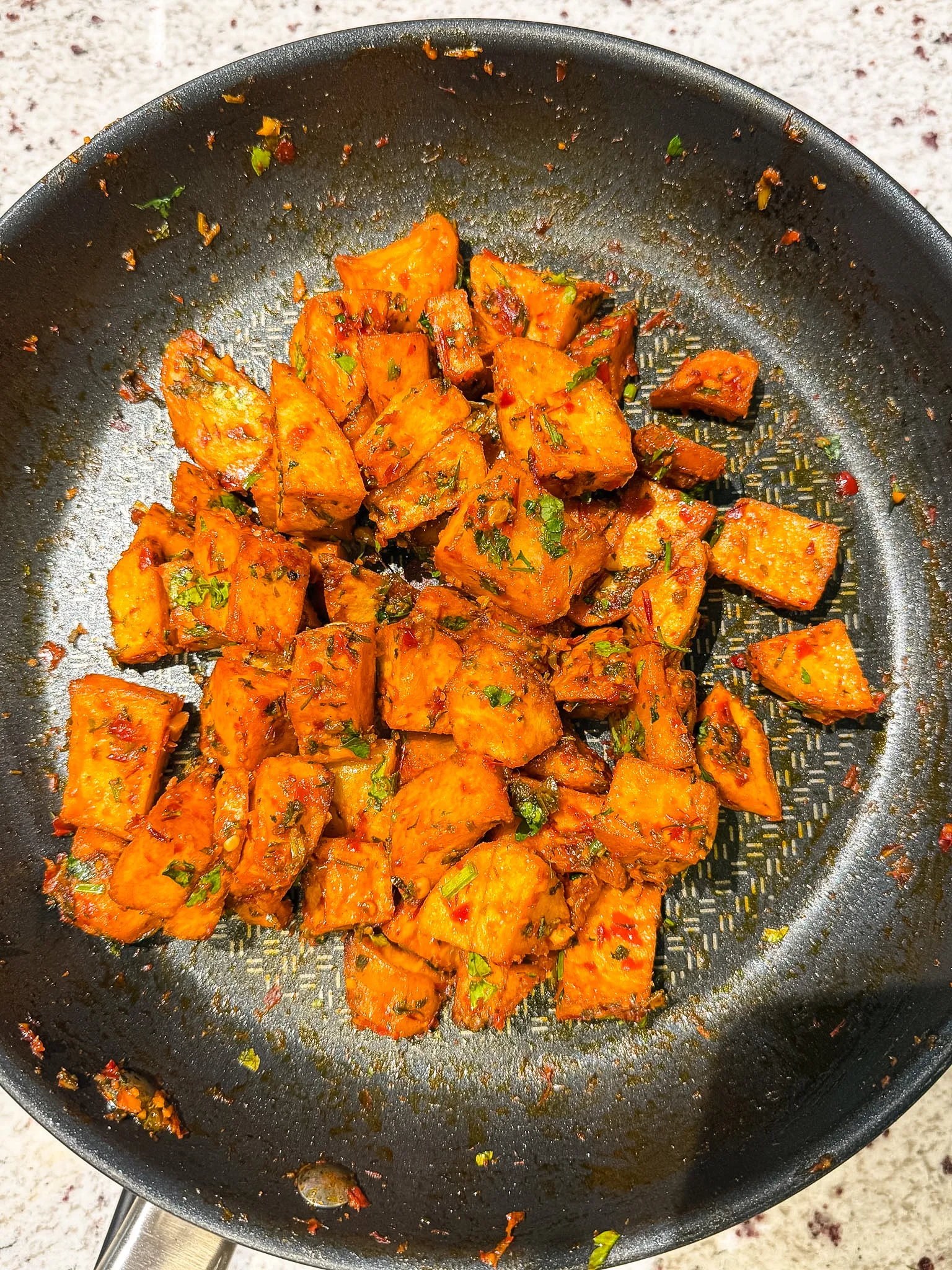
Yukon gold potatoes are the first choice for batata harra because their medium starch content produces a fluffy interior and crisps reliably at the surface. Red potatoes are an excellent alternative, holding their shape particularly well. Whatever variety you use, cut them uniformly and dry them completely before they touch the oil.
A neutral oil with a high smoke point — such as canola, sunflower, or vegetable oil — is ideal for the initial deep fry. Olive oil is too low-smoke for deep frying at the required temperatures and will burn before the potatoes are fully crisped. Reserve the olive oil for the second stage: building the garlic and red pepper paste sauce.
This is an ingredient worth sourcing properly. Red pepper paste (also called biber salçası in Turkish cuisine, widely available in Middle Eastern and Mediterranean grocery stores) adds a concentrated, slightly sweet, mildly spicy flavor that tomato paste alone cannot replicate. If you cannot find it, substitute with one part tomato paste combined with half a teaspoon of chili flakes and half a teaspoon of paprika — it is not identical, but it achieves a similar depth.
The lemon juice goes in at the very last moment, just before serving. Do not add it while the potatoes are still on heat — acid added too early dulls the brightness. A squeeze at the end, with the pan already off the flame, preserves the lemon’s sharp, fresh character and makes the whole dish taste vibrant rather than flat.
Cilantro in batata harra adds a grassy, slightly citrusy freshness that plays beautifully against the richness of the olive oil and the warmth of the garlic. If you are not a cilantro fan, fresh flat-leaf parsley is the traditional alternative and works equally well. A combination of both herbs is also common in Lebanese versions of this dish.
Peel your potatoes and cut them into even cubes of approximately 2 centimeters. Place the cut cubes into a bowl of cold water and let them soak for 15 minutes to remove excess surface starch — this step is optional but recommended for maximum crispiness. After soaking, drain the potatoes and spread them on a clean kitchen towel. Pat them firmly and thoroughly dry.
Any remaining moisture on the surface will cause oil to splatter dangerously and prevent proper crisping. While the potatoes dry, mince three to four garlic cloves finely, measure your red pepper paste, and chop a generous handful of fresh coriander. Have the lemon cut and ready at the side. Mise en place — having every element prepped before the oil heats — is especially important in batata harra because the cooking moves quickly once it begins.
Pour your neutral frying oil into a deep, heavy-bottomed pan to a depth of at least 5 centimeters. Heat the oil over medium-high heat until it reaches approximately 175 to 180 degrees Celsius. If you do not have a thermometer, test readiness by lowering a wooden chopstick into the oil — steady, consistent bubbles should form around it immediately. Add the potatoes in batches, never filling the pan more than halfway. Frying in small batches is critical: too many potatoes lower the oil temperature suddenly, which switches the cooking method from frying to steaming.
Fry each batch for 6 to 8 minutes, turning occasionally, until the cubes are deeply golden on the outside and a knife slides through them without resistance. Remove each batch with a slotted spoon and transfer to a paper-towel-lined plate to drain. Season lightly with salt while hot.
In a separate wide pan or wok, heat two tablespoons of good-quality olive oil over medium-low heat. Add the minced garlic and stir continuously. Cook for 60 to 90 seconds — the garlic should turn fragrant and begin to go golden at the very edges, but must not brown. Add the red pepper paste and stir it into the garlic oil. Cook for another 60 to 90 seconds, stirring constantly, until the paste darkens slightly in color and smells deeply aromatic. Add the chopped coriander and stir for 20 to 30 seconds until just wilted. Now add all of the crispy fried potatoes to the pan.
Toss everything together firmly until every cube is coated in the glossy garlic-pepper sauce. Remove the pan from the heat. Squeeze the fresh lemon juice over the potatoes and give one final toss. Taste and adjust the salt. Serve immediately.
The temptation to cook all the potatoes at once is understandable, but it is the most common reason batata harra comes out soggy instead of crispy. Each batch of potatoes in the oil lowers the temperature momentarily. If you overload the pan, the temperature drops too far and recovery takes too long — the potatoes end up steaming in oil rather than frying. Three or four smaller batches is always better than one large one, even if it takes slightly longer. The results are not comparable. These Mashed Potato Fries follow the same single-layer frying principle and are another great example of how patience with potato cooking pays off.
Once you add the minced garlic to the olive oil, reduce the heat to medium-low and watch it carefully. Garlic goes from perfectly fragrant to acrid and burnt in about 30 seconds at the wrong temperature. The visual cue to look for is very light golden color at the very edges of the minced pieces — not full browning, not dark. If you smell anything acrid, the garlic has gone too far and the batch should be discarded and started again. A burnt garlic base will ruin the entire dish regardless of how good the potatoes are.
Salt draws moisture out of the surface of fried food and helps it season evenly. Sprinkle a light pinch of flaky or fine salt over each batch of potatoes the moment they come out of the oil, while the surface is still hot and slightly tacky. This timing ensures the salt adheres and penetrates the surface rather than falling off. Do not over-salt at this stage — you will adjust the final seasoning again after tossing with the garlic sauce.
When you combine the crispy potatoes with the garlic sauce, you want maximum surface area so every cube gets coated quickly and evenly without the potatoes steaming one another. A wide, shallow skillet or wok is ideal. A deep saucepan traps steam and softens the crust. If you enjoy bold garlic-forward sides that pair with a main protein, these CREAMY DREAMY POTATOES AU GRATIN offer a completely different but equally satisfying potato experience for days when you want something richer.
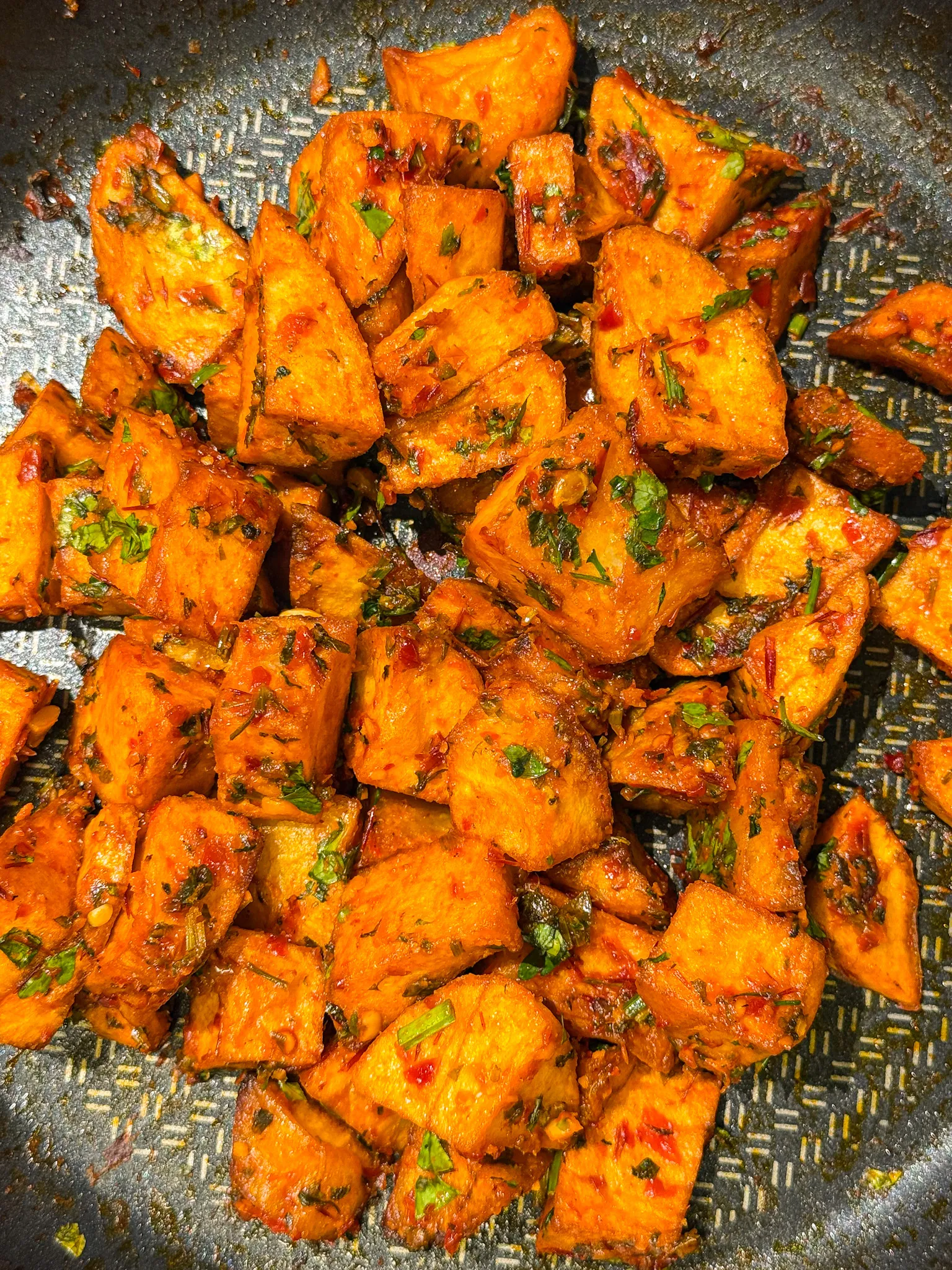
Wet potato surfaces create steam in the oil, which prevents the Maillard reaction that produces the golden-brown crust. Even if you choose not to soak the potatoes in cold water, you must dry them completely with paper towels before they go into the oil. This takes two minutes and is not negotiable for crispy batata harra.
The most common reason a batch of batata harra tastes bitter rather than fragrant is garlic that has been cooked at too high a heat for too long. Always use medium-low heat for the garlic stage, stir constantly, and add the red pepper paste the moment you see the lightest golden color at the edges of the garlic pieces.
Lemon juice added while the pan is still on heat loses its bright, fresh quality almost immediately. The citric acid reacts with the heat and the flavor becomes flat and slightly bitter. Always remove the pan from the heat completely before squeezing the lemon. This single adjustment transforms the finished dish from pleasant to genuinely memorable.
This applies both to the frying stage and the tossing stage. During frying, overcrowding lowers the oil temperature. During tossing, overcrowding traps steam and softens the crust you worked hard to achieve. Give the potatoes space at every stage.
If you prefer to avoid deep frying, roasting is an excellent alternative that produces beautiful results with significantly less oil. Par-boil the potato cubes for 5 to 7 minutes until just fork-tender at the edges, drain, and dry thoroughly. Toss with olive oil and spread in a single layer on a baking sheet lined with parchment. Roast at 220 degrees Celsius (425 degrees Fahrenheit) for 30 to 40 minutes, flipping once at the halfway mark, until deeply golden.
Then proceed with the garlic sauce exactly as described in the main recipe. The roasted version has a slightly drier, more concentrated texture — some people prefer it to the fried version. You can also try making a similar baked potato preparation like these Turkish Meat Borek alongside your batata harra for a full Middle Eastern-inspired spread.
Double the chili component by adding fresh minced red chili or a generous pinch of cayenne alongside the red pepper paste. A spoonful of harissa stirred into the garlic sauce at the end gives batata harra a North African heat profile that is smoky, deep, and warming. Adjust carefully — the goal is heat that builds gradually rather than sharp, overwhelming burn.
Add a teaspoon of ground sumac and a tablespoon of pomegranate molasses to the garlic sauce before tossing in the potatoes. Sumac provides a concentrated lemony sourness, and the pomegranate molasses brings a sweet-tart complexity that makes this a standout variation for entertaining. Garnish with pomegranate seeds for color and freshness.
Use equal parts fresh cilantro and flat-leaf parsley in the sauce for a more complex herbal character. Some Lebanese versions also add fresh mint at the very end — just a few torn leaves stirred in off the heat. The mint addition is polarizing but distinctive and worth trying at least once.
Batata harra is genuinely at its best eaten immediately, within minutes of leaving the pan. The contrast between the crispy exterior and the fluffy interior is a fleeting quality — the longer it sits, the more the moisture from the sauce softens the crust. Plan to serve it as soon as it is ready.
If you have leftovers, store them in an airtight container in the refrigerator for up to two days. The potatoes will lose their crispiness as they cool and the sauce moisture is absorbed, but the flavor remains excellent. Stored batata harra makes a wonderful addition to a wrap or grain bowl the next day even without reheating.
Freezing cooked batata harra is not recommended. The potato texture degrades significantly after freezing and thawing — the interiors become waterlogged and the exterior loses all structure. If you want to prep ahead, you can freeze raw cut potato cubes in a single layer on a baking sheet until solid, then transfer to a freezer bag. Fry them directly from frozen, adding a few extra minutes to the frying time.
The oven is the best tool for reheating batata harra and recovering some of the original texture. Spread the potatoes in a single layer on a baking sheet and heat at 200 degrees Celsius (400 degrees Fahrenheit) for 8 to 10 minutes until hot and slightly re-crisped at the edges. A dry non-stick skillet over medium-high heat works almost as well — toss the potatoes frequently for 3 to 5 minutes until the edges sharpen again. Avoid the microwave entirely: it introduces steam and produces a uniformly soft, mushy result.
“Batata harra” is an Arabic phrase that translates literally to “spicy potatoes.” Batata means potato and harra means hot or spicy. The dish originates in Lebanon and Syria, where it is a staple mezze dish and side served in restaurants throughout the region. Despite the name, the level of spice is typically quite mild — it refers more to the warmth from chili and garlic than to intense heat.
Yes, and the roasted version is excellent. Par-boil the cubed potatoes for 5 to 7 minutes until the very edges are fork-tender, then drain and dry them thoroughly. Toss with olive oil and roast at 220 degrees Celsius (425 degrees Fahrenheit) on a preheated baking sheet in a single layer for 30 to 40 minutes, flipping once. Then make the garlic sauce separately and toss as described in the main recipe. The air fryer also works very well — 200 degrees Celsius for 18 to 22 minutes, shaking halfway through.
Yes to both. The traditional recipe contains potatoes, olive oil, garlic, fresh herbs, chili, and lemon — all naturally vegan and gluten-free ingredients. The red pepper paste used in this version is also naturally vegan. Just confirm the label on your specific brand if strict gluten-free compliance is required, as some processed pastes use shared facilities.
Serve it immediately. Crispiness in fried foods is always at its peak in the first few minutes after cooking. To maximize the window, make sure the oil was hot enough when you fried the potatoes, that you fried in small batches, and that the potatoes were completely dry before they hit the oil. Using a wide pan for tossing rather than a deep pot also helps because it minimizes steam buildup. If you are making it for a gathering, fry the potatoes in advance and keep them uncovered on a baking sheet in a 150-degree oven — they will hold their crispness for up to 30 minutes while you prepare the garlic sauce.
Batata harra is most traditionally served as part of a mezze platter alongside hummus, baba ganoush, tabbouleh, stuffed grape leaves, and flatbread. It also pairs naturally with grilled meats such as chicken kebabs, lamb skewers, or kofta. The bold garlic and lemon flavors make it an excellent counterpart to rich, slow-cooked dishes. A simple cucumber and tomato salad alongside adds welcome freshness.
You can prepare the components in advance, but the final dish is best assembled and served fresh. The potatoes can be fried up to 30 minutes ahead and kept warm in a low oven. The garlic sauce can be made an hour ahead and kept covered at room temperature. Toss them together only when ready to serve, adding the lemon juice at the very last moment.
Watch the recipe video for more clarity!
See our similar recipes:
People also like these recipes:
Batata harra is proof that a short ingredient list and a simple technique can produce something genuinely extraordinary. Every element of this dish — the crispy potatoes, the fragrant garlic oil, the red pepper paste, the fresh coriander, the bright lemon — earns its place, and nothing is wasted. Once you understand the three fundamentals of hot oil, dry potatoes, and carefully cooked garlic, this recipe becomes one you can execute from memory on any night of the week.
What makes batata harra so enduringly popular across Lebanese and Middle Eastern tables is precisely this combination of accessibility and impact. It transforms a humble potato into something that people reach for again and again before the other dishes on the table. Whether it appears as part of a full mezze spread or as a bold side to grilled chicken or lamb, it consistently earns the same response — an empty serving dish and requests for the recipe.
I hope this guide gives you everything you need to make batata harra with confidence from the very first attempt. Start with the classic fried version to understand what perfect crispiness feels like and how the garlic sauce should smell when it is ready. Then explore the roasted version, experiment with the spice level, and try the sumac and pomegranate variation when you want to impress. However you make it, this recipe is here to stay in your kitchen.

If you've given this recipe a try and it won you over, please share your thoughts by leaving a rating and comment below! If you have any questions about this recipe, don't hesitate to ask – I'm here to help and will respond promptly.