Homemade Beignets
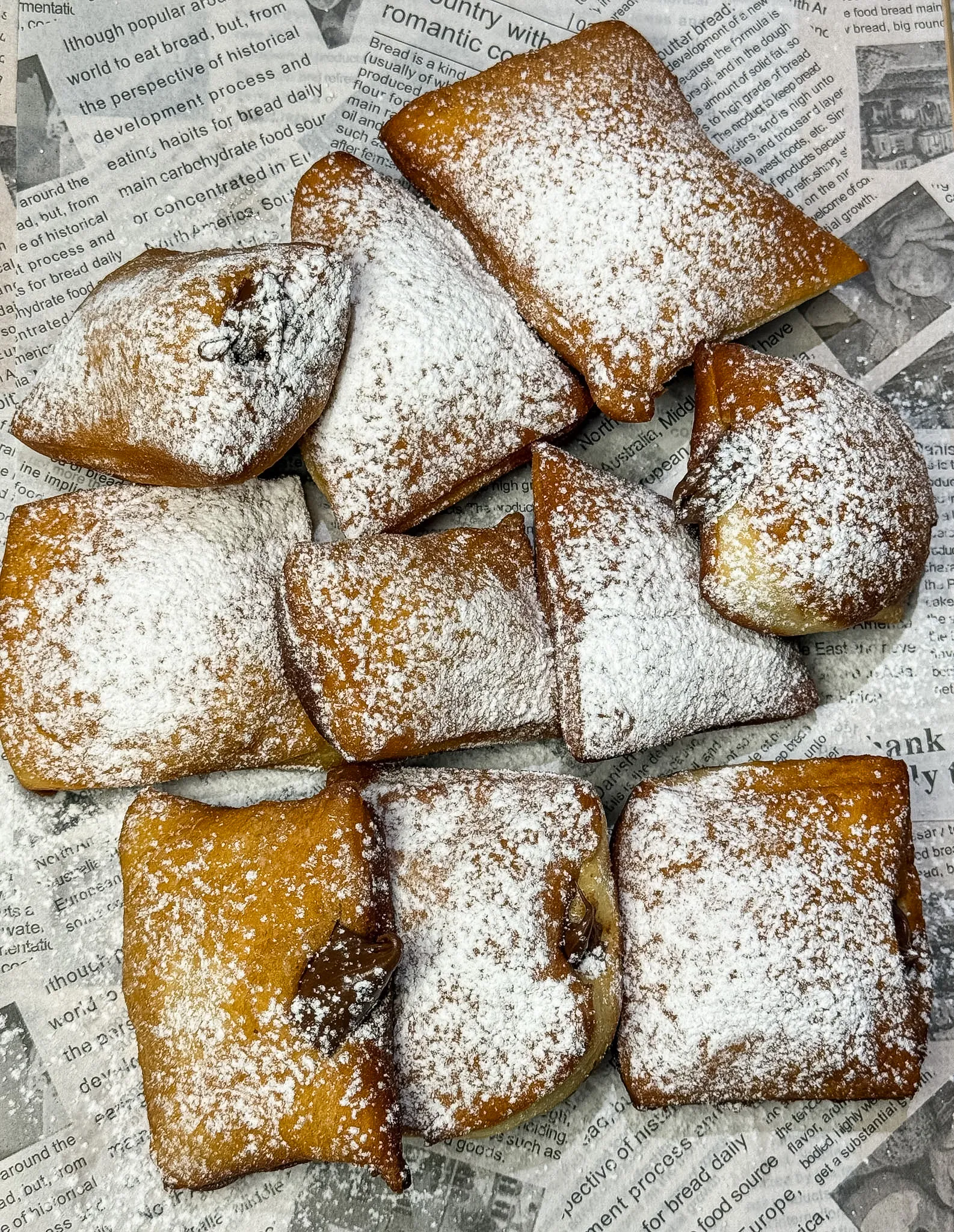
Homemade beignets are one of those recipes that delivers something rare in home cooking: a genuine sense of occasion from a relatively short ingredient list. There is the slow, quiet anticipation of watching the dough rise, the heat of the oil when it is finally ready, and then that extraordinary moment when the cut squares of dough hit the hot oil and puff almost instantly into golden, pillow-shaped clouds. And then the powdered sugar — generous, unavoidable, covering everything — which is not finishing decoration but a fundamental part of the beignet experience.
This recipe is designed to walk you through every step and every technique, so that your first batch of homemade beignets comes out exactly the way it should: airy inside, lightly crisp outside, and absolutely irresistible. If you love deep-fried desserts done beautifully, the CRÈME BRÛLÉE DONUTS offer another elevated take on fried dough that pairs rich custard flavor with that same golden, lightly crisp exterior.
Why These Homemade Beignets Are Special
The word beignet (pronounced ben-YAY) comes from French and means fritter or bump — a reference to the irregular, puffed shapes these small squares of fried dough take in the oil. In the United States, beignets are most closely associated with New Orleans, where Café du Monde has served them continuously since 1862. But the version most people know — the yeasted dough, the square shape, the deep-fried golden crust, the powdered sugar blizzard — is a distinctly Louisiana interpretation of the French original.
What makes a homemade beignet remarkable is the dough. Unlike a quick-bread or a choux pastry beignet (the French style), New Orleans-style homemade beignets use a yeasted, enriched dough that produces a dramatically different texture. The yeast creates an open, slightly hollow interior as the gas expands during frying.
The egg, milk, and butter enrich the dough and make it tender and flavorful rather than simply bready. The vanilla adds a warmth that makes the finished product smell and taste like something made with genuine care. Served warm, fresh from the oil, and buried in powdered sugar, homemade beignets do not taste like anything else.
Key Ingredients Overview
Every ingredient in this homemade beignets recipe contributes to the final texture and flavor in a specific way. Warm water is the activation medium for the yeast — its temperature must fall between 38 and 43 degrees Celsius to activate the yeast without killing it. Sugar serves two purposes: it feeds the yeast during fermentation, accelerating the rise, and it adds a subtle background sweetness to the dough that balances the generous coating of powdered sugar at the end.
The yeast itself is the engine of the recipe, producing the carbon dioxide that creates the characteristic puffed interior of a properly made homemade beignet.
The egg adds richness, structure, and tenderness — it binds the dough and contributes protein that gives the finished beignet a slightly chewy, satisfying bite rather than a crumbly one. Milk softens the crumb and adds a gentle creaminess to the flavor. Vanilla extract, while subtle, adds a warmth and depth that makes the dough smell extraordinary as it fries. Flour provides structure and should be added gradually — too much produces a stiff dough that resists puffing and yields dense, disappointing results.
Butter enriches the dough and creates a more tender final texture. And salt balances every other flavor, preventing the dough from tasting flat. If you enjoy the process of working with an enriched, buttery dough to create something special, the Nutella babka is another recipe where a similar enriched dough technique produces a dramatically impressive result.
Understanding the Science Behind Homemade Beignets
How Yeast Creates the Puff
The signature puff of a homemade beignet is created by yeast — and by what happens to the gas it produces when the dough hits hot oil. During the two-hour first rise, the yeast consumes sugar and produces carbon dioxide, which becomes trapped in the gluten network as the dough doubles in size. When a square of risen dough is lowered into oil at 182 degrees Celsius (360 degrees Fahrenheit), two things happen simultaneously.
First, the exterior of the dough sets almost instantly because the hot oil cooks the outer layer before the interior has time to escape. Second, the gas and steam inside the dough expand rapidly from the heat, pushing the still-soft interior outward in every direction. The result is a hollow, puffed interior enclosed by a thin, crisp, golden shell. Under-risen dough does not contain enough gas to create this puff; over-risen dough can collapse in the oil.
Why Oil Temperature Is the Most Critical Variable
Oil temperature determines everything in deep frying. At the correct temperature of 175 to 185 degrees Celsius, the moisture on the surface of the dough flash-evaporates the moment it contacts the oil, creating a steam barrier that prevents oil absorption. This is what gives homemade beignets their light, non-greasy texture.
If the oil is too cool — below 165 degrees Celsius — the steam barrier does not form quickly enough, oil penetrates the dough, and the finished beignets are heavy, greasy, and flat. If the oil is too hot — above 195 degrees Celsius — the outside browns before the interior has cooked through, producing a burnt exterior over raw dough. A thermometer is not optional for successful homemade beignets; it is the most important tool in this recipe.
How Enrichments Affect Dough Behavior
The milk, egg, and butter in this dough change how it fries compared to a plain flour-and-water dough. Fats from the egg yolk and butter soften the gluten network, making the dough more extensible and easier to roll thin without springing back. They also create a more tender crumb with a richer flavor than lean doughs produce.
The milk proteins contribute to browning — milk solids caramelize at lower temperatures than sugar alone, which helps the beignets develop their characteristic golden color more reliably and evenly. Understanding these roles explains why substituting water for milk or omitting the butter consistently produces inferior results in homemade beignets.
Choosing the Right Ingredients
Flour
All-purpose flour is the correct choice for this recipe. Its moderate protein content (around 10 to 12 percent) develops enough gluten to produce structure and chewiness without making the dough so strong that it resists puffing. Bread flour, with its higher protein content, can be used and will produce a slightly chewier interior — some bakers prefer this texture — but all-purpose flour is more forgiving and produces consistent results across different kitchens and climates.
Add the flour gradually and stop when the dough is soft, slightly sticky, and smooth. The exact amount needed can vary by a few tablespoons depending on humidity.
Yeast
Active dry yeast or instant yeast both work for homemade beignets. Active dry yeast benefits from being proofed in warm water first (as described in the instructions), which confirms it is viable before you invest time in making the dough. Instant yeast can be added directly to the flour without proofing. Both produce excellent results. Check the expiration date on your yeast before starting — expired yeast is the most common reason homemade beignets fail to puff.
Milk
Whole milk produces the best results because its fat content contributes to the richness and tenderness of the crumb. Many traditional New Orleans beignet recipes use evaporated milk, which has a higher concentration of milk solids and produces an even richer, slightly denser dough. Regular whole milk produces a lighter result that most home bakers prefer. Avoid skim or low-fat milk — the reduced fat content produces a noticeably less tender beignet.
Oil for Frying
A neutral oil with a high smoke point is essential for homemade beignets. Vegetable oil, canola oil, and sunflower oil are all excellent choices. Avoid olive oil — its lower smoke point and strong flavor are inappropriate here. You need at least 7 to 8 centimeters of oil depth in your pot so that the beignets can float and cook evenly on all sides without touching the bottom.
Step-by-Step Instructions
Activating the Yeast and Building the Dough Base
In a large mixing bowl, combine the warm water, yeast, and half the sugar. Stir gently and leave undisturbed for five minutes. You are looking for a thick, foamy surface that indicates the yeast is active and healthy. If nothing happens after five minutes, the yeast is likely dead — do not proceed, as the dough will not rise and the homemade beignets will be flat and dense.
When the yeast is confirmed active, add the milk, remaining sugar, egg, and vanilla extract. Whisk everything together until smooth and well combined. Add approximately one and three-quarter cups of flour and mix vigorously until you have a smooth, thick batter-like consistency with no lumps. This first stage of flour addition builds the initial gluten structure.
Forming and Kneading the Dough
Add the remaining flour and salt to the yeast and egg mixture. Mix with a wooden spoon or your hands until a shaggy dough begins to form. Now add the butter one tablespoon at a time, mixing thoroughly between each addition. Adding butter gradually — rather than all at once — allows it to incorporate fully into the gluten network rather than creating a greasy, separated dough.
After all the butter is incorporated, continue mixing or kneading for about four minutes. The finished dough should feel soft, slightly sticky, smooth, and elastic. It will not pull completely away from the sides of the bowl, and that is expected — this is a soft, enriched dough, not a stiff bread dough. Resist the urge to add more flour to dry it out; extra flour creates dense homemade beignets.
First Rise
Transfer the dough to a lightly oiled bowl and turn it once to coat the surface. Cover the bowl tightly with plastic wrap or a clean kitchen towel and place it in a warm, draft-free spot. Let it rise for approximately two hours, or until it has doubled in size. For an even better result, after the first 30 minutes at room temperature, transfer the covered bowl to the refrigerator and let it rise slowly overnight.
Cold fermentation develops more complex flavor in the dough and produces homemade beignets with a noticeably deeper, more satisfying taste. Refrigerated dough should be brought to room temperature for 20 to 30 minutes before rolling and cutting.
Heating the Oil and Preparing the Workspace
About 30 minutes before you plan to fry, pour the neutral oil into a deep, heavy-bottomed pot or Dutch oven to a depth of at least 7 centimeters. Clip a deep-fry thermometer to the side of the pot and heat the oil over medium heat to 182 degrees Celsius (360 degrees Fahrenheit). While the oil heats, line a large baking sheet or plate with several layers of paper towels and set it next to the stovetop.
Prepare a fine-mesh sieve filled with powdered sugar and set it nearby. Have everything ready before the first batch of dough goes into the oil — once frying begins, the process moves quickly. The Apple Fritter Donuts Recipe requires the same kind of organized frying station setup, and getting it right before you start makes the entire process noticeably smoother.
Rolling, Cutting, and Frying
Transfer the risen dough to a generously floured surface. Use a rolling pin to roll it out to approximately 1.5 centimeters (half an inch) thickness. Do not roll thinner — very thin dough produces flat homemade beignets with little interior airiness. Use a sharp knife, pizza cutter, or bench scraper to cut the dough into squares of approximately 5 to 6 centimeters (about 2 to 2.5 inches). Irregular shapes and slightly uneven cuts are entirely normal and part of the rustic character of homemade beignets. Carefully lower three or four squares into the hot oil — not more than that.
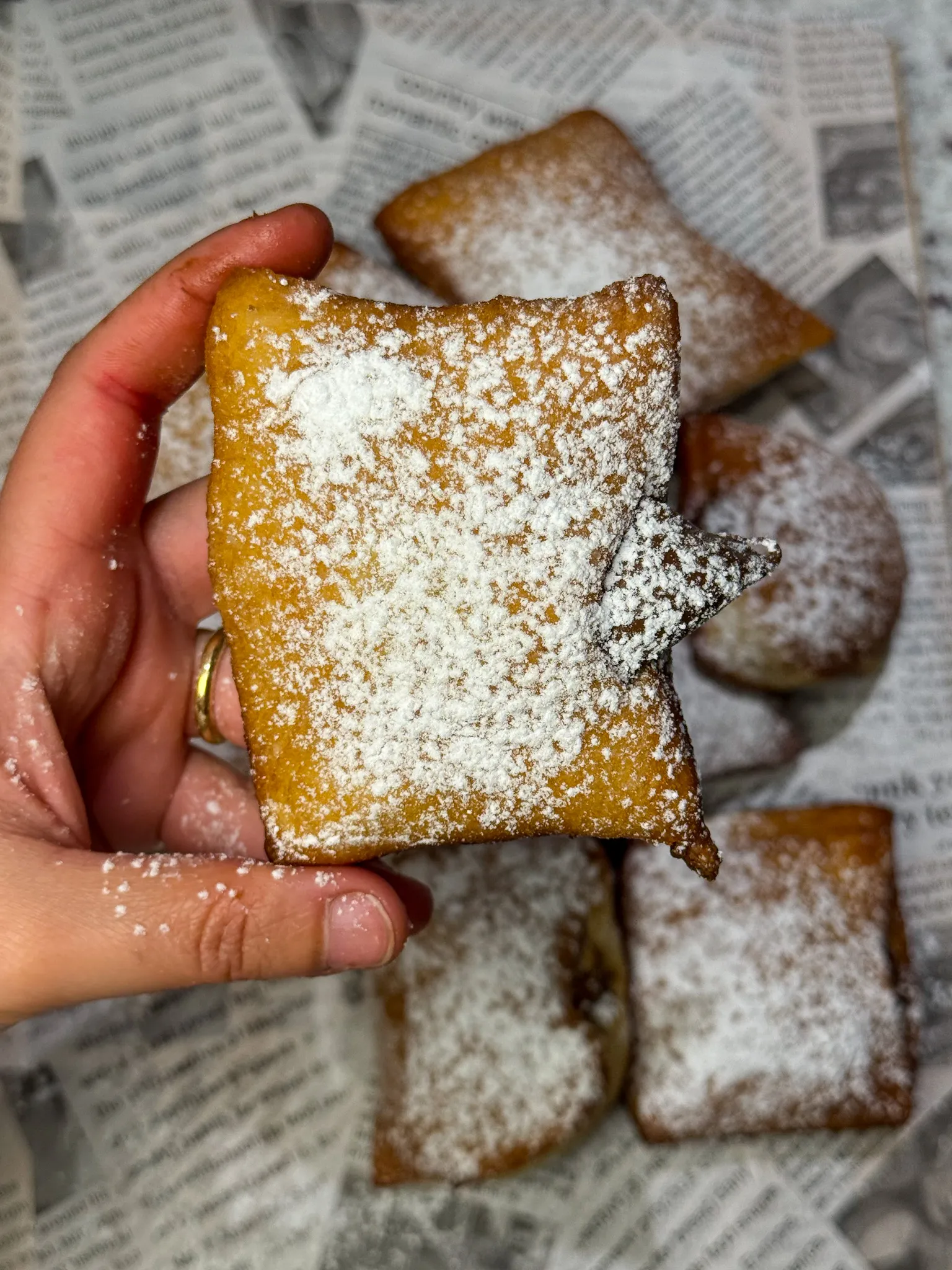
Overcrowding drops the oil temperature rapidly, which produces exactly the greasy, flat result you are trying to avoid. Fry for two to three minutes on the first side until deep golden brown, then flip once and fry for another minute or two on the second side. Remove with a slotted spoon and place on the paper-towel-lined plate. While still hot, dust immediately and generously with powdered sugar using the fine-mesh sieve.
Professional Tips for Perfect Results
Keep the Dough Soft — Resist Adding Extra Flour
The most common mistake with homemade beignets is adding too much flour to compensate for a dough that feels sticky. A slightly tacky, soft dough is correct — it is what produces an airy, tender interior after frying. If you add flour until the dough feels easy to handle, you have added too much, and the resulting homemade beignets will be dense and bready rather than light and hollow. Trust the recipe, flour your hands and surface generously, and work quickly.
Use a Thermometer — Not Guesswork
Oil temperature is the single most important variable in this recipe, and it cannot be reliably estimated by eye. A deep-fry thermometer or an instant-read probe thermometer tells you exactly when the oil is at 182 degrees Celsius and alerts you when it drops (after adding cold dough) so you can adjust the heat upward. The temperature will drop slightly each time you add a new batch — always wait for it to return to the target temperature before adding the next batch of homemade beignets.
Dust With Powdered Sugar While Still Hot
The powdered sugar adheres best to the surface of hot homemade beignets when the natural steam and heat from the just-fried dough help it cling. Dusting cooled beignets produces a thinner, less adhered coating that falls off immediately when you pick them up. Dust immediately after draining on paper towels, using a sieve for even, fine coverage rather than simply spooning sugar on top. Be generous — a modest dusting looks and tastes like an afterthought on a homemade beignet.
If you enjoy desserts with a generous, dramatic sugar coating, the CRÈME BRÛLÉE MUFFINS offer that same sense of dessert indulgence in a baked format with a caramelized sugar top.
Fry in Small Batches — Every Time
Three to four beignets per batch is the maximum for a standard home pot. Adding more dramatically reduces the oil temperature, preventing proper crust formation and resulting in homemade beignets that are pale, greasy, and flat. Each batch should take no more than three to four minutes total. Between batches, wait for the oil temperature to return fully to 182 degrees Celsius before adding the next round.
The Tres Leches Cinnamon Rolls are another recipe where patience between stages — letting each layer rest fully — produces a dramatically superior result compared to rushing the process.
Serve Immediately — Do Not Wait
Homemade beignets are a moment-sensitive food. They are extraordinary in the first five to ten minutes after frying: the crust is crisp, the interior is steamy and airy, and the powdered sugar is freshly dusted. As they cool and sit, the steam inside softens the crust, the interior becomes denser, and the powdered sugar absorbs into the surface. There is no effective way to fully restore fresh-fried homemade beignets once they have sat for more than 15 minutes. Make them to order, in small batches, and eat them warm.
Common Mistakes to Avoid
Dense, Heavy Beignets
This is almost always caused by too much flour or insufficient rising time. Dense homemade beignets have not developed enough gas in the dough to create the interior puff during frying. Check that the dough truly doubled during the rise — if your kitchen is cool, it may need more than two hours. And use a light hand with the flour: soft and slightly sticky is correct.
Flat Beignets That Do Not Puff
Flat homemade beignets result from one of three causes: dead yeast (the dough never rose properly), oil that is too cool (so the dough sinks and spreads rather than puffing), or dough that was rolled too thin. Verify the yeast is active before making the dough, maintain oil temperature at 182 degrees Celsius throughout frying, and roll the dough to at least 1.5 centimeters thickness.
Greasy Texture
Greasy homemade beignets are a direct result of oil that was not hot enough. When the oil is below 165 degrees Celsius, the moisture in the dough evaporates too slowly and oil penetrates the interior rather than being repelled. Use a thermometer and never add dough to oil that has not yet reached the target temperature.
Burnt Outside With Raw Inside
This is the opposite problem — oil that is too hot. At temperatures above 195 degrees Celsius, the exterior of the beignet browns within 30 to 60 seconds, long before the interior dough is cooked. Maintain the correct temperature range and trust the process.
Variations to Try
Chocolate Dipping Sauce Beignets
While homemade beignets are perfect with only powdered sugar, a warm chocolate dipping sauce served alongside transforms them into an interactive dessert. Melt 150 grams of good-quality dark chocolate with 100 milliliters of heavy cream, a pinch of salt, and a teaspoon of vanilla extract over low heat, stirring until silky. Serve warm in a small bowl alongside the freshly fried and sugared beignets for dipping. The slight bitterness of dark chocolate against the sweet, airy dough and powdered sugar is an extraordinary combination.
Cinnamon Sugar Beignets
Instead of plain powdered sugar, mix two tablespoons of ground cinnamon into one cup of powdered sugar before dusting. The cinnamon adds warmth and a spiced complexity that makes the homemade beignets taste reminiscent of churros while retaining their distinct pillowy texture. You can also add a quarter teaspoon of ground nutmeg for a deeper, more aromatic spice profile.
Filled Beignets
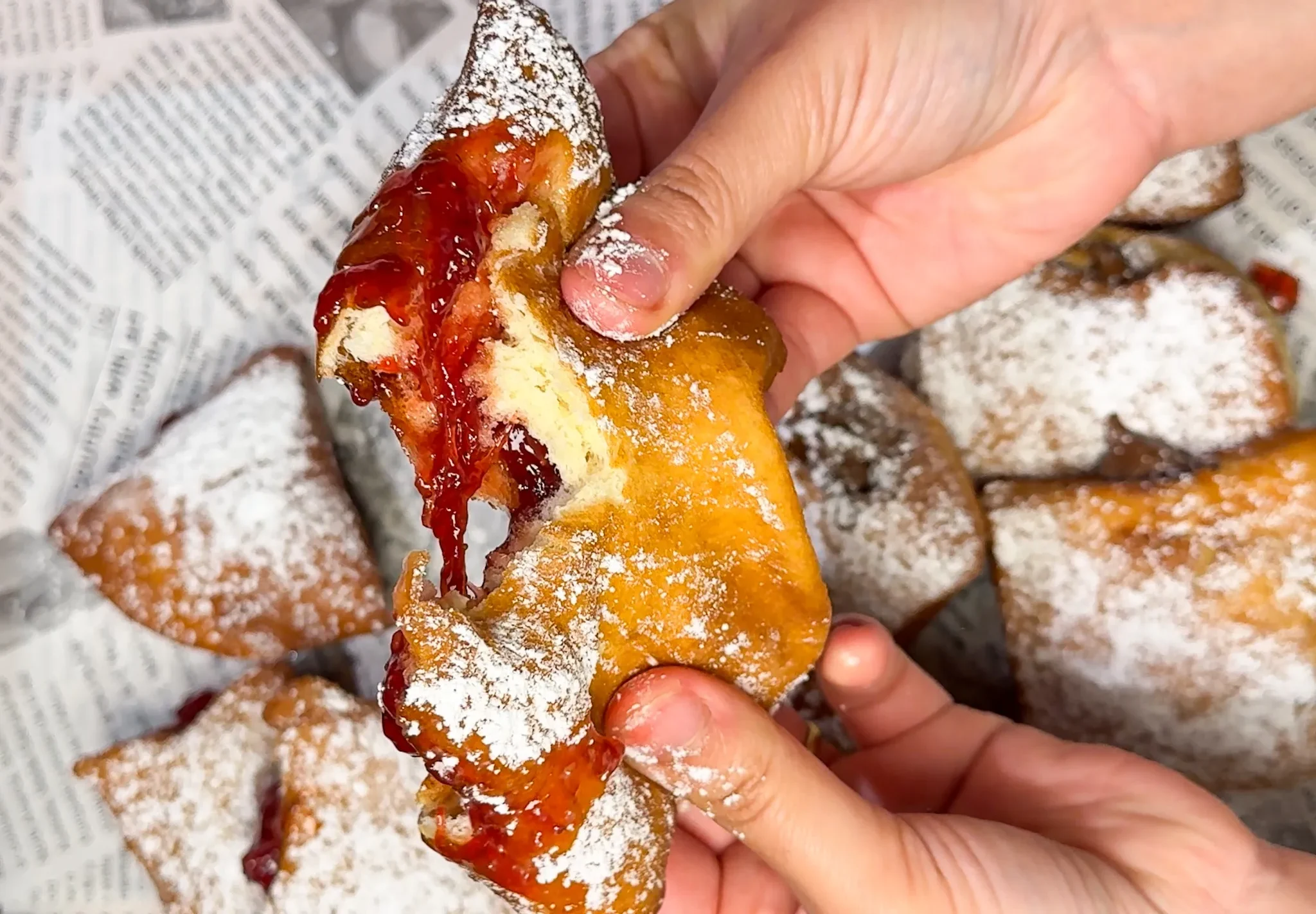
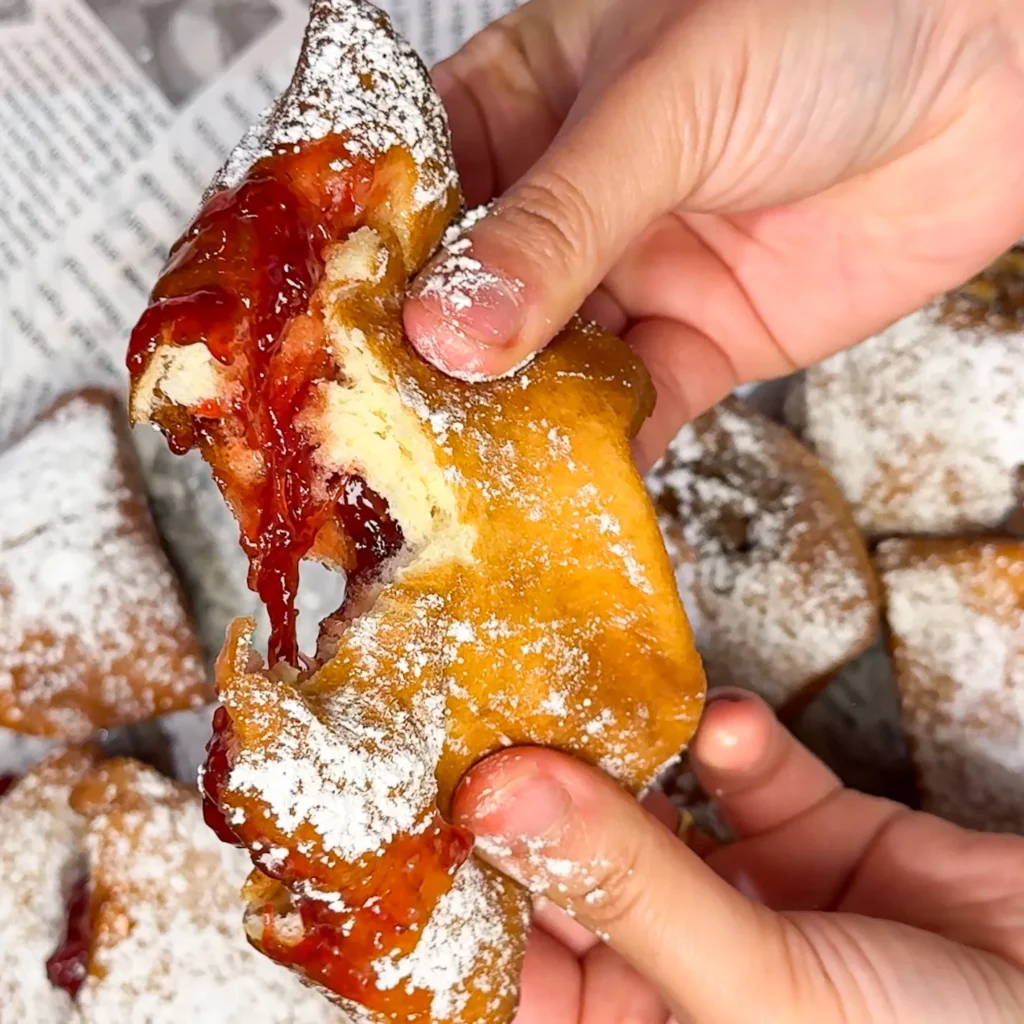
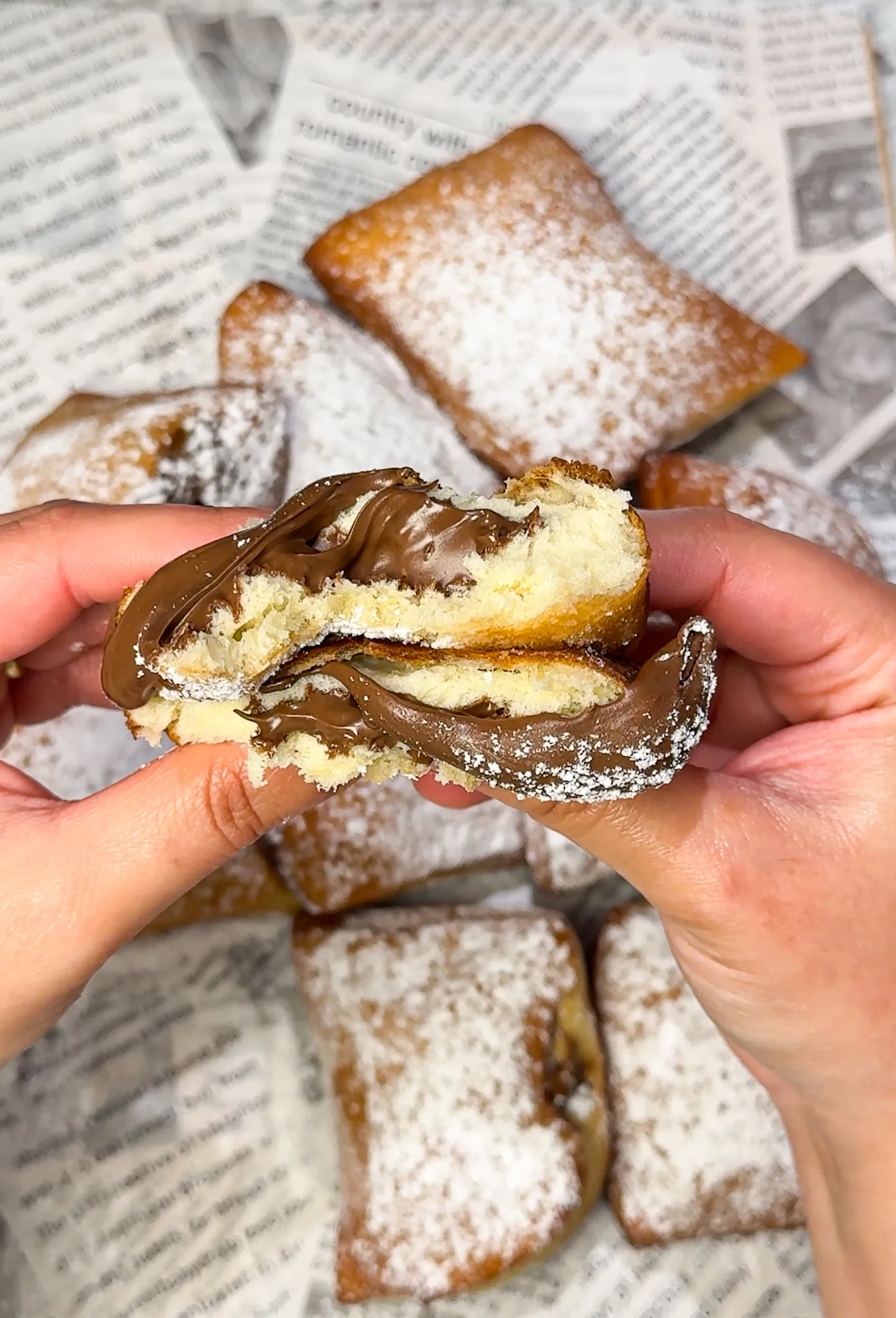
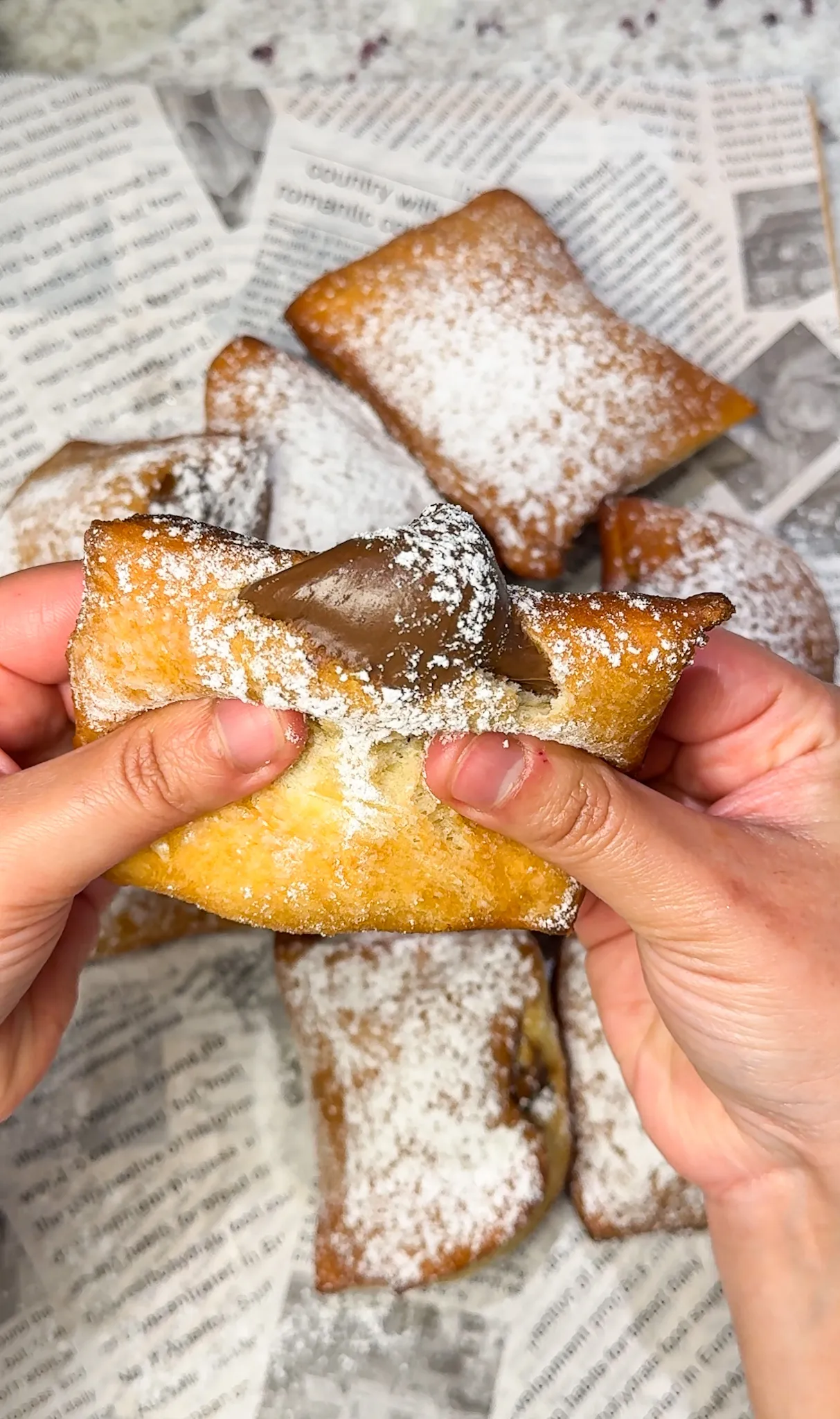
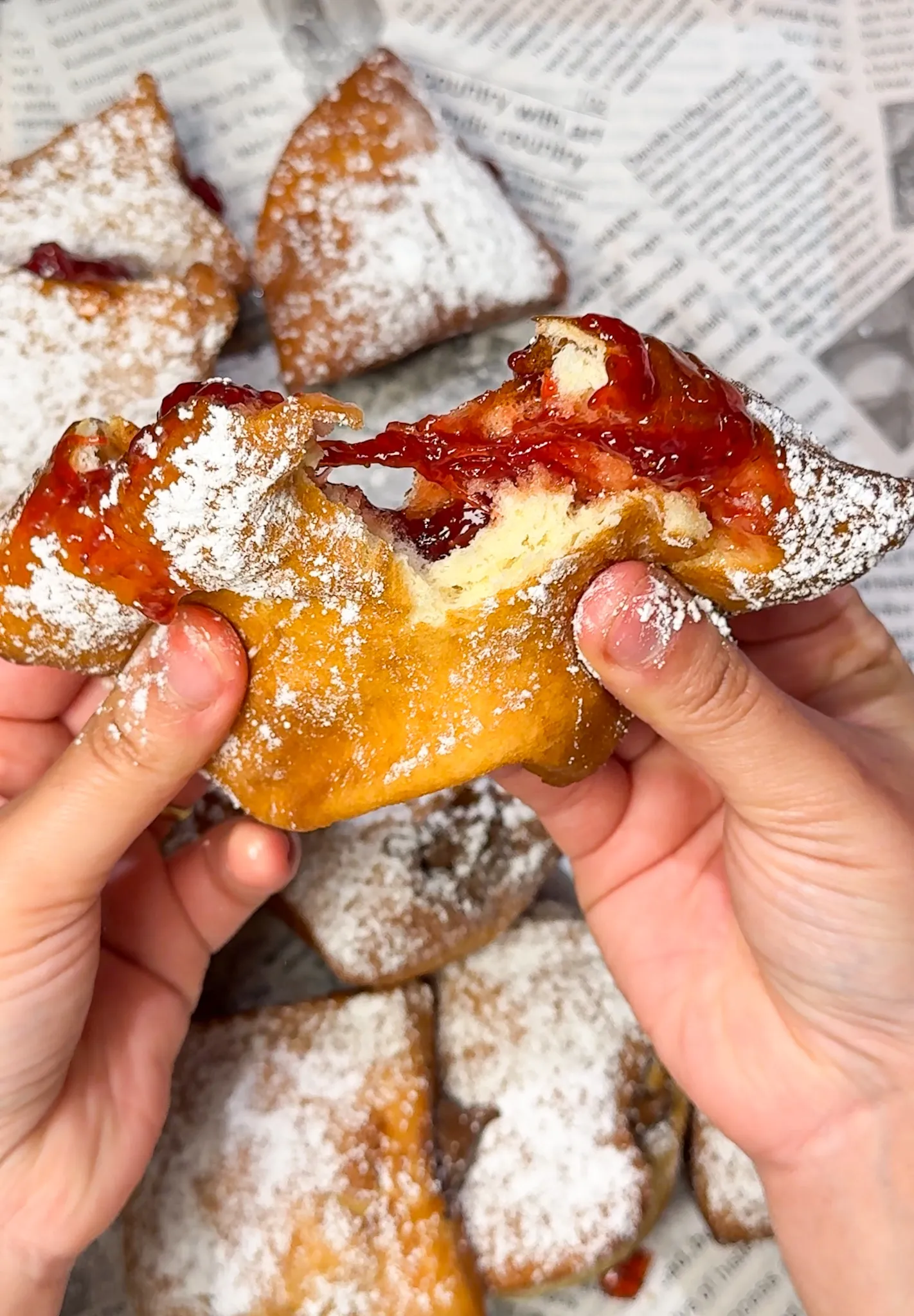
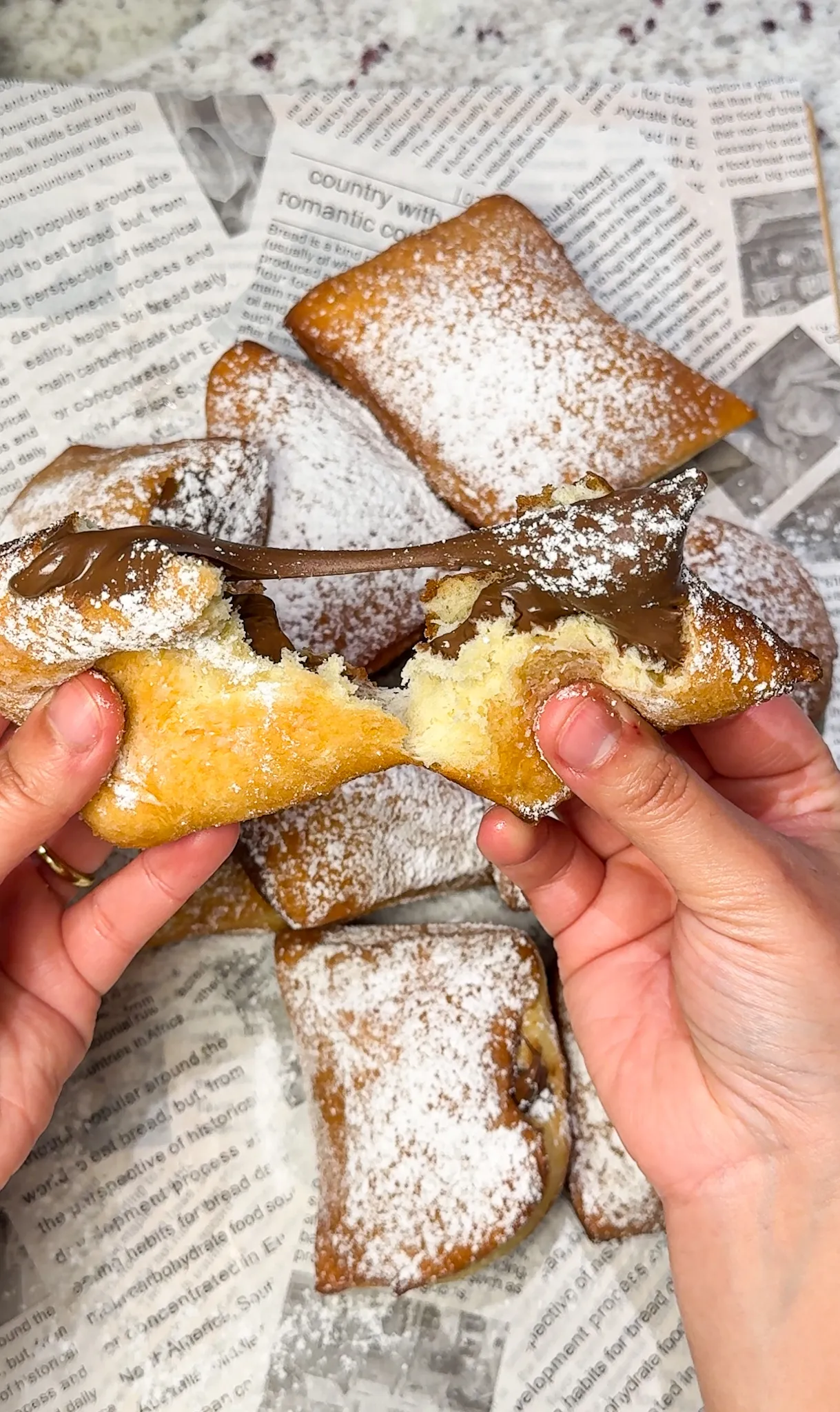
After frying and draining, use a piping bag fitted with a narrow tip to inject pastry cream, Nutella, or strawberry jam into the center of each homemade beignet. Then dust with powdered sugar as usual. Filled homemade beignets are more substantial and work beautifully as a dessert course rather than a breakfast or snack. The CRÈME BRÛLÉE MUFFINS demonstrate the same principle of a simple exterior paired with a rich, creamy interior that makes every bite feel special.
Overnight Dough Beignets
Make the dough the evening before and refrigerate after the first rise. The slow, cold fermentation develops significantly more complex flavor — a slight tang and depth that you cannot achieve with a same-day rise. The next morning, take the dough out 20 to 30 minutes before rolling and frying. The result is the best version of homemade beignets you will ever make. This is the method I find produces the most consistently exceptional results in my own kitchen, and once you try it, you will default to it every time.
Storage and Reheating
Room Temperature
Homemade beignets should be eaten within 30 minutes of frying for the best experience. If you must keep them briefly, leave them uncovered at room temperature — covering traps steam and makes the crust soft. They will remain reasonably pleasant for one to two hours but degrade noticeably in quality as time passes.
Refrigeration
Refrigerating fried homemade beignets is not recommended. Cold temperatures cause the starch in the dough to retrograde rapidly, making the interior dense and gummy and the exterior completely soft. If you have leftover dough rather than leftover fried beignets, refrigerating the dough for up to three days before frying is a much better approach — fry fresh as needed.
Freezing
Fried and cooled homemade beignets can be frozen for up to two months. Place them in a single layer on a baking sheet to freeze solid, then transfer to a sealed freezer bag. Reheat directly from frozen in the oven. The texture after freezing is noticeably different from fresh, but the flavor is largely preserved.
Reheating
The oven is the only method that partially restores the texture of homemade beignets that have been stored. Preheat to 175 degrees Celsius (350 degrees Fahrenheit) and heat the beignets on a rack for five to seven minutes until warmed through and slightly crisped at the edges. Do not use the microwave — it makes the interior gummy and the exterior completely soft, producing a result that bears little resemblance to a properly fried homemade beignet. Re-dust with fresh powdered sugar after reheating.
Frequently Asked Questions
What exactly is a beignet?
A beignet (pronounced ben-YAY) is a square-shaped piece of enriched yeast dough that is deep-fried until golden and puffed, then immediately coated in a generous amount of powdered sugar. The word is French and means bump or fritter. In the United States, beignets are most famous as the signature food of New Orleans, where they have been served at Café du Monde since 1862. They are related to, but distinct from, French-style choux pastry beignets — the New Orleans version uses a yeasted dough that produces a lighter, more bread-like interior with a characteristic hollow center.
Why are my homemade beignets not puffing up?
There are three common reasons. First, the yeast may have been dead or inactive before you added it to the dough — always check that the yeast mixture becomes foamy before proceeding. Second, the oil may be too cool — below 165 degrees Celsius, the dough spreads rather than puffing. Third, the dough may have been rolled too thin — aim for 1.5 centimeters thickness. All three of these factors must be correct for homemade beignets to puff properly and reliably.
Can I make homemade beignet dough ahead of time?
Yes, and it is actually recommended. After the initial mixing and first rise, refrigerate the dough for up to three days before rolling and frying. Slow, cold fermentation develops significantly better flavor in the dough. When ready to use, let the dough come to room temperature for 20 to 30 minutes before rolling. This is the method that produces the best-tasting homemade beignets with minimal day-of effort.
What is the right oil temperature for frying beignets?
The target temperature is 180 to 185 degrees Celsius (360 to 365 degrees Fahrenheit). This range produces a crust that sets quickly, a puff that develops fully, and a golden-brown color that develops in two to three minutes per side. Use a thermometer — this is not a variable to estimate. Check the temperature between each batch and wait for it to return to the target before adding more dough.
What is the difference between beignets and donuts?
The primary differences are in shaping and texture. Donuts are typically ring-shaped (or filled) and are made from a richer dough that often includes more sugar. They are usually slightly denser and sweeter than beignets. Homemade beignets are square-shaped, made from a leaner enriched dough, and have a distinctly lighter, more hollow interior because the yeast produces more expansion in a less restricted shape. The powdered sugar coating on beignets is also far more generous than on a typical donut — it is considered part of the essential beignet experience, not optional garnish.
Can I bake homemade beignets instead of frying them?
Baked beignets are a different product. The deep frying process — the rapid heat transfer from hot oil — is what creates the fast exterior set, the dramatic interior puff, and the light, crisp crust of authentic homemade beignets. An oven produces a more even, gentler heat that does not create the steam barrier responsible for the hollow interior. Baked versions will look similar but will be denser, less airy, and more bread-like. They are pleasant, but they are not beignets in the authentic sense.
Watch the recipe video for more clarity!
See our similar recipes:
People also like these recipes:
Final Thoughts
Homemade beignets are the kind of recipe that teaches you something every time you make them. Your first batch will be good. Your second will be better because you will have a feel for when the dough is right and what the oil looks and sounds like at the correct temperature. By your third batch, you will understand intuitively when to add a splash more oil, when to pull the beignets before the color goes too far, and how much powdered sugar is actually the right amount (the answer is always more than you think). This is the nature of fried dough — it rewards practice and attention.
What makes homemade beignets worth mastering is how they transform a handful of pantry staples into something that feels genuinely festive. There is no occasion too small or too large for them. They work as a special breakfast, a weekend brunch centerpiece, a simple dessert for guests, or an after-dinner treat that fills the kitchen with the smell of warm vanilla and hot oil. Served immediately, still steaming under their cloud of powdered sugar, they deliver a level of sensory satisfaction that very few other homemade desserts can match.
Make them once using the overnight dough method for the deepest flavor. Share them warm with strong coffee or hot tea. And watch how quickly the plate empties — because that is what homemade beignets do. They disappear, and then everyone immediately wishes there were more.
- ¾ cup warm water
- ½ cup sugar
- 2¼ tsp yeast
- 1 egg
- ½ cup milk
- 2 tsp vanilla
- 3¾ cups flour
- 1 tsp salt
- 3 tbsp butter
- oil for frying
- ½ cup powdered sugar
Activate yeast in warm water and sugar.
Add milk, egg, vanilla.
Add flour and salt.
Mix in butter gradually.
Knead until soft and smooth.
Let rise until doubled.
Roll and cut into squares.
Fry at 360°F until golden.
Drain and dust with powdered sugar.
Serve warm.
If you've given this recipe a try and it won you over, please share your thoughts by leaving
a rating and comment below! If you have any questions about this recipe, don't hesitate to ask – I'm here to
help and will respond promptly.