Ingredients
Method
- Partially boil potatoes (10 min)
- Cool and grate
- Mix with egg, spices, Parmesan, cornstarch
- Shape into hashbrowns
- Freeze 1 hour
- Fry at medium-low heat
- Cook 4 min per side
- Serve hot
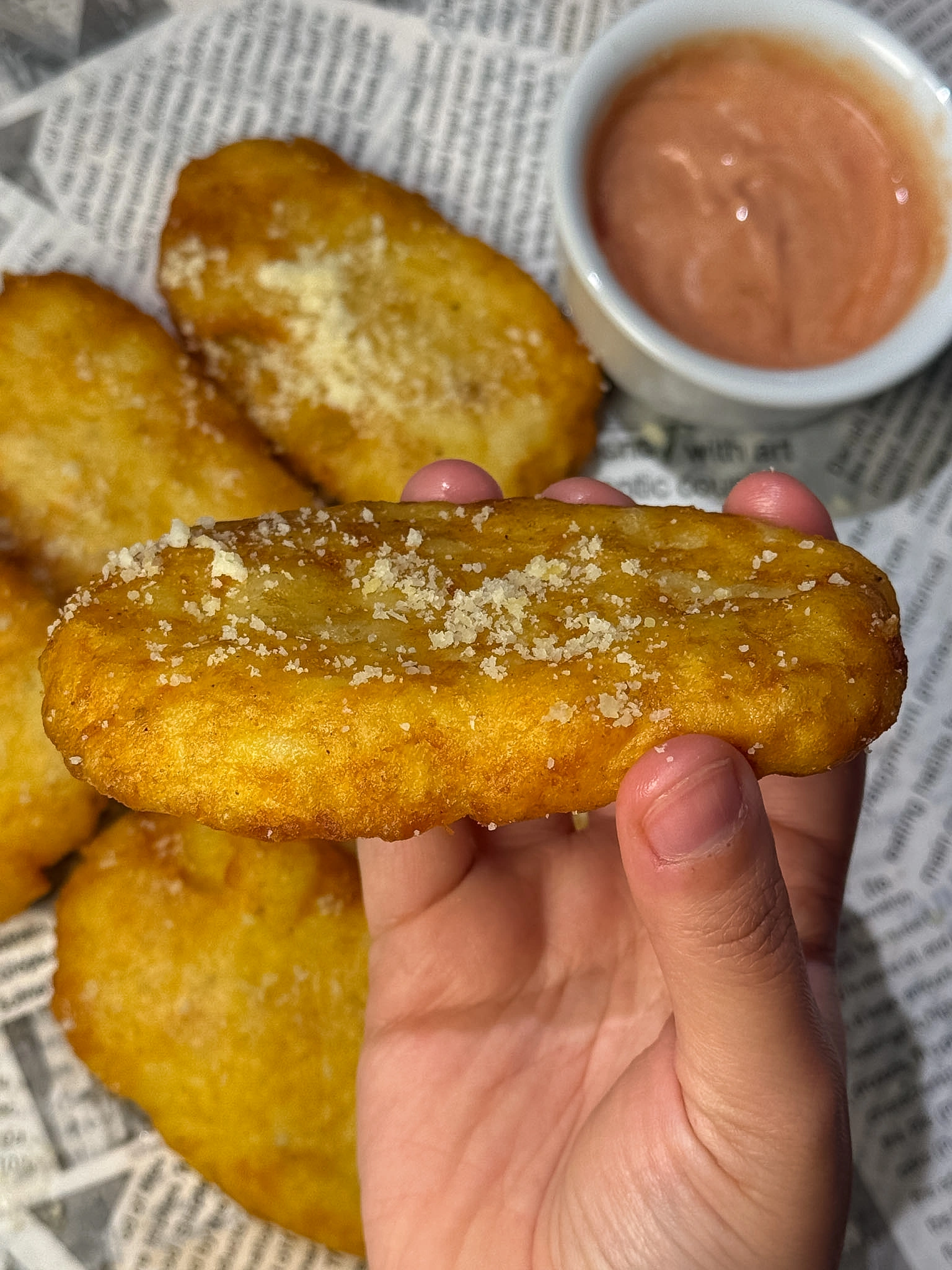
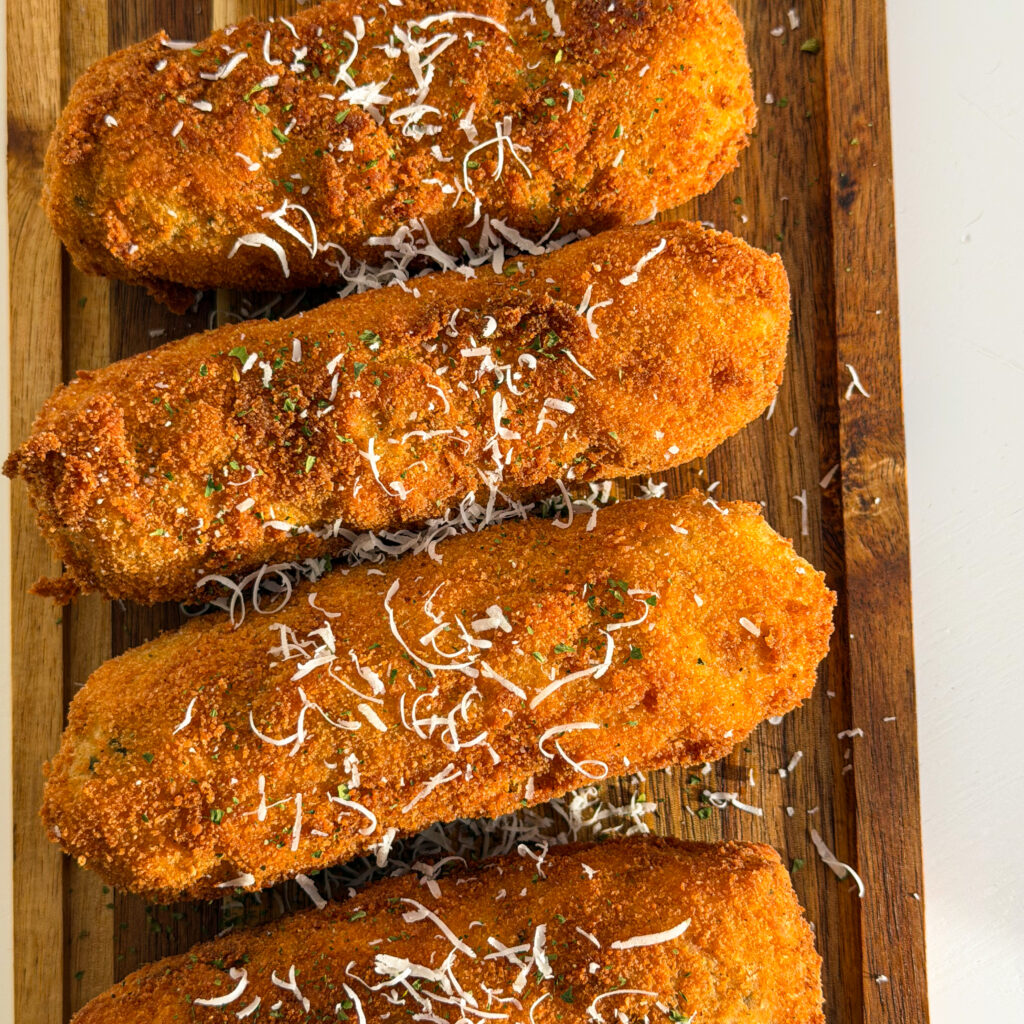
Garlic parmesan hashbrowns are the kind of breakfast side dish that turns an ordinary morning into something genuinely worth waking up for. Picture this: golden, crunchy patties fresh from the pan, coated in a salty Parmesan crust, filling your kitchen with the warm, savory scent of toasted garlic. If you have ever wondered why homemade hashbrowns end up soggy, flavorless, or falling apart in the pan, this recipe solves every one of those problems with a simple, step-by-step technique that I have tested dozens of times to get exactly right.
These garlic parmesan hashbrowns are not just shredded potatoes thrown into hot oil. The method behind them — partial boiling, proper binding, freezing before frying — is what separates a truly spectacular hashbrown from a mediocre one. If you love crispy, cheesy potato dishes, you might also enjoy our CRISPY PARMESAN HASSELBACK POTATOES, which use the same bold Parmesan flavor in a completely different format. But first, let us talk about what makes these garlic parmesan hashbrowns a recipe worth bookmarking.
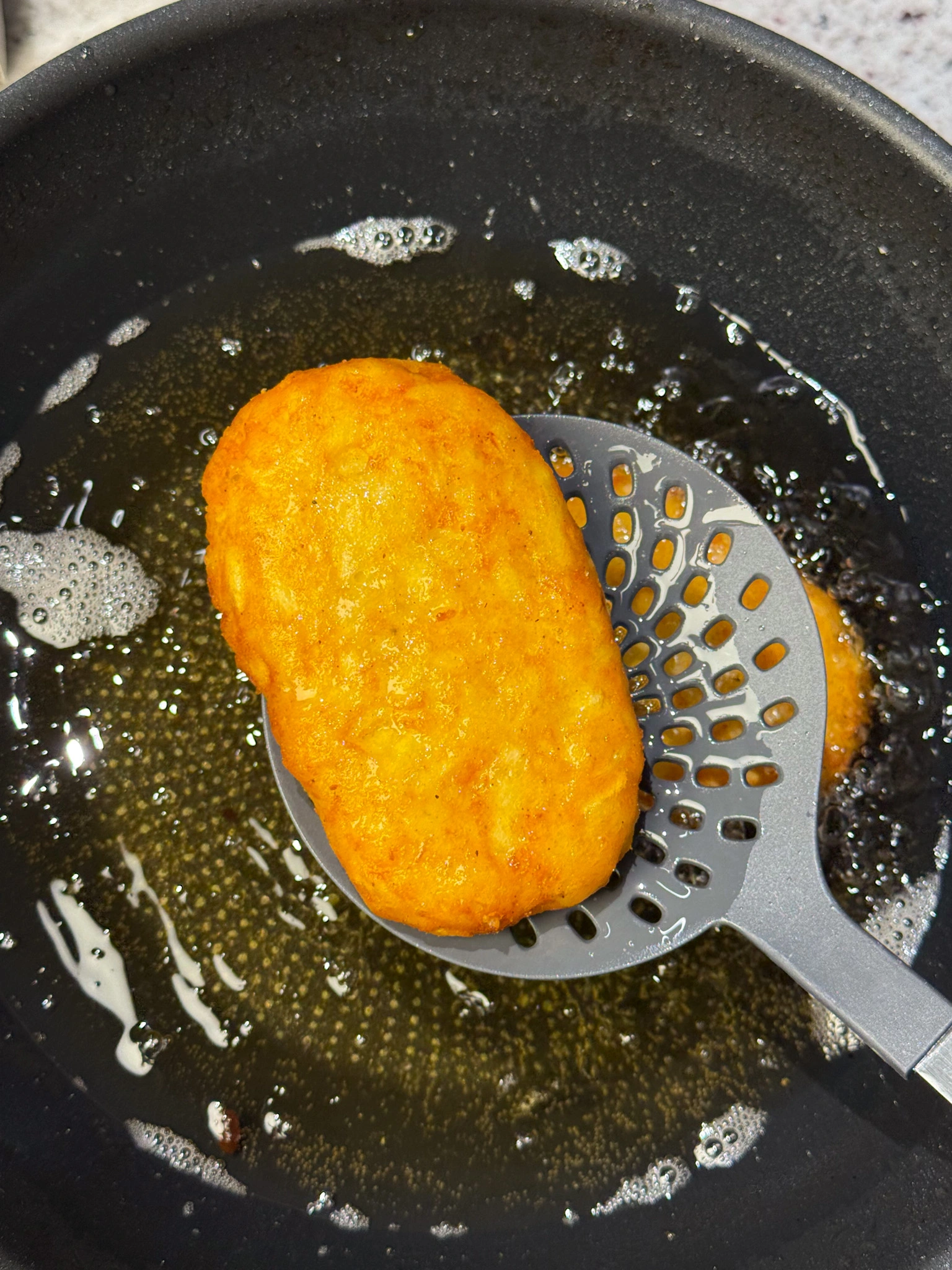
Most hashbrown failures come down to two issues: too much moisture and not enough structure. These garlic parmesan hashbrowns solve both at the root cause, not as an afterthought. The result is a hashbrown patty that is genuinely crispy on the outside, fluffy and well-seasoned on the inside, and sturdy enough to pick up and eat with your hands without crumbling.
What sets this recipe apart is the freezing step. After shaping the patties, placing them in the freezer for at least an hour does something magical. It draws out excess moisture, firms up the interior, and creates a surface that crisps almost instantly when it hits the hot oil. In my experience, skipping the freeze is the single most common reason homemade garlic parmesan hashbrowns fail — even when everything else is done correctly.
The Parmesan cheese plays a dual role here that most recipes overlook. It acts as a seasoning, yes, but it also forms a crust on the outside of the patty that adds an extra layer of crunch. Freshly grated Parmesan is essential — the kind sold in shaker cans contains anti-caking agents that prevent it from melting properly and will not give you the same golden crust. After many test batches, freshly grated Parmigiano-style cheese is the only version that consistently delivers the crunchy, salty exterior these hashbrowns are known for.
The ingredient list for garlic parmesan hashbrowns is deliberately short. Every item earns its place in this recipe, and substituting freely can undermine the results. Here is what you need and why it matters.
Russet potatoes are the foundation, and they are the only potato worth using here. Their naturally high starch content is what creates the crispy exterior and soft, pillowy interior that defines a great hashbrown. Waxy potatoes like red or Yukon Gold contain less starch and more water, which produces a denser, less crispy result. Stick with large russets for the best garlic parmesan hashbrowns every single time.
The egg and cornstarch work together as a binding system. The egg adds cohesion and richness, while the cornstarch absorbs residual moisture and forms a coating on the potato strands that fries up extra-crispy. If you have made potato pancakes or latkes before, you will recognize this approach. It is reliable, simple, and produces a consistent texture without any complicated ingredients.
Garlic powder is used here rather than fresh garlic, and that is an intentional choice. Fresh garlic can burn before the outside of the hashbrown is fully golden, leaving a bitter edge. Garlic powder distributes evenly throughout the mixture and infuses every strand of potato with a steady, warm garlic flavor that stays consistent from the first bite to the last. For another take on potato dishes with rich garlic character, the CREAMY DREAMY POTATOES AU GRATIN is a perfect companion recipe that leans into a creamier style of potato comfort food.
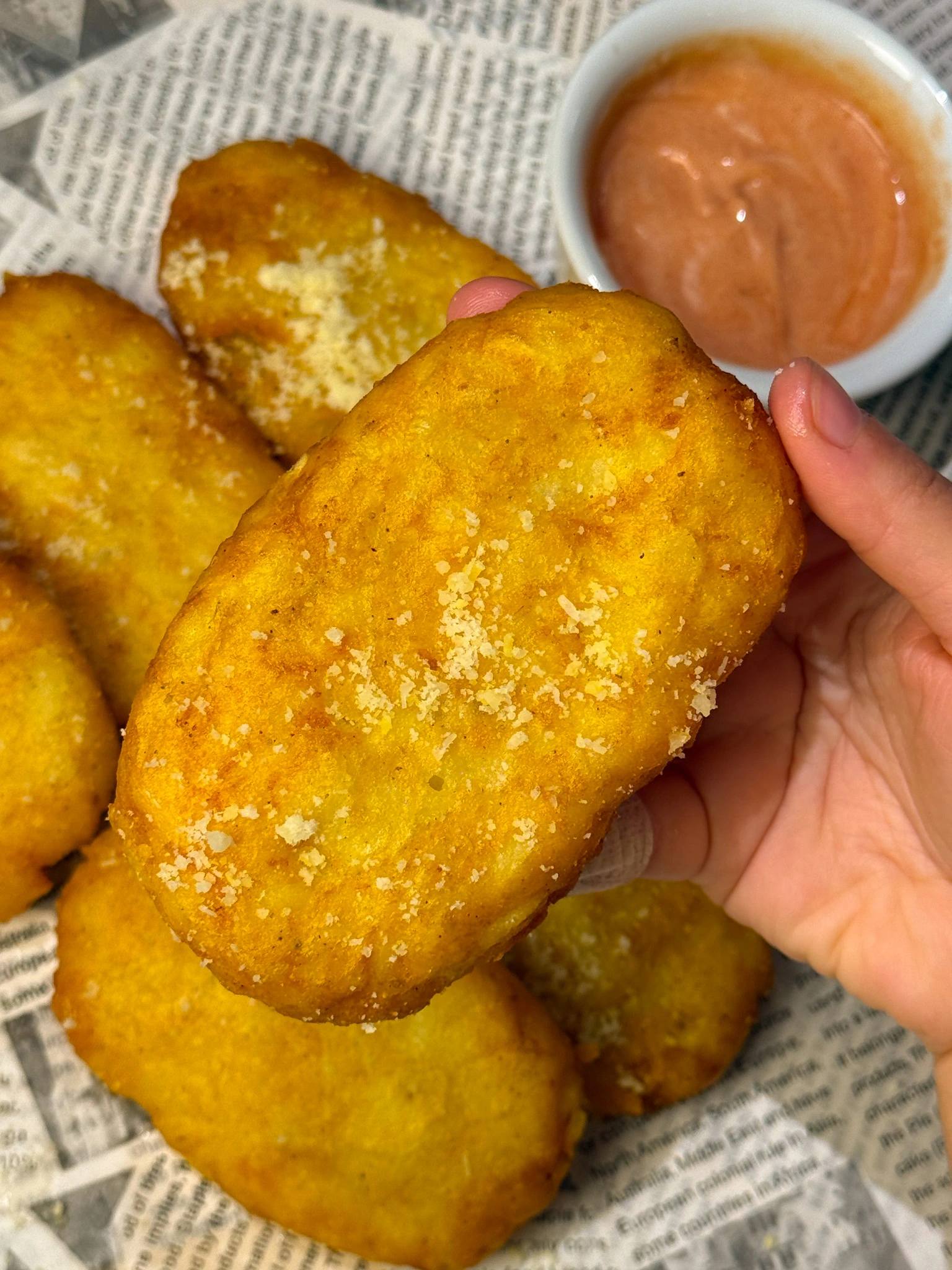
When you boil russet potatoes for ten minutes before shredding, you are doing something precise and deliberate. The heat partially gelatinizes the starch on the outer layer of each potato piece, making it easier to grate into long strands without the potato turning mushy. It also starts the cooking process from the inside, which means the center of your garlic parmesan hashbrowns reaches a fully cooked texture during frying without requiring the outside to sit in oil long enough to burn.
Raw-grated potatoes have a higher free-water content and a more uniform texture that tends to steam rather than fry when it hits oil. The result is a pale, soft interior with uneven crispness. Partially boiled potatoes grate differently — they are drier, more structured, and they produce shreds that separate and crisp individually rather than clumping together.
The freezing step is where garlic parmesan hashbrowns go from good to genuinely great. When you place the shaped patties in the freezer, ice crystals form within the mixture and push water toward the surface, where it evaporates. This creates a drier interior that, when hit with hot oil, produces a rapid Maillard reaction on the surface — the chemical process responsible for that deep golden-brown color and satisfying crunch.
Frozen patties also hold their shape far better than unchilled ones. When a cold hashbrown hits hot oil, the outer surface sets almost instantly, creating a crust before the interior has a chance to shift or spread. This is why restaurant-style hashbrowns — which are almost always pre-frozen — look so uniform and hold such a clean shape.
Parmesan cheese has one of the lowest moisture contents of any hard cheese, which makes it exceptional for crisping. When it comes into contact with hot oil at the surface of the hashbrown, the proteins in the cheese undergo rapid browning while the fat renders out and acts like an additional frying medium. The result is that the outside of each garlic parmesan hashbrown develops a double crust: one from the potato starches and one from the caramelized cheese.
As noted above, large russet potatoes are non-negotiable for garlic parmesan hashbrowns. Choose ones that feel firm and heavy for their size, with no soft spots or green patches. A green tint indicates the presence of solanine, a compound that develops when potatoes are exposed to light and that carries a bitter taste. For five large russets, you are looking at roughly 1.2 to 1.4 kilograms total weight.
Buy a wedge of Parmesan and grate it yourself immediately before using it. Pre-shredded Parmesan has a powdery coating that prevents clumping in the bag but also prevents it from binding and browning the way you need it to in these garlic parmesan hashbrowns. The difference in flavor is also significant — freshly grated Parmesan is sharper, nuttier, and more pungent, and those qualities come through clearly in the finished dish.
Use a neutral oil with a high smoke point: sunflower, canola, or refined avocado oil all work well. Olive oil has too low a smoke point for the medium-high heat required at the start of frying and can produce off-flavors. You need enough oil to come about halfway up the sides of each patty — typically around 1.5 to 2 centimeters in a standard frying pan. This amount ensures the garlic parmesan hashbrowns cook evenly on the sides as well as the flat faces.
If you enjoy cooking with garlic-forward oils and crispy potato sides, the CRISPY GARLIC BUTTER PARMESAN FRIES uses a similar flavor profile in a different cut and preparation style worth exploring.
Peel and wash the russet potatoes thoroughly, making sure to remove any eyes or blemishes. Cut them into large chunks — roughly quartered — so they cook evenly during the partial boil. Place the chunks in a large pot, cover with cold salted water, and bring to a boil over medium-high heat. Cook for exactly ten minutes from the point of boiling. The potatoes should feel just slightly firm when poked with a knife — they will continue cooking later during frying, so you are not aiming for fully tender at this stage.
Drain the potatoes and spread them on a wire rack or tray to cool completely. This step matters more than it might seem. Grating hot or even warm potatoes causes them to compress and turn paste-like rather than producing the long, airy strands that give garlic parmesan hashbrowns their signature texture. Wait at least twenty to thirty minutes, or speed the process by placing them in the refrigerator for fifteen minutes.
Once the potatoes are fully cooled, grate them using the coarse side of a box grater. Work in one direction to produce the longest possible strands. Transfer the grated potato to a large mixing bowl and add the egg, cornstarch, salt, black pepper, garlic powder, and the freshly grated Parmesan. Mix everything thoroughly with your hands or a fork until every strand of potato is coated and the mixture holds together when pressed.
Divide the mixture into eight equal portions. Take each portion, press it firmly between your palms, and shape it into an oval or rectangular patty about one centimeter thick. The key is firm, consistent pressure — loose patties will break apart in the oil. Place the shaped garlic parmesan hashbrowns in a single layer on a parchment-lined baking tray and transfer to the freezer for at least one hour.
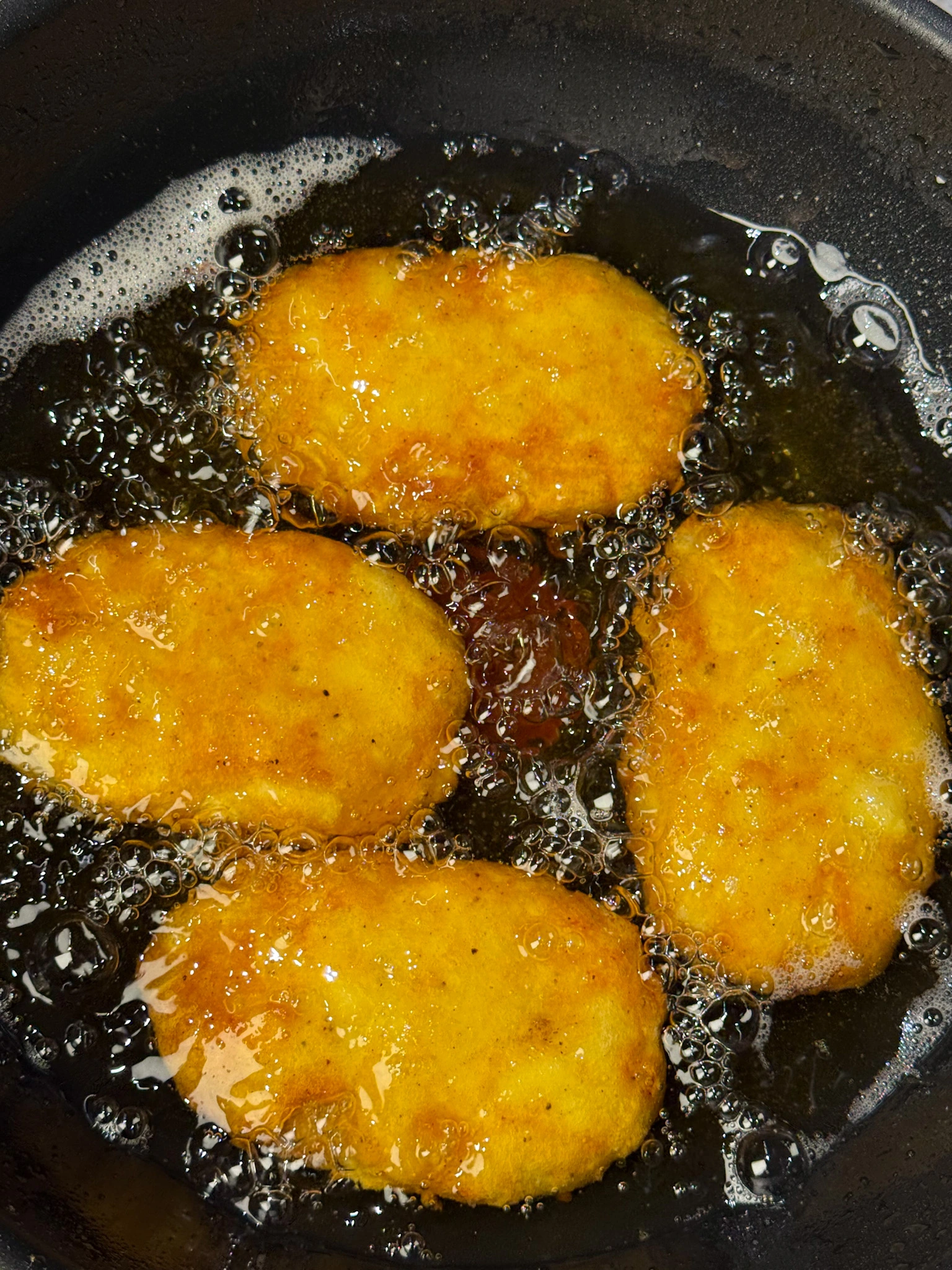
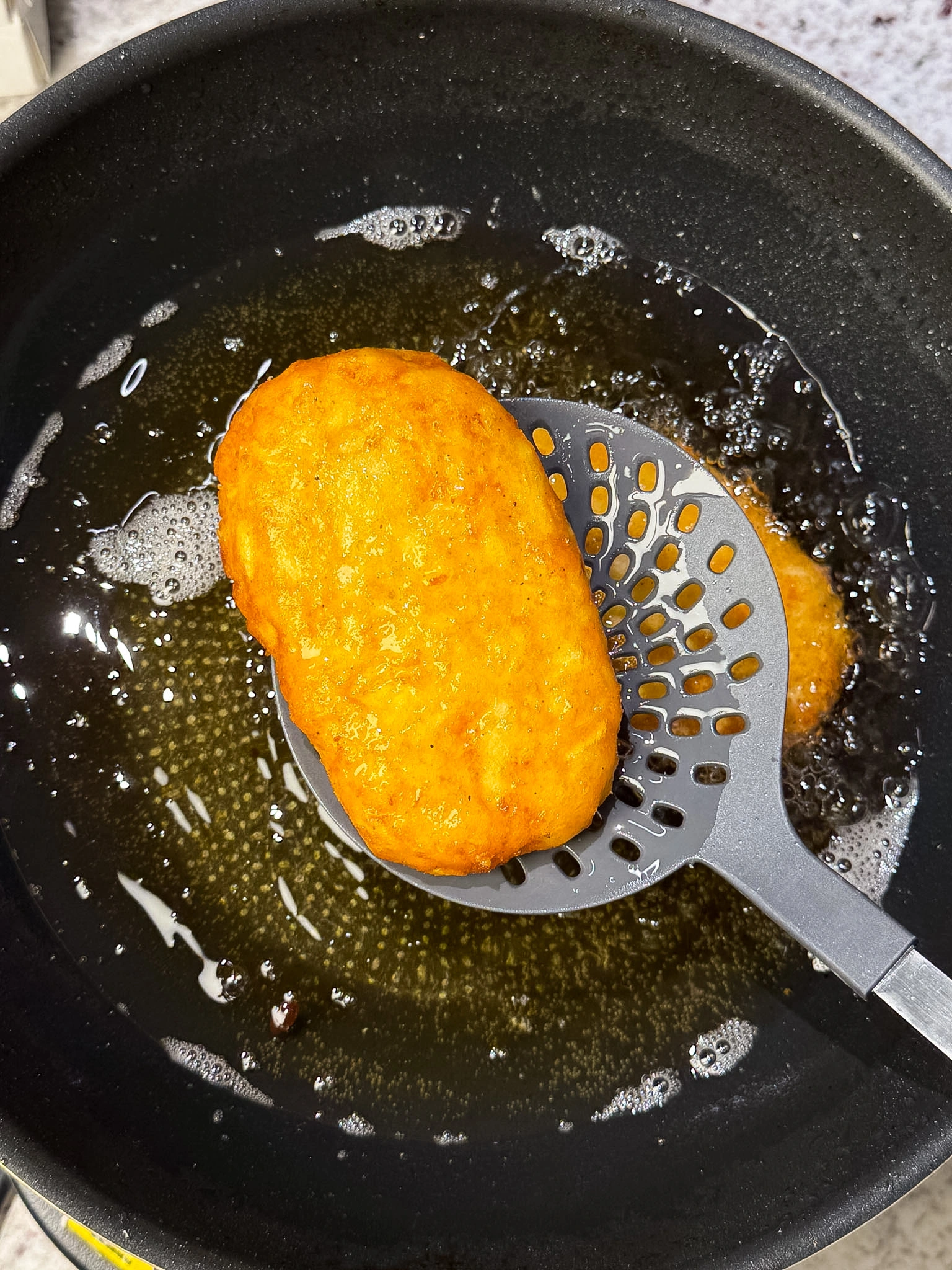
Pour enough oil into a large heavy-bottomed frying pan to reach a depth of about 1.5 centimeters. Heat over medium-high until the oil shimmers and a small piece of potato dropped in sizzles immediately. At that point, reduce the heat to medium-low before adding the hashbrowns. This two-stage temperature approach is critical: the initial high heat ensures the oil is fully ready, and the reduced heat allows the hashbrowns to cook through without burning on the outside.
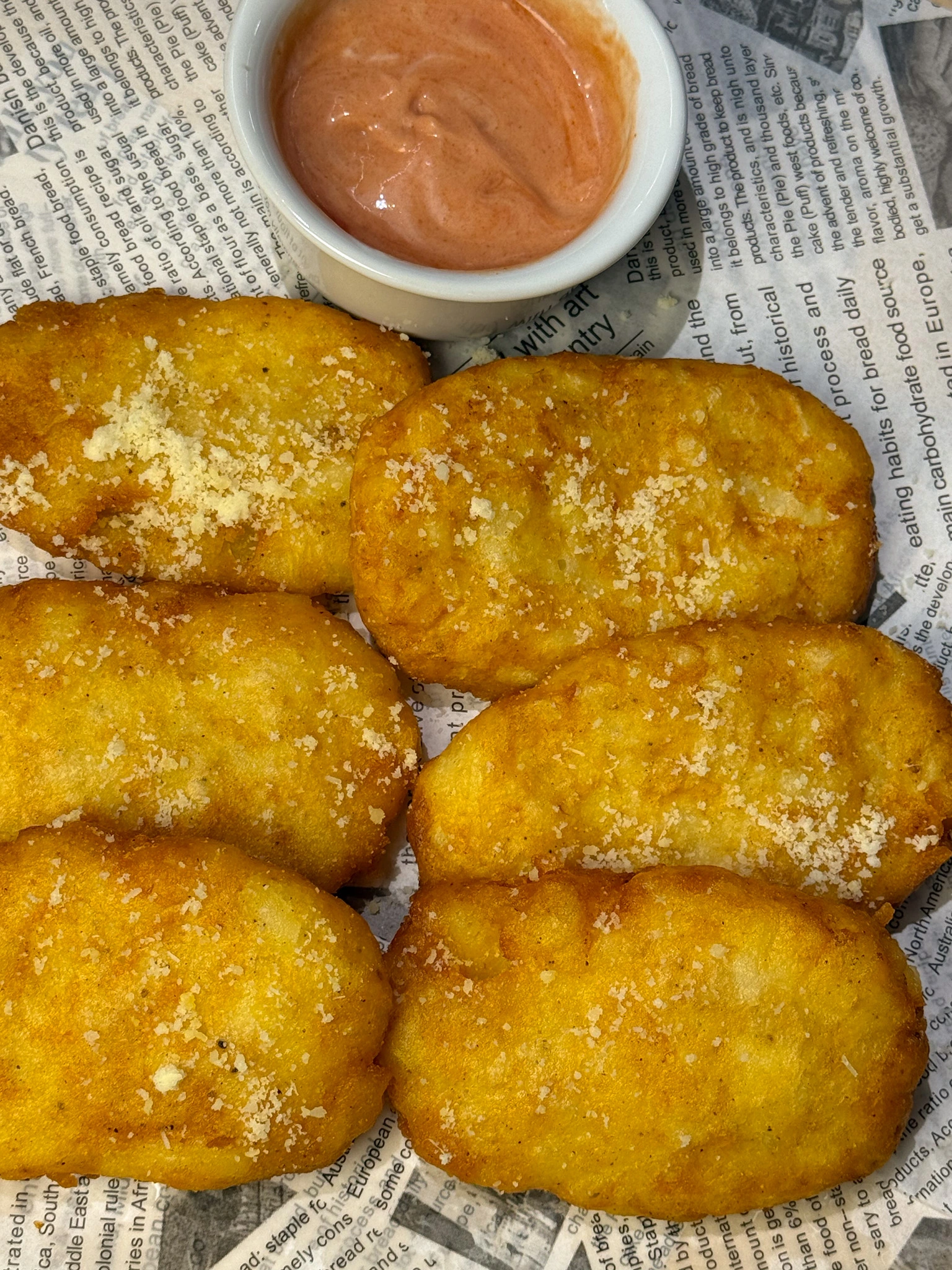
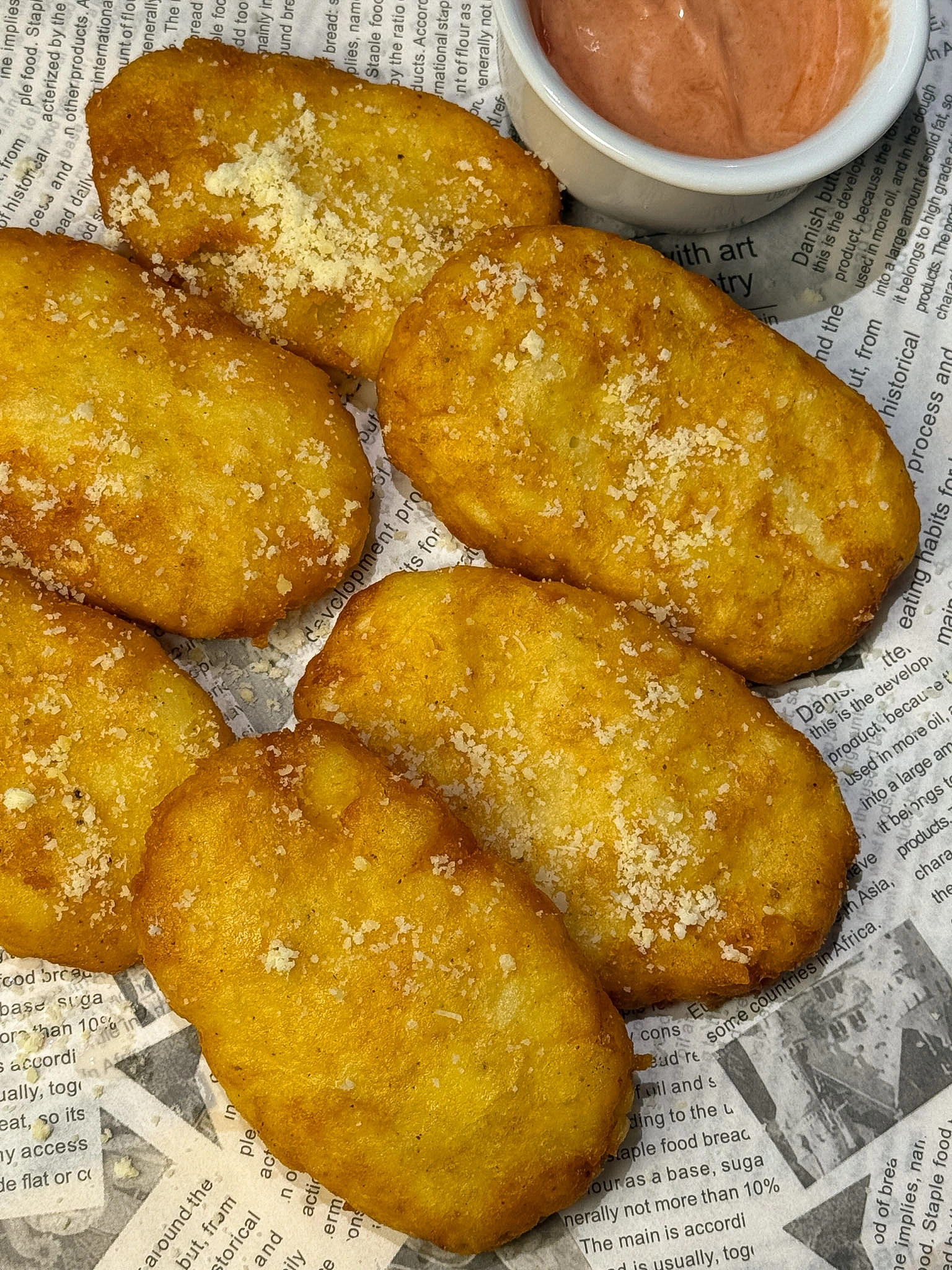
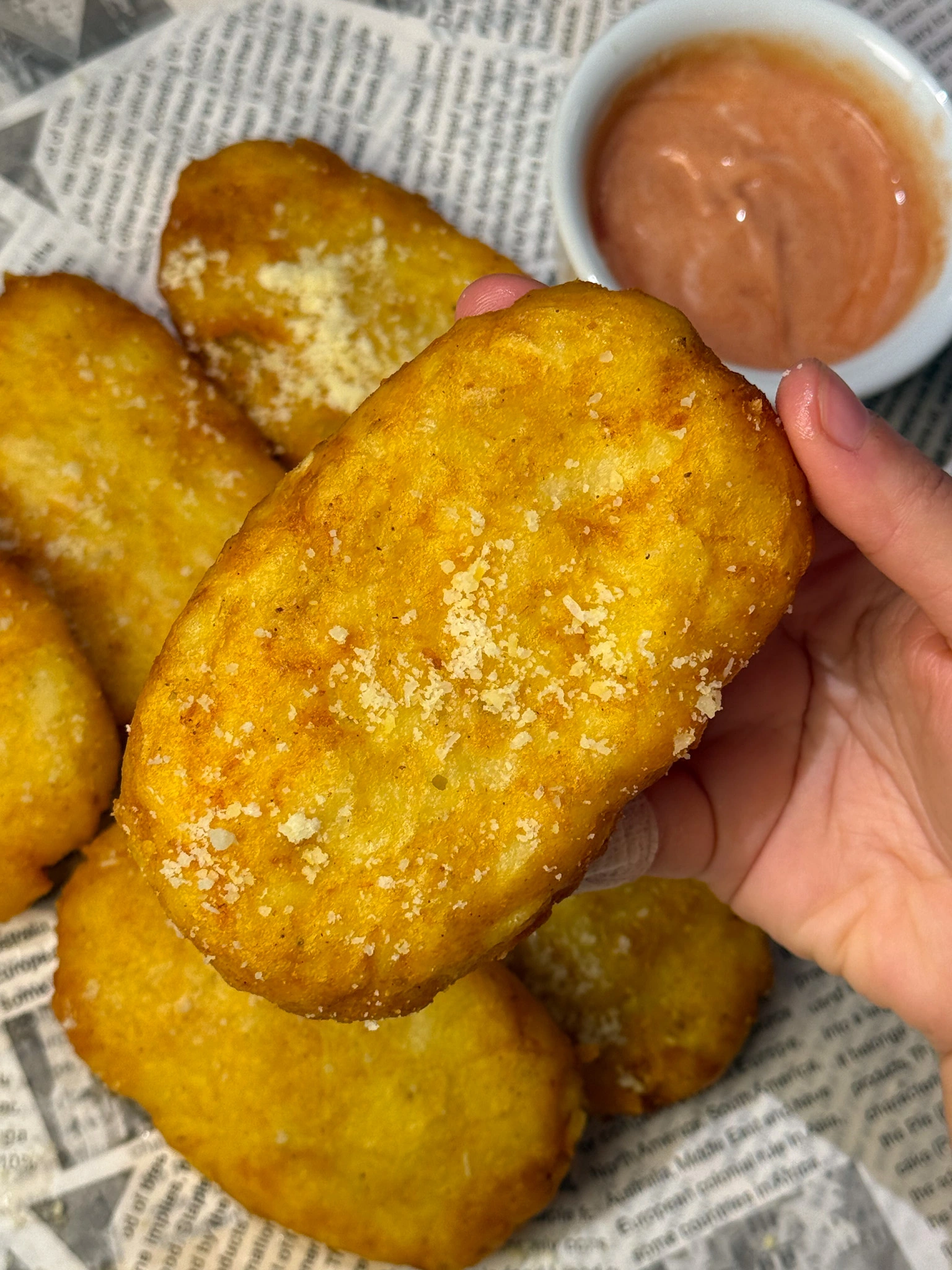
Fry three to four garlic parmesan hashbrowns at a time, never crowding the pan. Cook for four minutes per side without moving them — resist the urge to check or lift them early. When the first side is a deep, even golden-brown color, flip once using a thin spatula, pressing gently to re-establish contact with the oil. After four minutes on the second side, transfer to a paper towel-lined plate. Sprinkle with extra Parmesan immediately while still hot, and serve right away.
The most common reason garlic parmesan hashbrowns come out pale and soft rather than golden and crispy is that the oil temperature dropped when too many cold patties were added at once. Every frozen patty lowers the oil temperature slightly. If you add too many, the temperature drops below the point where crisping occurs, and the hashbrowns begin to steam rather than fry. Fry in small batches of three to four patties maximum, and give the oil thirty seconds to recover between batches.
When shaping the patties, press them harder than you think is necessary. Then press them again. Firm, compact patties hold together through the thermal shock of hitting cold oil and through flipping. A loosely shaped garlic parmesan hashbrown will always crack or crumble when you try to flip it, no matter how careful you are with your spatula. Take the extra ten seconds per patty to compress them properly.
A wide fish spatula or a thin, flat metal spatula gives you the leverage to slide under the entire hashbrown in one motion. A thick spatula edge or a slotted spoon is too narrow and will break the patty. Once the first side is golden and the exterior has set, the hashbrown releases cleanly from the pan on its own — if it resists, it needs another thirty to sixty seconds.
For a completely different take on bold potato flavors, the CHEESY SUCUK HASSELBACK BAKED POTATOES offer a baked, oven-roasted alternative that uses layered cheese and spiced sausage for an equally satisfying result.
Waxy potatoes — red, fingerling, or Yukon Gold — contain too much water and not enough starch to crisp properly. The resulting hashbrown will be dense in texture and resistant to browning. Always use russet potatoes for garlic parmesan hashbrowns. This is not a suggestion; it is a structural requirement of the recipe.
Grating warm potatoes breaks down their structure and produces a wet, paste-like mass that clings together and steams in the pan rather than crisping. Every minute you invest in letting the potatoes cool fully before grating is returned to you as a crispier, more evenly textured hashbrown. If you are short on time, the refrigerator speeds this process considerably.
This is the most commonly skipped step and the most consequential. An unfreezed, room-temperature patty placed in hot oil will soften and spread before the outside has a chance to set. The interior stays wet and the patty often sticks to the pan. The freezing step requires patience, but it is what transforms a decent attempt into a restaurant-quality garlic parmesan hashbrown.
Overcrowding lowers oil temperature and creates steam between the patties, which is the enemy of crispness. Even if it means frying in more batches and waiting longer, always leave space between each garlic parmesan hashbrown in the pan. The patience required here is minor compared to the textural difference in the finished product.
Loosely shaped patties crack on contact with hot oil and fall apart when flipped. Press each portion firmly and consistently before freezing, and the hashbrown will hold together through the entire frying process.
Press a small cube of mozzarella into the center of each patty before shaping and freezing. As the garlic parmesan hashbrown fries, the mozzarella melts into a gooey, stretchy center that contrasts with the crispy exterior. This version is particularly popular as a brunch appetizer or a shareable snack.
Add half a teaspoon of cayenne pepper or one teaspoon of chili flakes to the potato mixture along with the other seasonings. The heat builds gradually as you eat through the hashbrown and pairs well with a cooling dip like ranch or garlic yogurt sauce. This variation works especially well if you are serving the garlic parmesan hashbrowns as a snack or party appetizer rather than a breakfast side.
Fold two tablespoons of crispy bacon bits and two tablespoons of finely sliced green onion into the mixture before shaping. The bacon adds a smoky, savory depth and an additional layer of crunch, while the green onion brings freshness to balance the richness. For another recipe that layers crispy potato with bold, savory toppings, the EASY ROASTED GARLIC POTATO SOUP is a great companion dish that uses similar flavor logic in a comforting soup format.
Add one tablespoon of finely chopped fresh rosemary or two tablespoons of chopped chives to the mixture. The herbs perfume the hashbrown from the inside and add a visual element when mixed in with the pale potato strands. Parsley is the most neutral choice if you want herb flavor without anything too assertive.
These garlic parmesan hashbrowns are best eaten immediately after frying while they are still fully hot and the Parmesan crust is at its crispiest. At room temperature, the exterior begins to soften within twenty to thirty minutes as steam from the interior migrates outward. If you are serving them as part of a larger spread, keep them in a low oven (around 100°C) on a wire rack until ready to serve.
Cooked garlic parmesan hashbrowns keep well in an airtight container in the refrigerator for up to three days. They will soften during storage, but they reheat to a crispy texture with the right method. Stack them in a single layer with parchment between layers to prevent sticking.
For the best results, freeze the garlic parmesan hashbrowns before cooking rather than after. Line the shaped, unfried patties on a parchment-lined tray and freeze until solid (about two hours), then transfer to a freezer bag with parchment between each patty. They keep for up to two months this way. Fry directly from frozen, adding an extra one to two minutes of cooking time per side.
The air fryer is the best tool for reheating cooked garlic parmesan hashbrowns. Set it to 180°C and cook for five to seven minutes until the exterior is fully crispy again. An oven at 180°C works nearly as well — place the hashbrowns on a wire rack over a baking tray and heat for ten to twelve minutes. Avoid the microwave entirely; it softens the exterior irreversibly and produces a texture more like steamed potatoes than crispy hashbrowns.
The two most common causes are insufficient pressing during shaping and skipping the freezing step. Each patty needs to be compressed firmly and thoroughly before going into the freezer, and it needs at least one full hour of freeze time before frying. If both of those steps are followed and the hashbrowns still fall apart, the mixture may be too wet — press the grated potato in a clean kitchen towel to remove excess moisture before combining with the other ingredients.
Yes, but the result will be noticeably less crispy. To bake, preheat your oven to 200°C, place the frozen hashbrowns on a well-oiled baking tray, brush the tops with oil, and bake for twenty to twenty-five minutes, flipping once halfway through. The Parmesan crust develops well in the oven, but the overall texture is softer than the fried version because the heat is less intense and the contact with hot oil is absent.
Cornstarch absorbs moisture more efficiently than flour and creates a finer, crispier coating on the potato strands. Flour works as a substitute if cornstarch is unavailable, but the texture of the finished garlic parmesan hashbrown will be slightly denser and less crispy. Use the same quantity — two tablespoons — if substituting.
Absolutely, and this recipe is particularly well-suited for advance preparation. Shape the patties, freeze them on a tray until solid, and then transfer to a freezer bag. They keep for up to two months and can be fried directly from the freezer when needed. This makes garlic parmesan hashbrowns an excellent option for meal prep or for hosting breakfast or brunch without last-minute cooking stress.
Russet potatoes are the clear best choice for garlic parmesan hashbrowns because of their high starch and low moisture content. The starch is what creates crispiness, and the lower moisture means less steam during frying. Yukon Gold potatoes are sometimes used in hashbrown-style recipes for their buttery flavor, but they tend to produce a softer, less crispy result than russets.
The oil is ready when a small piece of grated potato dropped into the pan sizzles immediately and rises to the surface within a second or two. If it sinks without sizzling, the oil is too cold and the hashbrowns will absorb excess oil and turn greasy. If it browns within seconds, the oil is too hot and the outside will burn before the inside cooks through. Medium-high heat reaching approximately 170–180°C is the ideal temperature range for frying garlic parmesan hashbrowns.
Watch the recipe video for more clarity!
See our similar recipes:
People also like these recipes:
Garlic parmesan hashbrowns are one of those recipes that look simple on the surface but reward the cook who pays attention to technique. The partial boiling, the precise grating, the freezing step, the controlled frying temperature — each of these choices exists for a specific reason, and each one contributes to the final result in a way that matters. Once you make this version of garlic parmesan hashbrowns and experience the difference that proper method makes, it becomes very difficult to go back to basic shredded potatoes in a pan.
What I love most about this recipe is how adaptable it is. Whether you serve these garlic parmesan hashbrowns as part of a full breakfast spread, use them as a side dish for burgers or roasted meats, or enjoy them on their own with a dipping sauce, they deliver every time. The Parmesan crust and garlic seasoning make them feel elevated and deliberate rather than like an afterthought, and that quality shows in every bite.
I hope this recipe becomes a regular part of your cooking rotation. Give these garlic parmesan hashbrowns a try this weekend — whether for a relaxed brunch or a weeknight dinner side — and I am confident you will find yourself making them again soon. Happy cooking.

If you've given this recipe a try and it won you over, please share your thoughts by leaving a rating and comment below! If you have any questions about this recipe, don't hesitate to ask – I'm here to help and will respond promptly.