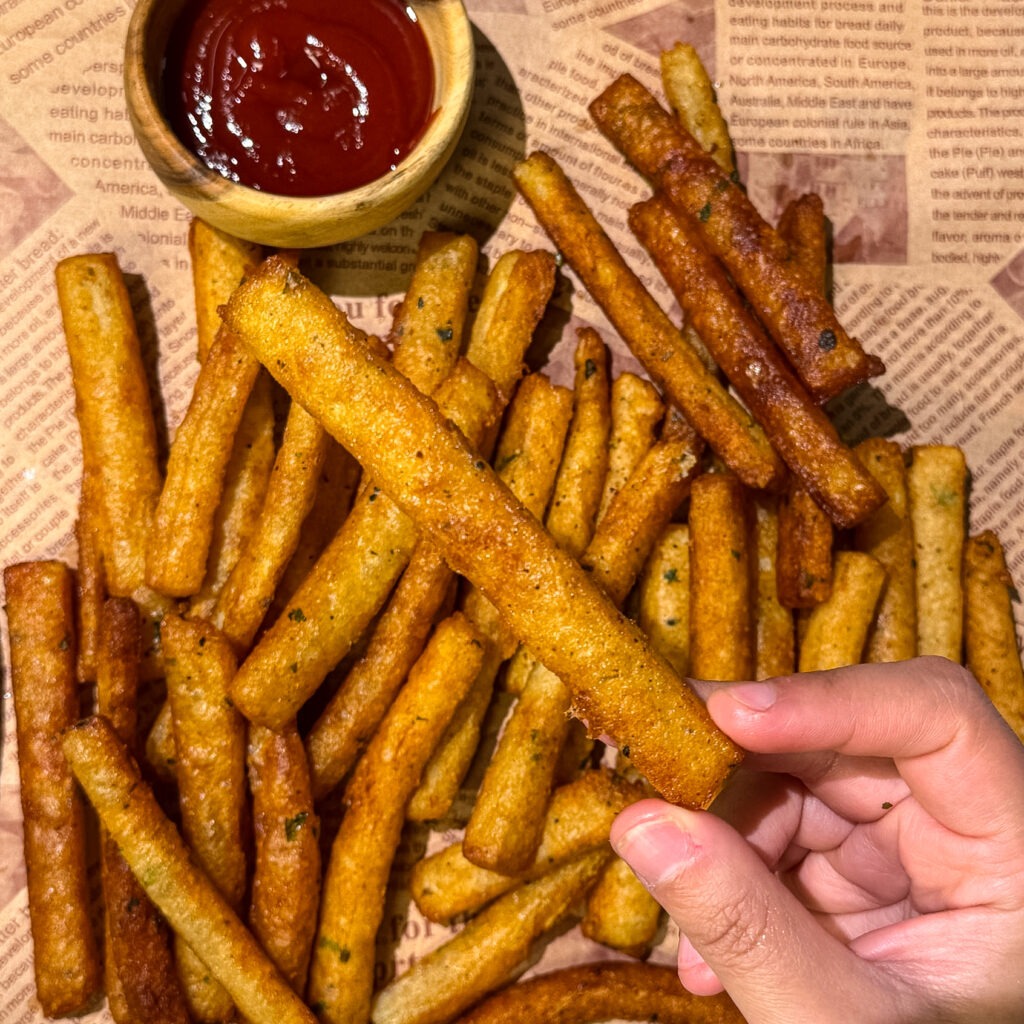
Why These Mashed Potato Fries Are Special
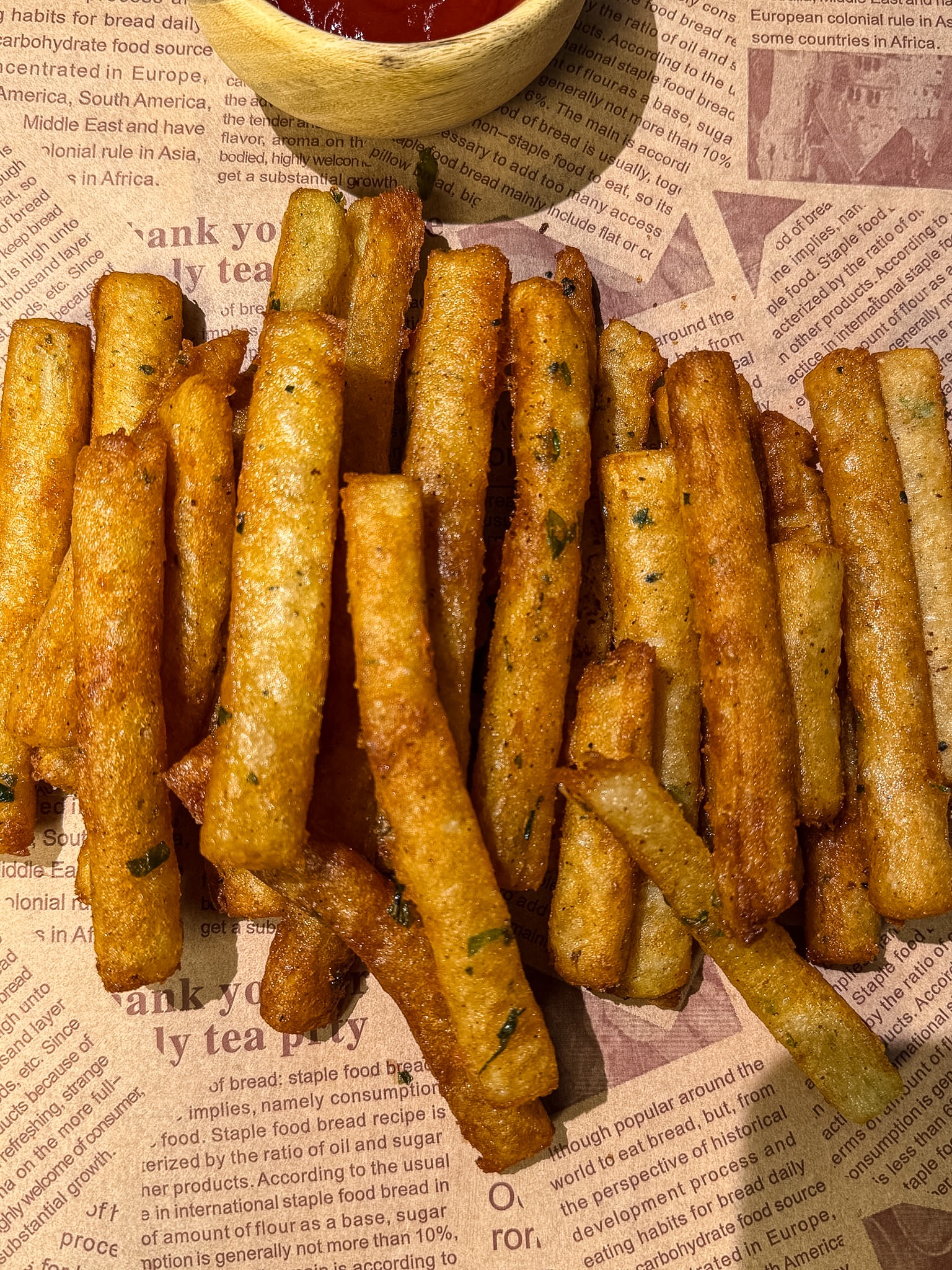
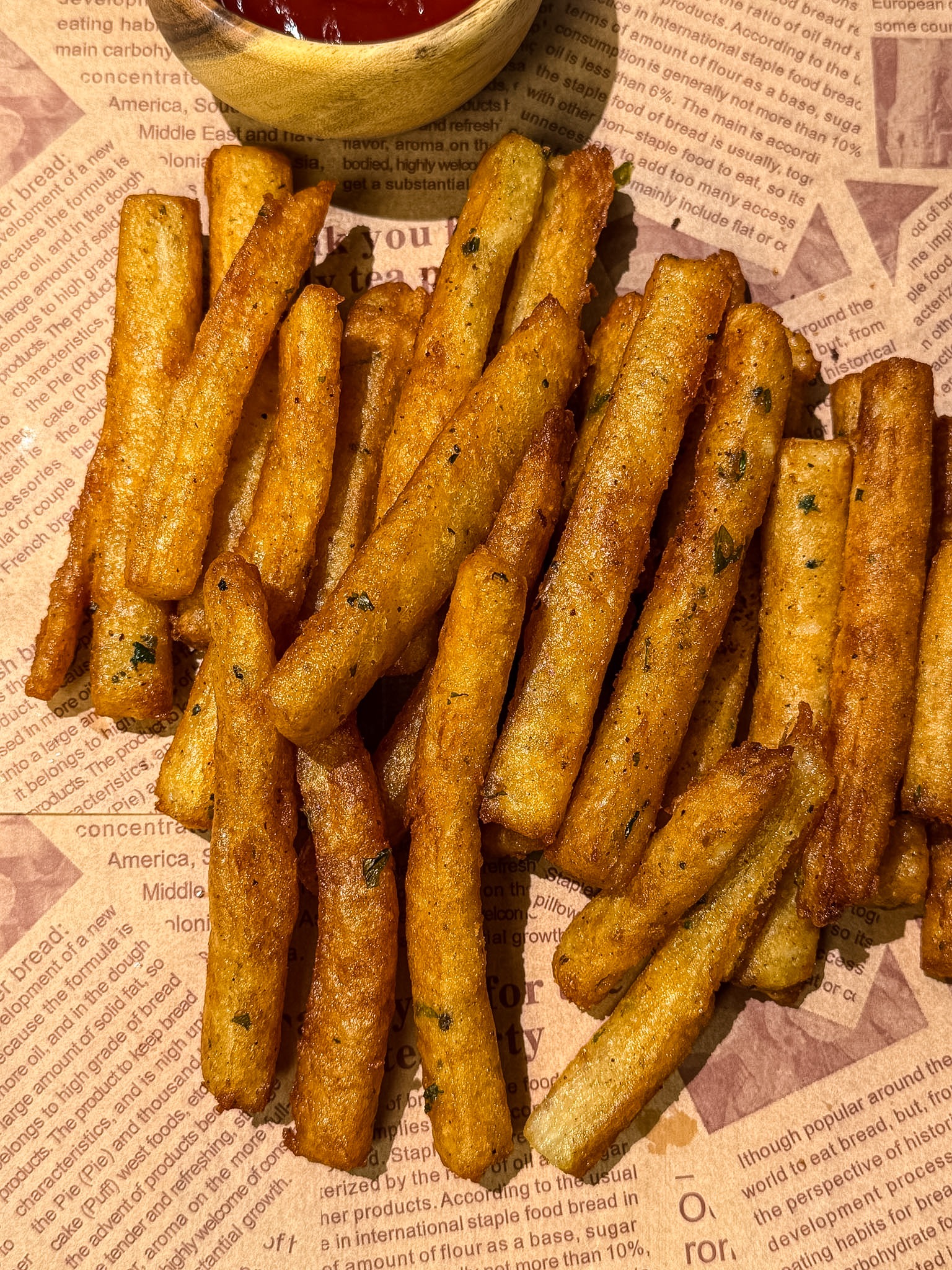
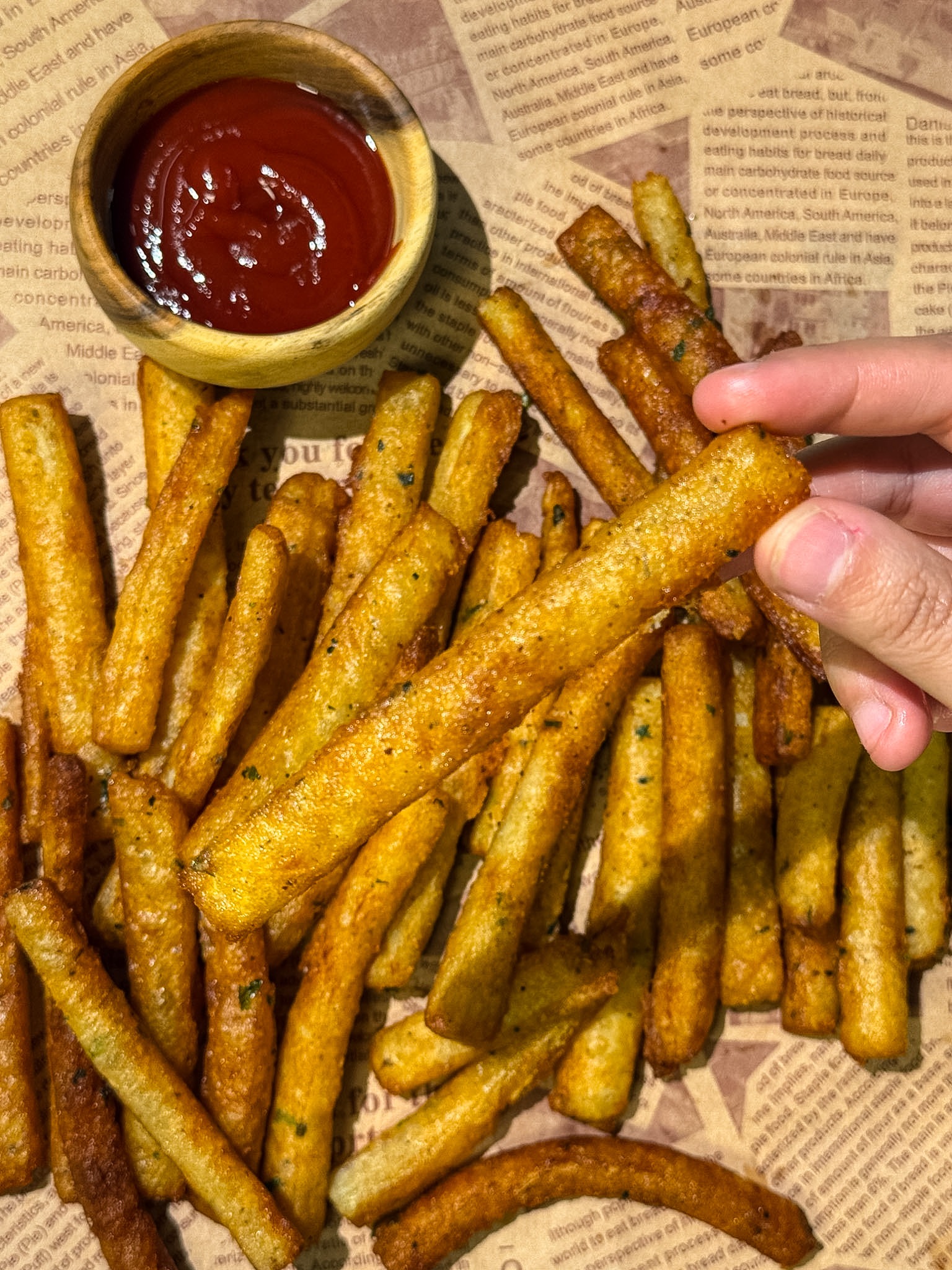
Mashed potato fries occupy a unique category in the world of fried food. They sit somewhere between a classic French fry and a potato croquette, but they are lighter than a croquette, crispier than a standard baked potato wedge, and more interesting in texture than any frozen fry you have ever tried. The process of boiling the potatoes first and then shaping the mash into fries is what creates the defining quality of this dish: a crust that forms rapidly in hot oil and seals the creamy interior inside, producing the perfect bite every time.
What distinguishes great mashed potato fries from mediocre ones is the ratio of cornstarch to mashed potato in the mixture. Too little cornstarch and the mashed potato fries become too soft to hold their shape in the oil, spreading and losing definition before the crust has a chance to form. Too much cornstarch and the finished fries taste starchy and dense rather than light and fluffy. The ratio in this recipe has been calibrated to produce mashed potato fries that hold a clean edge, fry up golden and crisp, and deliver that soft, almost creamy interior that makes this dish so satisfying.
The seasoning inside the mashed potato fries is also part of what makes these exceptional. The base mash is seasoned with salt, black pepper, paprika, and finely chopped fresh coriander. Paprika adds a warm, slightly smoky note and contributes to the beautiful golden-amber color of the crust. The coriander adds a burst of freshness that balances the richness of the frying and keeps the mashed potato fries from feeling heavy. Together these flavors make every piece interesting from the very first bite.
Key Ingredients Overview
The ingredient list for mashed potato fries is short and entirely pantry-friendly, which is part of what makes this recipe so accessible and so repeatable.
Potatoes are the foundation of every mashed potato fries recipe, and the variety matters more than most people expect. Starchy potatoes — russets, Maris Piper, or King Edward — are the right choice because their high starch and low moisture content produces a mash that is fluffy, smooth, and dry enough to hold together when shaped into fries. Waxy potatoes such as red or new potatoes have a higher moisture content and a denser, more cohesive texture after boiling. They produce a mash that is sticky rather than fluffy, which results in mashed potato fries that are gummy and dense rather than light and airy inside.
Cornstarch is the structural backbone of these mashed potato fries. When mixed into the mashed potato base and exposed to the heat of the oil during frying, the cornstarch molecules form a rigid, thin layer on the exterior of each fry that produces the signature crispness this recipe is known for. Cornstarch creates a lighter, more shatteringly crisp crust than flour alone, which is why it is used in so many great fried recipes from crispy chicken to tempura batter. For mashed potato fries specifically, cornstarch also helps the individual pieces hold their piped shape during the chilling period and maintain clean edges throughout frying.
Neutral oil with a high smoke point is essential for properly fried mashed potato fries. Vegetable oil, canola oil, sunflower oil, and peanut oil all work well. The oil needs to reach and maintain a temperature of approximately 170°C to 180°C (340°F to 355°F) throughout the frying process. Oil that is too cool produces mashed potato fries that absorb excess fat and turn out greasy and pale. Oil at the right temperature seals the exterior almost immediately upon contact and produces the golden crust that defines this recipe.
Fresh coriander is the aromatic finishing touch inside the mashed potato fries mixture. It adds a green, herby brightness that provides contrast to the richness of the fried exterior. If coriander is not to your taste, flat-leaf parsley makes an excellent and equally fresh substitute.
Understanding the Science Behind Mashed Potato Fries
Why Starch Content Determines the Final Texture
The difference between using a starchy potato and a waxy potato in mashed potato fries is not just a matter of preference — it is a matter of chemistry. Starchy potatoes contain a higher proportion of amylose starch, which absorbs water during boiling and then releases it as steam during frying. This steam creates the open, airy crumb structure inside mashed potato fries that produces the fluffy, soft interior everyone loves. Waxy potatoes, with their higher amylopectin content, retain their moisture and produce a dense, compact structure after mashing that fries up heavy and gummy. Choosing the right potato is genuinely the single most impactful decision in any mashed potato fries recipe.
How Cornstarch Creates a Crispy Crust
Cornstarch works differently from wheat flour when exposed to heat and fat. Its starch molecules are more tightly packed than those in flour, and they form a thin, rigid film when they come into contact with hot oil. This film sets almost instantly when the mashed potato fries enter the oil, creating a sealed exterior before the interior has a chance to absorb any fat.
The result is a crust that is significantly lighter and crispier than what flour alone can produce. When the chilled mashed potato fries hit the oil, the rapid temperature shock accelerates this crust formation further, which is why the resting and chilling step is so important. Cold mashed potato fries in hot oil produce a better crust than room-temperature ones for exactly this reason.
Why Resting in the Fridge Matters
The 30-minute minimum refrigeration period in this mashed potato fries recipe is not arbitrary. When the shaped fries are placed in the refrigerator, two things happen simultaneously. The starch in the mixture retrogrades slightly — meaning the starch molecules reorganize into a more crystalline structure — which makes the shaped fries firmer and less prone to deforming during handling and frying. At the same time, the surface of the mashed potato fries dries out slightly in the refrigerator, which gives the cornstarch layer better adhesion and promotes faster crust formation in the oil. Skipping this step produces mashed potato fries that are softer, harder to handle, and less reliably crispy.
Choosing the Right Ingredients
Selecting the Best Potatoes for Mashed Potato Fries
The ideal potato for mashed potato fries has a fluffy, dry texture after boiling — the kind that crumbles slightly as you press it rather than staying firm and waxy. Russet potatoes are the most widely available and most reliable option. They have a high starch content, a mild earthy flavor, and a dry, mealy texture after cooking that produces a smooth, light mash with minimal effort. Yukon Gold potatoes can also work, though they are slightly more waxy and produce a richer, butterier mash that holds together well but is slightly denser inside the finished mashed potato fries.
Choosing Your Oil
Not all frying oils perform equally in this mashed potato fries recipe. The key requirements are a high smoke point and a neutral flavor. Sunflower oil reaches temperatures of up to 230°C without breaking down and has virtually no flavor of its own, making it one of the best choices for mashed potato fries. Canola oil and vegetable oil are equally effective and widely available. Avoid olive oil, which has a lower smoke point and a distinct flavor that competes with the seasoning inside the mashed potato fries.
Getting the Seasoning Balance Right
The seasoning in the mashed potato fries mixture should be bold enough to taste clearly through the fried crust, because frying dulls flavors slightly. Season the mash more generously than you would ordinary mashed potatoes served as a side dish. The salt should be noticeably present, the paprika should be visible as a warm orange tint in the mixture, and the black pepper should be detectable in the background. Well-seasoned mashed potato fries are deeply satisfying. Under-seasoned ones taste flat and disappointing no matter how crispy the exterior is.
Step-by-Step Instructions
Preparing the Mash
Peel 600 grams of starchy potatoes and cut them into equal-sized cubes, approximately 3 centimeters across. Cutting them uniformly is important — uneven pieces will cook at different rates, and some will be under-done while others are overcooked. Place the potato cubes in a pot of cold, salted water and bring to a boil over high heat. Reduce to a steady simmer and cook for 7 to 8 minutes until the potatoes are just fork-tender. They should yield to gentle pressure from a fork but should not be falling apart. Overcooked potatoes absorb too much water, making the mash too wet to shape properly.
Drain the potatoes completely through a fine colander and return them to the warm, empty pot. Leave them uncovered for 7 minutes to allow steam to escape, which removes excess moisture and produces a drier mash. Transfer to a large bowl and mash thoroughly until completely smooth with no lumps remaining.
Mixing the Mashed Potato Fries Mixture
To the smooth mash, add 4 tablespoons of cornstarch, 1 teaspoon of salt, half a teaspoon of black pepper, half a teaspoon of paprika, and 2 tablespoons of finely chopped fresh coriander. Mix until everything is fully incorporated and the mixture forms a smooth, slightly firm dough-like consistency. It should hold its shape when pressed and not stick excessively to your hands or the bowl. If the mixture seems too wet to hold a shape, add a further tablespoon of cornstarch and mix again. Taste the raw mixture and adjust the seasoning if needed — remember that the flavors will be slightly muted after frying.
Shaping and Chilling the Mashed Potato Fries
Spoon the mixture into a large zip-lock bag or piping bag. If using a zip-lock bag, seal it and use a rolling pin to flatten the contents into an even layer approximately 1.5 centimeters thick. Place the bag flat in the refrigerator and rest for a minimum of 30 minutes, and up to 2 hours. Once chilled and firm, open or cut the bag and use a sharp knife to cut the mashed potato fries into neat strips, approximately 1.5 centimeters wide and 8 to 10 centimeters long. Handle the chilled mashed potato fries gently — they are firmer than the fresh mixture but still fragile until the crust sets in the oil.
Frying the Mashed Potato Fries
Pour neutral oil into a deep, heavy-bottomed pan to a depth of at least 5 centimeters. Heat the oil over medium heat until it reaches 175°C (350°F). Use a thermometer for accuracy — the temperature is critical for producing properly crispy mashed potato fries. If no thermometer is available, test the oil by dropping in a small piece of the potato mixture. It should sizzle immediately and rise to the surface within 3 to 4 seconds.
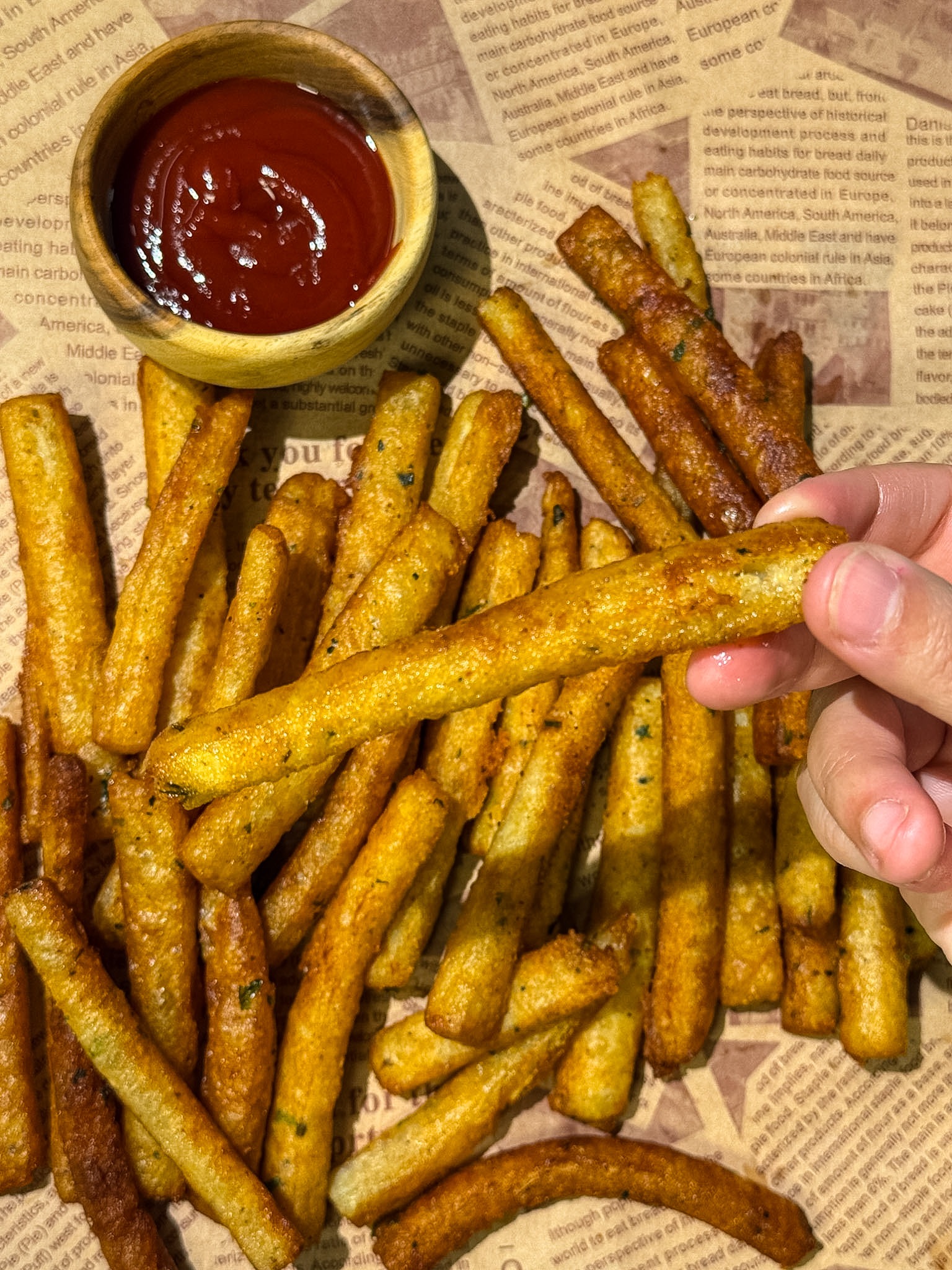
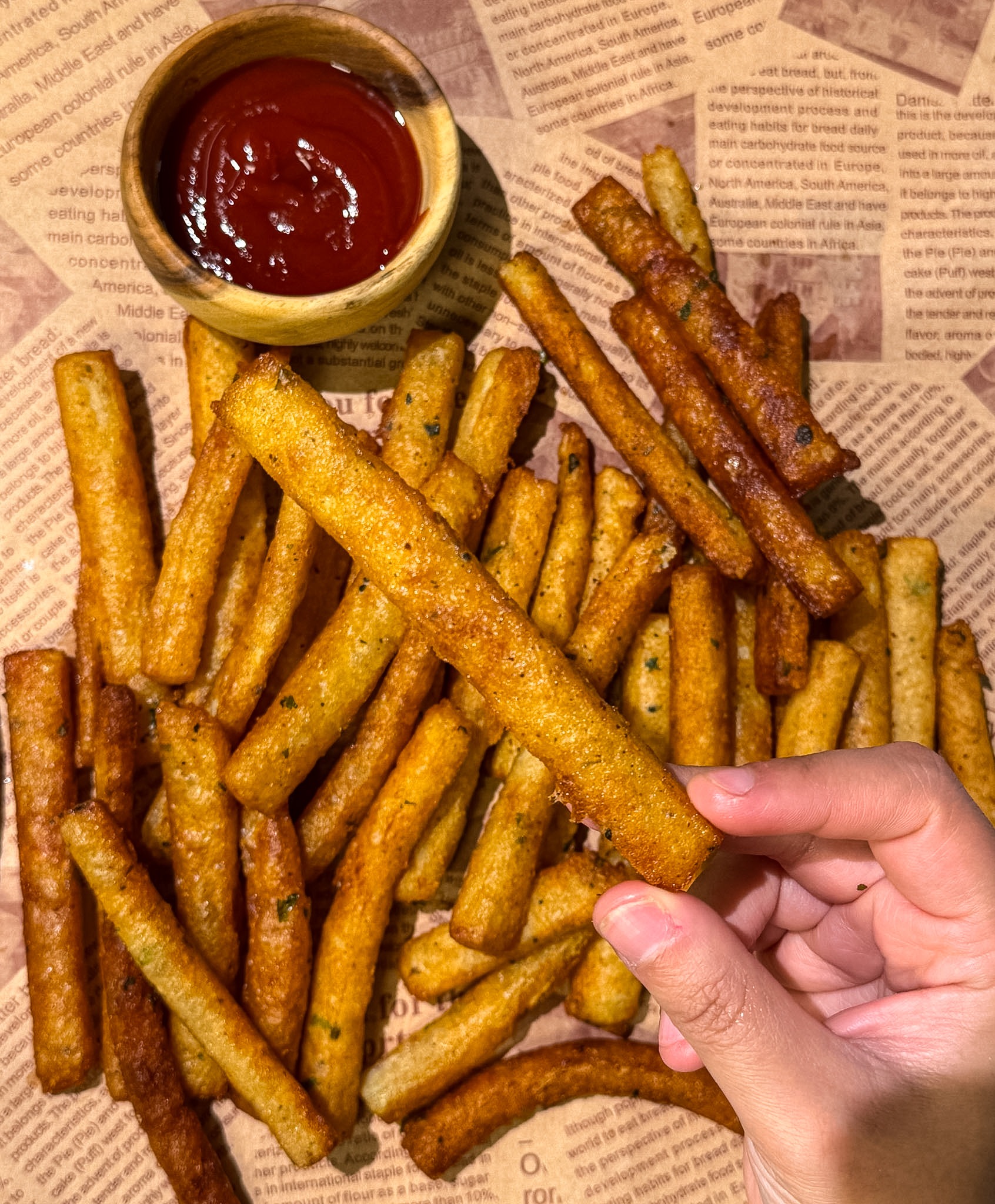
Fry the mashed potato fries in batches of 5 to 6 pieces, never overcrowding the pan. Cook each batch for 3 to 4 minutes, turning once halfway through, until the mashed potato fries are deep golden brown on all sides. Remove with a slotted spoon and drain on a wire rack set over paper towels. Serve immediately.
Professional Tips for Perfect Results
Cool the Potatoes Completely Before Mashing
Potatoes that are still very hot and steaming when mashed retain more moisture than potatoes that have been allowed to cool for a few minutes. For mashed potato fries, drier is always better. After draining the boiled potatoes, allow them to sit in the warm pot uncovered for the full 7 minutes before mashing. You will see steam rising from the surface of the potato cubes during this time — that steam is moisture leaving the potatoes, and every bit of it that escapes before mashing makes the finished mashed potato fries lighter, crispier, and more structurally sound.
Fry in Small Batches, Without Exception
Overcrowding the pan is the most reliable way to ruin a batch of mashed potato fries. When too many pieces are added to the oil at once, the oil temperature drops significantly, and the mashed potato fries begin to absorb oil rather than crisping quickly. They turn greasy, pale, and soft instead of golden and shatteringly crisp. Five to six pieces per batch is the right quantity for a standard home frying pan.
Yes, this extends the total frying time, but the quality difference is enormous. For a comparison of how different fry styles use the same principle of properly managed oil temperature, the CRISPY GARLIC BUTTER PARMESAN FRIES on this site demonstrate the same technique applied to a completely different style of potato fry.
Do Not Skip the Steam-Drying Step
The 7-minute rest after draining the boiled potatoes is arguably the most overlooked step in any mashed potato fries recipe, and it is also one of the most impactful. Wet, waterlogged potatoes produce a mash that is too loose to pipe, shape, or hold its form during frying. The steam-drying step removes precisely the excess moisture that would otherwise turn your mashed potato fries into misshapen blobs rather than clean, crisp, well-defined sticks.
Maintain Oil Temperature Between Batches
After each batch of mashed potato fries is removed from the oil, the temperature will have dropped slightly. Allow the oil to return to 175°C before adding the next batch. This process takes only 30 to 60 seconds between batches but makes a significant difference to the consistency of the crust across all the mashed potato fries. A kitchen thermometer clipped to the side of the pan makes monitoring this easy and removes all guesswork from the process.
Season Immediately After Frying
Salt and any additional spices cling best to mashed potato fries when applied immediately after they come out of the oil, while the surface is still hot and slightly oily. Waiting even 2 minutes allows the exterior to cool and firm up slightly, reducing how well the seasoning adheres. For a finishing flourish, a light sprinkle of flaky salt and a dusting of extra paprika while the mashed potato fries are still steaming on the wire rack transforms the presentation and adds a final hit of flavor.
Common Mistakes to Avoid
Using Waxy Potatoes
As discussed in the ingredients section, waxy potatoes are fundamentally incompatible with a good mashed potato fries recipe. No amount of cornstarch or chilling time will compensate for the dense, gummy interior that waxy varieties produce. Always use starchy potatoes. If you are unsure what type of potato you have, a simple test is to cut one in half and rub the cut faces together — starchy potatoes will release a thick, white, starch-heavy juice, while waxy potatoes will barely release anything.
Adding Butter or Cream to the Mash
This is the instinct of every good cook who makes mashed potatoes for a dinner table, but it is exactly the wrong approach for mashed potato fries. Butter and cream add fat and extra moisture to the mash, which makes the mixture too soft to shape and too wet to fry properly. The mash for mashed potato fries should be dry, firm, and seasoned with spices rather than enriched with dairy. Reserve the butter and cream for your dinner table mash — the mashed potato fries recipe is better without them.
Skipping the Refrigeration Step
Shaping warm mashed potato fries and frying them immediately produces a fragile, soft fry that deforms in the oil and does not develop a clean crust. The chilling step is essential, not optional. If you are genuinely pressed for time, 15 minutes in the freezer can substitute for 30 minutes in the refrigerator, but the full 30-minute fridge rest always produces the best results. Overnight chilling produces exceptional results and makes this an ideal recipe to prepare in advance for parties or gatherings.
Cutting the Fries Too Thick
Mashed potato fries that are cut too thick take longer to heat through to the center during frying. The exterior browns before the interior is fully hot, which can produce a crust that looks golden but sits over a center that is slightly dense and undercooked in feel. A thickness of 1.5 centimeters is the optimum for mashed potato fries — thin enough to heat through quickly, thick enough to provide a satisfying soft interior without being flimsy.
Variations to Try
Cheesy Mashed Potato Fries
Add 60 grams of finely grated mozzarella or sharp cheddar to the mashed potato mixture along with the cornstarch and spices. The cheese melts slightly during frying and adds a savory, slightly tangy depth to the interior of each mashed potato fry. For an even bolder flavor, use Parmesan instead of mozzarella — the sharpness comes through clearly in every bite and makes the mashed potato fries taste more complex and restaurant-quality. If you enjoy loaded potato dishes, the IN N OUT COPYCAT ANIMAL STYLE FRIES on this site offer an inspired approach to building on a base of great fries with toppings.
Spicy Mashed Potato Fries
Increase the paprika to a full teaspoon and add half a teaspoon of cayenne pepper and a pinch of chili flakes to the mashed potato fries mixture. The heat builds gradually as you eat, making these a particularly compelling snack for anyone who enjoys bold, spicy flavors. Serve alongside a cooling dipping sauce — a simple yogurt with garlic and lime provides the ideal contrast.
Garlic Herb Mashed Potato Fries
Replace the coriander with a combination of finely minced garlic, fresh flat-leaf parsley, and a pinch of dried rosemary. Sauté the garlic briefly in a dry pan before adding it to the mash to remove its raw sharpness. The combination of garlic and herbs gives the mashed potato fries an aroma that is impossible to resist and a flavor that pairs beautifully with both a simple garlic mayonnaise and a sharp tomato-based dipping sauce. For another elevated take on the potato as a centerpiece dish, the CRISPY PARMESAN HASSELBACK POTATOES offer an equally impressive and visually stunning potato recipe worth adding to your regular rotation.
Loaded Mashed Potato Fries
After frying, pile the mashed potato fries on a serving plate and top them immediately with a warm cheese sauce, sliced pickled jalapeños, crispy bacon bits, sour cream, and a scattering of sliced spring onions. This loaded version of mashed potato fries is the ultimate sharing dish and is guaranteed to disappear within minutes at any gathering. For more inspiration on loaded fry concepts, the BIG MAC FRIES on this site demonstrate the same principle of building a spectacular topping on a great fry base.
Storage and Reheating
Room Temperature
Mashed potato fries are at their absolute best immediately after frying, while the crust is at maximum crispness and the interior is still warm and soft. At room temperature, they remain good for up to 1 hour before the crust begins to soften noticeably as steam from the interior migrates outward. For serving at a party or gathering, keep cooked mashed potato fries on a wire rack in a low oven at 90°C (200°F) to maintain crispness while additional batches are being fried.
Refrigeration
Store leftover mashed potato fries in an airtight container in the refrigerator for up to 2 days. The crust will soften during storage but the flavor remains excellent. Reheating can restore most of the original crispness if done correctly. The mixture for mashed potato fries can also be refrigerated in its shaped, unfried form for up to 24 hours before frying, which makes this an excellent recipe to prepare a day ahead.
Freezing
Mashed potato fries freeze very well in their pre-fried, shaped form. After cutting the chilled fries into their individual shapes, arrange them in a single layer on a parchment-lined baking sheet and freeze until solid, about 1 hour. Transfer to a freezer bag and store for up to 2 months. Fry directly from frozen at 165°C (330°F), adding 2 to 3 extra minutes to the frying time. Freezing after frying is also possible but produces a less impressive result on reheating.
Reheating
The oven is the best method for reheating cooked mashed potato fries. Place them in a single layer on a wire rack set over a baking sheet and heat in an oven preheated to 200°C (400°F) for 8 to 10 minutes until hot throughout and crisped on the surface. An air fryer at 190°C (375°F) for 5 to 6 minutes also works very well and produces results close to freshly fried. Avoid the microwave entirely — it heats the interior by producing steam, which softens the crust irreversibly and produces mashed potato fries that are limp and pale rather than golden and crunchy.
Frequently Asked Questions
Can I make mashed potato fries with leftover mashed potatoes?
Yes, and it is one of the most practical uses for leftover mashed potatoes. The key requirement is that the leftover mash is not too wet or heavily enriched with butter, cream, or cheese, all of which can make it too soft to shape and fry properly. If your leftover mash is quite buttery or creamy, add an extra tablespoon of cornstarch to the mashed potato fries mixture and allow a longer chilling time — at least 45 minutes — to compensate for the additional moisture.
Why do my mashed potato fries fall apart in the oil?
Mashed potato fries that fall apart during frying usually have one of three problems: the mixture is too wet, the cornstarch ratio is too low, or the fries were not chilled for long enough before frying. Start by making sure the boiled potatoes were steam-dried properly after draining. Then check that the cornstarch quantity is correct and that the chilled fries are firm to the touch before they go into the oil. If they still fall apart, add another tablespoon of cornstarch and increase the chilling time to 1 hour.
Can I bake mashed potato fries instead of frying them?
Yes. Brush the shaped, chilled mashed potato fries generously on all sides with vegetable oil and arrange in a single layer on a parchment-lined baking sheet. Bake at 220°C (430°F) for 20 minutes, then flip each fry and bake for a further 10 to 15 minutes until golden. The result will be less dramatically crispy than the deep-fried version but still excellent, particularly when served hot straight from the oven.
Can I air fry mashed potato fries?
Yes. Spray or brush the shaped, chilled mashed potato fries generously with oil on all sides. Place in the air fryer basket in a single layer — do not stack or overlap them. Air fry at 200°C (390°F) for 12 to 15 minutes, flipping halfway through. The crust will be noticeably crispier than the baked version, and the result is genuinely very close to the deep-fried mashed potato fries in both appearance and texture.
What dipping sauces work best with mashed potato fries?
Mashed potato fries are versatile enough to pair with almost any dipping sauce. Classic ketchup is always the crowd favorite. Garlic mayonnaise complements the paprika and coriander in the mashed potato fries particularly well. Spicy mayo — a blend of mayonnaise, sriracha, and a squeeze of lime — adds a bold, tangy heat that works beautifully with the warm, soft interior. A yogurt-based dip with garlic and cucumber provides a cooling contrast that is especially welcome alongside the spicy variation of this recipe.
How do I get mashed potato fries to stay golden and not turn pale?
Pale mashed potato fries are almost always the result of oil that is not hot enough. Make sure the oil is at 175°C before the first batch goes in, and allow it to return to temperature between each subsequent batch. Pale fries that are soft in the crust are a reliable indicator of under-temperature oil. If the oil is at the right temperature, the mashed potato fries should turn a deep, even golden amber within 3 to 4 minutes of frying.