Introduction
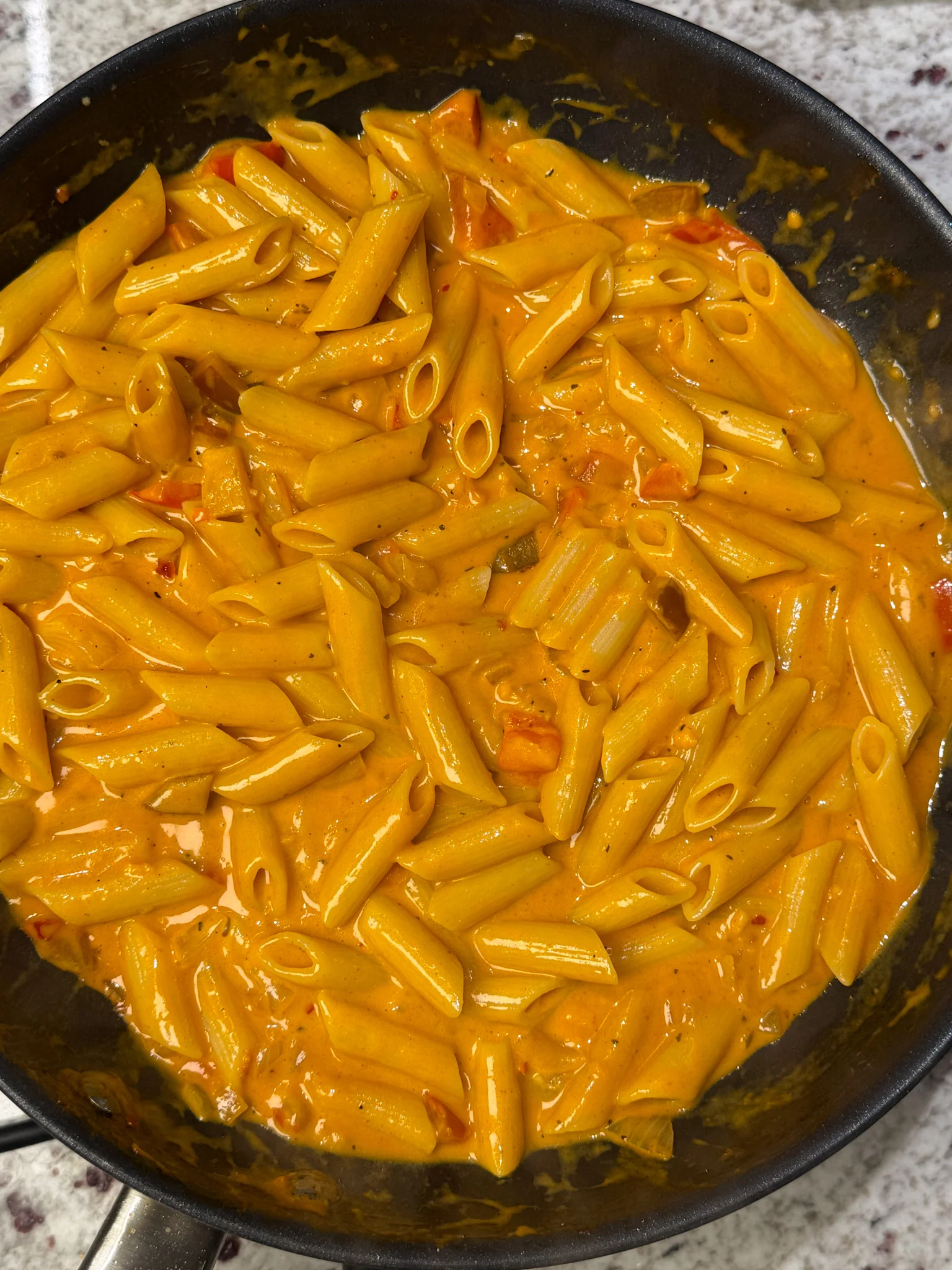
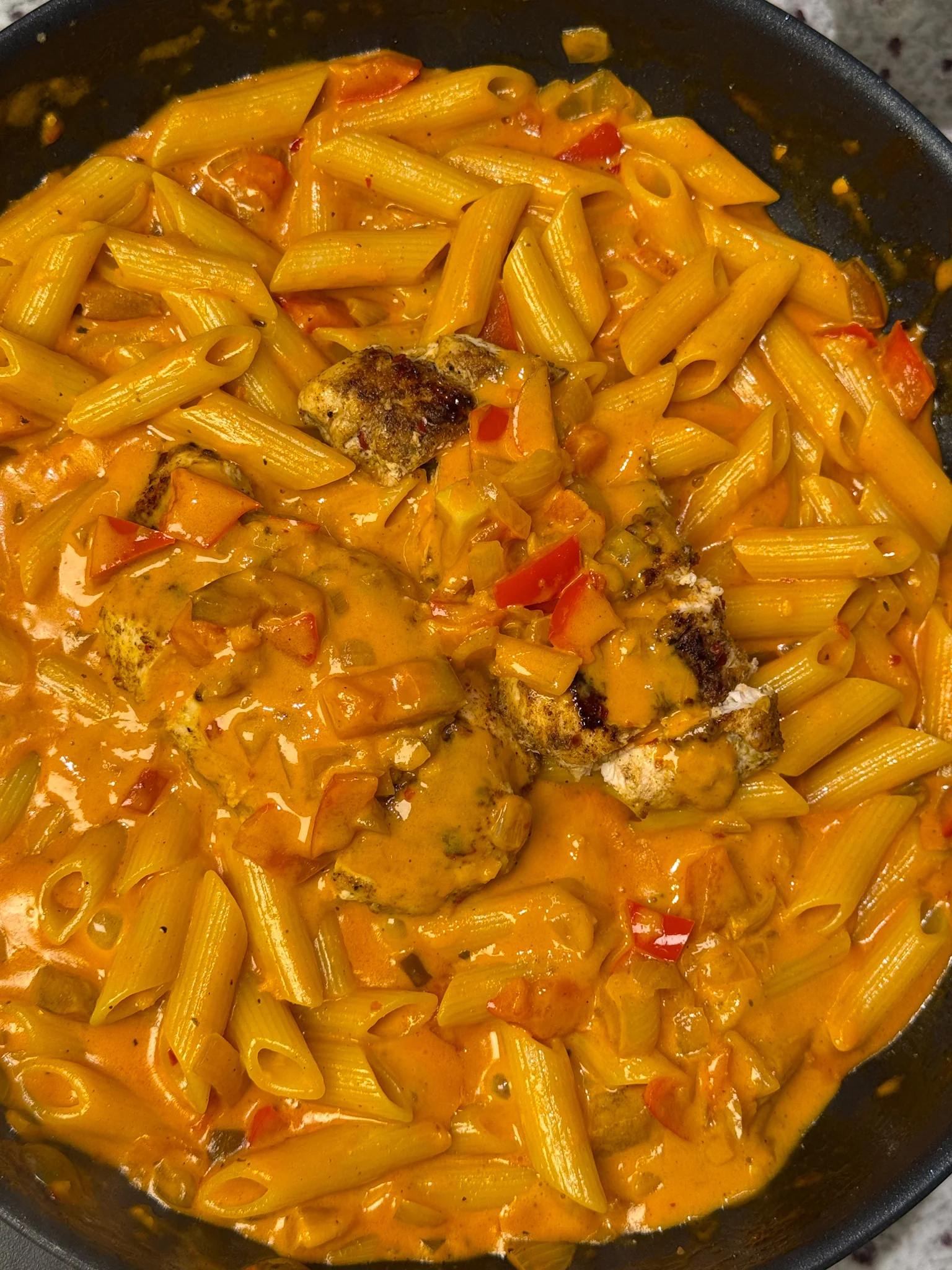
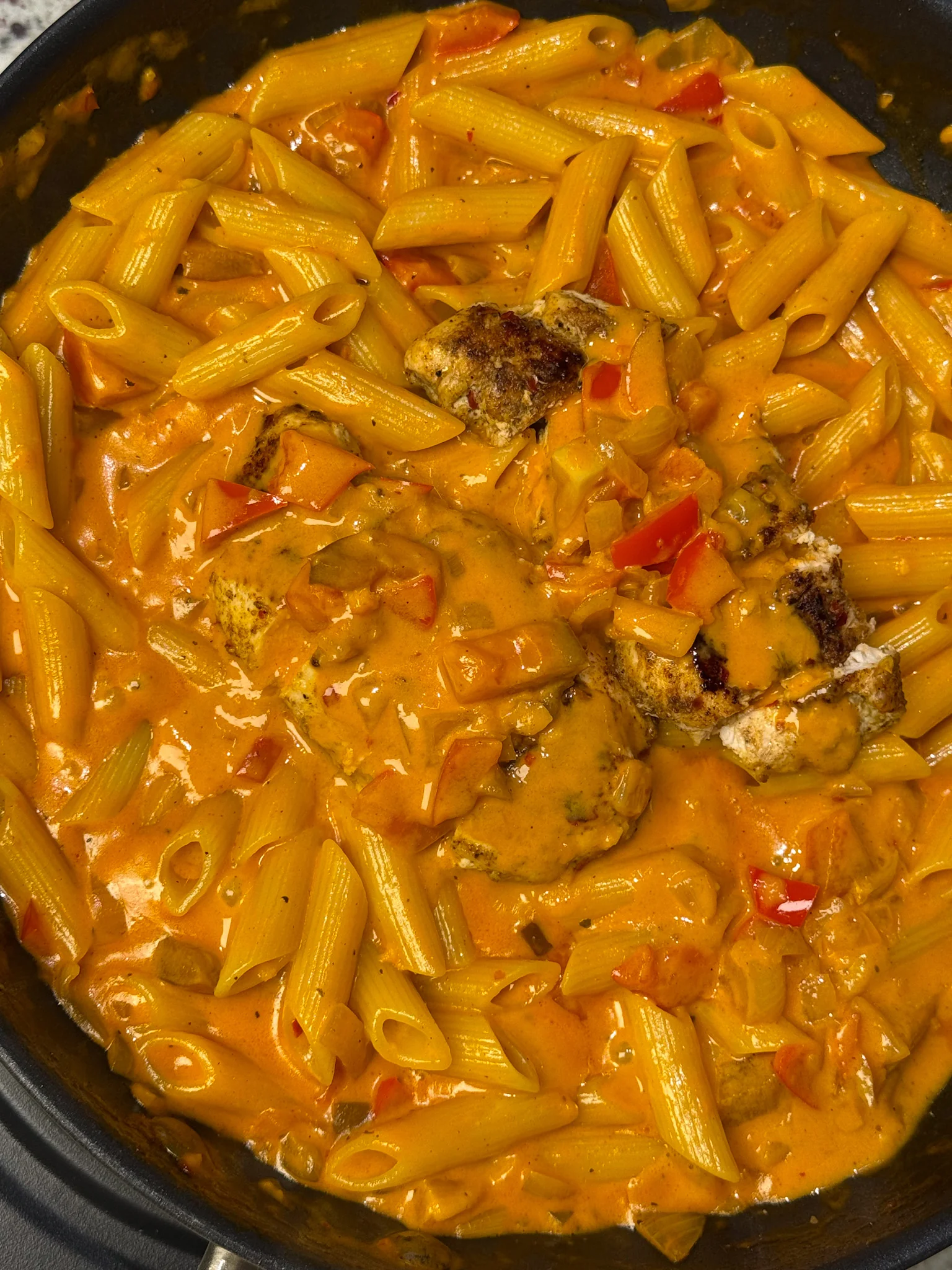
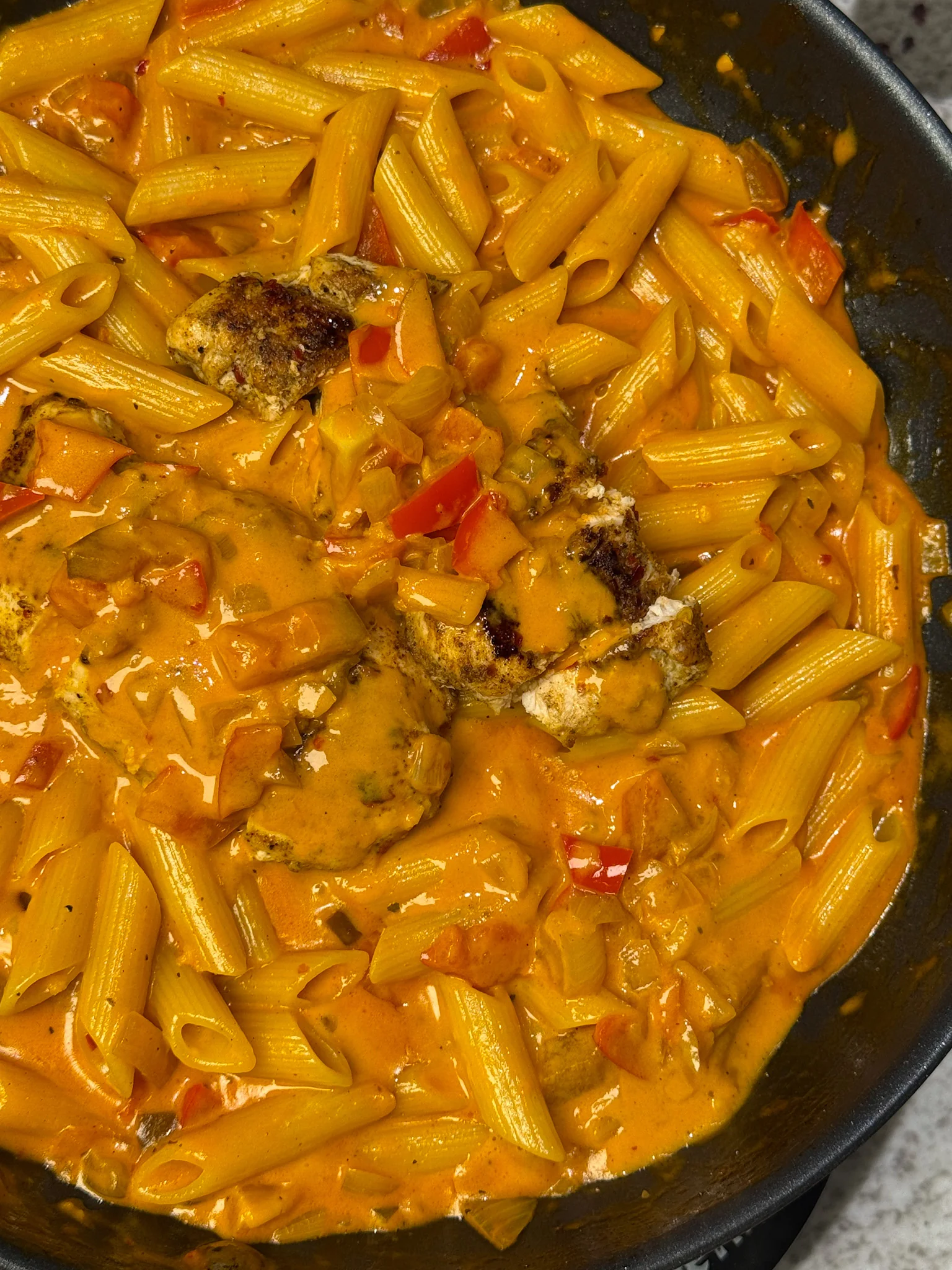
Red pepper chicken pasta is the weeknight dinner that does not feel like a weeknight dinner. It is the kind of dish that lands on the table and immediately makes everyone sit forward — rich and silky, layered with garlic and smoked paprika, full of sweet red bell pepper flavor and coated in a Parmesan cream sauce that clings to every piece of pasta. If you have ever eaten a creamy pasta at a good Italian restaurant and wondered how they made the sauce taste so intentional, so balanced, and so deeply savory, this recipe shows you exactly how.
The answer is not a secret ingredient — it is a method. This red pepper chicken pasta builds its sauce in stages: aromatics first, then sweet bell pepper, then caramelized tomato paste for depth, then chicken broth for balance, and finally cream and Parmesan for that signature silky richness. Each step adds something the previous one cannot provide alone, and the result is a sauce that tastes layered and complex without being complicated to make.
If you love sauced chicken pasta dishes, our Marry Me Chicken Lasagna uses a similar philosophy of building bold, multi-layered flavor into a cream-based Italian-style dish — but for now, let us go step by step through everything that makes this red pepper chicken pasta recipe so reliably good.
Why This Red Pepper Chicken Pasta Is Special
Most homemade creamy pasta dishes disappoint in one of two ways: the sauce is either too thin and flat, or too thick and heavy. This red pepper chicken pasta avoids both extremes because of how deliberately the sauce is constructed. It is not cream poured over sautéed vegetables. It is a sauce that earns its richness by building flavor at every stage, and by using chicken broth as a counterbalance that keeps the cream from tipping into heaviness.
The red bell pepper is what makes this dish uniquely itself. Where tomatoes bring acidity and sun-dried tomatoes bring concentrated tang, red bell pepper contributes something softer: a gentle, vegetal sweetness that rounds out the smoky paprika and the savory depth of the garlic. It is the ingredient that makes this particular red pepper chicken pasta taste different from other creamy chicken pasta recipes, even when all the other elements are similar. That sweetness is also what makes the dish accessible — it is bold without being aggressive, rich without being one-note.
The chicken is another element that distinguishes this recipe from simpler versions. By seasoning the chicken heavily before cooking — with garlic powder, smoked paprika, Italian seasoning, and salt — and by allowing it to rest before slicing, you embed flavor into the protein itself rather than relying on the sauce to do all the work. When the sliced chicken goes back into the finished red pepper chicken pasta, it contributes its own seasoning to every forkful.
Key Ingredients Overview
Understanding what each ingredient does in this red pepper chicken pasta recipe is the fastest way to make good decisions when something needs adjusting.
The heavy whipping cream is the backbone of the sauce’s texture. It provides fat, body, and a neutral richness that carries the flavors of everything cooked before it. Unsweetened cream is essential — any dairy product with added sweeteners will throw off the savory balance. Half-and-half can be substituted for a lighter result, but the sauce will be thinner and less stable. For a sauce with this level of garlic and spice, heavy cream is the right choice.
Smoked paprika appears twice in this recipe — once in the chicken marinade and once in the sauce — and that repetition is intentional. It creates a thread of warm, slightly smoky flavor that runs through both elements of the dish, unifying the chicken and the sauce without making either one taste independently overwhelming. Regular sweet paprika works as a substitute, but it lacks the depth that smoked paprika contributes.
Tomato paste is one of the most important ingredients in this red pepper chicken pasta, and it is also the one most likely to be underused. One tablespoon added directly to hot fat and cooked for two full minutes without adding any liquid transforms completely — it loses its raw, metallic edge, its sugars caramelize, and it develops a concentrated, almost nutty savory character that pushes the sauce into a different flavor register entirely. Never skip this step and never skip the two minutes of cooking time.
Understanding the Science Behind Red Pepper Chicken Pasta
How the Sauce Stays Silky and Stable
Cream-based pasta sauces break when the fat separates from the liquid, leaving a greasy, grainy result. This happens when the heat is too high, when the cream is added too quickly, or when the sauce is boiled rather than simmered. In this red pepper chicken pasta recipe, three elements work together to keep the sauce stable.
First, the cream is added over medium-low heat and allowed to simmer — never boil — until it thickens gently. Boiling causes rapid evaporation and protein denaturation that destabilizes the emulsion. Second, the Parmesan cheese is freshly grated and added off the heat, which allows it to melt gradually into the sauce rather than clumping or seizing. Pre-grated Parmesan contains anti-caking agents that interfere with smooth melting. Third, and most importantly, the pasta water.
Why Pasta Water Is Not Optional
The starchy water reserved from cooking the pasta contains dissolved starch that acts as a natural emulsifier. When added to the cream-based sauce, it helps the fat molecules stay suspended in the liquid rather than separating out. The result is the glossy, spoon-coating consistency that restaurant pasta sauces have — a texture that looks intentional and coats every surface of the pasta evenly. Without pasta water, the sauce often feels either too thick or slides off the pasta rather than clinging to it. Add it gradually, one tablespoon at a time, until the sauce reaches the consistency you want.
What Caramelizing Tomato Paste Actually Does
When tomato paste is added to a hot pan and stirred constantly for one to two minutes without any liquid, the water in it evaporates rapidly, concentrating the solids. The natural sugars in the tomato undergo a Maillard reaction — the same browning process that creates the crust on seared chicken — and produce hundreds of new flavor compounds. What starts as a bright, slightly acidic paste becomes a deep, complex, umami-rich base that adds structural flavor to the sauce in a way that no amount of cream or cheese can replicate. In this red pepper chicken pasta, it is the ingredient that makes the sauce taste like it cooked for hours.
Choosing the Right Ingredients
Choosing Your Chicken
Boneless chicken breast is used in this recipe for its clean flavor and consistent texture. Pound the breasts lightly to an even thickness before seasoning — this single step is the difference between chicken that finishes cooking at the same time across the whole piece and chicken where the thinner end is dry by the time the thick center is cooked through. Boneless chicken thighs are an excellent substitute: they are more forgiving of slight overcooking, stay juicier, and contribute a richer flavor. The cooking time will be slightly shorter for thighs.
Choosing Your Pasta
This red pepper chicken pasta works with almost any pasta shape, but shapes with ridges or hollows perform noticeably better because they trap the sauce rather than letting it pool at the bottom of the bowl. Penne rigate, rigatoni, fusilli, and farfalle are all excellent choices. Long pasta like spaghetti or linguine works too — the sauce coats well — but you lose the textural contrast of sauce pockets that shorter shapes provide. Cook the pasta to true al dente, not fully soft, because it will continue absorbing sauce in the pan for another two minutes after combining.
Choosing Your Parmesan
Buy a wedge of Parmigiano-Reggiano or another high-quality aged Parmesan and grate it yourself. The texture of freshly grated Parmesan is fine and almost powdery, which means it melts quickly and smoothly into the hot cream. Pre-grated Parmesan in bags or cans contains cellulose and other anti-caking agents that cause it to clump and resist smooth melting, which can give the sauce a slightly grainy texture. In a sauce as simple and clean as this one, the quality of the Parmesan is directly reflected in the final dish.
Step-by-Step Instructions
Preparation: Pasta and Chicken Seasoning
Begin by bringing a large pot of generously salted water to a boil and cooking your pasta to al dente according to the package instructions. Before draining, use a ladle or measuring cup to reserve one full cup of the pasta cooking water. Set the pasta and water aside separately — you will use both within the next ten minutes. Salting the pasta water properly is not about flavor alone: it seasons the pasta from the inside out, which means the finished red pepper chicken pasta tastes seasoned throughout rather than only in the sauce.
While the pasta cooks, prepare the chicken. Lightly pound each breast between two sheets of plastic wrap using the flat side of a meat mallet or the bottom of a heavy pan until the thickness is even across the entire piece. In a bowl, combine salt, black pepper, garlic powder, smoked paprika, Italian seasoning, and two tablespoons of oil. Add the chicken and massage the mixture in thoroughly, making sure every surface is coated. Allow it to rest for five to ten minutes — this brief marinating time allows the spices to penetrate rather than just sitting on the surface.
Cooking the Chicken and Building the Aromatic Base
Heat a wide, heavy-bottomed pan or skillet over medium heat and add oil. When the oil shimmers, add the seasoned chicken breasts. Cook for twelve to fifteen minutes, turning occasionally, until both sides are deep golden-brown and the internal temperature reaches 165 degrees Fahrenheit. Do not rush this step — the golden crust that forms on the chicken contributes to the overall flavor of the dish, and slicing before resting will release all the juices. Transfer the chicken to a plate, cover loosely with foil, and allow it to rest for at least five minutes before slicing.
In the same pan without washing it, reduce heat to medium and add the butter and remaining oil. Allow the butter to melt and foam, then add the finely diced onion. Cook for one to two minutes, stirring occasionally, until the onion is translucent and softened. Add the finely chopped garlic and cook for thirty seconds, stirring constantly, until fragrant. These thirty seconds matter — garlic can go from fragrant to burnt in under a minute at medium heat, and burnt garlic will make the entire sauce taste bitter.
Building the Sauce
Add the diced red bell pepper to the pan and cook for two to three minutes until it has softened and turned slightly sweet and tender. It should still hold its shape rather than becoming fully limp — you want texture as well as flavor in the finished red pepper chicken pasta. Next, add the tomato paste directly to the pan. Stir it constantly for one to two full minutes, spreading it across the hot base, until it darkens slightly and begins to smell rich and caramelized rather than raw and acidic. This is the most important step in the entire sauce-building process.
Add the smoked paprika, garlic powder, black pepper, Italian seasoning, red chili flakes, and salt. Stir well and cook for thirty seconds so the spices bloom in the hot fat and tomato base. The pan should smell complex, slightly smoky, and deeply savory at this point. Pour in the chicken broth slowly while stirring, then allow the sauce to simmer for three to four minutes until it reduces slightly. This step lightens the sauce and adds savory depth that prevents the cream from feeling too heavy.
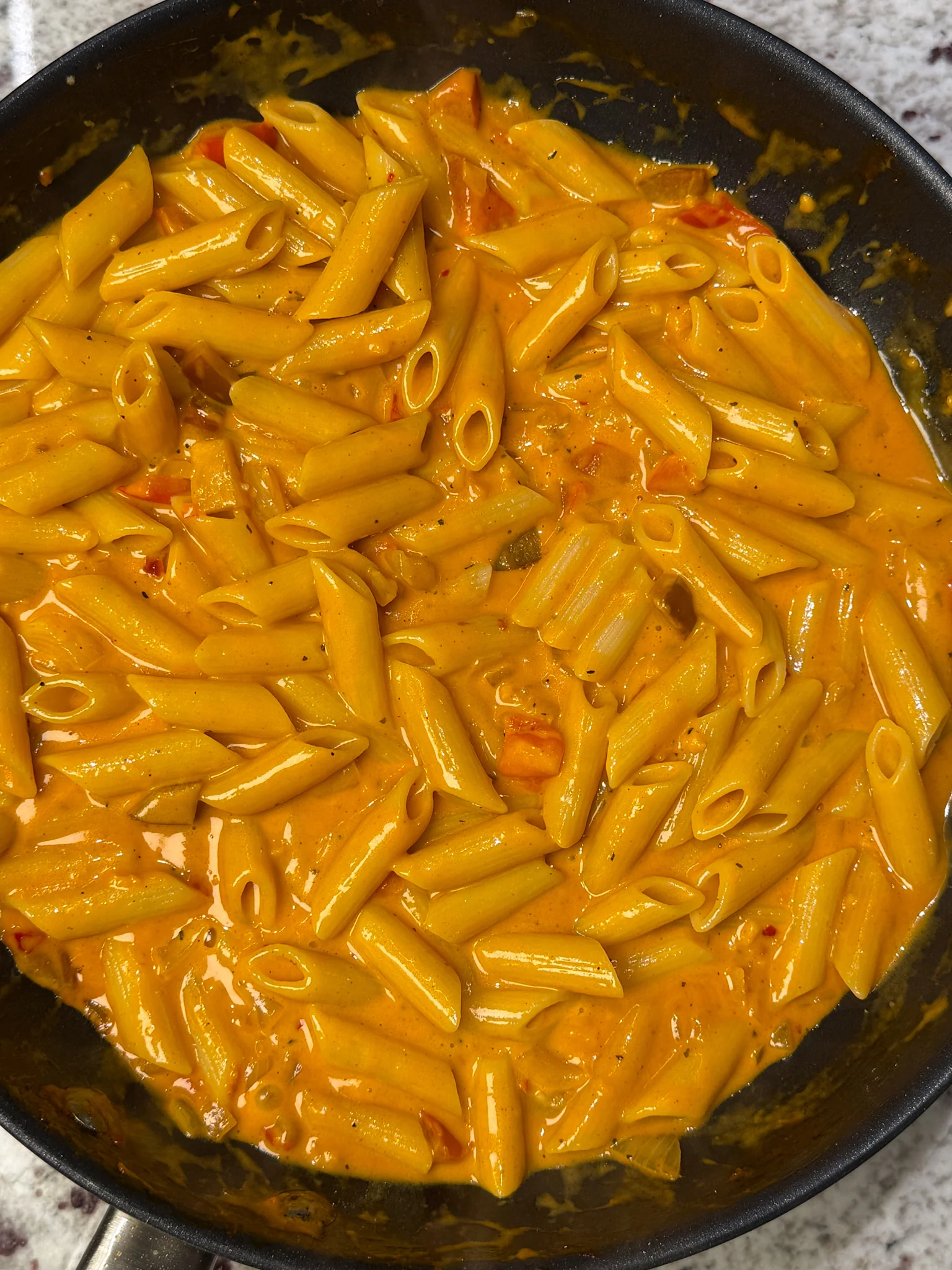
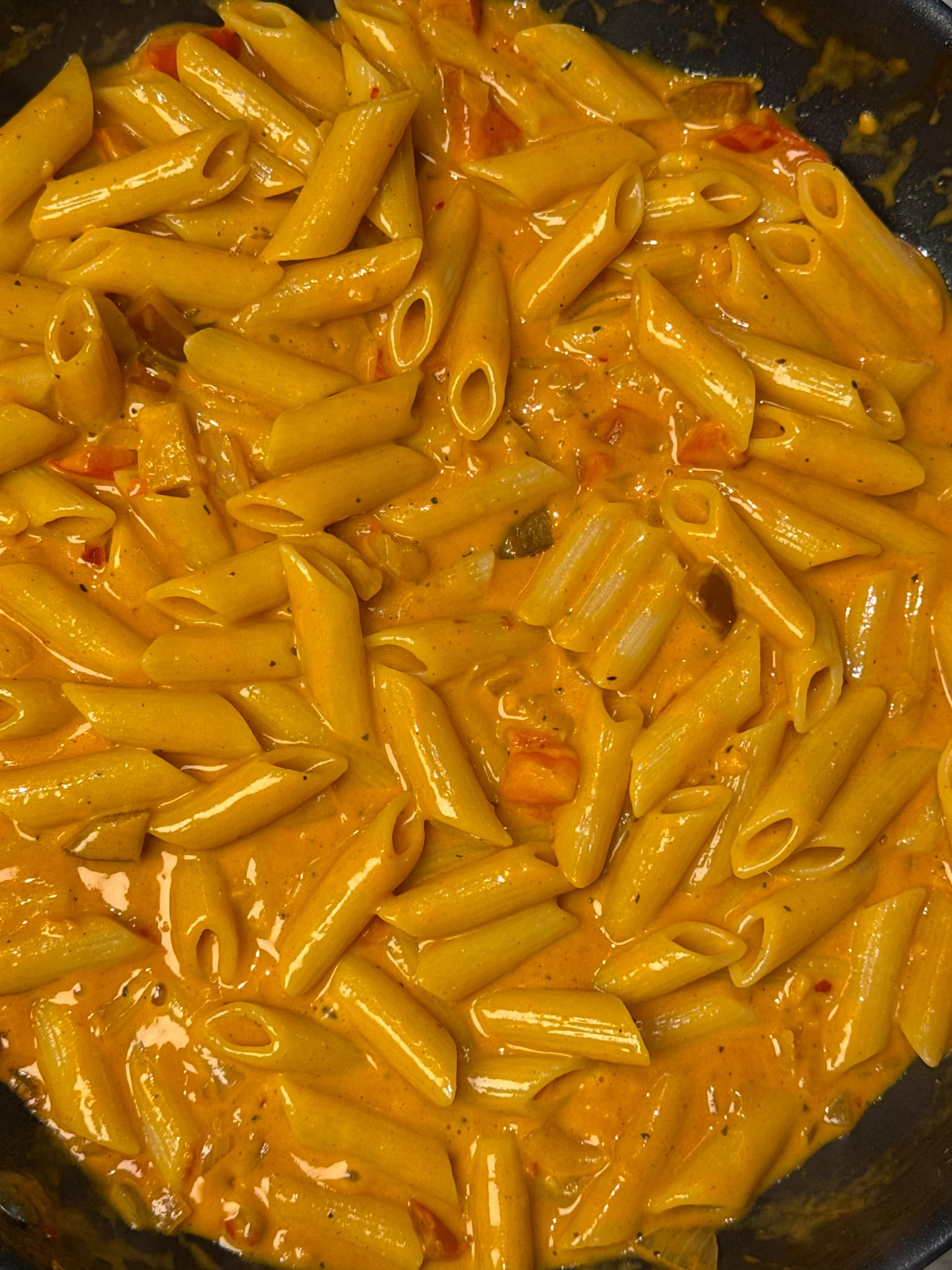
Reduce the heat to medium-low and pour in the heavy whipping cream gradually while stirring continuously. Allow the sauce to simmer gently for three to five minutes until it thickens enough to coat the back of a spoon. Add the freshly grated Parmesan and stir until fully melted and incorporated. Now add the reserved pasta water, one or two tablespoons at a time, stirring between each addition, until the sauce is glossy and clings to a spoon without running off. This is the consistency you are aiming for in this red pepper chicken pasta.
Finishing and Serving
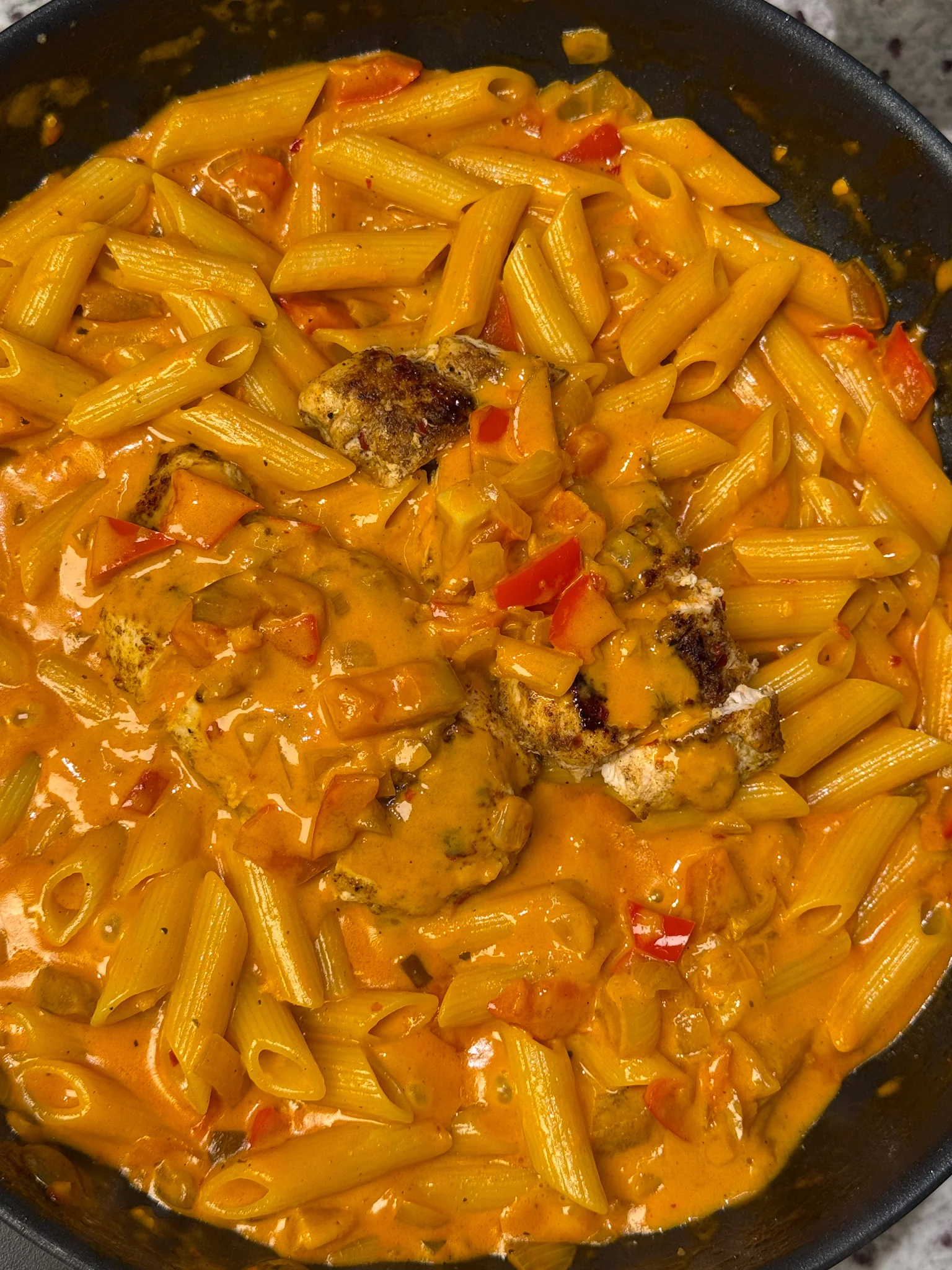
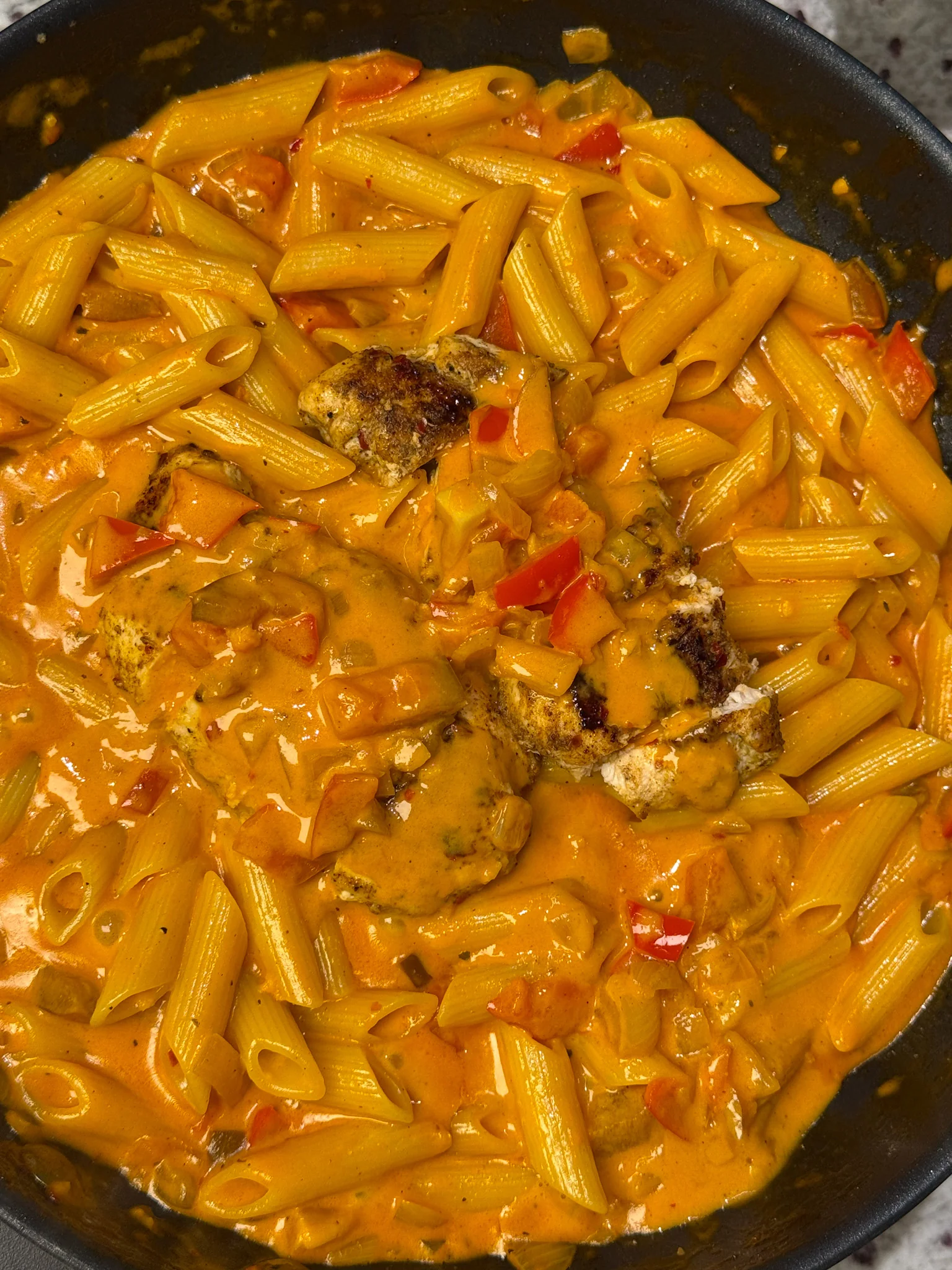
Add the cooked pasta directly to the sauce and toss thoroughly so every piece is evenly coated. Let it simmer together for one to two minutes over low heat, stirring gently, so the pasta absorbs some of the sauce and the flavors marry. Slice the rested chicken on a slight diagonal and add it back to the pan, nestling it into the pasta and spooning sauce over the top. Let everything rest together for one final minute before serving. Divide into bowls, top with freshly grated Parmesan, optional chopped parsley, and a pinch of extra chili flakes if you enjoy heat.
Professional Tips for Perfect Results
Rest the Chicken Before Slicing, Every Time
Cutting into chicken immediately after removing it from the heat causes the internal juices — which have been driven toward the center by the heat — to run out onto the cutting board rather than staying in the meat. A five-minute rest allows those juices to redistribute evenly throughout the muscle fibers. The difference is dramatic: properly rested chicken is juicy and tender; improperly rested chicken is dry at the edges even when cooked to the correct internal temperature.
Build Sauce Over Moderate Heat
The most common mistake when making cream-based red pepper chicken pasta at home is applying too much heat. High heat causes cream to boil and separate, leaving a broken sauce with visible fat pooling on the surface. Medium-low heat keeps the emulsion stable and allows the cream to thicken gently through slow evaporation. If you notice the edges of the sauce beginning to bubble rapidly, reduce the heat immediately and stir vigorously to re-incorporate any separating fat.
Season in Layers, Not All at Once
This recipe seasons at multiple points — in the chicken marinade, in the sauce spice addition, in the pasta water, and at the final taste check before serving. Each layer of seasoning adds to the previous one and builds complexity. Tasting the sauce before adding the pasta is important: it should taste slightly more seasoned than you want the finished dish to be, because the pasta will absorb some of that intensity when combined. For another bold, layered pasta sauce that uses this same approach, our Chili Onion Burrata Pasta is a beautiful companion recipe worth exploring.
Use the Pasta Water Window
Pasta water only contains significant starch for about ten to fifteen minutes after the pasta is drained. After that, the starch settles and the water loses much of its emulsifying power. Have the pasta water within reach before you start the sauce, and add it to the finished sauce while it is still warm. Cold pasta water added to a hot sauce can cause the cream to split temporarily — warm water integrates smoothly.
Common Mistakes to Avoid
Skipping the Tomato Paste Cooking Step
Adding tomato paste and immediately pouring in broth is one of the most common shortcut errors in red pepper chicken pasta recipes, and it results in a sauce that tastes flat and slightly metallic. The two minutes of cooking time for the tomato paste in hot fat is not optional — it is where most of the depth of this sauce is created. Set a timer if needed, and stir constantly so it does not catch and burn.
Using Pre-Minced Garlic from a Jar
Jarred pre-minced garlic is preserved in oil or citric acid and has a distinctly different flavor from freshly chopped garlic — often sharper, sometimes bitter, and lacking the volatile aromatic compounds that give fresh garlic its characteristic warmth and sweetness. In a sauce as garlic-forward as this red pepper chicken pasta, the quality of the garlic has a noticeable impact on the final result. Fresh is always the right choice here.
Adding Cold Cream Too Quickly
Heavy cream pulled directly from the refrigerator and added too quickly to a very hot pan can cause the sauce to break or seize, especially if the heat is too high. Let the cream come to room temperature for five minutes before using, or at minimum pour it in very slowly and stir constantly from the moment it enters the pan. Gradual addition combined with steady stirring prevents temperature shock and keeps the emulsion stable.
Overcooking the Red Bell Pepper
The bell pepper in this red pepper chicken pasta should be tender and sweet but not completely collapsed. Two to three minutes over medium heat is sufficient — beyond that, the pepper loses its structural texture and its natural sweetness begins to cook off. You want visible pieces of sweet, soft pepper in the finished dish, not a puree.
Not Saving Enough Pasta Water
One cup is the recommended reserve for this red pepper chicken pasta recipe, and it is worth saving at least that much. Many home cooks wait until the pasta is fully drained before remembering to reserve water, and by then it is too late. Set a reminder before you drain — ladle out a full cup as soon as the pasta reaches al dente, before draining.
Variations to Try
Spicy Version
Double the red chili flakes and add half a teaspoon of cayenne pepper to the sauce spice mix. Finish with a drizzle of chili oil over the plated pasta for an additional heat element and a glossy visual. This version pairs particularly well with rigatoni, which holds the sauce in the grooves and delivers an intense burst of flavor in every bite. For another pasta dish that handles heat with similar confidence, our CREAMY CAJUN STEAK PASTA uses a Cajun spice profile in a cream-based sauce to similarly bold effect.
Mushroom and Red Pepper Version
Add two cups of sliced cremini mushrooms to the pan after the onion, before the garlic. Cook them on medium-high heat without stirring for two minutes to allow browning, then stir and continue cooking until most of their moisture has evaporated. The mushrooms add an earthy depth that complements the sweetness of the red pepper beautifully. This is also a natural way to make the dish stretch further or reduce the amount of chicken without losing satisfying richness.
Shrimp Version
Substitute large peeled shrimp for the chicken. Season and cook the shrimp in batches over high heat for one to two minutes per side — just until pink and curled — then remove and set aside. Build the sauce exactly as written, and add the shrimp back in at the very end, after combining with the pasta, for the last thirty seconds of heat. Shrimp overcooks quickly and becomes rubbery, so timing is critical. The result is a lighter, faster version of red pepper chicken pasta with a beautiful sweet seafood contrast against the smoky cream sauce.
Vegetable Version
Omit the chicken entirely and add two cups of blanched broccoli florets and one cup of halved cherry tomatoes along with the red bell pepper. Use vegetable broth in place of chicken broth. The finished dish is still deeply flavored and satisfying, and the cherry tomatoes add bright bursts of acid that balance the richness of the Parmesan cream. For more inspiration on how pasta sauces can be built around vegetables with real depth, our PINK CHICKEN PASTA demonstrates a similar tomato-cream base used to different visual and flavor effect.
Storage and Reheating
Room Temperature
Like all cream-based pasta dishes, red pepper chicken pasta should not be left at room temperature for more than two hours. The cream sauce is a dairy product and can become unsafe if left out during a long dinner service or social gathering. Transfer leftovers to a container and refrigerate as soon as possible after serving.
Refrigeration
Store leftover red pepper chicken pasta in an airtight container in the refrigerator for up to three days. The pasta will absorb more of the sauce as it sits, which means leftovers can feel denser than the freshly made dish. This is normal and easily corrected during reheating.
Freezing
Cream-based sauces do not freeze ideally because the fat and liquid can separate on thawing, producing a grainy or watery result. If you want to prepare ahead, freeze the chicken and sauce separately from the pasta, and cook fresh pasta when you are ready to serve. The sauce alone freezes reasonably well for up to one month if stored in a well-sealed container and thawed overnight in the refrigerator.
Reheating
Reheat red pepper chicken pasta gently over low heat in a pan, adding a splash of chicken broth or whole milk to loosen the sauce and restore its creaminess. Stir continuously as it heats and avoid bringing it to a boil — the cream will separate if overheated. The microwave works in a pinch, but use fifty percent power and stir every sixty seconds to prevent hot spots that can break the emulsion. A small addition of fresh Parmesan stirred in at the end of reheating refreshes the sauce noticeably.
Frequently Asked Questions
What pasta shape works best for this recipe?
Short pasta shapes with ridges or hollow centers — penne rigate, rigatoni, fusilli, or farfalle — work best for this red pepper chicken pasta because they physically trap the cream sauce inside and between the pasta pieces. This means each forkful delivers a consistent amount of sauce rather than having sauce pool in the bowl. Long pasta like spaghetti or linguine also works, but the sauce distribution is less even. Avoid very fine pasta like angel hair, which becomes overpowered by the weight of this sauce.
Can I use milk instead of heavy cream?
You can substitute whole milk, but the sauce will be thinner, less stable, and more prone to breaking when heated. If using milk, reduce the amount of pasta water added, increase the Parmesan slightly to help thicken the sauce, and keep the heat very low throughout. The flavor will be lighter and less rich than the original red pepper chicken pasta, but still very good. Half-and-half is a better middle-ground substitute — richer than milk but lighter than cream.
Do I have to use fresh garlic?
Fresh garlic gives a noticeably better result than pre-minced garlic from a jar, particularly in a sauce this garlic-forward. The aromatic compounds in fresh garlic that create its warmth and complexity degrade quickly after mincing, and jarred garlic is typically preserved in a way that alters its flavor. Garlic powder is used separately in the spice layers and provides a different type of garlic flavor — background depth rather than fresh punch. Both are present for a reason; only fresh garlic is used for the sauté aromatics.
Why does my cream sauce keep breaking?
Broken cream sauce in red pepper chicken pasta almost always traces back to one of three causes: heat that is too high, cream added too quickly to a very hot pan, or pre-grated Parmesan that resists melting smoothly. Lower the heat to medium-low before adding cream, add it slowly while stirring, and use freshly grated Parmesan only. If the sauce does break, remove the pan from the heat immediately, add two tablespoons of warm pasta water, and whisk vigorously — this often re-emulsifies the sauce.
Can I make this ahead of time?
The chicken can be seasoned and cooked up to twenty-four hours in advance and stored covered in the refrigerator. The sauce does not hold well overnight because cream-based sauces tend to separate and absorb into pasta during storage. The best approach for advance preparation is to make the aromatic base — onion, garlic, red pepper, tomato paste, and spices — up to a day ahead, then add the cream and Parmesan and finish the red pepper chicken pasta fresh when ready to serve. This reduces the day-of cooking time significantly without sacrificing texture.
What can I serve with red pepper chicken pasta?
Garlic bread is the classic pairing — a simple crusty loaf brushed with garlic butter and toasted alongside this red pepper chicken pasta rounds out the meal perfectly. A fresh green salad with a lemon vinaigrette provides acidity that cuts through the richness of the cream sauce. Roasted vegetables — particularly asparagus, zucchini, or broccoli — work well as a side that adds color and texture contrast. For a simpler complement, just a wedge of lemon squeezed over the finished pasta immediately before serving brightens the entire dish.
Watch the recipe video for more clarity!
See our similar recipes:
People also like these recipes:
Final Thoughts
Red pepper chicken pasta is one of those recipes that earns its place in a regular dinner rotation not because it is quick or effortless, but because it delivers a result that feels genuinely restaurant-worthy from an ordinary home kitchen. The ingredients are accessible, the technique is learnable, and the flavor — once you understand what each step is doing and why — becomes something you can reliably reproduce and confidently adjust.
What I love most about this particular red pepper chicken pasta is that it teaches you something useful every time you make it. You learn to trust the two-minute tomato paste step when you taste how different the sauce is for it. You learn what a properly emulsified cream sauce looks like when it coats the spoon. You learn that resting chicken before slicing is not a suggestion but a practice that has a real, tangible effect on texture and moisture. These are skills that transfer to every cream-based pasta you make after this one.
Make this red pepper chicken pasta for a cozy dinner on a weeknight when you want something that tastes like you spent far more effort than you actually did. Make it for guests when you want something elegant but approachable. Make it for meal prep and reheat it gently on a busy evening when dinner needs to be something worth looking forward to. However you approach it, this recipe will not disappoint.
For the chicken
- 1 lb 450 g boneless chicken breast
- 1 –1½ tsp salt to taste
- 1 tsp smoked paprika
- 1 tbsp garlic powder
- 1 tsp black pepper
- 2 tbsp oil
For the sauce
- 2 cups 480 ml heavy whipping cream
- 1 cup 240 ml chicken broth
- 1 tbsp butter
- 2 tbsp oil
- 1 small onion finely diced (about ½ cup)
- 6 –8 cloves garlic finely chopped
- 1 red bell pepper diced
- 2 tbsp tomato paste
- 1 tsp smoked paprika
- 1 tsp garlic powder
- 1 tsp black pepper
- ½ tsp Italian seasoning
- 1 tsp red chili flakes
- 1 –1½ tsp salt to taste
- ½ cup 50 g freshly grated Parmesan cheese
- ¾ –1 cup 180–240 ml reserved pasta water
To assemble
- 8 –10 oz 225–280 g pasta of choice
Cook pasta
Boil pasta in salted water until al dente.
Reserve ¾–1 cup pasta water, then drain.
Season the chicken
Season chicken with salt, pepper, garlic powder, smoked paprika, and oil.
Mix well.
Cook chicken
Heat oil in a pan over medium heat.
Cook chicken for 10–12 minutes, flipping until fully cooked (165°F / 75°C).
Remove, rest, and slice.
Sauté aromatics
In the same pan, add butter + oil.
Add onion and cook for 1–2 minutes.
Add garlic and cook for 30 seconds.
Add red bell pepper
Cook for 2–3 minutes until slightly softened.
Cook tomato paste
Add tomato paste and cook for 1–2 minutes, stirring constantly.
Add seasoning
Add paprika, garlic powder, black pepper, Italian seasoning, chili flakes, and salt.
Mix well.
Add chicken broth
Pour in broth and simmer for 2–3 minutes.
Add cream & Parmesan
Add heavy cream and simmer until slightly thickened.
Stir in Parmesan until smooth.
Adjust consistency
Add pasta water gradually until sauce is silky.
Combine
Add pasta and mix well.
Add sliced chicken and combine.
Serve
Serve hot with extra Parmesan if desired.
If you've given this recipe a try and it won you over, please share your thoughts by leaving
a rating and comment below! If you have any questions about this recipe, don't hesitate to ask – I'm here to
help and will respond promptly.