Step-by-Step Instructions
Making the Turkish Pide Dough
Combine 500 grams of bread flour, 7 grams of instant yeast, 1 teaspoon of sugar, and 1 teaspoon of salt in a large mixing bowl. Whisk briefly to distribute the dry ingredients. Add 300 milliliters of warm water and 2 tablespoons of olive oil. Mix with a wooden spoon until a shaggy dough forms, then turn out onto a lightly floured surface and knead for 8 to 10 minutes until the dough is smooth, soft, and elastic.
It should spring back when poked gently with a finger. Place the dough in a lightly oiled bowl, cover with a clean kitchen towel or plastic wrap, and allow it to rise in a warm place for 60 minutes until doubled in size. This rise is the foundation of the Turkish pide’s light, airy texture — do not cut it short.
Preparing the Cheese Filling and Toppings
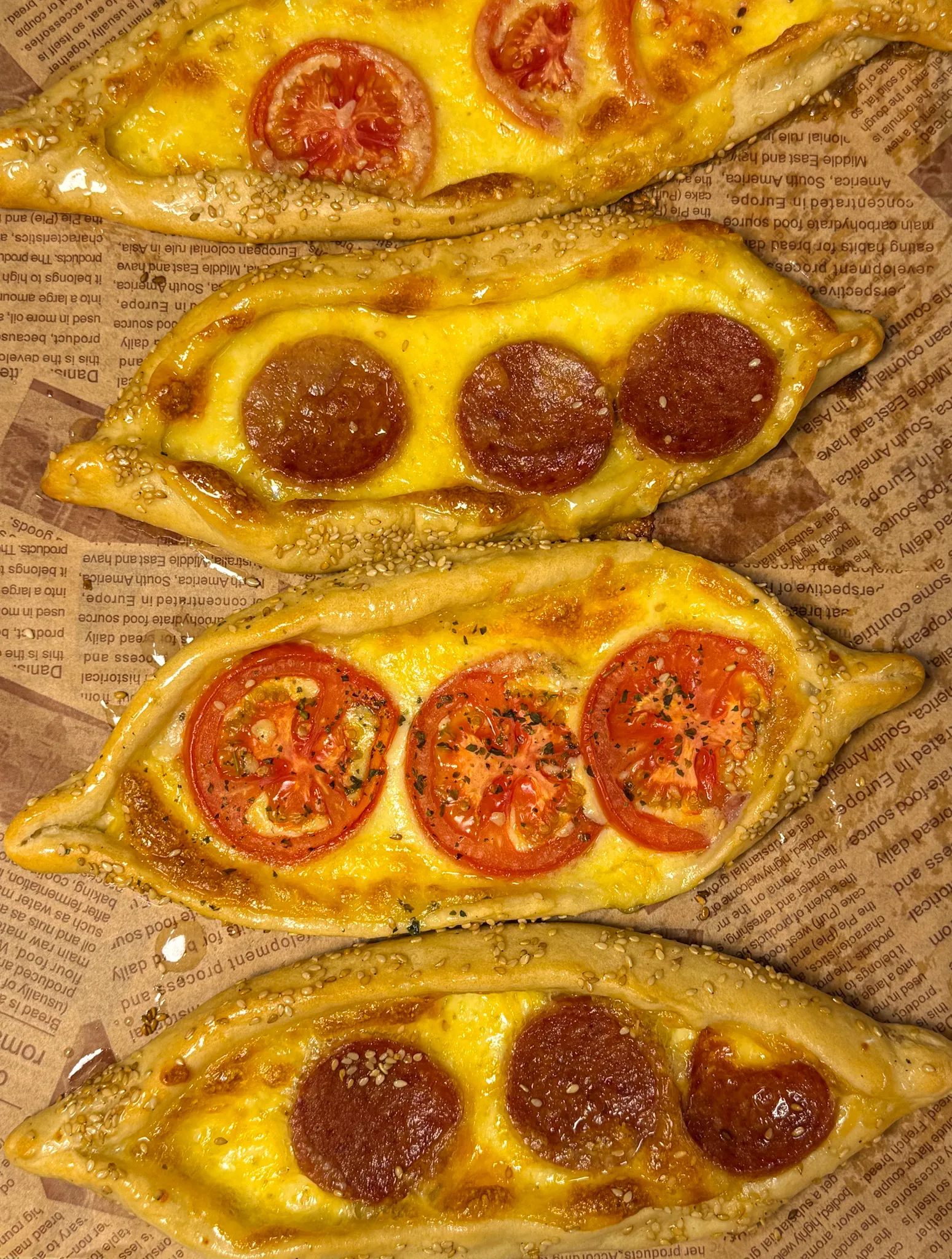
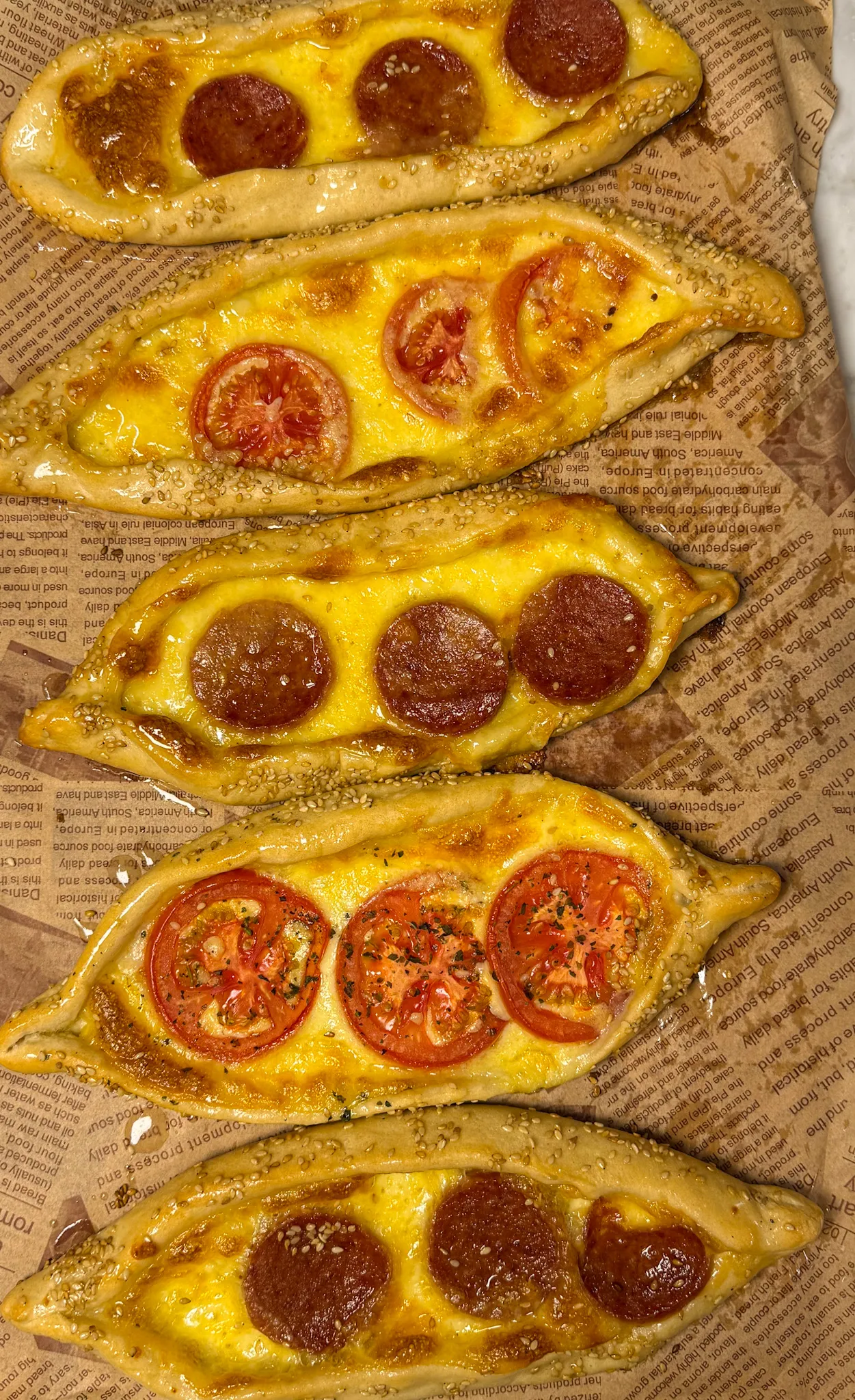
While the dough rises, prepare the toppings for both versions of Turkish pide. For the cheese base, combine 150 grams of grated low-moisture mozzarella and 150 grams of crumbled or grated akawi cheese in a bowl. For the sucuk Turkish pide, thinly slice 120 grams of sucuk into rounds and set aside. For the tomato Turkish pide, slice 2 medium ripe tomatoes into thin rounds, pat them dry gently with kitchen paper to remove excess moisture, and set aside. Season the tomatoes with a pinch of salt and dried oregano.
Shaping the Turkish Pide
Preheat your oven to 230°C (450°F) and place a baking tray or pizza stone inside to heat. Once the dough has doubled, punch it down gently and divide it into 4 equal portions. Working with one portion at a time, roll each piece into a thin oval approximately 30 centimeters long and 15 centimeters wide. The dough should be roughly 4 to 5 millimeters thick — thin enough to bake quickly but substantial enough to hold the toppings without tearing.
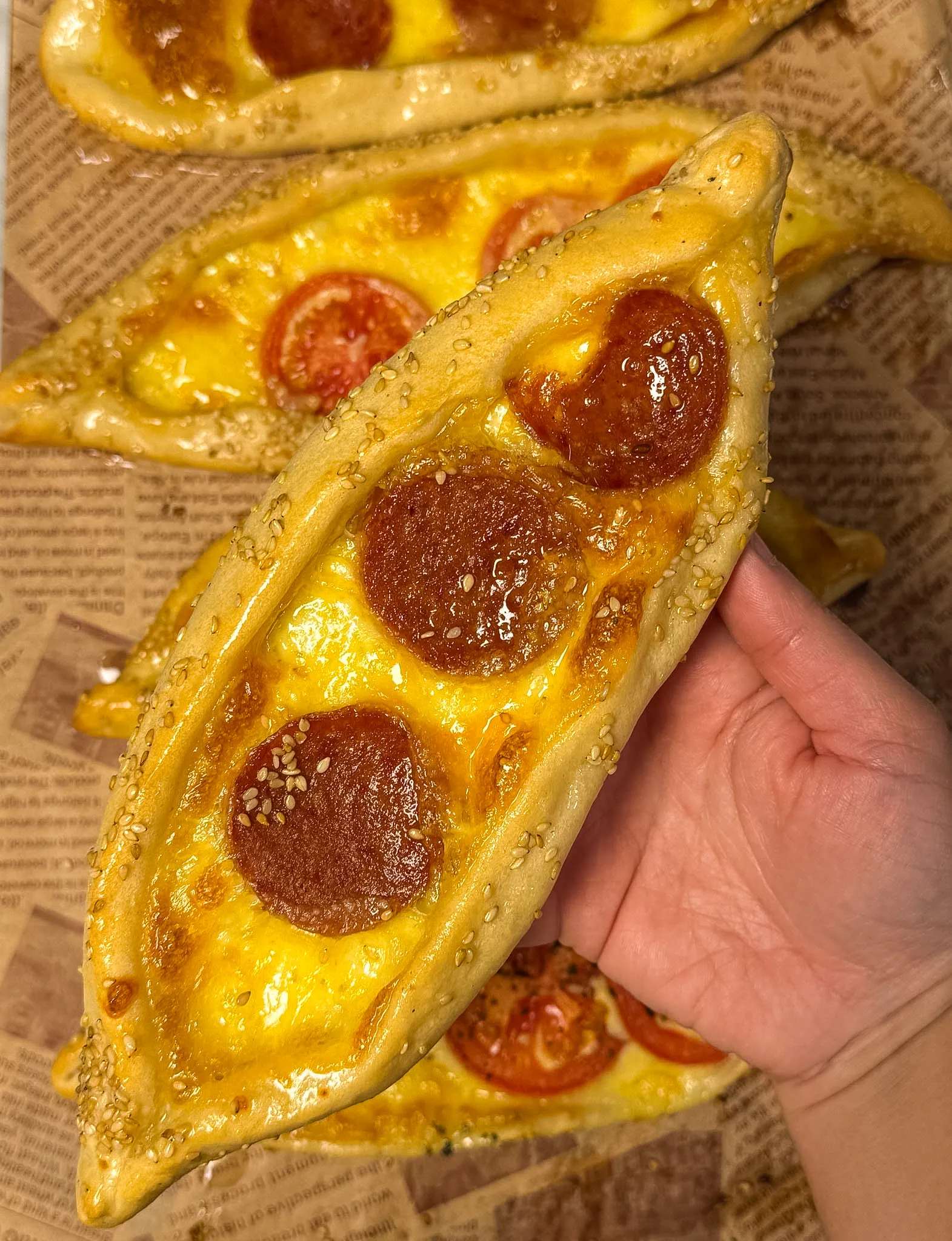
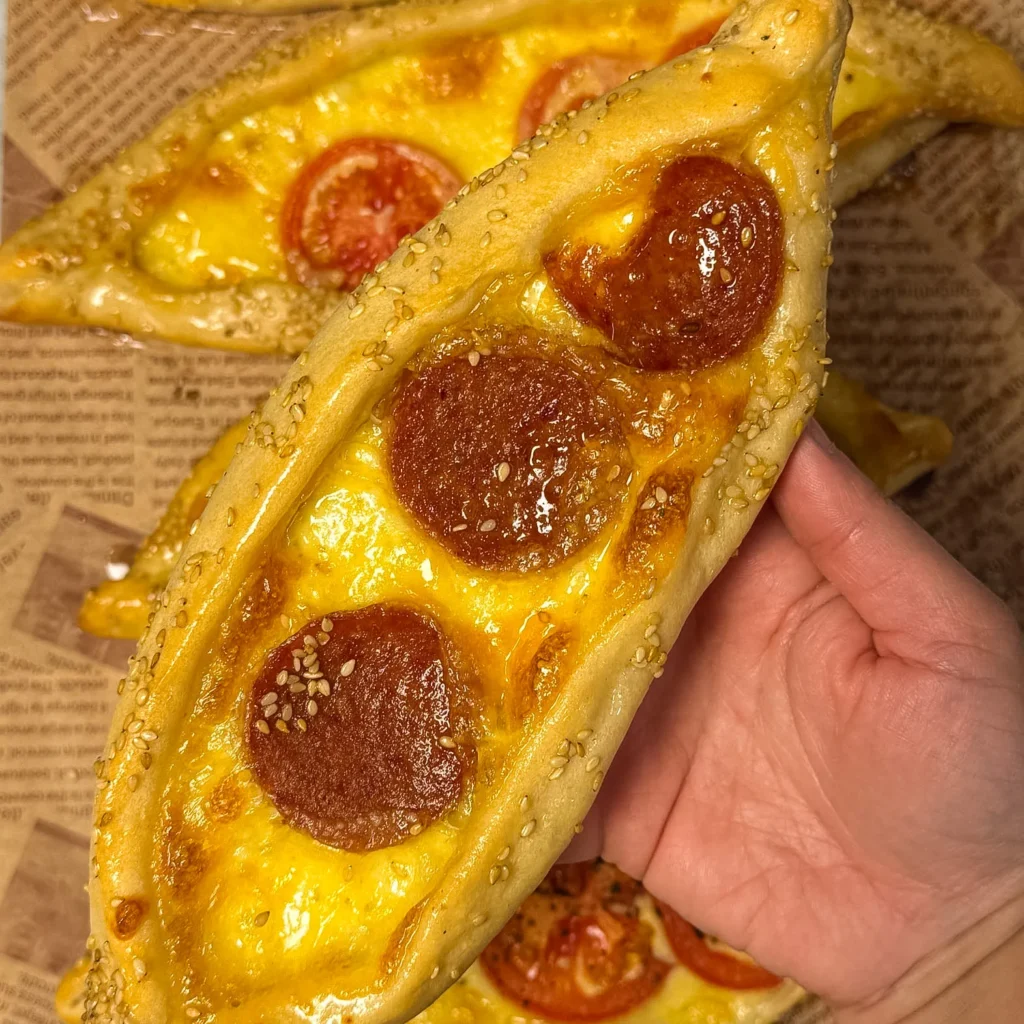
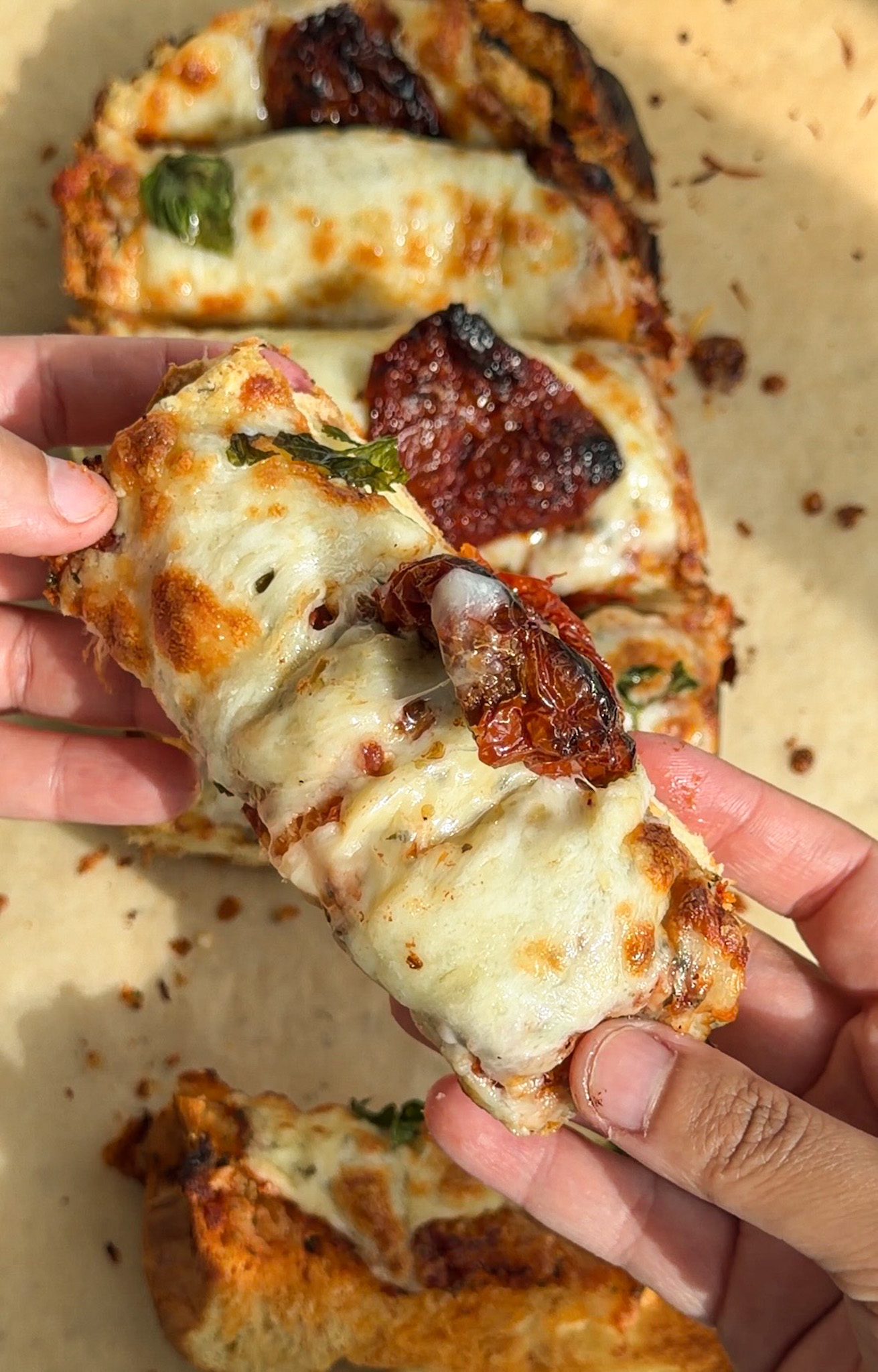
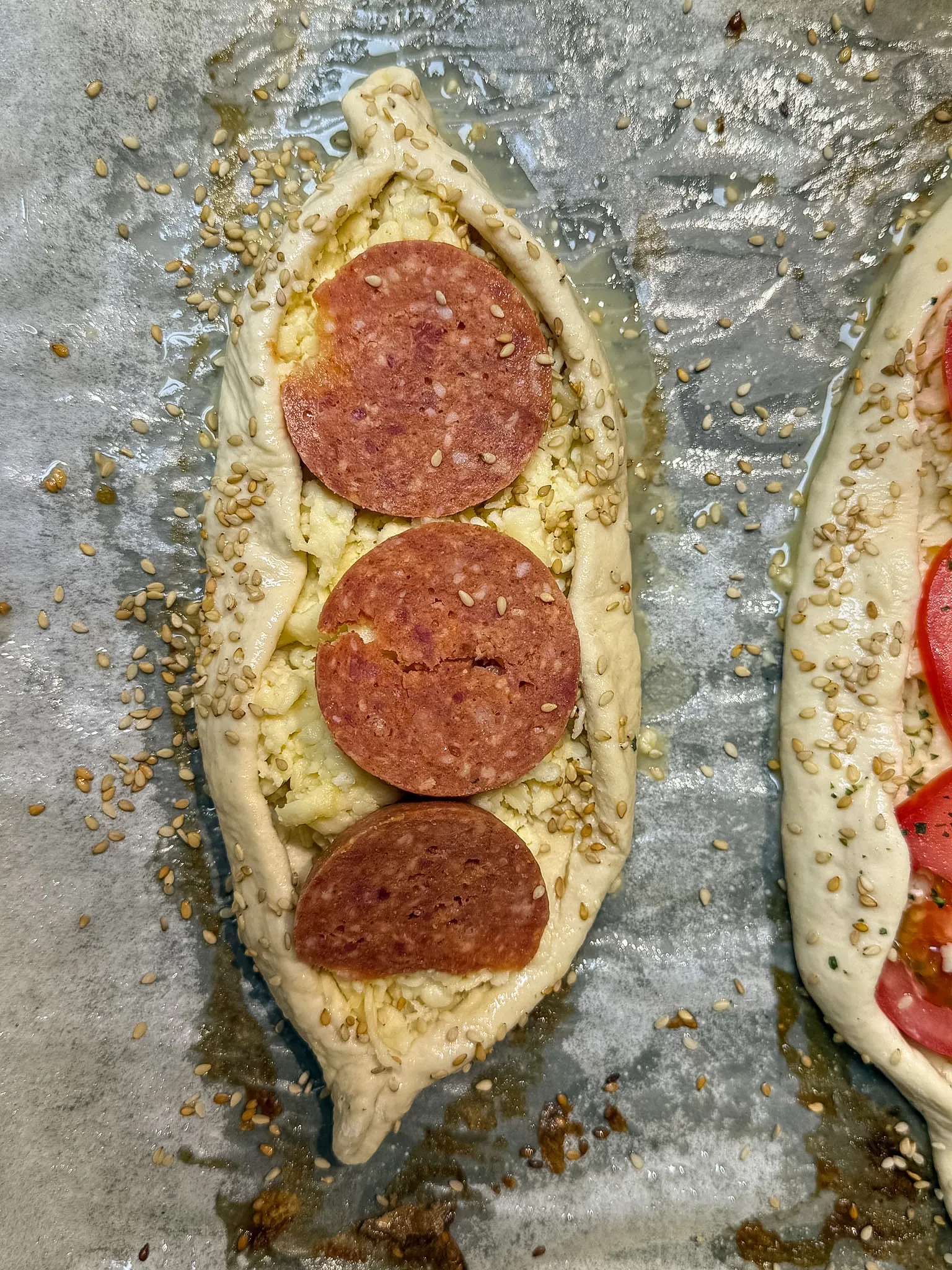
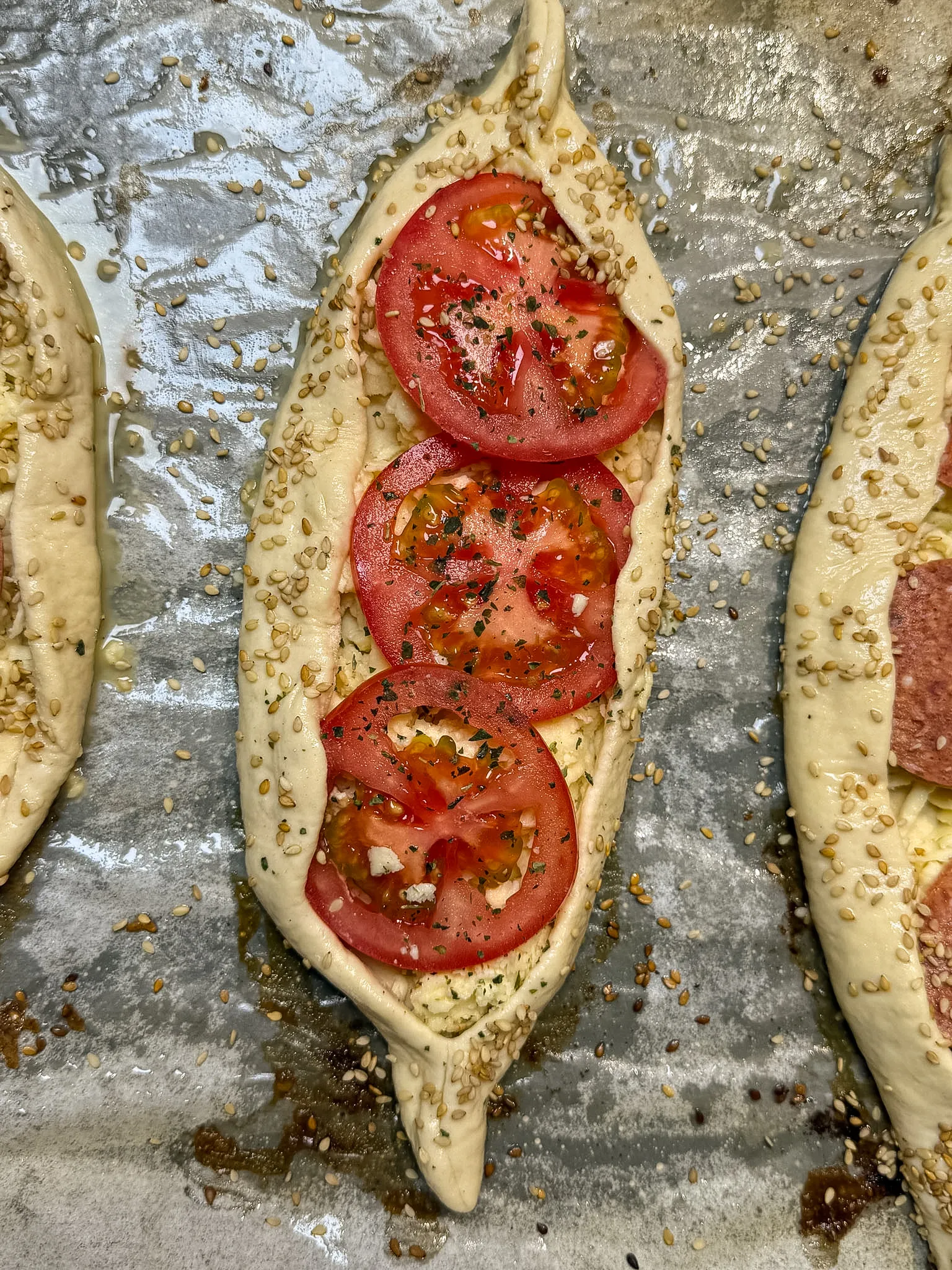
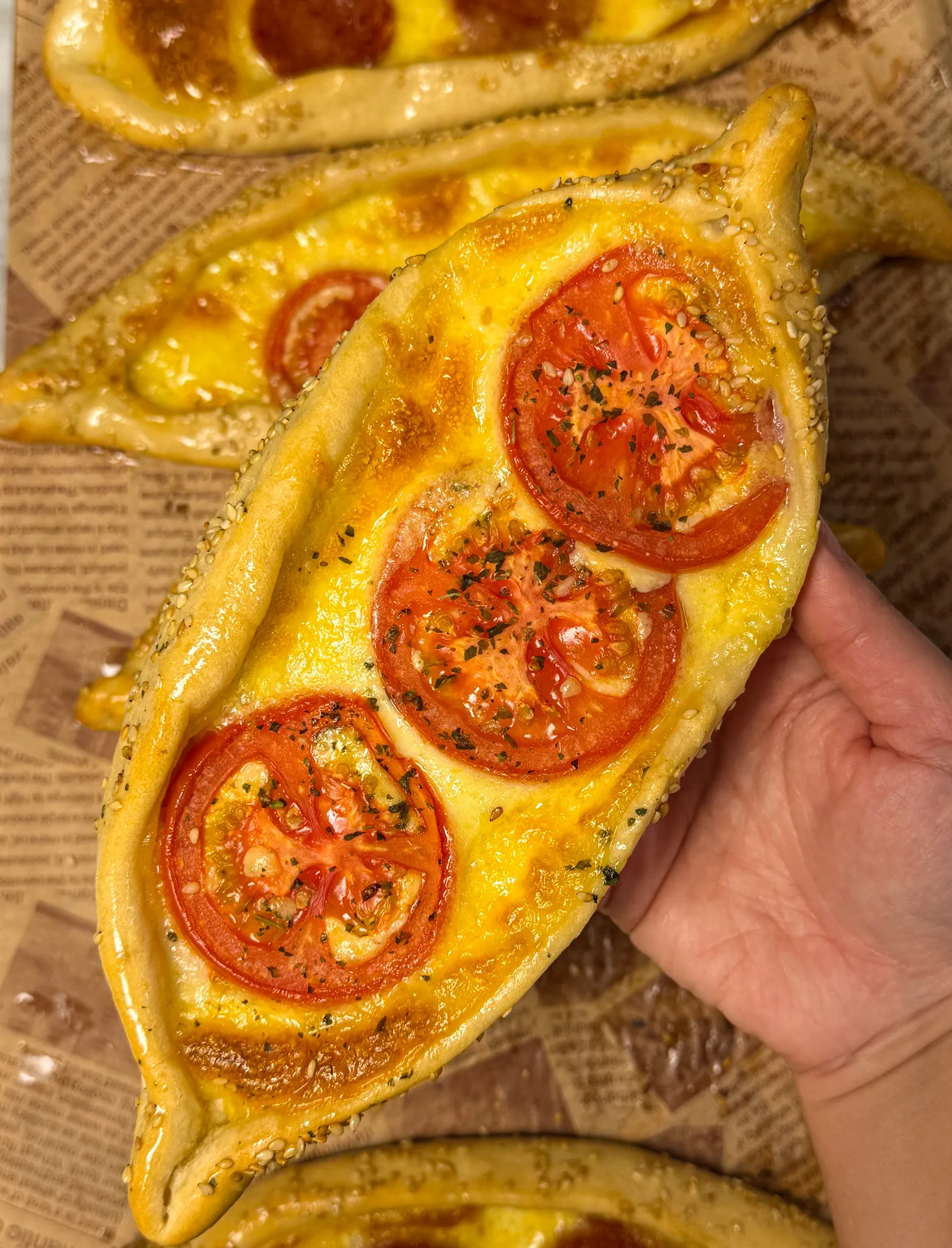
Place the rolled dough on a sheet of parchment paper. Spread the cheese mixture down the center of each oval, leaving a 3-centimeter border clear on all sides. For the sucuk Turkish pide, arrange the sucuk rounds over the cheese in a single layer. For the tomato version, lay the tomato slices over the cheese in overlapping rows.
Forming the Boat Shape
Fold the long edges of the dough inward toward the filling, pressing them down firmly against the edge of the cheese layer to seal. Pinch the two ends of the oval together tightly and twist slightly to form the pointed tips that define the classic Turkish pide shape. Press the folded edges down with your fingers to ensure they hold during baking. Brush the exposed dough border generously with egg wash made from one beaten egg and a tablespoon of milk. Transfer the parchment paper with the shaped Turkish pide directly onto the preheated tray in the oven.
Baking and Finishing
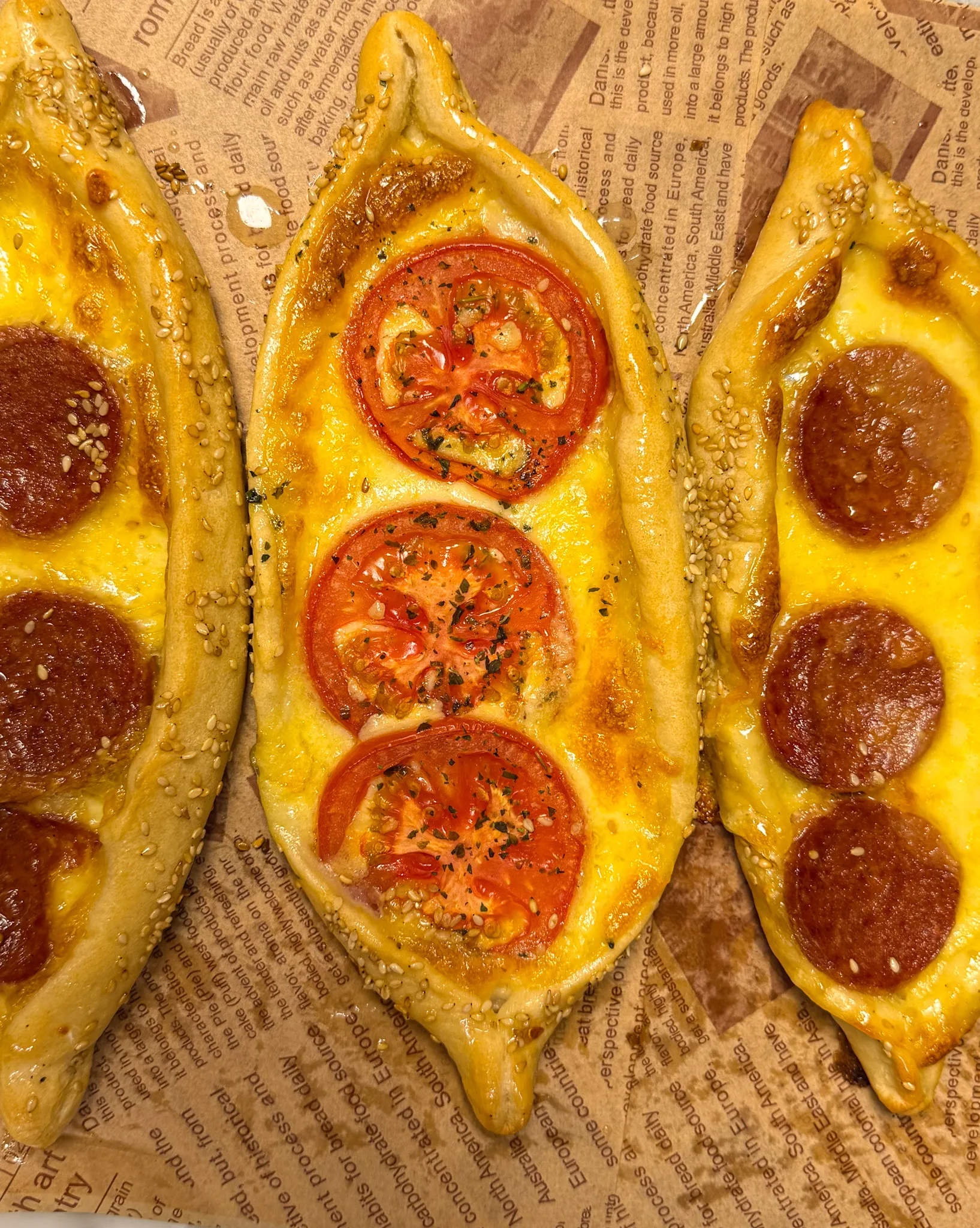
Bake the Turkish pide for 18 to 22 minutes until the edges are deep golden brown, the cheese is fully melted and beginning to show golden spots, and the base of the Turkish pide sounds hollow when tapped. If the cheese is browning faster than the edges, reduce the heat by 10°C for the remainder of the bake. Remove the Turkish pide from the oven and immediately brush the entire surface, including the cheese, with melted unsalted butter.
This step is essential and should not be skipped — the butter cools and sets quickly on the hot bread, creating the glossy, fragrant finish that is one of the defining characteristics of authentic Turkish pide. Allow to cool for 3 to 4 minutes before slicing and serving.
Professional Tips for Perfect Results
Preheat the Baking Tray
A cold baking tray placed in a hot oven will absorb heat slowly and produce a pale, soft underside on your Turkish pide. Preheating the tray for at least 15 minutes before the Turkish pide goes in creates a surface that is already at full oven temperature when the dough makes contact. The immediate burst of bottom heat sets the underside of the dough rapidly, creating the slightly crispy base that is a hallmark of properly baked Turkish pide. A pizza stone, if you have one, works even better for this purpose.
Roll the Dough Thin and Work Quickly
Turkish pide dough that is too thick will bake unevenly, producing a dense center that is undercooked before the edges have properly colored. Aim for 4 to 5 millimeters as a consistent thickness across the entire oval. Once the dough is rolled and the toppings are added, move quickly through the shaping and into the oven. Pide dough that sits on the counter with wet toppings on top will begin to soften at the base, which can lead to a soggy bottom in the finished Turkish pide.
Pat Tomatoes Dry Before Baking
The tomato version of Turkish pide is particularly susceptible to a wet center if the tomatoes are not properly dried before they go on. Even a brief pat with kitchen paper to remove surface moisture makes a meaningful difference. Slicing the tomatoes a few minutes before assembly and allowing them to sit on the paper towel helps draw out additional moisture before they are placed on the cheese.
Do Not Over-Fill
The filling quantity in this Turkish pide recipe is calibrated to keep the topping ratio balanced with the dough. More cheese or sucuk feels generous but often leads to overflow during baking, where the filling bubbles out over the folded edges and burns on the tray. It also weighs down the center of the Turkish pide during the final rise in the oven and prevents it from puffing properly. Use the quantities given and trust the balance the recipe has been designed to achieve.
Butter While Hot, Always
The melted butter brushed over the Turkish pide immediately after it comes out of the oven is not decoration. It is a technique. The heat of the freshly baked bread melts the butter on contact and allows it to soak slightly into the surface of the dough, adding richness, gloss, and a subtle dairy sweetness that softens the edges just enough while keeping them crisp. Butter applied to a cold Turkish pide sits on the surface rather than being absorbed and produces a greasy finish rather than the beautiful sheen of a properly finished pide.
For a different style of Turkish flavors at the table, the TRADITIONAL CILBIR TURKISH EGGS make a wonderful companion dish to serve alongside Turkish pide at brunch, and the combination of the two dishes creates a genuinely impressive spread with minimal effort.
Common Mistakes to Avoid
Using Water That Is Too Hot
Killing the yeast is the most catastrophic mistake in any yeast-based bread recipe, and Turkish pide is no exception. Water above 43°C destroys yeast cells and produces a dough that will not rise regardless of how long it is left. If you are not using a thermometer, always err on the side of cooler rather than hotter. A dough that rises slowly in slightly cool water will still produce excellent Turkish pide. A dough made with hot water will produce nothing at all.
Skipping the Egg Wash on the Border
The egg wash applied to the folded edges of Turkish pide before baking serves two important functions. It encourages the Maillard browning reaction that gives the crust its characteristic deep golden color, and it helps the folded edges stay sealed during baking. Without it, the exposed dough border of the Turkish pide tends to bake up pale and slightly dry rather than the beautiful, glossy gold that signals a properly finished pide.
Pulling the Pide Too Early
Turkish pide that comes out of the oven before the edges are fully golden and the base is properly set will be soft and doughy rather than crisp and satisfying. The baking time given in this recipe is a guideline — ovens vary, and the visual cues are more reliable than the clock. The border of the Turkish pide should be deeply golden, the cheese should be fully melted with a few light golden spots, and the base should feel firm when the parchment is lifted and the bottom of the Turkish pide is tapped.
Pinching the Ends Too Loosely
The pointed ends of Turkish pide need to be pinched firmly enough to stay sealed during baking. Loose ends open up in the oven as the dough expands, and the filling spills out toward the tips, creating an uneven distribution of toppings and a messier presentation. Pinch the ends between your thumb and forefinger and twist slightly, then press flat. If they open during shaping, simply re-pinch and press again before the Turkish pide goes in the oven.
Variations to Try
Spinach and Feta Turkish Pide
Replace the sucuk and cheese filling with a mixture of sautéed spinach, crumbled feta, diced onion, and a pinch of dried chili. Squeeze as much water as possible from the cooked spinach before using it, as excess moisture will prevent the Turkish pide from baking properly. This vegetarian variation is lighter than the cheese and sucuk version and has a bright, savory flavor that pairs beautifully with the soft pide dough. For another creative take on sucuk used as a main topping ingredient, the CHEESY SUCUK HASSELBACK BAKED POTATOES demonstrate just how well this spiced Turkish sausage translates across different recipes.
Minced Lamb and Spice Turkish Pide
Combine 300 grams of ground lamb with one finely diced onion, a handful of chopped parsley, half a teaspoon each of cumin, paprika, and allspice, and a generous pinch of salt. Cook the mixture briefly in a hot pan until the meat is just barely cooked through, then drain away any excess fat. Use this spiced lamb mixture in place of the cheese and sucuk filling. This variation is one of the most traditionally beloved forms of Turkish pide, particularly popular in central and eastern Anatolia.
Egg and Cheese Turkish Pide
For the last 3 minutes of baking, remove the Turkish pide from the oven and crack a fresh egg directly into the center of the melted cheese filling. Return immediately to the oven and bake until the white is just set but the yolk is still soft and runny. This version of Turkish pide is commonly served at breakfast across Turkey and is a deeply satisfying combination of flavors and textures. The BUTTERY GARLIC NAAN BREAD is another excellent soft flatbread recipe that uses a similar yeast-based dough approach if you want to expand your flatbread repertoire beyond Turkish pide.
Mushroom and Cheese Turkish Pide
Sauté 200 grams of sliced mushrooms in butter with a pinch of thyme and garlic until all the moisture has evaporated and the mushrooms are golden and concentrated in flavor. Spread over the mozzarella and akawi cheese base before shaping. The earthy depth of the mushrooms pairs remarkably well with the creamy cheese and the soft, olive-oil-enriched Turkish pide dough. A drizzle of truffle oil after baking takes this variation to a completely different level of sophistication.
Storage and Reheating
Room Temperature
Turkish pide is best eaten immediately after baking, while the cheese is still stretchy, the edges are crisp, and the surface is still warm from the butter brush. At room temperature, a freshly baked Turkish pide can be kept loosely covered for up to 4 hours without significant quality loss, though the edges will gradually soften as the steam from the filling migrates outward.
Refrigeration
Store leftover Turkish pide in an airtight container or wrapped tightly in foil in the refrigerator for up to 2 days. The dough will firm and the cheese will solidify during refrigeration, but the flavor remains excellent. Allow the refrigerated Turkish pide to come to room temperature for 15 minutes before reheating.
Freezing
Turkish pide freezes well. Allow the baked pide to cool completely before wrapping each one individually in plastic wrap and then foil. Freeze for up to 2 months. Thaw overnight in the refrigerator and reheat in the oven as directed below. For best results, freeze the Turkish pide before the butter brush is applied and brush with fresh melted butter after reheating.
Reheating
Place the Turkish pide on a baking tray in an oven preheated to 180°C (350°F) for 6 to 8 minutes until the edges have regained their crispness and the cheese is soft and warm again. This method restores most of the original texture and is far superior to the microwave, which softens the dough and makes the cheese rubbery. A flat skillet or griddle pan over medium heat with a small amount of butter works beautifully for reheating a single piece of Turkish pide when the oven seems excessive.
Frequently Asked Questions
Can I make the Turkish pide dough ahead of time?
Yes, and a slow refrigerator rise actually improves the flavor of the dough. After the initial kneading, place the dough in a lightly oiled bowl, cover tightly with plastic wrap, and refrigerate for up to 24 hours. The cold slows the yeast without stopping it, and the extended fermentation time develops more complex flavor compounds in the dough. When you are ready to bake, remove the dough from the refrigerator and allow it to warm up at room temperature for 30 to 45 minutes before shaping your Turkish pide.
What is the best cheese for Turkish pide if I cannot find akawi?
Low-moisture mozzarella alone will produce excellent Turkish pide, particularly for the tomato version where the cheese is less central to the flavor profile. For the sucuk version, adding a small amount of crumbled feta alongside the mozzarella provides the salty, slightly tangy quality that akawi normally contributes. Kasseri cheese, if available, is the closest direct substitute and produces a result that is very close to the original.
Do I need a pizza stone to make Turkish pide?
A pizza stone is helpful but not essential. The most important thing is to preheat whatever surface you are baking on — whether a pizza stone, a heavy baking tray, or a cast-iron pan — so that it is fully at temperature when the Turkish pide goes in. The bottom heat is what produces the slightly crispy underside that distinguishes properly baked Turkish pide from a soft flatbread that has simply been cooked through.
Why is my Turkish pide dough tearing when I roll it?
Tearing during rolling is usually a sign that the gluten in the dough is too tense and needs more rest time. If the dough resists rolling and springs back aggressively, cover it with a kitchen towel and rest for 10 additional minutes before trying again. The gluten will relax during this period and the dough will become significantly more cooperative. Avoid adding extra flour to a dough that is tearing, as this makes it tougher and drier rather than more pliable.
Can I make Turkish pide without sucuk?
Absolutely. The tomato and cheese version in this recipe is a perfect standalone Turkish pide, and the egg and cheese variation described in the variations section is equally classic. Beyond that, any combination of soft, non-watery toppings that you enjoy on pizza or flatbread can work on Turkish pide. The key constraint is moisture — wet or watery toppings need to be patted dry or pre-cooked before being placed on the dough to prevent a soggy center.
How do I make Turkish pide crispier on the bottom?
Three techniques combine to produce the crispiest possible base on Turkish pide. First, preheat the baking surface thoroughly. Second, roll the dough thin — a thicker center takes longer to dry out and crisp. Third, bake at the highest temperature your oven will reliably reach. If your Turkish pide is consistently producing a soft bottom even with these measures, place the tray on the lowest rack of the oven for the final 5 minutes of baking to maximize the heat from below. For another flatbread recipe with a similarly satisfying base, the HOMEMADE NEW YORK STYLE PIZZA uses many of the same principles applied to a round, thin-crust format.
Watch the recipe video for more clarity!
See our similar recipes:
People also like these recipes:
Final Thoughts
Turkish pide is a recipe that rewards effort, patience, and a little practice in equal measure. Once you have made it once — once you have watched the dough transform from a shaggy mix into a smooth, elastic ball, shaped the oval, folded the edges into that satisfying boat form, and pulled the finished Turkish pide from the oven with its golden crust and bubbling cheese — it becomes one of those recipes you will return to again and again without needing to look at the instructions.
The versatility of Turkish pide is part of what makes it so valuable. The same dough and the same technique produce completely different eating experiences depending on what goes inside. The rich, smoky sucuk version and the fresh, lighter tomato version both start from exactly the same place, and from there the possibilities multiply in every direction. Spinach and feta, spiced lamb, egg and cheese, mushroom and truffle — Turkish pide accommodates them all with the same generous, reliable softness.
What this recipe ultimately teaches you is not just how to make Turkish pide. It teaches you how to think about flatbread, how to handle yeast dough with confidence, how to work with high heat and wet fillings and get them to cooperate. Every one of those skills transfers directly to other breads, other recipes, and other cooking challenges. Make Turkish pide once, and you will find that a whole world of bread baking feels more approachable because of it