Introduction
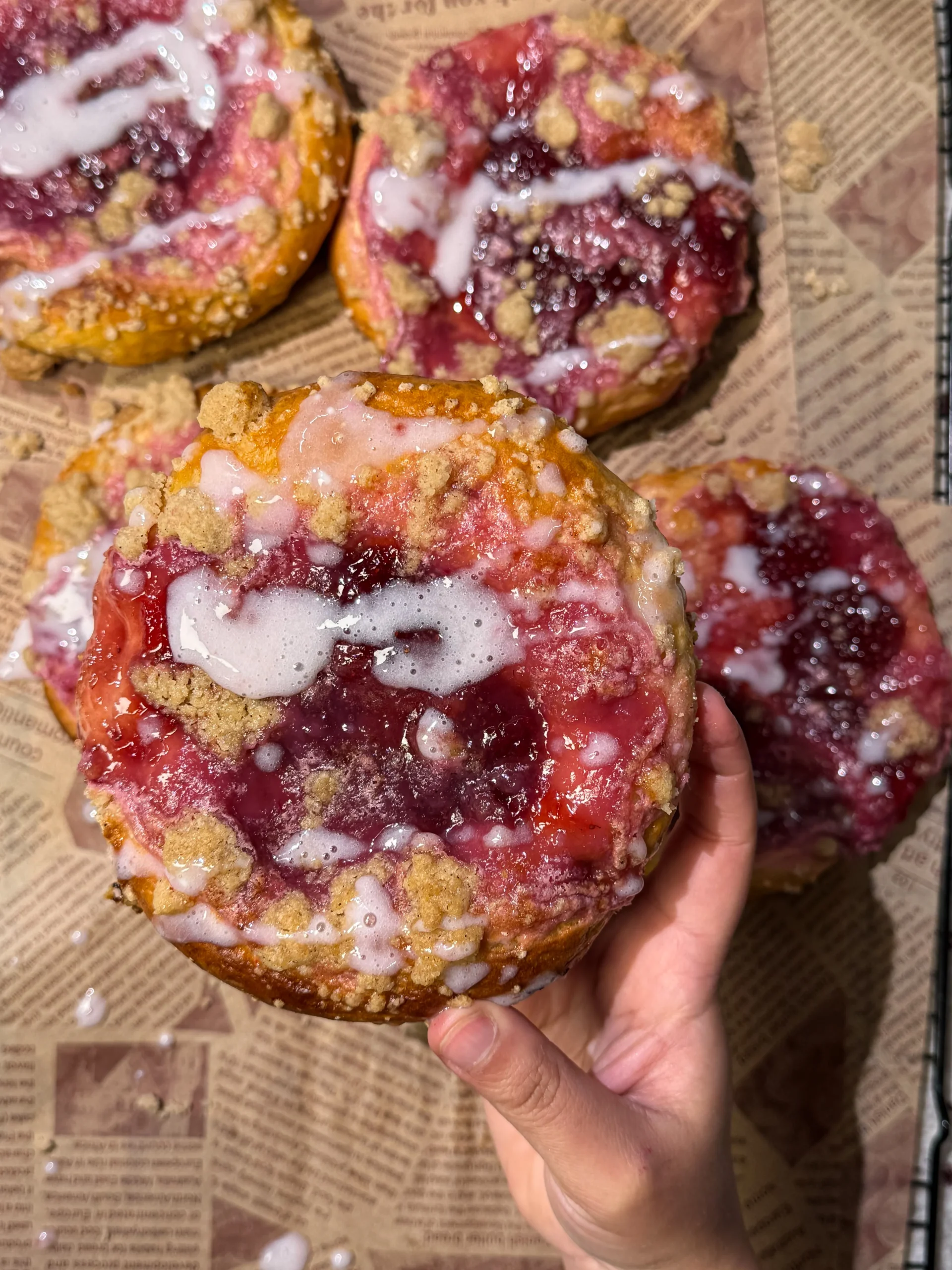
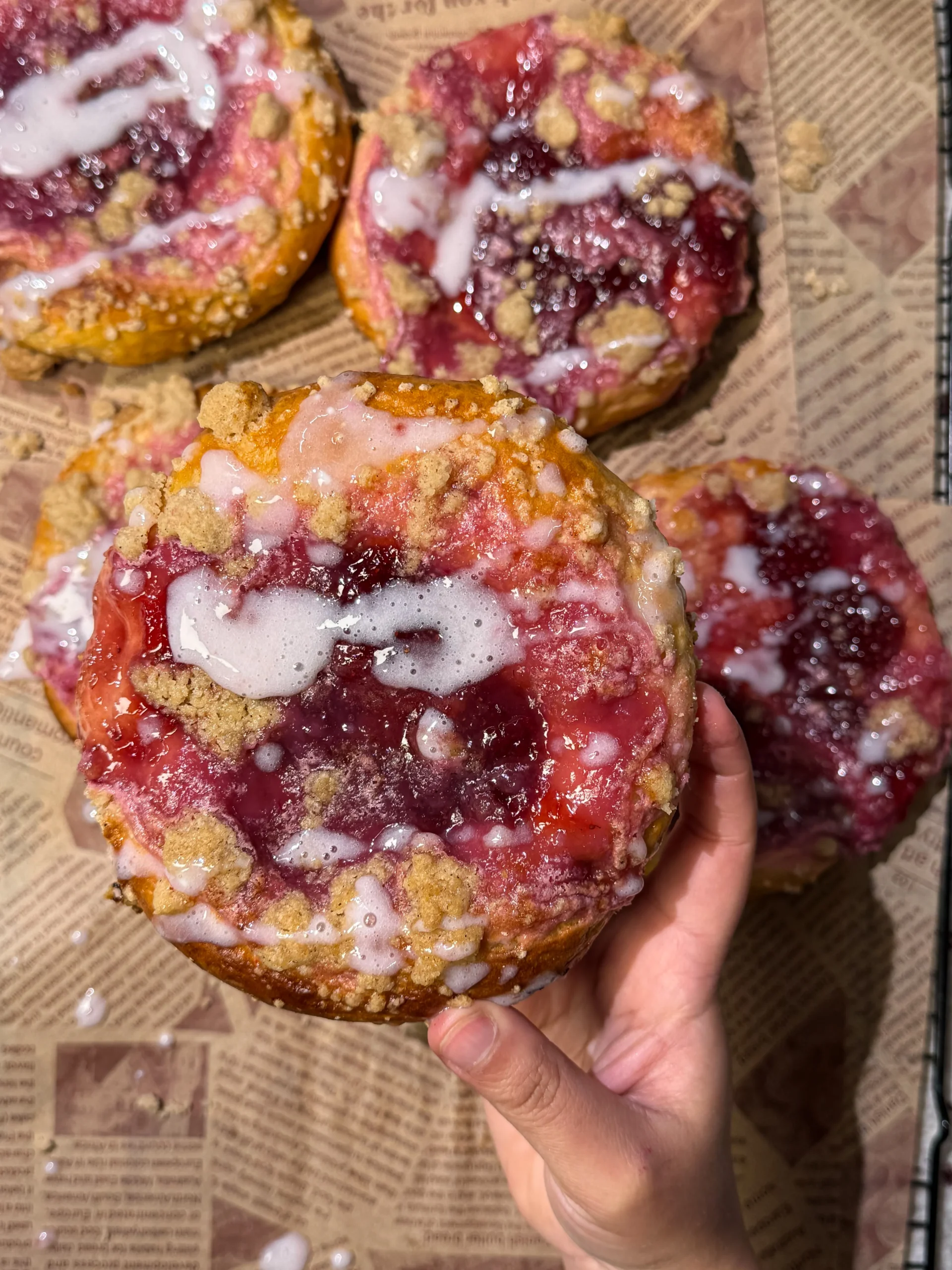
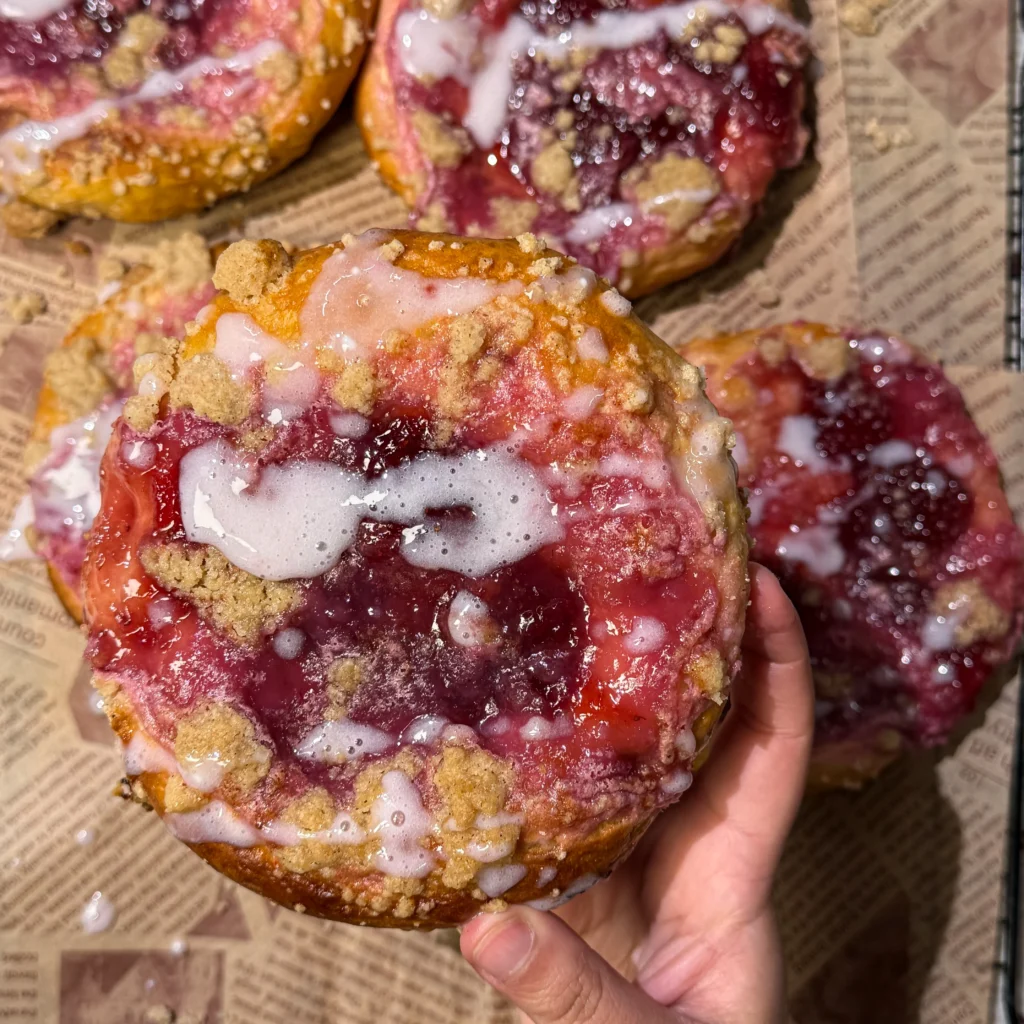
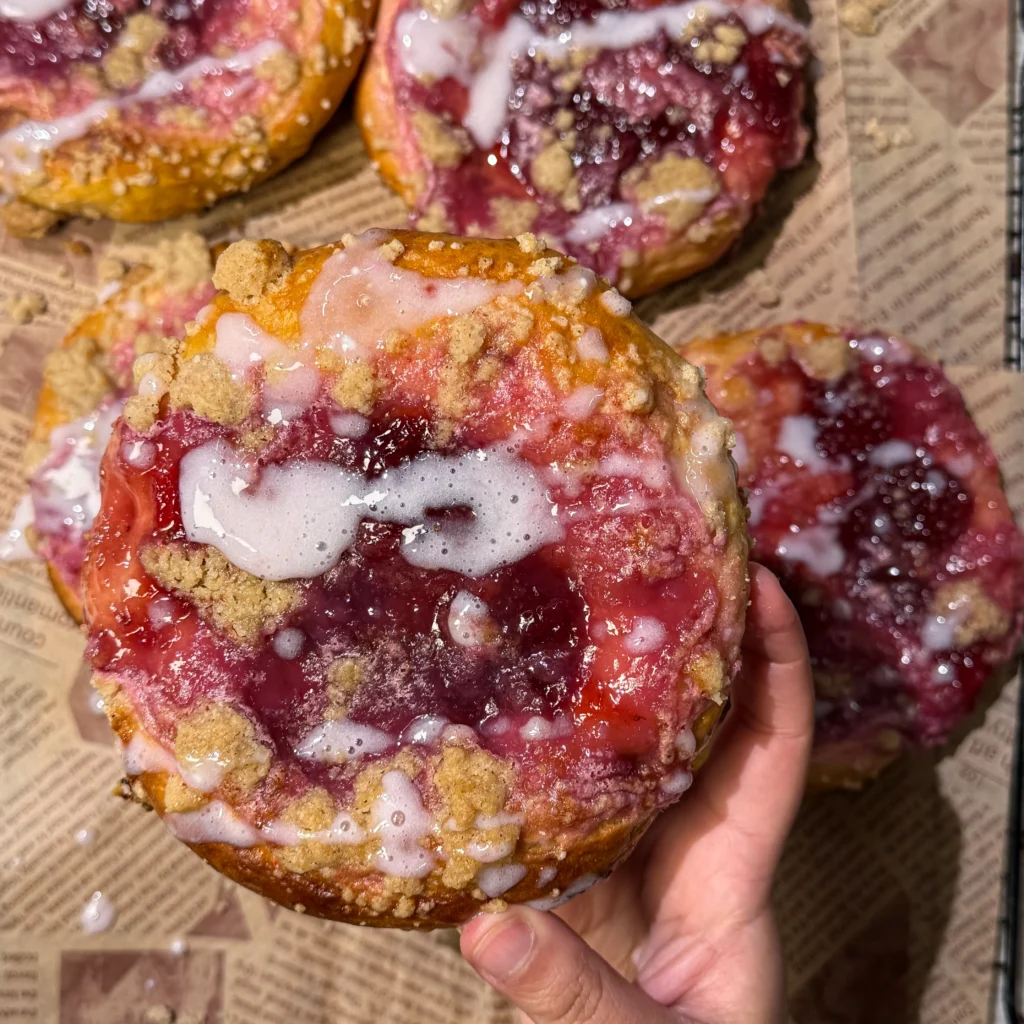
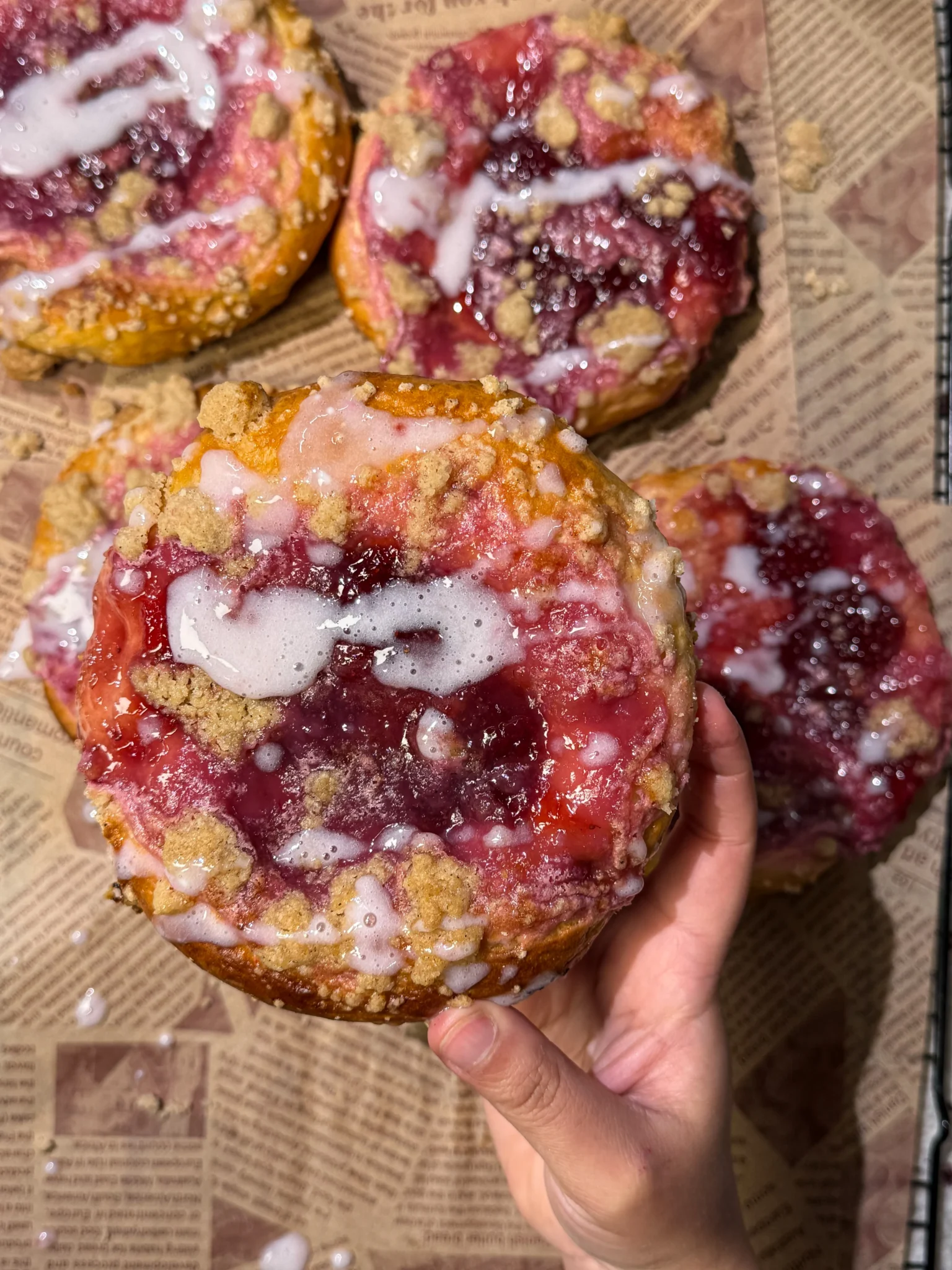
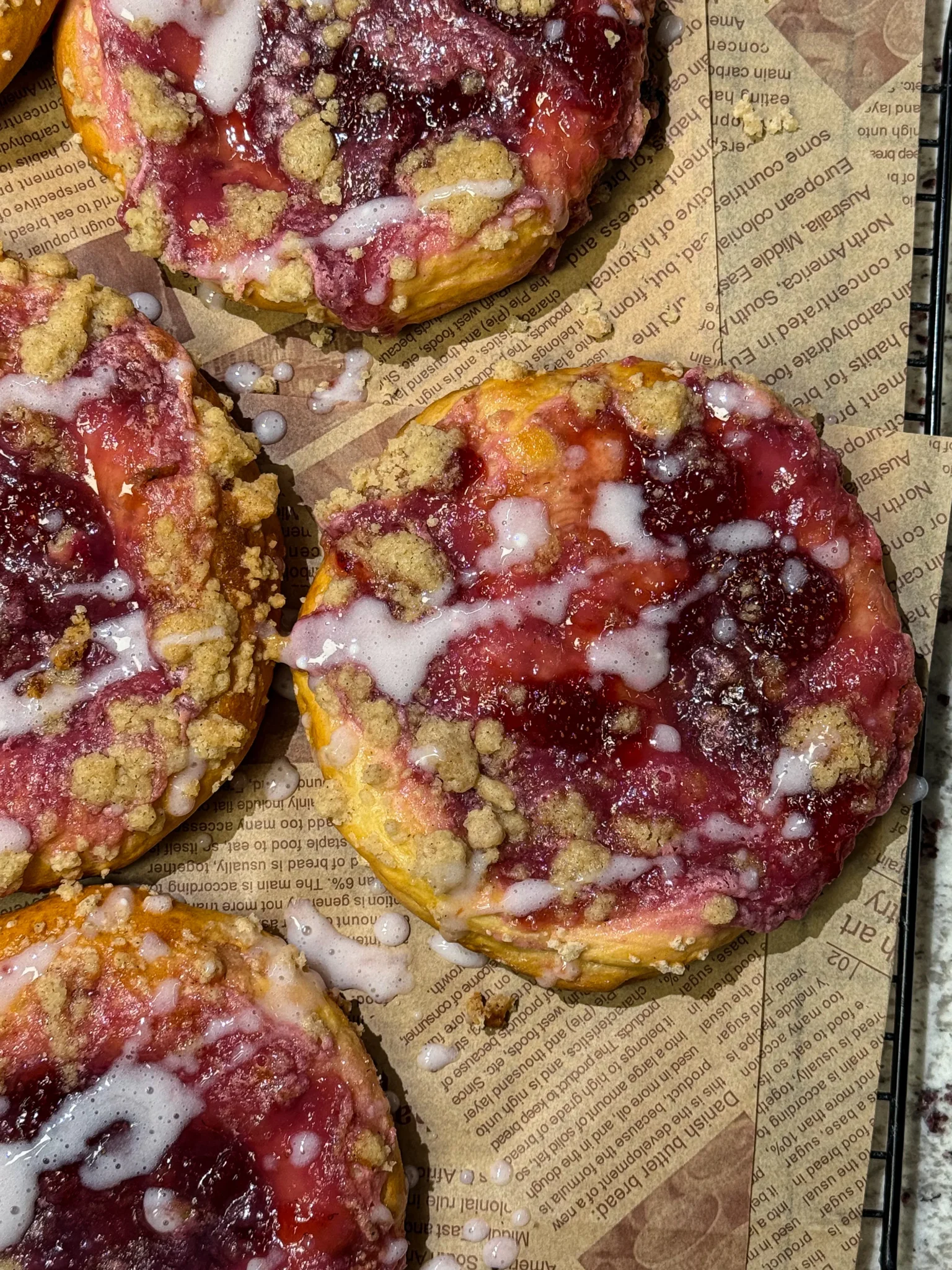
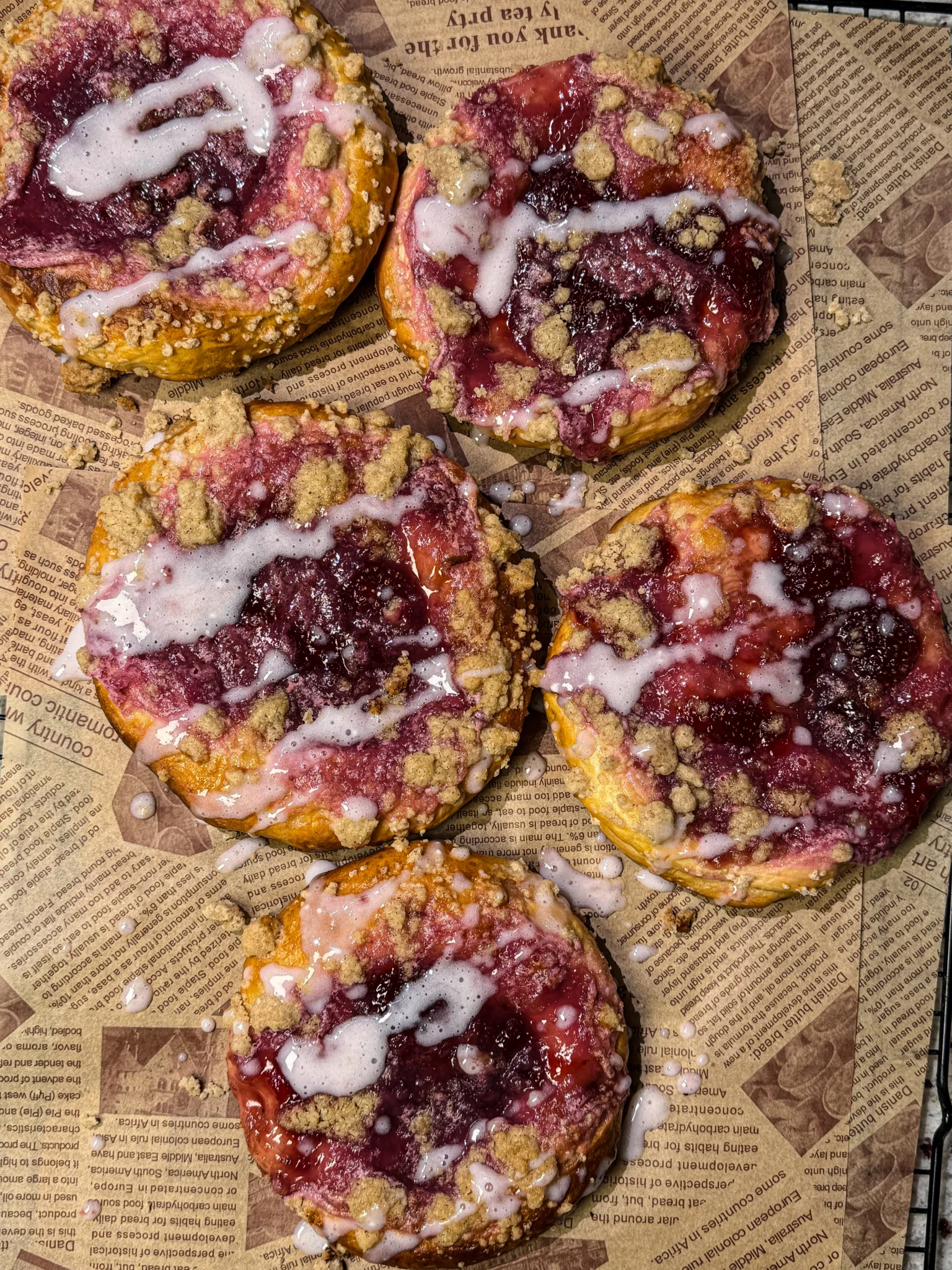
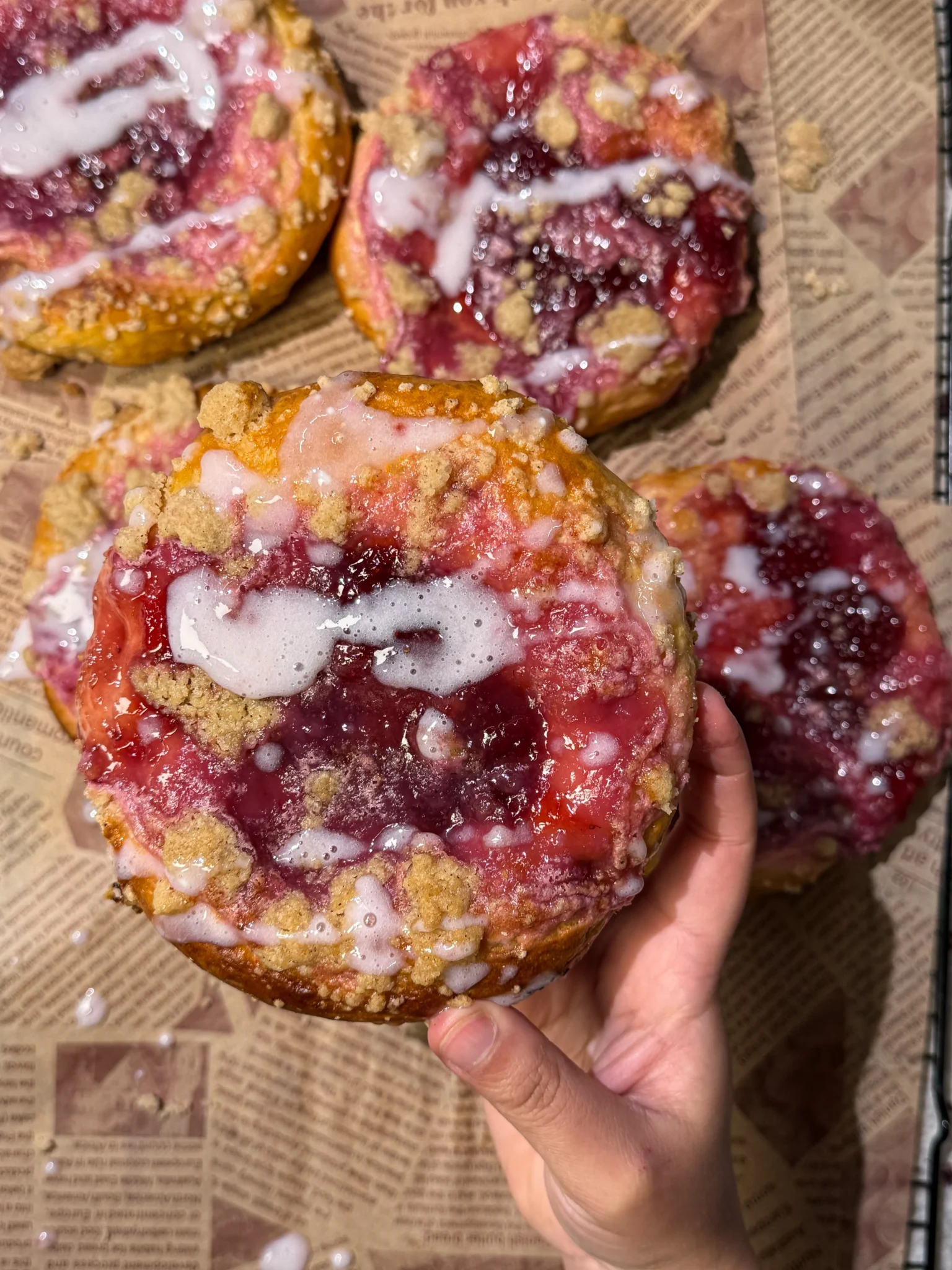
Strawberry crumble danishes are the kind of pastry that makes an ordinary morning feel like a genuine occasion. The moment the tray comes out of the oven, warm and golden with melted cream cheese, glossy jam, and a buttery cinnamon crumble crown on every pastry, something shifts in the kitchen. The smell alone draws people in before you have had a chance to set them on the table.
What makes strawberry crumble danishes so special is the way every layer earns its place. The soft, enriched brioche dough forms a pillowy, slightly sweet base that holds its shape beautifully without becoming dense or bready. The vanilla cream cheese filling adds a smooth, tangy contrast that keeps the sweetness of the jam in check. The strawberry jam itself brings a concentrated, glossy fruitiness that fresh berries alone cannot match. And then there is the cinnamon crumble: that golden, buttery, lightly spiced topping that adds the crunch every great pastry needs and transforms the entire thing into something that looks and tastes like it came from a proper café counter.
The recipe is also far more achievable at home than most people expect. Once the dough is made and has had its rise, the assembly is straightforward and satisfying. If you enjoy working with enriched doughs, you will find the same pleasure and process in these CLASSIC JELLY BRIOCHE DONUTS, which use a very similar base dough to wonderful effect. Strawberry crumble danishes are exactly the kind of recipe to return to all year long.
Why These Strawberry Crumble Danishes Are Special
Most pastry recipes ask you to choose between flavor and ease. Strawberry crumble danishes refuse that compromise. They deliver bakery-quality results through a process that is well within the reach of a confident home baker, and the flavor payoff is remarkable at every stage.
The decision to build the recipe around brioche dough rather than laminated croissant-style pastry is the first important choice. Laminated doughs require repeated folding of cold butter into cold dough across several rest periods, a technique that takes practice and patience. Brioche, by contrast, comes together in a single mixing session with a stand mixer, rises twice, and produces a dough that is tender, rich, and deeply flavorful without requiring the same level of precision. The resulting pastry is softer and more bread-like than a traditional Danish croissant, which many people find even more satisfying, particularly when fresh from the oven.
The second key decision is using strawberry jam instead of fresh fruit. This is not a shortcut. It is a deliberate technique choice. Fresh strawberries release water as they bake, which can pool in the center of the danish and create a soggy bottom that undermines the whole texture. Strawberry jam, by contrast, has already been cooked down and concentrated. It stays in place, holds its glossy appearance, and delivers an intense fruitiness that raw berries rarely achieve in a baked setting.
The third element that sets these strawberry crumble danishes apart is the crumble itself. A cinnamon-spiced butter crumble scattered around the edges of each pastry bakes into a golden, slightly crunchy rim that provides textural contrast against the soft dough and creamy filling. It is the finishing touch that elevates the entire experience from simply good to genuinely memorable.
Key Ingredients Overview
The ingredient list for strawberry crumble danishes is purposeful and relatively short, with each component contributing something that cannot be easily swapped out without affecting the final result.
Bread flour is the preferred flour for the brioche dough. Its higher protein content builds a stronger gluten network that holds the enriched dough together and supports the rise. All-purpose flour can be used as an alternative, though the dough will be slightly less structured and the finished pastries somewhat more tender and delicate.
Eggs are central to the richness and structure of brioche. They contribute fat from the yolks, which keeps the crumb soft and moist, and protein from the whites, which helps the dough hold its shape during baking. Using room-temperature eggs is important, as cold eggs can slow yeast activity and make incorporating softened butter more difficult.
Unsalted butter goes into both the brioche dough and the crumble topping. In the dough, it is incorporated gradually after the initial mixing, a technique that builds structure and prevents the butter from disrupting gluten development too early. In the crumble, it is melted and combined with brown sugar, flour, and cinnamon to form the clusters that bake into a golden, crunchy topping.
Cream cheese forms the filling base and should be at room temperature before using it. Cold cream cheese does not blend smoothly and tends to leave lumps in the filling, which affects both the texture and the visual appeal of the finished strawberry crumble danishes. Full-fat cream cheese produces the richest, most satisfying filling, though reduced-fat versions will work if preferred.
Strawberry jam should be a good-quality variety with a high fruit content. A thin or overly sweet jam will spread and bubble out of the pastry during baking. A thicker, fruit-forward jam sits neatly in the center and holds its position even as the dough rises around it in the oven. If the jam you have seems very loose, a brief simmer in a small saucepan will concentrate it to the right consistency.
Understanding the Science Behind Strawberry Crumble Danishes
How Enrichment Changes Dough Behavior
Standard bread dough contains flour, water, yeast, and salt. Brioche dough, the foundation of these strawberry crumble danishes, adds eggs, milk, butter, and sugar to that base, and each addition changes the dough in a meaningful way. Eggs increase protein content and contribute fat from the yolks, making the crumb finer and more tender. Milk adds moisture and a small amount of sugar that feeds the yeast and promotes browning.
Butter coats the gluten strands as it is incorporated, weakening them slightly and producing the characteristic soft, pillowy texture that brioche is known for. Sugar not only sweetens the dough but also retains moisture after baking, which is why brioche stays soft for longer than a lean bread dough.
The Two-Rise Method and Why It Matters
Strawberry crumble danishes require two separate rise periods, and both serve distinct functions. The first rise, often called bulk fermentation, allows the yeast to produce carbon dioxide throughout the entire mass of dough. This is when the most flavor development occurs, as the yeast consumes sugars and produces not just gas but also organic acids and esters that give brioche its distinctive aroma. The second rise, called proofing, happens after the dough has been shaped into individual danishes. This final proof allows the shaped pastries to relax, expand slightly, and develop an open structure that bakes up light and airy rather than dense and compact.
Why Jam Creates a Better Baked Filling Than Fresh Fruit
Fresh strawberries contain approximately 90 percent water by weight. When enclosed in a pastry and exposed to oven heat, that water converts to steam and has nowhere to escape. It pools in the center of the danish, saturating the base of the pastry and creating the wet, soggy center that undermines the entire texture of the dish. Strawberry jam has already undergone the cooking process that drives off most of this water.
Its sugar content has been concentrated and its pectin activated, which means it behaves as a stable, cohesive gel during baking rather than a liquid that spreads and steams. The result is a centered, glossy topping that stays beautifully in place throughout the full bake.
Choosing the Right Ingredients
Selecting the Right Yeast
Instant yeast is the most convenient option for strawberry crumble danishes and can be added directly to the dry ingredients without being proofed first. Active dry yeast is also suitable but should be dissolved in the warm milk called for in the recipe and left to sit for five minutes until foamy before being added to the other ingredients. Both will produce excellent results. What matters most is that the yeast is within its expiration date and has been stored in a cool, dry place.
Choosing the Best Jam
Not all strawberry jams behave the same way in baking. Look for a jam with a short ingredient list — ideally strawberries, sugar, and pectin — and a high fruit content. Premium artisan jams or preserves tend to have a thicker, more stable consistency that performs best in these danishes. Avoid reduced-sugar jams, which tend to be thinner and more prone to spreading, and flavored fruit spreads that contain additives that can affect browning and flavor during baking. A jam that tastes vibrant and intensely fruity on its own will produce a danish filling that is equally impressive.
Vanilla Bean Paste vs. Vanilla Extract
The cream cheese filling calls for vanilla, and vanilla bean paste is the more flavorful option if you have it. It carries both the flavor compounds and the aromatic oils of whole vanilla beans and delivers a noticeably more rounded, floral vanilla note compared to standard extract. It also leaves the characteristic black specks throughout the filling that signal real vanilla to anyone who catches a glimpse of the center of each pastry. Pure vanilla extract is a perfectly fine substitute and will produce a filling that is still beautifully flavored, just slightly less complex.
The PINK CLASSIC CINNAMON ROLLS on this site use a similar enriched dough approach and are a wonderful point of comparison if you want to see how the same fundamental technique translates to a different pastry format.
Step-by-Step Instructions
Making the Brioche Dough
Combine 350 grams of bread flour, 7 grams of instant yeast, 50 grams of sugar, and half a teaspoon of salt in the bowl of a stand mixer fitted with the dough hook. In a separate jug, whisk together 120 milliliters of warm milk (not hot — around 38°C), 2 large eggs at room temperature, and 1 teaspoon of vanilla extract.
With the mixer on medium-low speed, pour the wet ingredients into the dry and mix until a shaggy dough forms. Increase speed to medium and knead for 5 minutes until the dough begins to smooth out. With the mixer running, add 80 grams of softened unsalted butter, one small piece at a time, waiting for each piece to be fully incorporated before adding the next.
This process takes around 5 to 8 minutes. Once all the butter is incorporated, continue kneading for a further 3 to 4 minutes until the dough is smooth, slightly tacky, and passes the windowpane test. Cover the bowl and allow the dough to rise in a warm spot for 60 to 90 minutes until doubled in size.
Preparing the Fillings and Crumble
While the dough rises, prepare the three components. For the cream cheese filling, beat 200 grams of softened cream cheese with 50 grams of powdered sugar, 1 teaspoon of vanilla bean paste, and 1 tablespoon of milk until completely smooth and light. Transfer to a piping bag or a zip-lock bag with one corner snipped and refrigerate until needed. For the crumble, combine 60 grams of plain flour, 50 grams of brown sugar, half a teaspoon of ground cinnamon, and 45 grams of melted butter. Mix with a fork until the mixture forms coarse, irregular clusters. Set aside at room temperature. Have the strawberry jam within easy reach.
Shaping the Danishes
Once the dough has doubled, turn it out onto a lightly floured surface. Divide it into 8 equal portions. Roll or press each portion into a round approximately 12 centimeters in diameter. Place the shaped rounds on lined baking sheets, spaced well apart. Using the back of a spoon, gently press a well into the center of each round, leaving a border of about 2 centimeters around the edge.
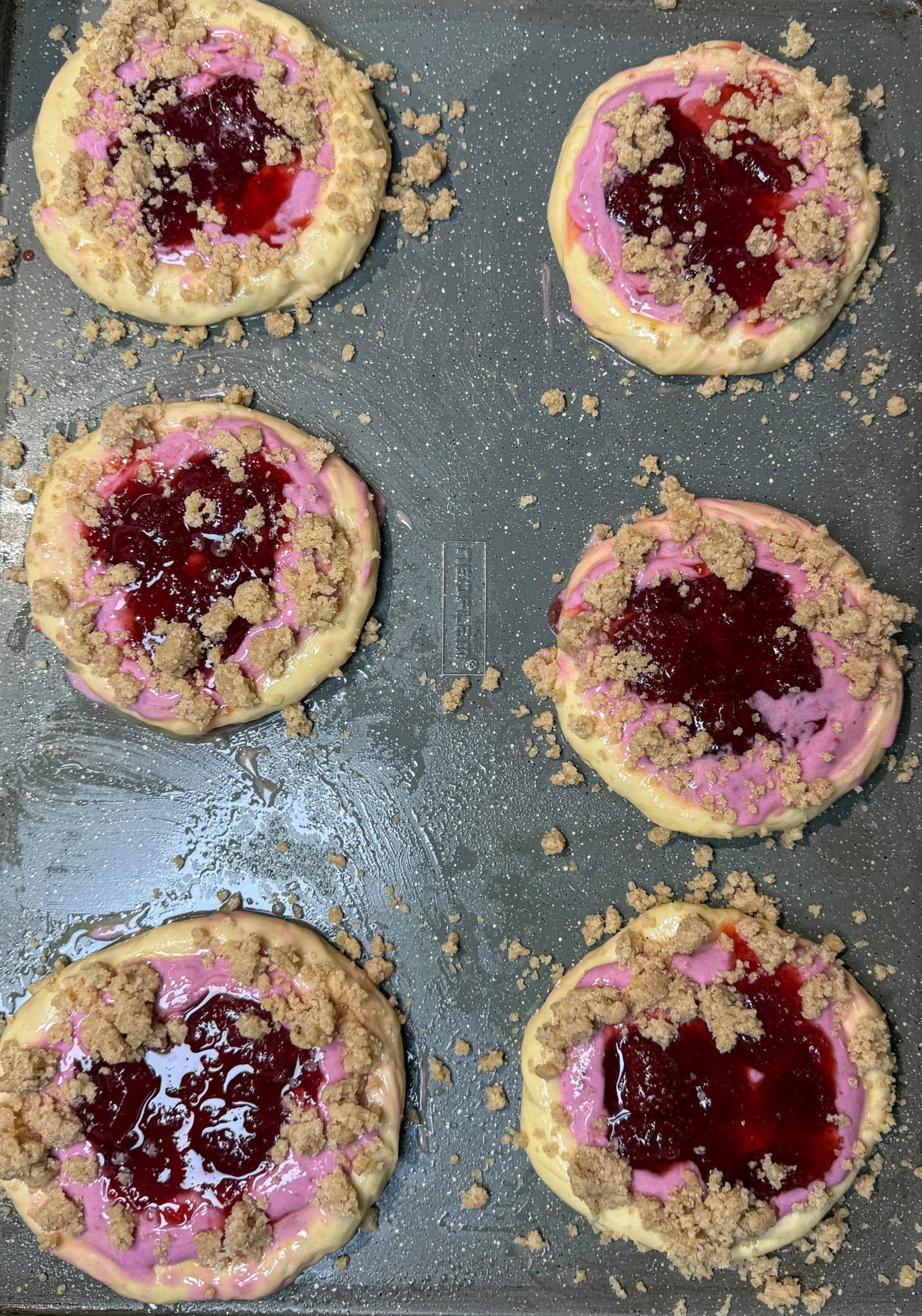
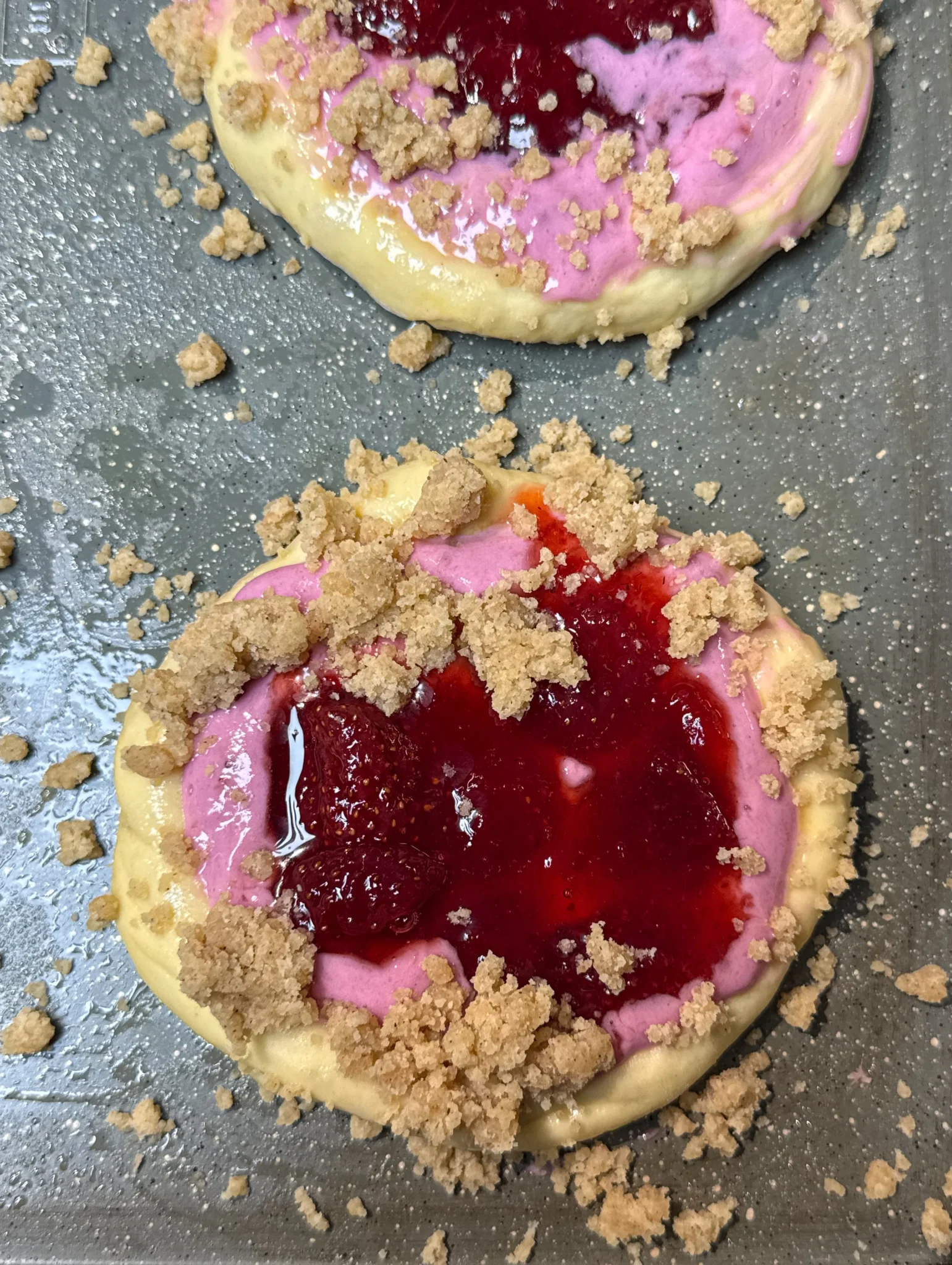
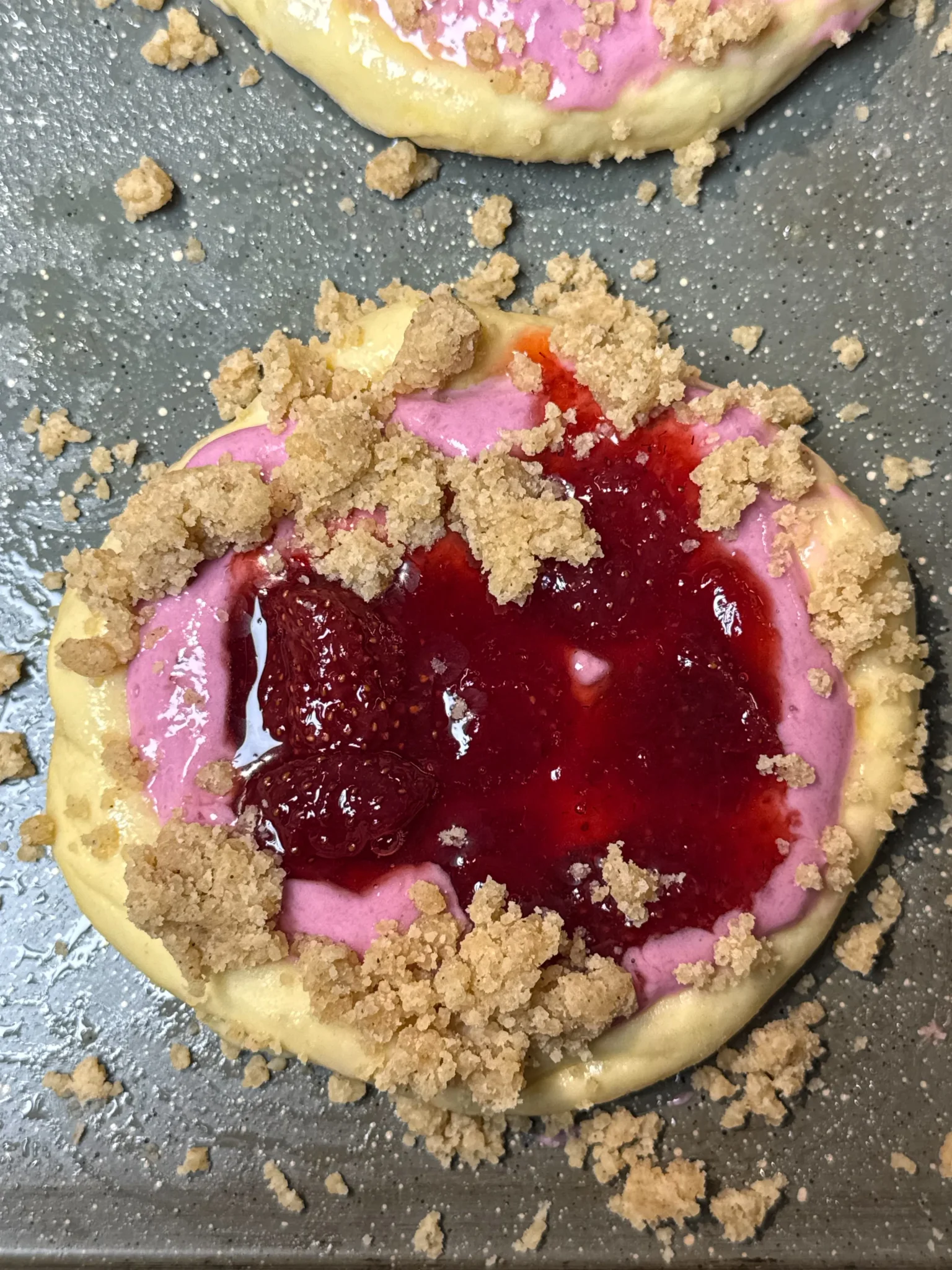
Cover loosely and allow the danishes to proof for a further 30 to 45 minutes until visibly puffed. Pipe or spoon the cream cheese filling into each well. Add a generous teaspoon of strawberry jam directly on top of the cream cheese. Scatter the crumble mixture around the edges of each danish, pressing very gently so it adheres to the dough rather than falling off. Brush any exposed dough with egg wash made from 1 beaten egg and a splash of milk.
Baking the Strawberry Crumble Danishes
Bake in a preheated oven at 190°C (375°F) for 18 to 22 minutes until the edges are deep golden and the crumble is visibly crunchy and caramelized. The cream cheese filling will puff slightly during baking and settle as it cools. Remove from the oven and allow to cool for at least 10 minutes on the tray before transferring.
If using the optional vanilla glaze, whisk together 80 grams of powdered sugar, half a teaspoon of vanilla extract, a pinch of salt, and enough milk to create a drizzleable consistency. Drizzle over the danishes while they are still slightly warm.
Professional Tips for Perfect Results
Add the Butter Slowly to the Brioche Dough
The step where butter is incorporated into the brioche dough is the one that most home bakers rush, and it is also the one that has the greatest impact on the final texture. Adding butter too quickly — especially large pieces at once — prevents the gluten from developing properly and can result in a greasy, dense dough that does not rise well. The butter should go in gradually, in pieces no larger than a teaspoon, with the mixer running.
Each addition should be fully absorbed before the next goes in. Patience here pays dividends in every bite of the finished strawberry crumble danishes.
Keep the Cream Cheese Filling Chilled Until Assembly
A cream cheese filling that has warmed to room temperature becomes too soft to hold its shape in the center of the danish during baking. Keep it refrigerated right up until the moment you are ready to pipe it onto the shaped and proofed dough. Cold filling holds its position better, spreads less during baking, and produces a neater, more defined center in the finished pastry.
Do Not Skip the Second Proof
After shaping the danishes, the temptation to go straight to the oven is real, especially after the long first rise. Resist it. The second proof allows the gluten to relax after shaping, which means the dough will expand evenly rather than springing back or cracking at the edges. Properly proofed strawberry crumble danishes will look noticeably puffier and lighter before they go into the oven, and they will bake up softer and more even as a result.
The JELLY CUSTARD BRIOCHE BUNS are another excellent recipe that demonstrates the same two-rise technique in action and are well worth making alongside this one.
Scatter the Crumble Around the Edges, Not the Center
Placing crumble directly on top of the cream cheese filling can weigh it down and prevent it from setting properly during baking. The crumble is most effective when scattered around the border of the danish, where it has direct contact with the egg-washed dough and can bake into a properly crunchy, golden rim. A few clusters tumbling onto the filling is fine, but the majority of the crumble should frame the pastry rather than cover the center.
Cool Slightly Before Glazing
If using the optional vanilla glaze, wait until the danishes have cooled for at least 10 minutes after coming out of the oven. Glazing while they are still very hot causes the glaze to melt straight off the surface rather than setting into a soft, sweet coating. A slightly warm pastry absorbs just enough glaze to create that beautiful, lightly shiny finish without becoming soggy or wet.
Common Mistakes to Avoid
Using Cold Butter or Cold Eggs in the Dough
Both butter and eggs should be at room temperature before making the brioche dough for these strawberry crumble danishes. Cold butter does not incorporate smoothly and tends to break the dough into greasy chunks rather than distributing evenly through the gluten network. Cold eggs can shock the yeast and slow the fermentation process significantly. Take both out of the refrigerator at least an hour before you plan to start baking.
Over-proofing the Shaped Danishes
A dough that has risen too long during the second proof becomes fragile and full of oversized gas bubbles that collapse in the oven. Over-proofed danishes often spread sideways rather than rising upward, and the interior crumb becomes irregular and coarse. The second proof is complete when the danishes look puffier than when you shaped them but still have some firmness when gently pressed with a fingertip. If a gentle poke springs back slowly, they are ready.
Overfilling the Center
More filling feels more generous, but in the context of strawberry crumble danishes it is actually counterproductive. Too much cream cheese filling will bubble and overflow during baking, spilling onto the tray and burning around the edges of the pastry. Too much jam will pool into the bottom of the danish and make the dough soggy. A heaped teaspoon of cream cheese and a generous teaspoon of jam are the right quantities for each pastry. Restraint here produces a neater, more professional result.
Under-baking to Avoid Dark Color
Brioche is a pale dough by nature, and the instinct to remove it from the oven as soon as it shows color can result in pastries that are under-baked in the center. The crumble on these strawberry crumble danishes should be genuinely golden and beginning to look caramelized before the tray comes out. The bottom of the danishes should be golden brown when lifted. A pale crumble and a pale bottom are reliable signs that more time is needed.
Variations to Try
Raspberry Crumble Danishes
Swap the strawberry jam for a good-quality raspberry preserve. Raspberry’s sharper, more acidic flavor pairs beautifully with the vanilla cream cheese filling and produces a slightly more sophisticated flavor profile than strawberry. The crumble and dough remain exactly the same. A small scattering of fresh raspberries around the border before baking adds color and a burst of fresh fruit flavor alongside the jam.
If you enjoy the combination of berries with buttery pastry, the STRAWBERRY GALETTE is another beautiful recipe in a completely different format that celebrates the same flavor pairing.
Lemon Blueberry Crumble Danishes
Add the zest of one lemon to the cream cheese filling and replace the strawberry jam with blueberry preserve or jam. The lemon lifts the richness of the cream cheese and complements the blueberry’s subtle tartness wonderfully. Add a pinch of lemon zest to the crumble as well for a more cohesive citrus note throughout the pastry. Finish with a lemon glaze made from powdered sugar and fresh lemon juice in place of the vanilla glaze.
Almond Cream Danishes
Replace the cream cheese filling with a simple almond cream (frangipane) made from equal weights of ground almonds, butter, sugar, and egg, beaten together until smooth. Top with a thin layer of apricot jam instead of strawberry and scatter sliced almonds over the crumble before baking. This variation leans into the classic European-style danish aesthetic and produces a more nutty, caramelized result.
For those who love the combination of sweet pastry and berries in a different context, EASY STRAWBERRY BLONDIES are a no-yeast alternative that delivers similar flavor in far less time.
Cinnamon Apple Crumble Danishes
Use apple butter or a thick, well-spiced apple jam in place of the strawberry, and increase the cinnamon in the crumble to a full teaspoon. Add a small pinch of cardamom to the crumble for warmth. This autumn-leaning variation pairs beautifully with the vanilla cream cheese filling and turns these strawberry crumble danishes into a versatile year-round pastry that shifts naturally with the seasons.
Storage and Reheating
Room Temperature
Freshly baked strawberry crumble danishes are at their peak within the first two hours of coming out of the oven, when the dough is still soft and warm, the filling is creamy, and the crumble retains its crunch. At room temperature, they can be kept loosely covered for up to 8 hours. Covering tightly can trap moisture from the jam and filling, which softens the crumble and makes the dough slightly tacky.
Refrigeration
Store strawberry crumble danishes in an airtight container in the refrigerator for up to 3 days. The crumble will lose most of its crunch during refrigeration as it absorbs moisture from the pastry and filling, but the flavor remains excellent. Allow them to come to room temperature for 15 to 20 minutes before reheating for the best texture.
Freezing
These strawberry crumble danishes freeze well once fully baked and cooled. Allow them to cool completely before placing them in a single layer on a baking sheet and freezing until solid. Transfer to a freezer-safe container or bag with parchment between layers and freeze for up to 2 months. Thaw overnight in the refrigerator and reheat in the oven before serving. Do not apply the glaze before freezing — add it fresh after reheating.
Reheating
Place the danishes on a baking sheet in an oven preheated to 150°C (300°F) for 5 to 8 minutes until warmed through and the crumble has regained some of its texture. This is a gentler temperature than the original bake, which prevents the jam from over-caramelizing or the cream cheese from curdling during reheating. A toaster oven works equally well for individual pastries. Avoid the microwave for reheating, as it will make the dough soft and the crumble lose all of its texture entirely.
Frequently Asked Questions
Can I make the dough the night before?
Yes, and it is one of the best ways to work with brioche. After the first rise, punch the dough down gently, wrap it tightly in plastic wrap, and refrigerate overnight. The cold temperature slows the yeast significantly without stopping it entirely, and by morning the dough will have developed an even more complex flavor from the slow fermentation. Take it out of the refrigerator, divide and shape the danishes, and allow the full second proof at room temperature before baking as directed.
Do I need a stand mixer for this recipe?
A stand mixer makes incorporating the butter into the brioche dough considerably easier, but it is possible to make the dough by hand with patience. Mix the flour, yeast, sugar, salt, milk, and eggs in a bowl until a dough forms, then knead on a work surface for 10 minutes until smooth. Gradually work the softened butter into the dough, kneading after each addition until fully incorporated. The process takes around 20 minutes by hand compared to around 15 minutes with a machine, but the result is equally good.
My danishes spread and lost their shape during baking. What went wrong?
The most common cause is over-proofing during the second rise. When the dough is over-fermented, the gluten structure weakens and the pastry cannot hold its shaped form in the oven. It collapses outward rather than rising upward.
The fix is to watch the second proof carefully and bake the danishes when they look puffed and light but still have a little firmness to the touch. Another possible cause is dough that was too warm at the start — brioche dough should be handled quickly and efficiently to keep the butter from melting before the structure sets.
Can I use a different fruit jam?
Absolutely. These strawberry crumble danishes work beautifully with raspberry, blueberry, apricot, cherry, or mixed berry jam. The only requirement is that the jam is thick enough to hold its shape during baking. Test it by placing a teaspoon on a cold plate from the freezer — if it holds a neat mound rather than spreading into a flat puddle, it is thick enough. If it is too runny, simmer it briefly in a saucepan to concentrate it before using.
How do I know when the brioche dough is properly kneaded?
The windowpane test is the most reliable method. Pinch off a small piece of dough, about the size of a grape, and gently stretch it between your fingers until it is thin enough to be translucent. If the dough stretches without tearing and you can see light through it, the gluten network is fully developed and the dough is ready. If it tears before becoming translucent, continue kneading for another 2 to 3 minutes and test again.
Can I add a glaze even if the recipe says it is optional?
The vanilla glaze is genuinely optional in terms of flavor — the strawberry crumble danishes are complete and delicious without it. However, the glaze adds a professional, bakery-style finish that makes the pastries look especially polished. For a version with more visual impact, the glaze is worth the 2 minutes it takes to mix. It can also be flavored with a little lemon juice or rose water for a variation that complements the strawberry filling particularly well.
Watch the recipe video for more clarity!
See our similar recipes:
People also like these recipes:
Final Thoughts
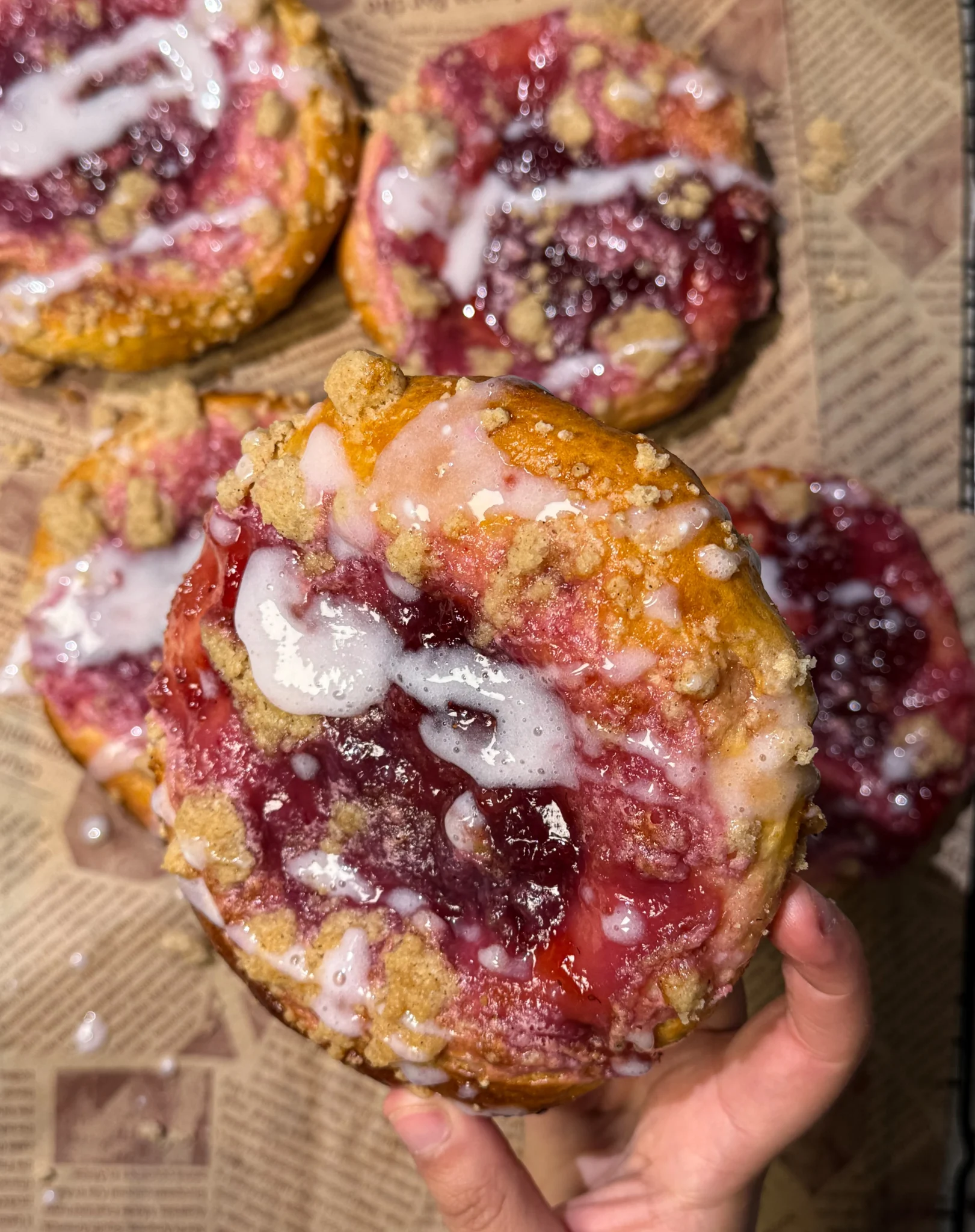
Strawberry crumble danishes are a recipe that proves homemade pastry does not have to mean complicated. From the enriched brioche dough that rises into something pillowy and golden to the vanilla cream cheese filling, the glossy strawberry jam center, and the buttery cinnamon crumble that finishes each pastry with a perfect crunch, every element is achievable in a regular home kitchen with standard equipment and a morning of focused, enjoyable baking.
What makes strawberry crumble danishes so rewarding to bake is the way the components build on one another. The dough itself is already flavorful from the eggs, butter, and slow fermentation. The cream cheese adds tang and richness. The jam brings brightness and color. The crumble adds texture and spice. Each layer is simple on its own, but together they produce something that genuinely feels greater than the sum of its parts, which is one of the most satisfying things baking can deliver.
Whether you make these strawberry crumble danishes for a weekend brunch gathering, a holiday breakfast spread, or a slow weekday morning when you want something more than toast, the result is always the same. Warm, golden, fragrant, and impossible to resist. Once you make them, they will become one of the recipes your kitchen comes back to again and again.
For the Brioche Dough
- 4 cups all-purpose flour
½ cup granulated sugar
2¼ teaspoons instant yeast
1¼ cup warm milk
1 large egg
1 egg yolk
3 tablespoons unsalted butter softened and cubed
- 1 beaten egg for brushing
For the Filling
- 8 oz cream cheese softened
½ cup powdered sugar
¼ cup whole milk
2 teaspoons vanilla bean paste
- Strawberry jam instead of blueberries
For the Coffee Cake Crumb
- ⅓ cup brown sugar
¾ cup all-purpose flour
2 teaspoons ground cinnamon
6 tablespoons melted butter
Optional Vanilla Glaze
- 1½ cups powdered sugar
1 teaspoon vanilla extract
2–3 tablespoons milk
Pinch of salt
Make the Brioche Dough
In a stand mixer combine:
flour
sugar
yeast
egg
egg yolk
warm milk
Using the dough hook, mix on low speed for 2–3 minutes until combined.
Add the softened butter cubes and knead for 3–4 minutes until a soft, smooth dough forms.
Transfer the dough to a greased bowl, cover with plastic wrap, and allow it to rise in a warm place for 1–2 hours, or until doubled in size.
Prepare the Baking Tray
Preheat the oven to 375°F (190°C).
Line a baking sheet with parchment paper.
Divide the Dough
Once the dough has risen, transfer it to a clean well floured surface.
Divide it into 8–12 equal pieces and roll each one into a tight ball.
Place them on the prepared baking tray.
Make the Cream Cheese Filling
In a mixing bowl beat the softened cream cheese for 1–2 minutes until smooth.
Add:
powdered sugar
milk
vanilla bean paste
Beat for another 2–3 minutes until the mixture becomes smooth and fluffy.
Prepare the Crumble
In a bowl combine:
brown sugar
flour
cinnamon
melted butter
Mix until the mixture forms a crumb-like texture.
Shape the Danishes
Using your fingers, press the center of each dough ball to create a shallow well while leaving a ½-inch border around the edge.
The center should be slightly thinner than the edges.
Place a spoonful of cream cheese filling into the center of each pastry.
Add a spoonful of strawberry jam on top.
Add the Crumble
Brush the edges with a beaten egg.
Sprinkle the cinnamon crumble around the edges and lightly over the center if desired.
Bake
Bake the danishes for 20–30 minutes, rotating the pan halfway through baking.
They are ready when the edges are deep golden brown and the centers are set.
Allow them to rest for 10 minutes before glazing.
Make the Glaze (Optional)
In a small bowl whisk together:
powdered sugar
vanilla extract
milk
pinch of salt
Mix until smooth and drizzle over the warm danishes.
Serve
Enjoy these danishes warm with coffee or tea for the ultimate bakery-style treat.
If you've given this recipe a try and it won you over, please share your thoughts by leaving
a rating and comment below! If you have any questions about this recipe, don't hesitate to ask – I'm here to
help and will respond promptly.