Introduction
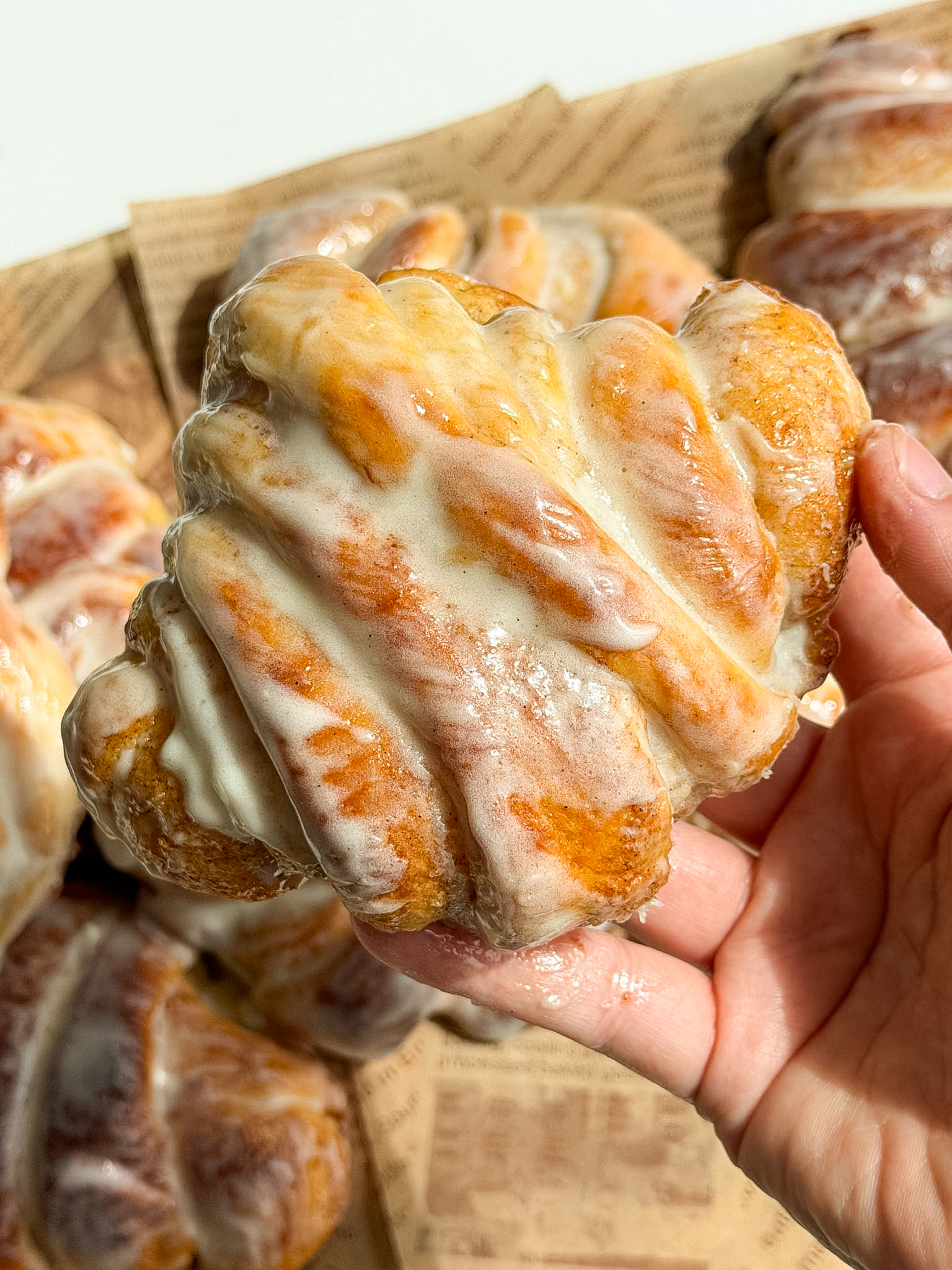
Pumpkin monkey bread is the kind of recipe that turns an ordinary autumn morning into something truly memorable. The moment that warm, spiced aroma fills your kitchen — butter caramelizing, cinnamon blooming, pumpkin weaving through soft yeast dough — you will understand exactly why this pull-apart bread has become the unofficial centerpiece of fall breakfast tables everywhere. Whether you are planning a cozy Sunday morning at home, hosting a Thanksgiving brunch, or just need a reason to celebrate the season, this pumpkin monkey bread delivers something no store-bought pastry ever could.
What sets this version apart is the layering of flavors. The dough itself is enriched with real pumpkin puree, which adds natural moisture, a subtle earthy sweetness, and a gorgeous golden hue throughout every pull-apart piece. Layered over and through those pillowy bites is a deeply rich homemade caramel sauce made from butter, brown sugar, and heavy cream — the kind that pools gloriously at the bottom of the Bundt pan and cascades over the sides the moment you flip it. If you love pumpkin-spiced baked goods as much as we do, you might also want to bookmark our PUMPKIN CINNAMON ROLLS, which pair beautifully with this bread for a full autumn spread.
This guide walks you through every step with the clarity and detail that helps you succeed on the very first try. You will learn the science behind the dough, the specific techniques that guarantee a gooey center rather than a dry one, and the seven professional secrets that take this pumpkin monkey bread from good to extraordinary.
Why This Pumpkin Monkey Bread Is Special
Classic monkey bread is already a beloved crowd-pleaser, but folding pumpkin into the equation transforms it into something seasonal and soulful. The pumpkin puree does triple duty here: it softens the crumb, enriches the flavor, and adds a warm orange tint that makes every piece look as beautiful as it tastes. Unlike a standard enriched dough that relies solely on butter and egg for tenderness, this pumpkin monkey bread draws on the natural sugars and moisture in the pumpkin to create a texture that stays soft for longer.
The homemade caramel sauce is another point of distinction. Many monkey bread recipes use packaged caramel candies or pre-made sauce, which tends to be one-dimensional and overly sweet. The version here is made from scratch in under five minutes, and it brings a depth of buttery, slightly smoky sweetness that commercial products simply cannot replicate. When it seeps into every crevice of the layered dough balls during baking, it creates that signature sticky, pull-apart texture that makes this pumpkin monkey bread so irresistible.
Finally, there is the question of spice balance. Many pumpkin baked goods go overboard with the spice blend, leaving you feeling like you are eating potpourri rather than pastry. This recipe uses a measured, intentional combination of cinnamon, nutmeg, and a whisper of ginger — enough to create warmth and complexity, but restrained enough to let the pumpkin and caramel shine through as the true stars of the dish.
Key Ingredients Overview
The ingredient list for this pumpkin monkey bread is refreshingly short and approachable, but each item plays a specific role in the final result. Understanding those roles will help you make informed substitutions when needed and troubleshoot problems before they arise.
The enriched yeast dough is built on all-purpose flour, active dry yeast, warm milk, butter, egg, and of course pumpkin puree. The flour provides structure. The yeast creates gas that makes the dough rise and gives the finished bread its signature lightness. The milk activates the yeast and contributes to tenderness. The butter and egg enrich the crumb, adding both flavor and that satisfying pull you get when you separate a warm piece from the loaf. The pumpkin puree, at half a cup, brings moisture and natural sweetness without overpowering the other components.
For the caramel layer, the key players are brown sugar, unsalted butter, and heavy cream. Brown sugar melts into a deeply flavored, slightly molasses-kissed caramel far more interesting than one made with plain white sugar. The butter adds richness and helps the caramel stay fluid enough to coat every piece of dough. The heavy cream softens the sauce and gives it a silky, pourable consistency that distributes evenly between layers. If you enjoy the deep caramel notes in this pumpkin monkey bread, you will absolutely love our EASY PUMPKIN CARAMEL CAKE, which channels those same warm, buttery flavors into a stunning layer cake.
Understanding the Science Behind Pumpkin Monkey Bread
How Yeast Creates That Pull-Apart Texture
The entire structure of pumpkin monkey bread depends on yeast working correctly during the rise. Active dry yeast consumes the sugars in the dough and releases carbon dioxide gas, which creates thousands of tiny air pockets throughout the dough. When the dough is shaped into small balls and baked together, those air pockets expand in the heat and cause each piece to press against its neighbors — which is what gives monkey bread its distinctly fluffy, pull-apart texture rather than the dense crumb you get from quick breads.
The pumpkin puree interacts with this process in a helpful way. Its natural sugars provide additional food for the yeast, which can actually speed up the rise slightly. Its moisture content keeps the gluten strands from becoming too tight, resulting in a more tender dough. However, too much pumpkin can weigh the dough down and prevent proper rising, which is why this recipe uses exactly half a cup — enough to make a meaningful contribution without slowing the yeast.
How Heat Transforms the Caramel Sauce
The caramel sauce in this pumpkin monkey bread works through a process called caramelization and then a separate but simultaneous Maillard reaction. When brown sugar and butter melt together and begin to bubble, the sugars break apart at the molecular level and recombine into hundreds of new flavor compounds. This is what gives caramel its characteristic toasty, complex sweetness that is so different from simply dissolved sugar.
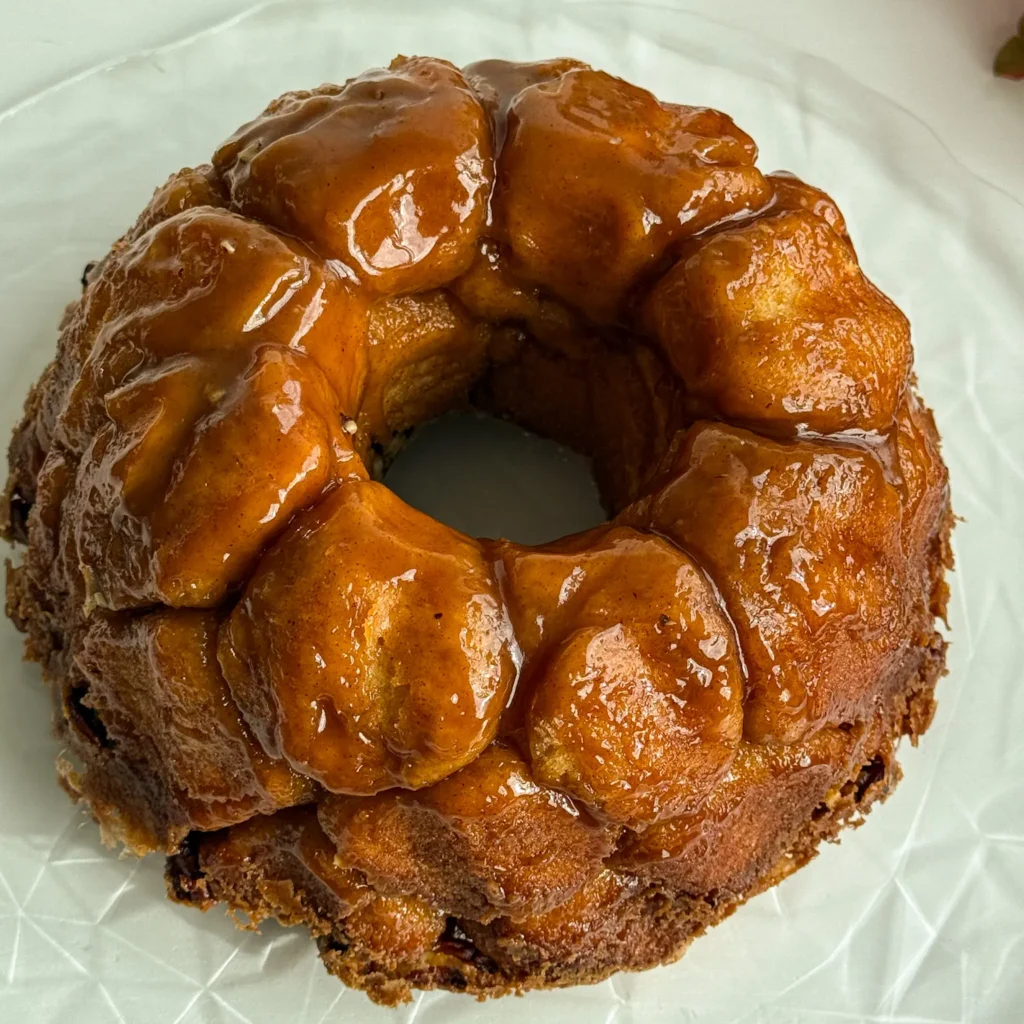
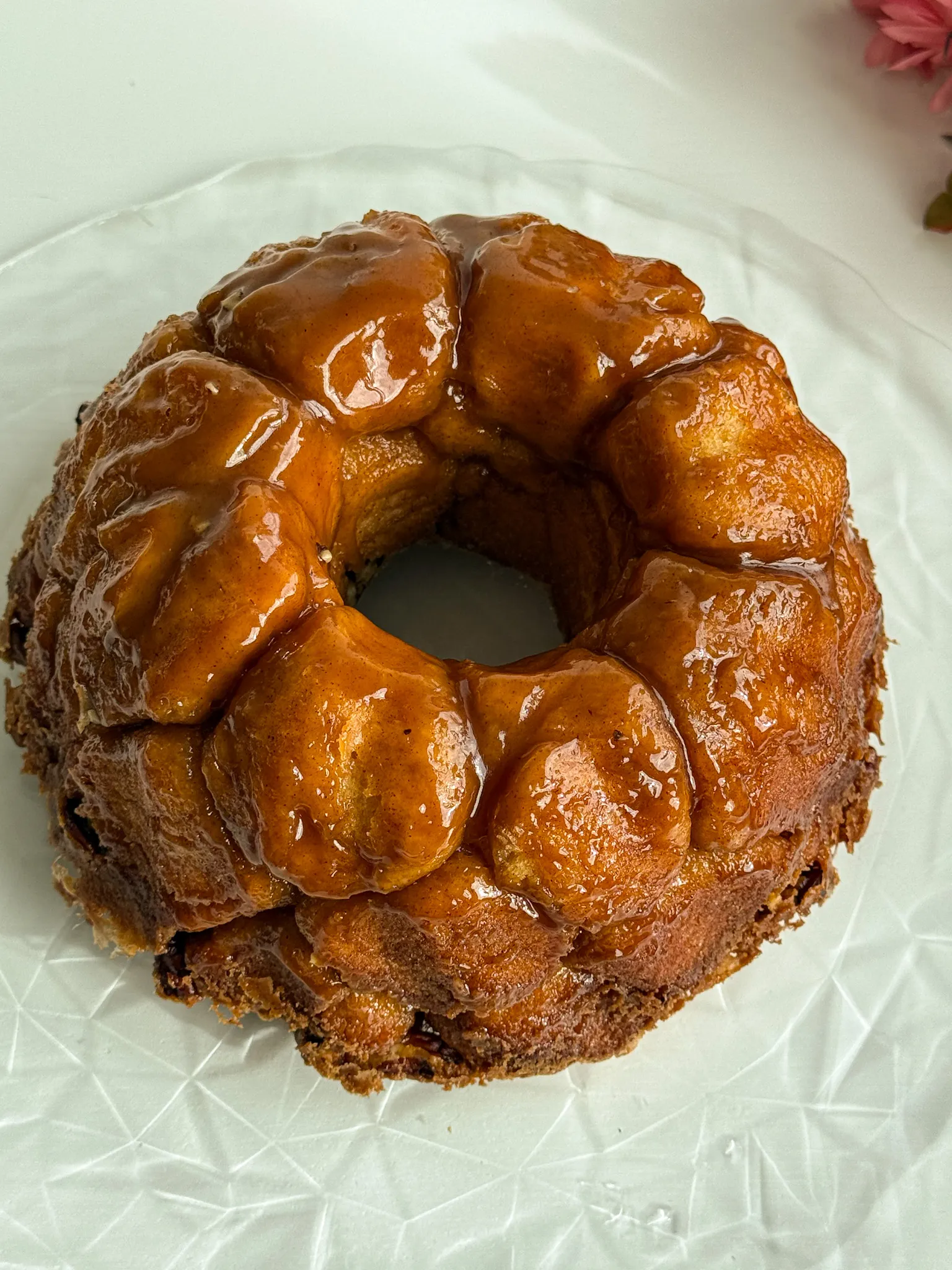
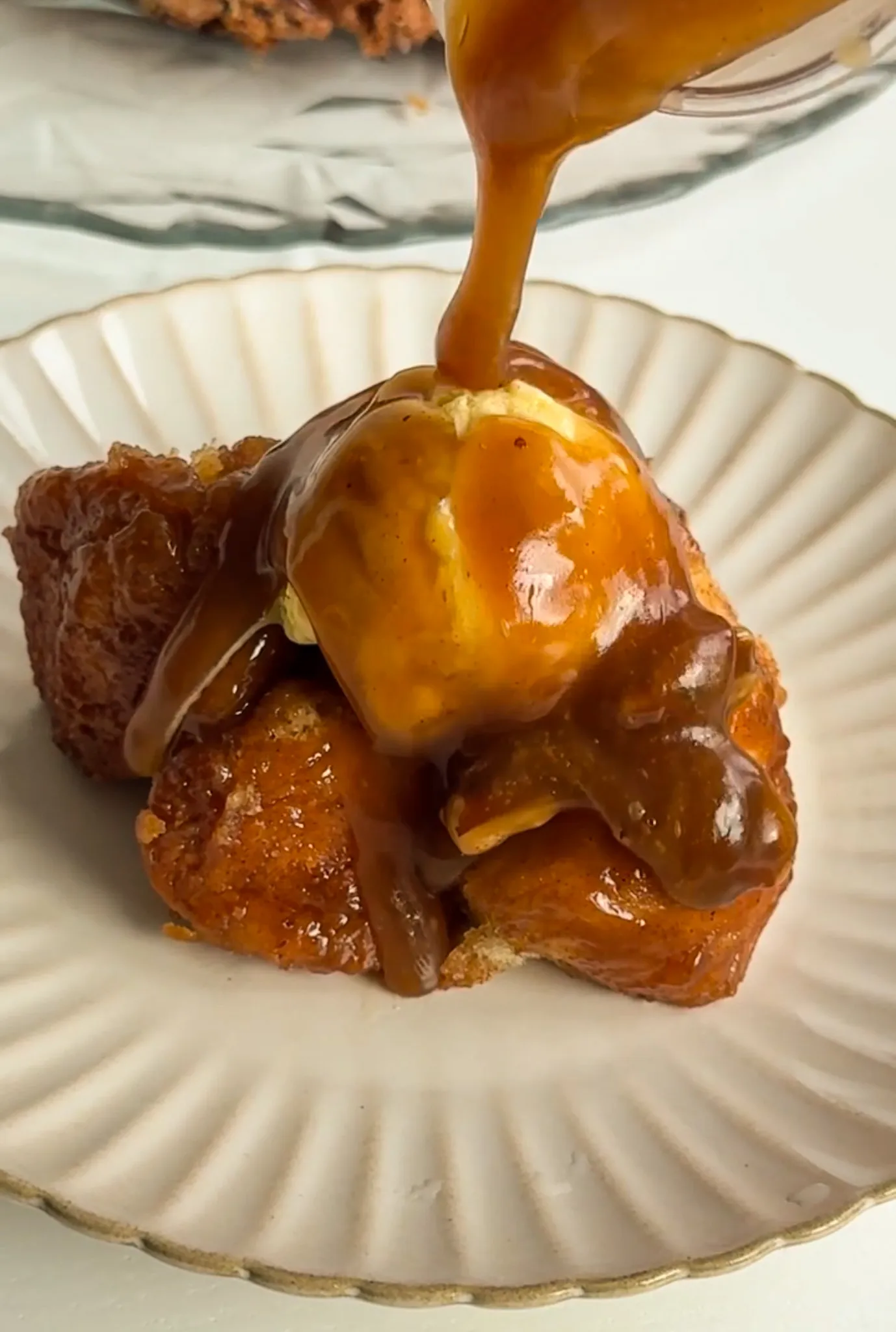
During baking, the caramel sauce between the dough layers continues to cook and concentrate. It absorbs some of the moisture released by the dough and becomes thicker and more intensely flavored. Some of it soaks directly into the dough pieces, flavoring them from the inside out. The rest pools at the bottom of the Bundt pan and, when you invert the bread, cascades down the sides in that spectacular golden waterfall that makes pumpkin monkey bread so visually stunning. Our CINNAMON SWIRL BUNDT CAKE uses a similar Bundt pan technique with a cinnamon ribbon running through each slice — another beautiful fall bake worth exploring.
Why Proper Layering Matters
One of the most common mistakes bakers make with monkey bread is pouring all the caramel over the top in a single pour. This approach creates an uneven distribution, with the top pieces swimming in caramel while the bottom ones remain dry. The correct technique — used in this pumpkin monkey bread recipe — is to layer the caramel between sections of dough balls as you build the loaf. Each layer gets a measured drizzle of sauce, ensuring that every single piece, from top to bottom, is properly coated and infused with that signature caramel richness.
Choosing the Right Ingredients
Pumpkin Puree vs. Pumpkin Pie Filling
This is the most important ingredient distinction in the entire recipe. Pumpkin puree is simply cooked, pureed pumpkin with no added ingredients — pure pumpkin. Pumpkin pie filling, by contrast, already contains sugar, spices, and sometimes thickeners. If you use pumpkin pie filling in this pumpkin monkey bread, you will completely throw off the sweetness and spice balance of the dough, resulting in bread that tastes overly sweet and confusingly spiced. Always reach for the plain pumpkin puree, and check the label to confirm it contains only pumpkin.
Active Dry Yeast vs. Instant Yeast
This recipe uses active dry yeast, which requires proofing — that ten-minute rest in warm milk before being added to the dough. The proofing step does two things: it rehydrates the yeast granules and confirms that your yeast is still alive and active. If your milk and yeast mixture does not turn frothy and bubbly within ten minutes, the yeast is dead and your pumpkin monkey bread will not rise properly. Instant yeast can be substituted in equal amounts and added directly to the dry ingredients without proofing, but the proofing test is a helpful safeguard for bakers who are less confident about the freshness of their yeast.
Brown Sugar for the Caramel
Light or dark brown sugar can be used in the caramel sauce, but dark brown sugar produces a more intensely flavored, molasses-rich caramel that pairs exceptionally well with the pumpkin and spices. If you only have light brown sugar, it still works perfectly — the caramel will simply be slightly milder and more delicate. Whatever you choose, make sure the sugar is measured by packing it firmly into the measuring cup, since loose brown sugar measurements can lead to a thin, under-flavored caramel sauce.
The Right Milk Temperature for Yeast
Yeast activation depends almost entirely on temperature. The ideal range for proofing active dry yeast is between 105 and 115 degrees Fahrenheit. Too cool and the yeast will not activate quickly enough. Too hot — above 120 degrees — and the yeast will be killed entirely, leaving you with dough that will never rise. If you do not have a kitchen thermometer, test the milk temperature on the inside of your wrist: it should feel warm and comfortable, not hot.
Step-by-Step Instructions
Preparation: Making the Dough
Combine the warm milk (105–115F) and active dry yeast in a small bowl or measuring cup. Let it sit undisturbed for 5–10 minutes until the surface is frothy and bubbly — this confirms the yeast is active. While it proofs, whisk together the all-purpose flour, granulated sugar, salt, cinnamon, nutmeg, and ginger in a large mixing bowl.
Add the pumpkin puree, melted unsalted butter, egg, and the proofed yeast mixture to the dry ingredients. Stir until a shaggy dough forms, then turn it out onto a lightly floured surface. Knead by hand for 5–7 minutes until the dough becomes smooth, slightly tacky, and elastic — it should spring back slowly when poked. Place it in a lightly greased bowl, cover with plastic wrap or a clean kitchen towel, and set it in a warm place to rise for 60–90 minutes, or until it has doubled in size.
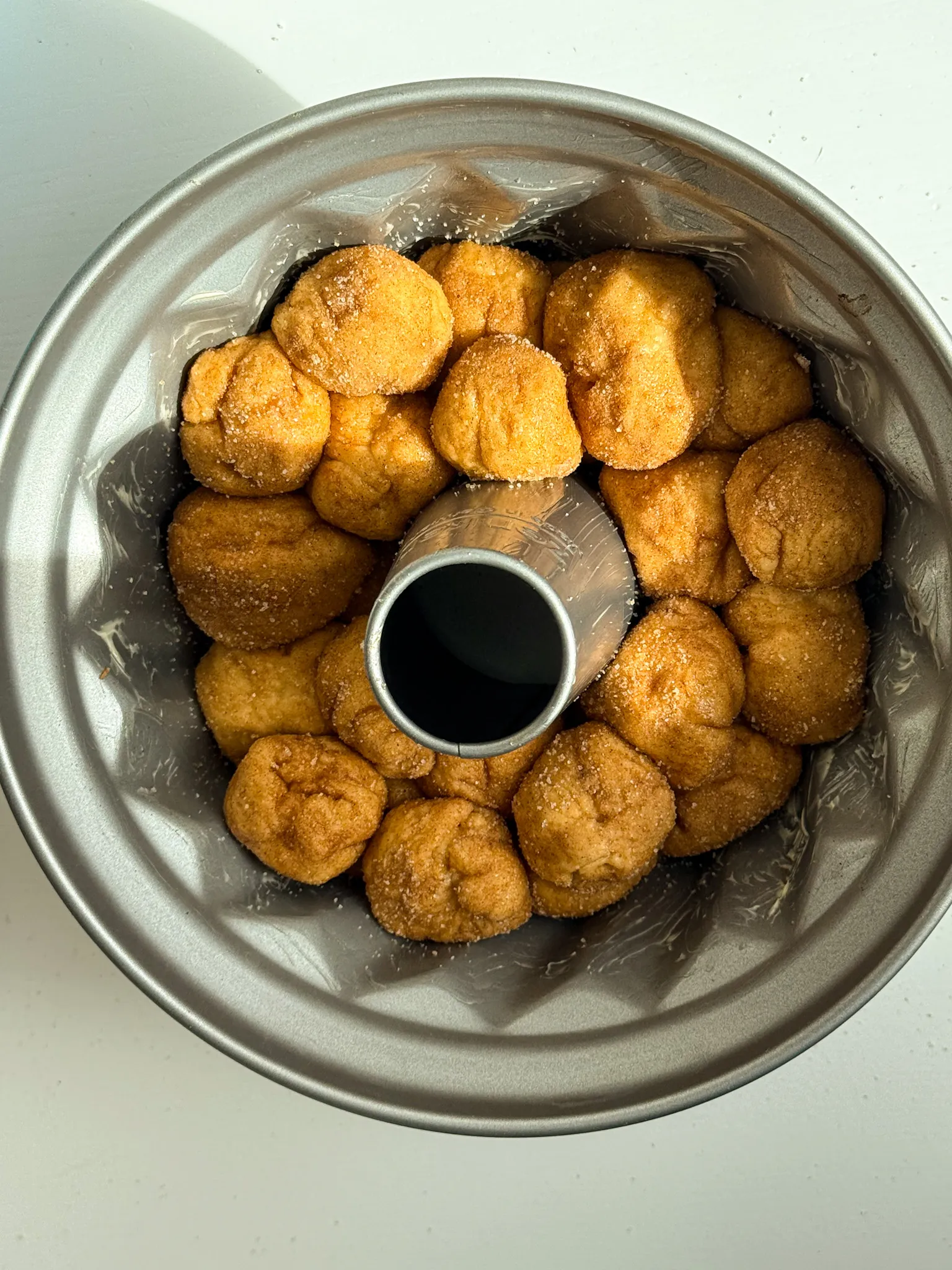
Making the Cinnamon Sugar Coating
Combine one cup of granulated sugar with one tablespoon of ground cinnamon in a wide, shallow bowl. Once the dough has finished rising, gently deflate it and transfer it to a clean surface. Divide it into approximately 30–40 equal pieces, each about one to one and a half inches across. Roll each piece into a smooth ball between your palms, then drop it into the cinnamon sugar mixture and roll to coat completely. Set the coated balls aside on a plate while you make the caramel sauce.
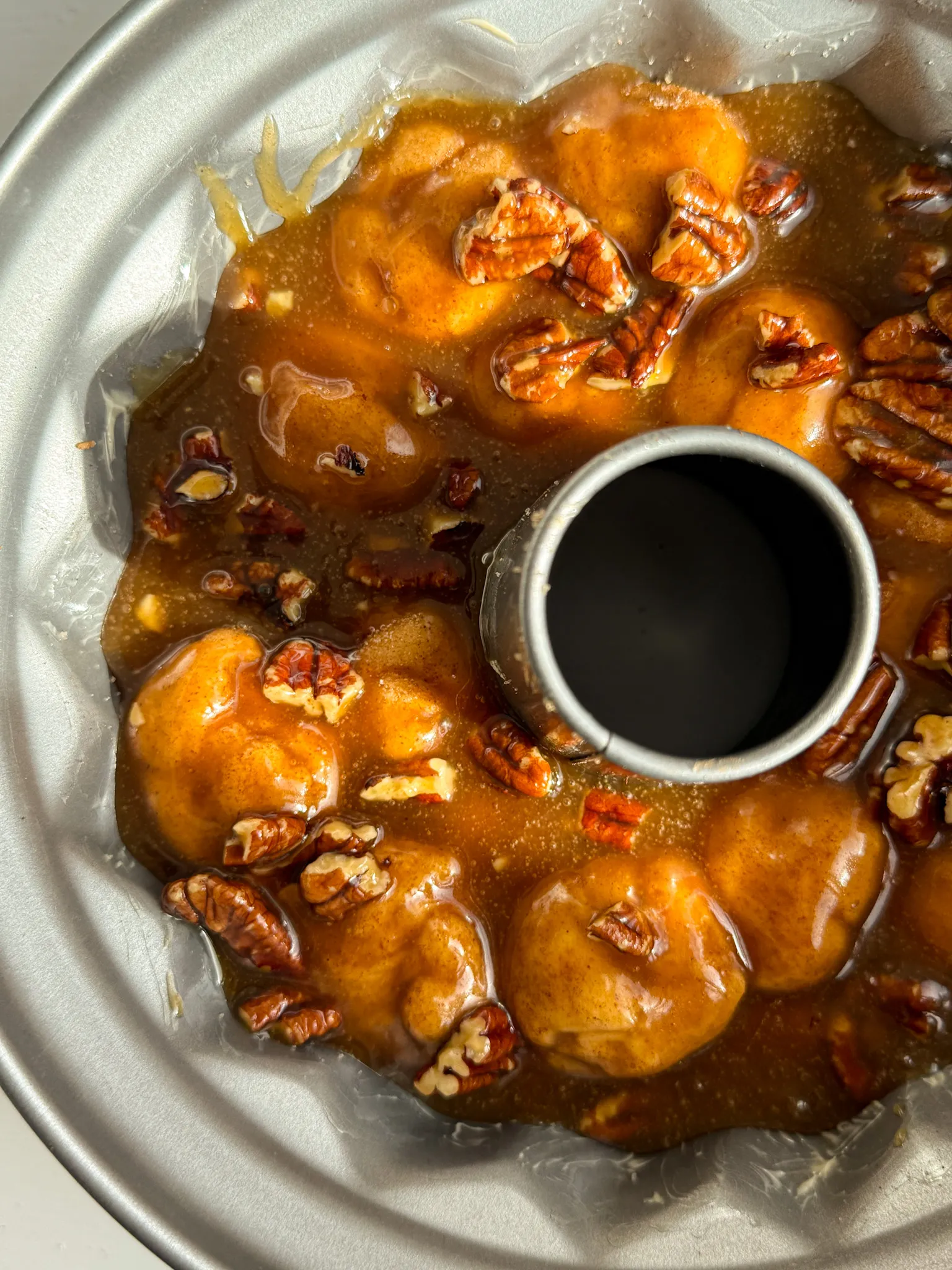
Making the Homemade Caramel Sauce
Melt the unsalted butter in a medium saucepan over medium heat. Stir in the packed brown sugar until the mixture is smooth and no lumps remain. Slowly whisk in the heavy cream — this will cause the mixture to bubble vigorously, so add it gradually. Let the caramel bubble gently for two minutes, stirring occasionally, until it thickens slightly. Remove the pan from heat and stir in the vanilla extract. The caramel should be pourable but not watery.
Assembly and Second Rise
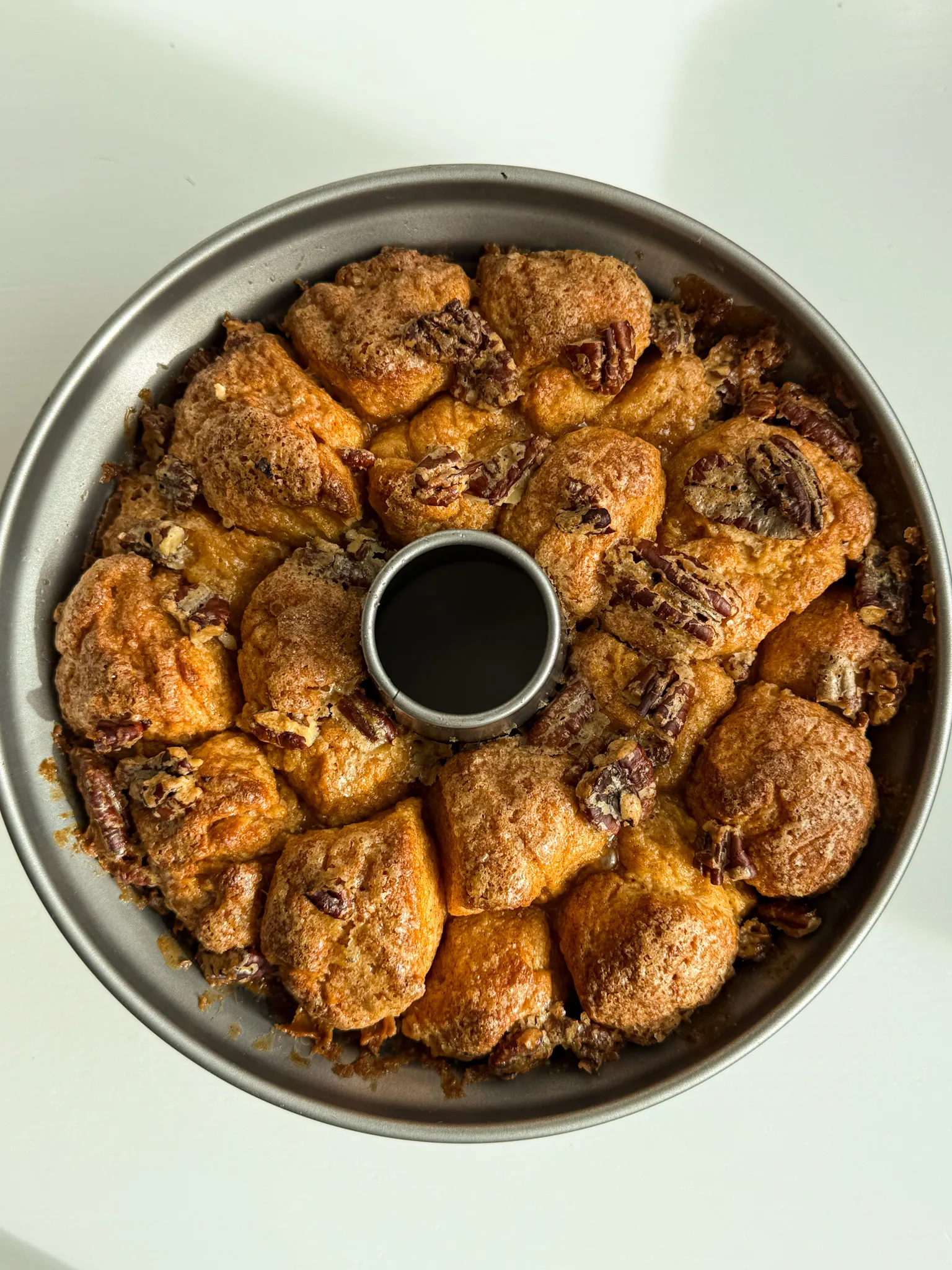
Preheat your oven to 350 degrees Fahrenheit and generously grease a standard Bundt pan, making sure to coat every curve and crevice. Arrange a single layer of cinnamon-sugar-coated dough balls in the bottom of the pan. Drizzle a generous portion of the caramel sauce over this layer. If using chopped pecans, scatter some between the layers now. Add the second layer of dough balls and drizzle more caramel over the top. Continue layering until all the dough balls and caramel are used, ending with a final drizzle of caramel over the top layer.
Cover the pan loosely with plastic wrap and allow the assembled bread to rest for 20–25 minutes while the oven finishes preheating. This brief second rise helps the dough relax and ensures the final baked texture is as tender as possible.
Baking and Unmolding
Bake the pumpkin monkey bread at 350 degrees Fahrenheit for 30–35 minutes. The top should be deep golden brown, the caramel should be actively bubbling around the edges, and a thin skewer inserted into the center should come out without any raw dough on it. If the top is browning too quickly before the center is cooked through, tent the pan loosely with aluminum foil and continue baking.
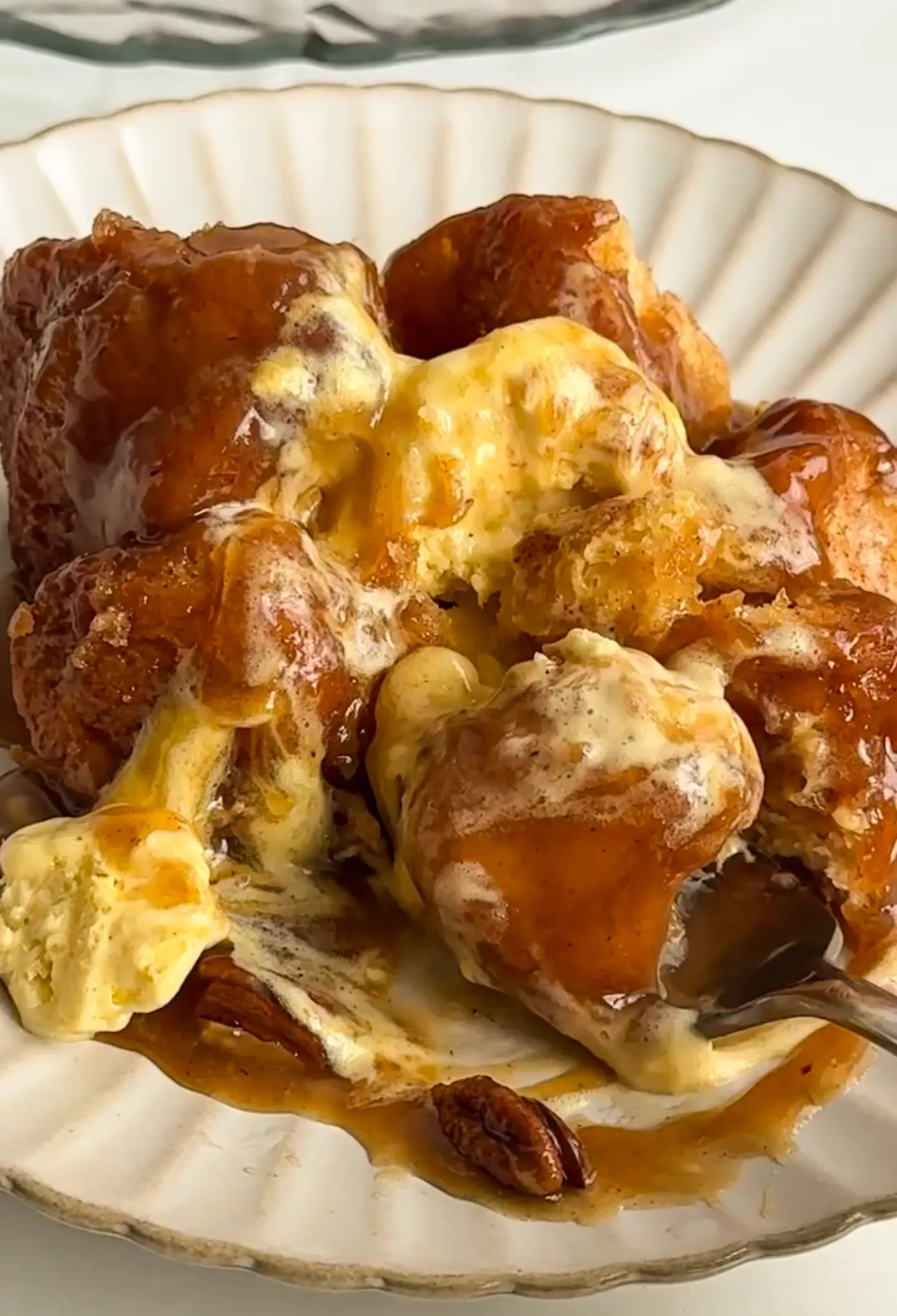
Once baked, remove the pan from the oven and allow it to cool on a wire rack for exactly 10 minutes — not longer. This cooling window allows the caramel to set just enough to hold its shape, but not so much that it hardens and sticks permanently to the pan. Place a large serving platter over the top of the Bundt pan, then confidently invert both together in one smooth motion. Lift the pan away slowly to reveal the finished pumpkin monkey bread in all its caramel-draped glory.
Professional Tips for Perfect Results
Secret 1: Use Room Temperature Eggs
Cold eggs straight from the refrigerator can lower the temperature of your yeast mixture and slow down gluten development. For the best pumpkin monkey bread texture, pull your egg from the refrigerator at least 30 minutes before you begin baking. If you forget, simply place the uncracked egg in a bowl of warm water for five minutes before using it.
Secret 2: Do Not Skip the Second Rise
The 20–25 minute rest after assembling the pumpkin monkey bread in the Bundt pan is not optional. During this time, the dough pieces relax and puff slightly, which gives the finished bread its characteristically light, cloud-like interior. If you skip this step and bake immediately after assembly, the bread will be noticeably denser and slightly tough in the center.
Secret 3: Layer the Caramel — Do Not Just Pour It on Top
As mentioned in the science section, proper layering is the key to even caramel distribution. The professional approach is to use approximately one-third of the caramel per layer, adding it between each section of dough balls rather than all at once. This ensures every piece in the finished pumpkin monkey bread is equally caramel-coated, from the topmost piece to the bottom.
Secret 4: Grease Every Corner of the Bundt Pan
A Bundt pan has a central tube and many decorative curves — all of which are potential sticking points for the caramel. Use softened butter applied with a pastry brush, or a generous coating of baking spray with flour, to ensure the entire interior surface is well-coated. Missing even a small section can cause the bread to tear when you try to unmold it, breaking the beautiful layered shape.
Secret 5: Do Not Rush the Unmolding
The 10-minute cooling window before inverting is genuinely important. Too soon, and the caramel is so fluid that it pours off the bread entirely rather than forming that beautiful glossy coating. Too long, and the caramel hardens into a sticky shell that bonds the bread to the pan. Set a timer and trust the process.
Secret 6: Use Dark Brown Sugar in the Caramel
While light brown sugar works, dark brown sugar contains more molasses, which adds a richer, more complex flavor to the caramel sauce. This depth of flavor is what makes the finished pumpkin monkey bread taste genuinely sophisticated rather than just sweet. If you enjoy deeply flavored caramel in your fall baking, you will also love our BROWN BUTTER PUMPKIN STREUSEL CAKE, which combines brown butter and pumpkin in an equally spectacular way.
Secret 7: Kneading Time Is Non-Negotiable
Kneading the dough for the full 5–7 minutes is what develops the gluten network that gives pumpkin monkey bread its structure and chew. Under-kneaded dough produces bread that crumbles rather than pulls apart in satisfying strands. The dough is properly kneaded when it is smooth, elastic, and springs back within a few seconds when you poke it with a finger.
Common Mistakes to Avoid
Using Pumpkin Pie Filling Instead of Pumpkin Puree
This mistake is so significant it deserves to be mentioned twice. Pumpkin pie filling contains added sugar and spices that will make the dough unpleasantly sweet and over-spiced. Always verify the label before opening the can — the ingredient list should contain only pumpkin, or pumpkin and water.
Overproofing the Dough
If you allow the dough to rise for too long during the first rise, the yeast will exhaust its food supply and the gluten structure will begin to break down. Overproofed dough produces pumpkin monkey bread that tastes yeasty and slightly sour and has a coarser, less pleasant texture. Watch the dough rather than the clock — it is ready when it has doubled in size, which may happen in 60 minutes in a warm kitchen or take up to 90 minutes in a cooler one.
Making the Dough Balls Uneven Sizes
Inconsistent dough ball sizes lead to uneven baking, with smaller pieces becoming dry and slightly crispy while larger ones remain underdone in the center. Take a few extra minutes to divide the dough as evenly as possible. A kitchen scale is genuinely helpful here — weigh the total dough mass after rising, divide by 35, and aim for pieces of roughly equal weight.
Pouring Cold Caramel
The caramel sauce should be warm and pourable when you layer it into the Bundt pan. If it has cooled and thickened too much, it will not distribute evenly between the dough balls. If this happens, simply return the saucepan to low heat for a minute and stir until the sauce loosens to a pourable consistency again.
Not Cooling Before Unmolding
Patience is genuinely difficult when your kitchen smells this good. But inverting the pumpkin monkey bread straight from the oven is a recipe for caramel disaster — the sauce will pour off entirely and pool on your serving platter rather than coating the bread. Those 10 minutes of cooling time are the most important minutes in the entire recipe. Use them to prepare your serving platter and enjoy the aroma.
Variations to Try
Cream Cheese Glaze Variation
For an extra-indulgent version of pumpkin monkey bread, make a simple cream cheese glaze by whisking together four ounces of softened cream cheese, one cup of powdered sugar, three tablespoons of milk, and half a teaspoon of vanilla extract until smooth. Drizzle this over the unmolded bread immediately before serving. The tangy cream cheese cuts beautifully through the richness of the caramel and the sweetness of the cinnamon sugar coating.
Pecan and Chocolate Chip Variation
Scatter a quarter cup each of roughly chopped toasted pecans and semi-sweet chocolate chips between the layers of dough balls along with the caramel. The pecans add crunch and a nutty counterpoint to the soft dough, while the chocolate chips melt into pools of rich, dark chocolate that weave through the caramel in the most wonderful way. This variation is especially popular with younger guests and turns pumpkin monkey bread into a genuine dessert as much as a breakfast bread.
Apple and Pumpkin Variation
Replace half the pumpkin puree with an equal amount of smooth, unsweetened applesauce, and toss half a cup of finely diced fresh apple into the dough balls before rolling them in cinnamon sugar. This variation leans into the apple-pumpkin pairing that defines so many fall desserts, adding a subtle brightness and slight tartness that balances the richness of the caramel beautifully. If you love apple-based fall baking, our PUMPKIN COFFEE CAKE is another excellent option — it uses a similar streusel technique in a more traditional cake format.
Maple Brown Butter Variation
Substitute two tablespoons of pure maple syrup for two tablespoons of the heavy cream in the caramel sauce, and use browned butter in place of regular melted butter. Brown the butter first by cooking it in the saucepan over medium heat until it foams, subsides, and begins to smell nutty and toasty, with small golden-brown solids forming on the bottom. Then proceed with the rest of the caramel recipe. The resulting sauce is extraordinarily complex — nutty, maple-sweetened, caramelized, and deeply autumnal. This is the variation to make when you really want to impress.
Storage and Reheating
Room Temperature
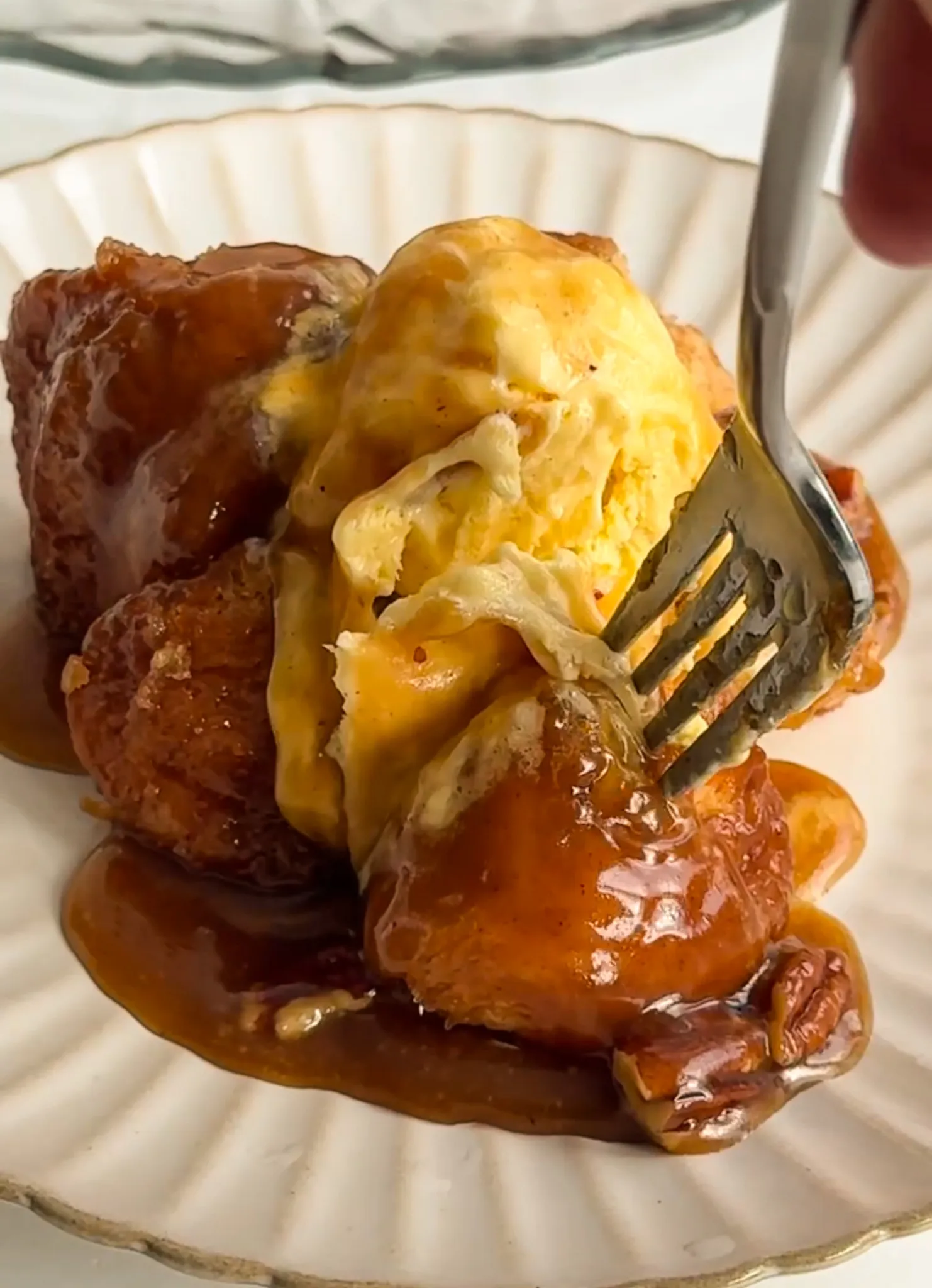
Pumpkin monkey bread is at its absolute best served warm, directly after unmolding. However, it holds beautifully at room temperature for up to two days when covered tightly with plastic wrap or stored in an airtight container. The caramel will set as it cools, creating a chewier coating around each piece that many people actually prefer to the warm, fluid version.
Refrigeration
For storage beyond two days, transfer the pumpkin monkey bread to an airtight container and refrigerate for up to five days. The cold temperature will cause the caramel to firm up significantly, so the bread will feel denser and stickier when you pull it from the refrigerator. Reheating always brings it back to life — this is not a bread that should be eaten cold.
Freezing
Pumpkin monkey bread freezes exceptionally well. After it has cooled completely, wrap the entire loaf (or individual portions) tightly in plastic wrap and then in a layer of aluminum foil. Freeze for up to two months. To serve, thaw overnight in the refrigerator and then reheat as described below. The texture and flavor hold up remarkably well through the freeze-thaw cycle, which makes this pumpkin monkey bread an excellent candidate for make-ahead holiday baking.
Reheating
The best way to reheat pumpkin monkey bread is in a 300-degree oven for 10–15 minutes, covered loosely with foil to prevent the top from over-browning. This method revives the caramel to a fluid, glossy state and warms the dough through without drying it out. Individual pieces can also be microwaved for 20–30 seconds on medium power — longer than that tends to make the caramel very hot and potentially hardened. Add a very small splash of water to the microwave-safe dish before reheating to introduce a little steam and keep the pieces soft.
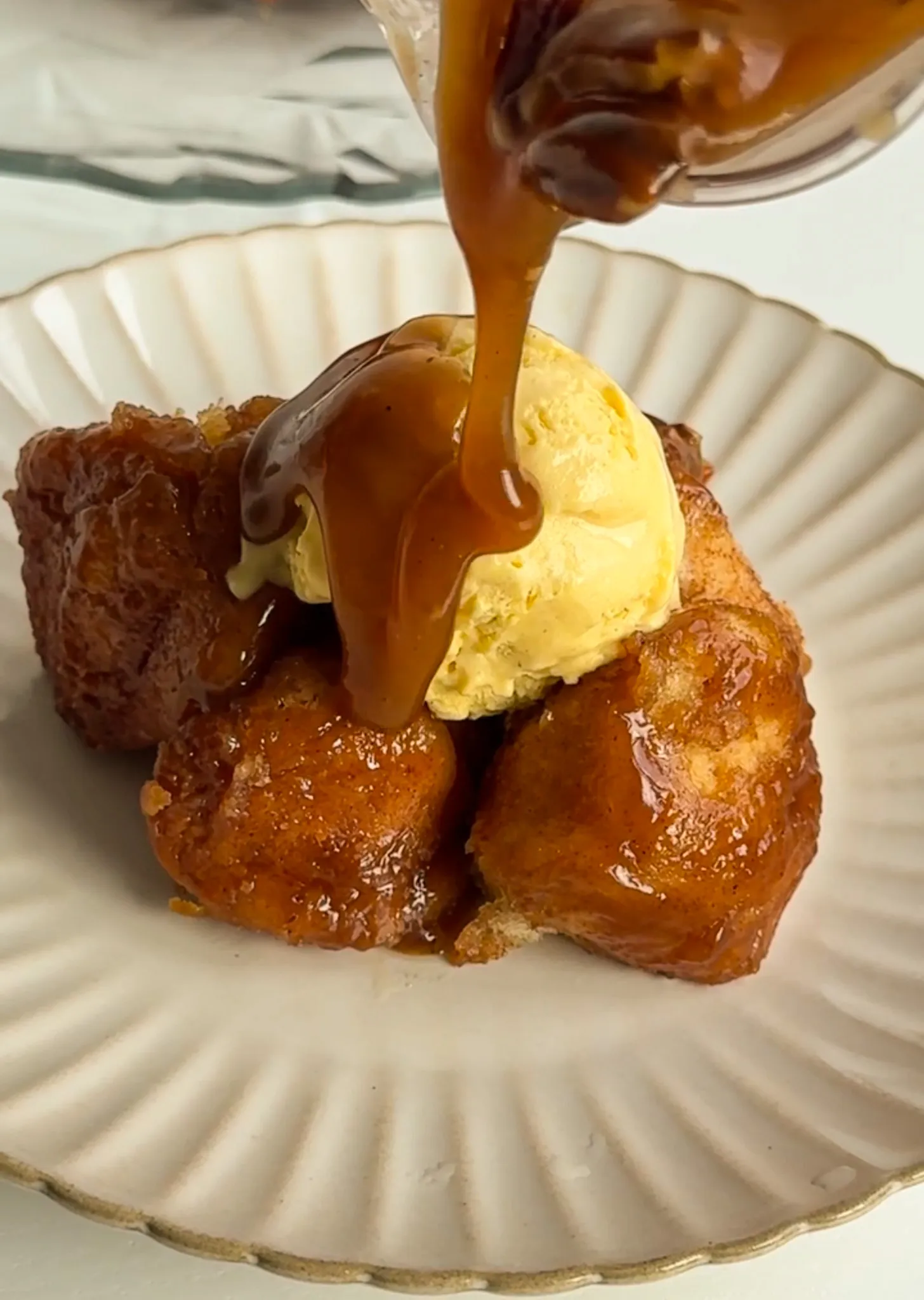
Frequently Asked Questions
Can I make pumpkin monkey bread the night before?
Yes, and this is actually a great strategy for holiday mornings. After assembling the coated dough balls and caramel in the Bundt pan, cover the pan tightly with plastic wrap and refrigerate overnight for up to 16 hours. Remove it from the refrigerator about 45 minutes before you plan to bake it, allow it to come to room temperature and complete its second rise, then bake as directed. This approach means your pumpkin monkey bread can be on the table with minimal morning effort.
Can I use a regular round cake pan instead of a Bundt pan?
A Bundt pan is strongly recommended for pumpkin monkey bread because the central tube ensures the heat reaches the inside of the loaf evenly. Without it, the center of the bread may remain undercooked while the outside overbrowns. If a Bundt pan is not available, a tube pan or angel food cake pan works as a substitute. A regular round cake pan is not ideal, but if it is your only option, reduce the oven temperature by 25 degrees and add 10–15 minutes to the baking time, checking carefully for doneness.
Why is my pumpkin monkey bread dry?
Dry pumpkin monkey bread is almost always caused by one of three issues: the dough was over-kneaded and the gluten became too tight, the bread was overbaked and too much moisture evaporated, or not enough caramel sauce was layered between the pieces during assembly. Make sure to use all of the caramel sauce the recipe specifies, distribute it between layers rather than pouring it all over the top, and pull the bread from the oven as soon as it reaches that deep golden color with bubbling caramel at the edges.
Can I make pumpkin monkey bread without yeast?
The yeast is what creates the distinctive fluffy, pull-apart texture of authentic monkey bread. Without it, the dough will be dense and biscuit-like rather than soft and airy. If you prefer not to work with yeast, you can use refrigerated biscuit dough from the store as a shortcut — simply cut each biscuit into quarters, coat in cinnamon sugar, and proceed with the caramel and assembly as directed. The result will be different from this recipe but still delicious.
How do I know when the pumpkin monkey bread is done baking?
There are three reliable indicators: the top should be deep golden brown (not pale, not very dark), the caramel should be actively bubbling around the edges and along the center tube, and a thin skewer or toothpick inserted into the thickest part should come out without any wet, raw dough clinging to it. If the top is browning faster than the center is cooking, tent with foil and continue baking until the skewer test passes.
Can I add a cream cheese swirl to the dough?
Yes, and it is a beautiful addition. Mix four ounces of softened cream cheese with two tablespoons of powdered sugar and one teaspoon of vanilla until smooth. Drop small dollops of this mixture between layers of dough balls as you assemble the pumpkin monkey bread. The cream cheese will melt slightly during baking, creating pockets of tangy, creamy filling distributed throughout the loaf.
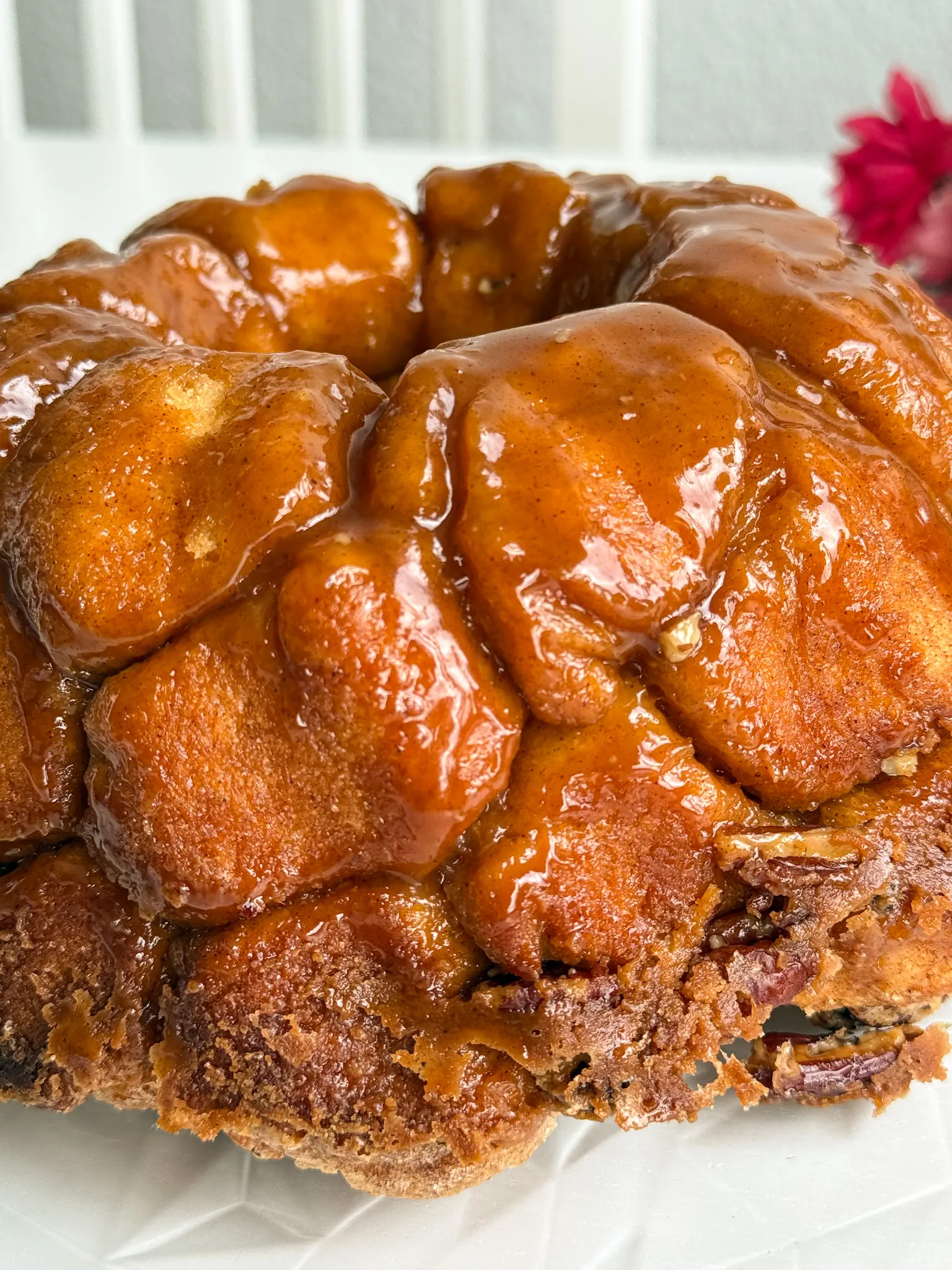
Watch the recipe video for more clarity!
See our similar recipes:
People also like these recipes:
Final Thoughts
Pumpkin monkey bread is one of those rare recipes that manages to be simultaneously impressive and completely approachable. Once you understand the core techniques — proofing the yeast properly, layering the caramel evenly, respecting the rise times — you will find that this pumpkin monkey bread comes together with a kind of relaxed confidence that makes baking genuinely enjoyable rather than stressful. It is a recipe that rewards patience and attention to detail with something that feels truly special.
The beauty of this particular pumpkin monkey bread lies in how naturally it fits into the rhythm of autumn. It is the recipe you reach for when the leaves have turned and the mornings are cool. It is the thing you bring to the table when you want everyone around it to feel genuinely cared for. The combination of soft, spiced dough, warm caramel sauce, and the ritual of pulling apart each piece by hand is deeply satisfying in a way that goes beyond just the flavor. It is comfort food in the most honest sense of the phrase.
We hope this guide gives you every tool you need to make the best pumpkin monkey bread of your life on your very first attempt. Save the recipe, share it with someone who would love it, and let this be the fall baking project that makes your kitchen smell like October for years to come. Happy baking.
For the Dough
- 2 ½ cups all-purpose flour
- 1 packet 2 ¼ tsp active dry yeast
- ½ tsp salt
- ½ tsp cinnamon
- ½ tsp nutmeg
- ¼ tsp ginger optional
- 1/3 cup granulated sugar
- 1/2 cup pumpkin puree not pumpkin pie filling
- 1/3 cup warm milk
- 1/4 cup unsalted butter melted
- 1 large egg
For the Coating
- 1 cup granulated sugar
- 1 tbsp cinnamon
For the Caramel Sauce
- 1 cup brown sugar packed
- 1/2 cup unsalted butter
- 1/4 cup heavy cream
- 1 tsp vanilla extract
- Chopped pecans optional
Make the Dough
Combine warm milk and yeast. Let sit 5–10 minutes until frothy.
In a bowl, whisk flour, sugar, salt, and spices.
Add pumpkin purée, melted butter, egg, and yeast mixture.
Knead 5–7 minutes until smooth and elastic.
Cover and let rise 1–1.5 hours until doubled.
Prepare the Coating
Mix granulated sugar and cinnamon.
Cut dough into 1–1.5 inch pieces and roll into balls.
Coat each ball in cinnamon sugar.
Make the Caramel Sauce
Melt butter in a saucepan over medium heat.
Stir in brown sugar until smooth.
Slowly whisk in heavy cream.
Let bubble gently 2 minutes.
Remove from heat and stir in vanilla.
Assemble
Preheat oven to 350°F (175°C).
Grease a Bundt pan or baking dish.
Layer dough balls in the pan, pouring caramel between layers.
Add chopped pecans if desired.
Bake & Serve
Bake 30–35 minutes until golden and cooked through.
Cool 10 minutes.
Invert onto a plate and serve warm.
If you've given this recipe a try and it won you over, please share your thoughts by leaving
a rating and comment below! If you have any questions about this recipe, don't hesitate to ask – I'm here to
help and will respond promptly.