Master the Art of Perfect Scrambled Eggs
Perfect scrambled eggs are one of those deceptively simple dishes that separate good cooks from great ones. Whether you prefer them soft and creamy, fluffy and tender, or fully set and classic, the technique remains surprisingly consistent. The secret to perfect scrambled eggs lies not in fancy ingredients or complicated methods, but in understanding a few fundamental principles about heat, timing, and seasoning. Once you master these basics, you’ll be able to make perfect scrambled eggs exactly how you like them, every single time.
This comprehensive guide will teach you everything you need to know about making perfect scrambled eggs. From choosing the right pan size to understanding how stirring speed affects texture, you’ll discover the small tweaks that make a massive difference. Whether you’re cooking breakfast for yourself on a busy weekday or preparing brunch for guests, these techniques ensure your scrambled eggs turn out tender, flavorful, and never dry.
Why This Recipe Delivers Perfect Scrambled Eggs
Perfect scrambled eggs aren’t about following a rigid formula. They’re about understanding four critical principles that give you complete control over the final result. First, salting your eggs early seasons them evenly throughout and actually makes them more tender by breaking down proteins. Second, adding a splash of liquid keeps the eggs soft and prevents that rubbery texture nobody wants. Third, using the right pan size gives you better control while cooking, preventing uneven heat distribution. Finally, finishing with a lid allows the eggs to gently set without overcooking, ensuring creamy perfection.
These techniques work whether you’re making perfect scrambled eggs for one or scaling up for a crowd. The beauty of this method is its flexibility. You can adjust the stirring speed, cooking time, and finishing technique to achieve exactly the texture you prefer.
Key Ingredients for Perfect Scrambled Eggs
The ingredient list for perfect scrambled eggs is remarkably simple: eggs, salt, a splash of liquid, and butter. However, the quality and proportions of these ingredients significantly impact your results. Fresh eggs with bright orange yolks deliver richer flavor and better texture. The type of liquid you add affects creaminess, with heavy cream producing the most luxurious results and water keeping things light. Butter serves double duty, adding flavor while helping you gauge when the pan reaches the ideal temperature.
Understanding how each ingredient contributes to perfect scrambled eggs helps you make informed adjustments based on your preferences and what’s available in your kitchen.
Understanding the Science Behind Perfect Scrambled Eggs
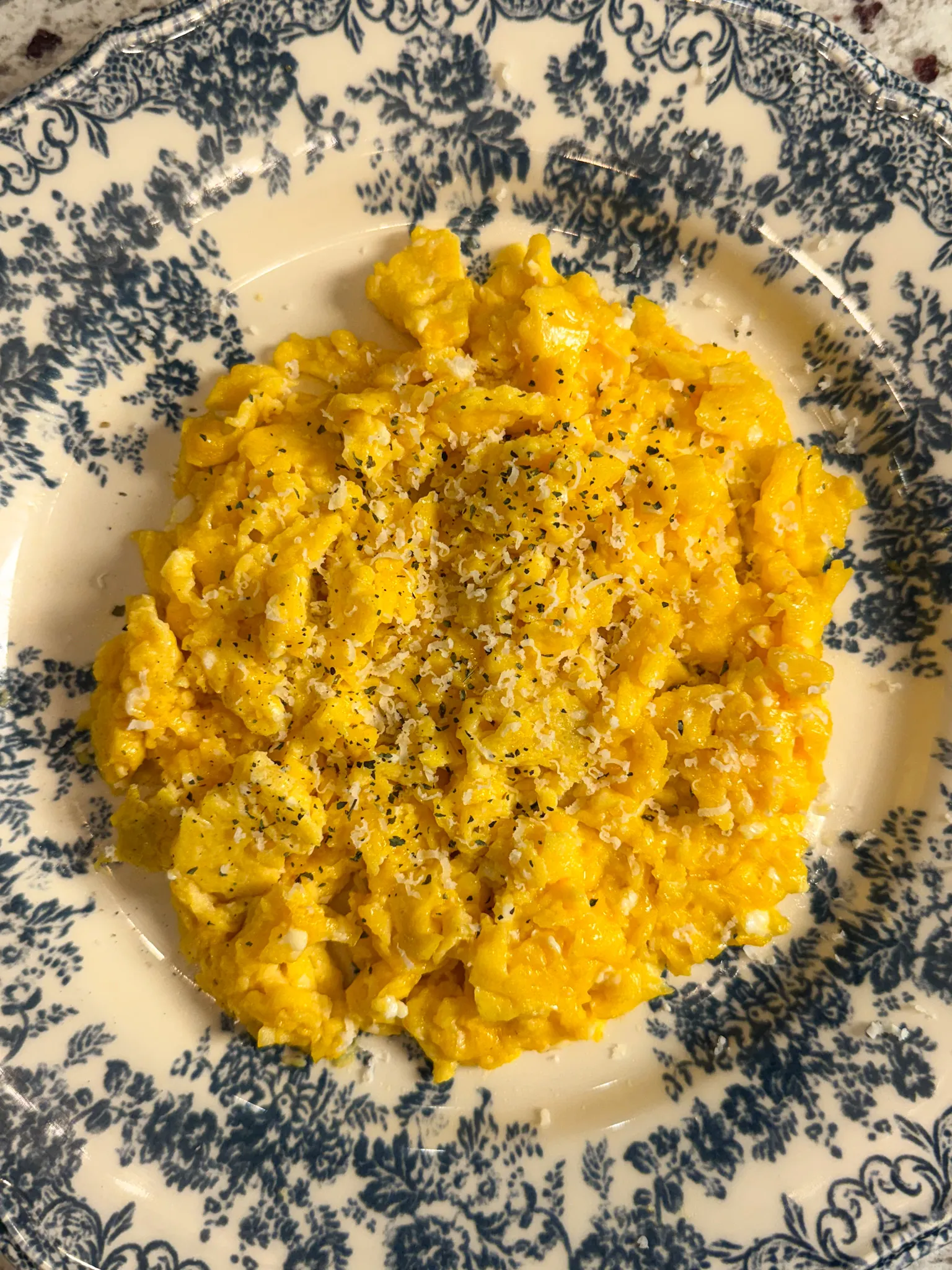
The journey to perfect scrambled eggs begins with understanding what happens when eggs cook. Eggs contain proteins that coagulate when heated, transforming from liquid to solid. The speed and temperature of this transformation determine whether your eggs turn out tender and creamy or tough and rubbery. Cooking perfect scrambled eggs means controlling this protein coagulation process through gentle heat and constant movement.
The Role of Salt in Perfect Scrambled Eggs
Adding salt to your eggs before cooking does more than just season them. Salt breaks down egg proteins, making them less likely to form tight bonds during cooking. This results in perfect scrambled eggs with a softer, more tender texture. The longer salt sits with the eggs before cooking, the more pronounced this effect becomes. Ideally, salt your eggs five to ten minutes before cooking for maximum benefit.
You’ll notice salted eggs look slightly darker and more translucent compared to unsalted eggs. This visual change indicates the salt has begun working its magic on the protein structure, setting you up for perfect scrambled eggs.
Why Liquid Makes Better Scrambled Eggs
Adding liquid to your eggs before cooking dilutes the egg proteins slightly, which helps prevent them from bonding too tightly during cooking. This creates perfect scrambled eggs that stay tender and creamy rather than becoming dense and rubbery. The type of liquid you choose affects the final richness. Milk creates classic scrambled eggs, half-and-half adds moderate richness, heavy cream produces ultra-luxurious results, and water keeps things light while still improving texture.
Even a tablespoon or two of liquid per egg makes a noticeable difference in achieving perfect scrambled eggs.
Choosing the Right Equipment for Perfect Scrambled Eggs
Your equipment choices significantly impact your ability to make perfect scrambled eggs. The right tools give you better control over temperature and texture, while the wrong ones can sabotage even perfect technique.
Selecting the Perfect Pan
Pan size matters more than most people realize when making perfect scrambled eggs. A pan that’s too large spreads the eggs too thin, causing them to cook unevenly and become dry. A pan that’s too small creates a thick layer of eggs that’s difficult to stir and prone to overcooking on the bottom. For four to six eggs, an eight-inch nonstick skillet provides ideal surface area for perfect scrambled eggs.
The pan material also matters. Nonstick surfaces prevent sticking and make cleanup easier, though a well-seasoned carbon steel or cast iron pan also works beautifully for perfect scrambled eggs.
The Best Utensils for Scrambling
A heat-resistant silicone spatula gives you the flexibility to scrape every bit of egg from the pan while protecting nonstick surfaces. Avoid metal utensils on nonstick pans, as they can damage the coating. Some cooks prefer wooden spoons for making perfect scrambled eggs, which work well but don’t scrape the pan as effectively as silicone spatulas.
Whisking your eggs before cooking helps create uniform perfect scrambled eggs by ensuring the yolks and whites blend completely.
Step-by-Step Instructions for Perfect Scrambled Eggs
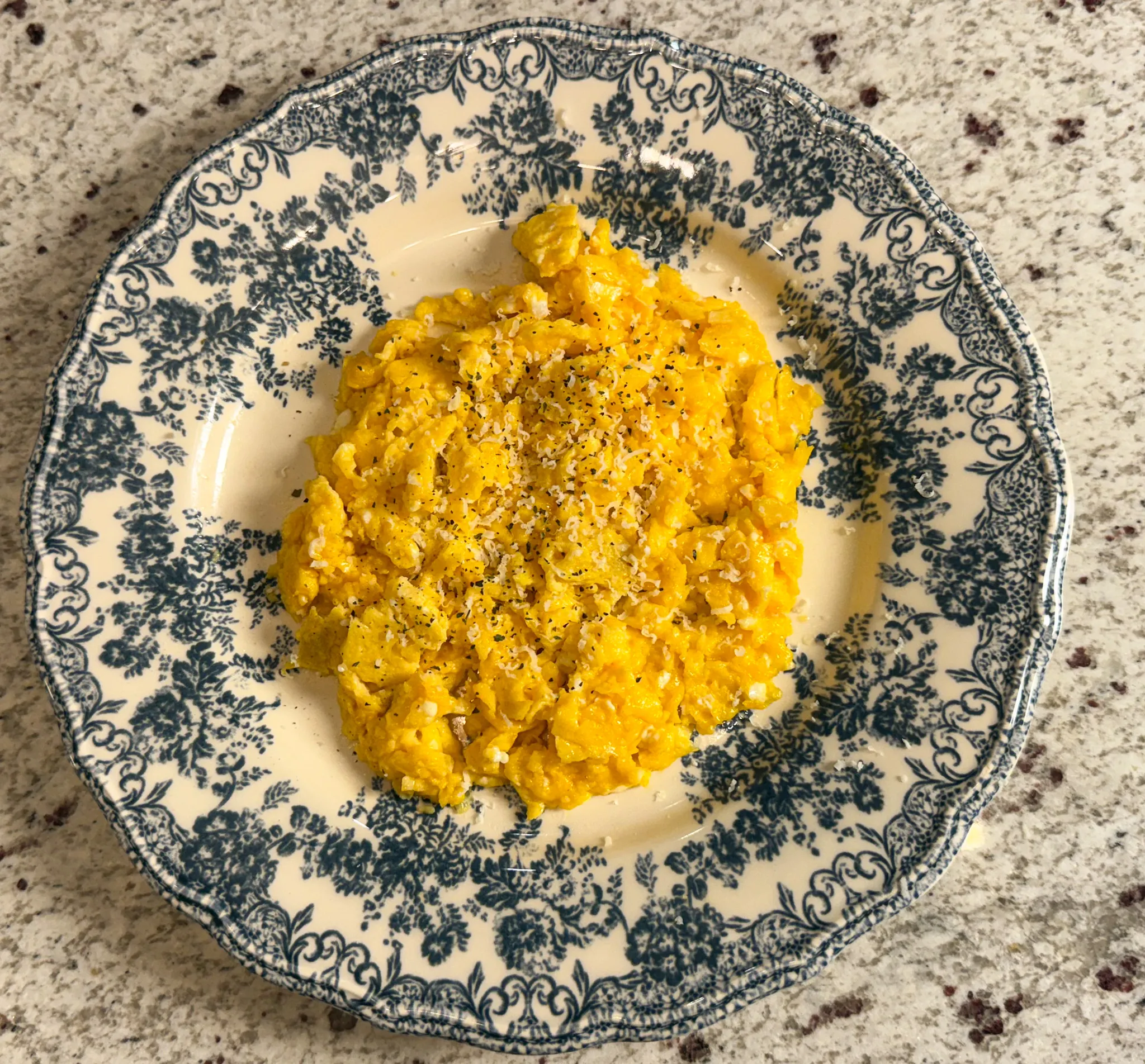
Now that you understand the science and have the right equipment, let’s walk through the complete process of making perfect scrambled eggs from start to finish.
Preparation Steps
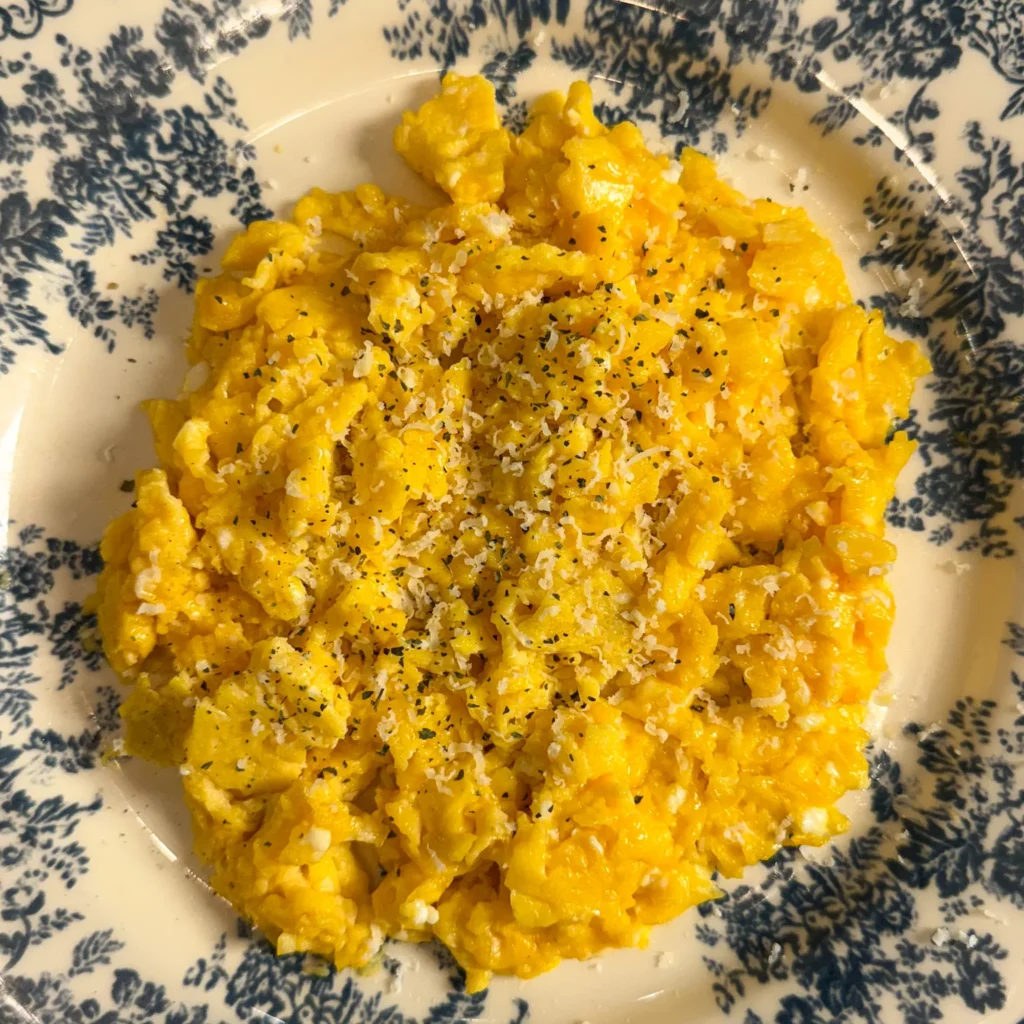
Start by cracking your eggs into a bowl. For one person eating just eggs and toast, use three eggs. If the eggs are part of a larger breakfast spread, two eggs per person usually suffices. Add a pinch of salt to the eggs and whisk thoroughly until the yolks and whites combine completely. You should see no streaks of white or yellow, just a uniform golden mixture. This is the foundation for perfect scrambled eggs.
Add one tablespoon of your chosen liquid per two to three eggs. Whisk again to incorporate the liquid completely. At this point, ideally let the salted eggs sit for five to ten minutes before cooking. During this time, you’ll notice the mixture becomes slightly darker and more translucent as the salt works on the protein structure, preparing the eggs to become perfect scrambled eggs.
Cooking Process for Perfect Scrambled Eggs
Place your pan over medium-low heat and add butter. For four to six eggs, use about one tablespoon of butter. As the butter melts, it will foam. When the foam begins to subside, the pan has reached the ideal temperature for perfect scrambled eggs. This visual cue prevents starting with a pan that’s too hot or too cold.
Pour your prepared eggs into the pan. Don’t touch them for about thirty seconds, allowing the bottom to begin setting. Then, using your silicone spatula, gently push the eggs from one edge of the pan toward the center, tilting the pan to allow uncooked egg to flow into the cleared space. Continue this process, working around the pan in a circular motion.
Your stirring speed directly affects the final texture of perfect scrambled eggs. Stir slowly and infrequently for firmer, more classic scrambled eggs with larger curds. Stir quickly and constantly for softer, creamier perfect scrambled eggs with smaller, more delicate curds.
Final Assembly and Finishing Technique
Here’s the critical step many people miss when making perfect scrambled eggs: Remove the pan from heat just before the eggs reach your desired doneness. They should still look slightly wet and underdone. Cover the pan with a lid and let it sit off the heat for thirty seconds to one minute. The residual heat will finish cooking the eggs gently, resulting in perfect scrambled eggs that are creamy and tender, never overcooked.
Transfer the eggs immediately to a plate to stop the cooking process. Perfect scrambled eggs continue cooking from residual heat even after you remove them from the pan, so getting them onto a plate quickly prevents overcooking.
Professional Tips for Consistently Perfect Scrambled Eggs
These expert techniques take your eggs from good to exceptional, ensuring perfect scrambled eggs every single time you cook.
Temperature Control Mastery
The single most important factor in making perfect scrambled eggs is controlling your heat. Too hot, and the eggs cook too quickly, becoming rubbly and dry. Too cool, and they take forever to cook, often resulting in a watery texture. Medium-low heat gives you the control needed for perfect scrambled eggs.
If you notice the eggs cooking too quickly or forming large, tough curds, immediately reduce the heat or remove the pan from the burner for a few seconds. Making perfect scrambled eggs is not a race. Slow and gentle wins every time.
Timing Your Eggs to Perfection
Perfect scrambled eggs cook surprisingly quickly once they hit the pan, typically taking just three to five minutes from start to finish. Set up your plate, toast, and any toppings before you start cooking. This ensures everything is ready when your perfect scrambled eggs reach ideal doneness, preventing the disaster of overcooked eggs while you scramble to find a plate.
The eggs are ready when they still look slightly glossy and wet but no longer liquid. Remember, they’ll continue cooking off the heat under the lid.
Portion Guidelines for Perfect Scrambled Eggs
Determining the right number of eggs depends on your meal context. For a simple breakfast of just perfect scrambled eggs with toast, plan on three eggs per person. This provides a satisfying, protein-rich meal. However, if your scrambled eggs are part of a larger spread including bacon, sausage, potatoes, or other items, two eggs per person usually suffices.
When scaling up to make perfect scrambled eggs for multiple people, cook in batches rather than overcrowding one pan. Four to six eggs is the maximum you should cook in an eight-inch skillet for optimal results.
The Early Salting Advantage
Don’t skip the step of salting your eggs five to ten minutes before cooking. This advance seasoning makes a dramatic difference in achieving perfect scrambled eggs. The salt has time to work on the protein structure, resulting in noticeably more tender eggs. Additionally, the salt seasons the eggs evenly throughout rather than creating pockets of salty and bland bites.
You’ll recognize properly salted eggs by their darker, more translucent appearance compared to just-cracked eggs.
Common Mistakes to Avoid When Making Perfect Scrambled Eggs
Even experienced cooks make these errors that prevent them from achieving scrambled eggs. Learn to recognize and avoid these pitfalls.
Mistake 1: Cooking Over High Heat
The most common error when attempting scrambled eggs is using heat that’s too high. High heat causes eggs to cook unevenly, with the bottom overcooking while the top remains liquid. The result is rubbery, tough eggs with a grainy texture. Perfect scrambled eggs require patience and gentle heat. Medium-low is your target, and if the eggs seem to be cooking too quickly, don’t hesitate to reduce the heat further or briefly remove the pan from the burner.
Many people assume faster cooking saves time, but overcooked eggs are a waste of time and ingredients. Slow down for perfect scrambled eggs.
Mistake 2: Overcooking in the Pan
Perfect scrambled eggs should come off the heat while they still look slightly wet and glossy. Many cooks make the mistake of cooking the eggs until they look completely done in the pan. By the time the eggs reach the plate, residual heat has overcooked them, resulting in dry, crumbly scrambled eggs instead of scrambled eggs.
Trust the process: remove the eggs when they look almost done, cover with a lid, and let residual heat finish the cooking gently.
Mistake 3: Using the Wrong Pan Size
A pan that’s too large spreads your eggs too thin, causing them to overcook quickly and become dry. Conversely, a pan that’s too small creates a thick layer of eggs that’s difficult to cook evenly. For scrambled eggs using four to six eggs, an eight-inch skillet provides ideal control. Scale your pan size appropriately if cooking different quantities.
The right pan size is essential for achieving scrambled eggs with your preferred texture.
Mistake 4: Stirring Too Much or Too Little
Stirring technique dramatically affects the final texture of scrambled eggs. Constant stirring creates very soft, creamy eggs with small curds. Infrequent stirring produces firmer eggs with larger curds. Neither approach is wrong, but understanding this relationship helps you achieve perfect scrambled eggs with your preferred texture.
Experiment with different stirring patterns to find your scrambled eggs sweet spot.
Variations to Try for Your Perfect Scrambled Eggs
Once you’ve mastered the basic technique for scrambled eggs, these variations add interest and flavor while maintaining that signature creamy texture.
French-Style Perfect Scrambled Eggs
French-style scrambled eggs take the creamy approach to the extreme. Use a double boiler or very low heat and stir constantly with a whisk or spatula. Cook slowly for ten to fifteen minutes until the eggs reach an almost custard-like consistency. Add a tablespoon of crème fraîche or butter at the end for ultra-rich perfect scrambled eggs.
This technique requires patience but delivers incomparably creamy results.
Herb-Infused Perfect Scrambled Eggs
Fresh herbs transform basic scrambled eggs into something special. Chop fresh chives, parsley, dill, or tarragon and fold them into the eggs just before they finish cooking. The residual heat will gently wilt the herbs without overcooking them. Herbs add brightness and complexity to perfect scrambled eggs without overwhelming the delicate egg flavor.
Start with one tablespoon of chopped herbs per three eggs and adjust to taste.
Cheese-Enhanced Perfect Scrambled Eggs
Adding cheese creates rich, savory perfect scrambled eggs. Shredded cheddar, crumbled goat cheese, or grated Parmesan all work beautifully. Add the cheese when the eggs are about eighty percent cooked, allowing it to melt gently into the curds. Avoid adding cheese too early, as the fat can interfere with the eggs setting properly.
Use about one-quarter cup of cheese per three eggs for scrambled eggs with balanced flavor.
International Flavor Profiles
Transform your scrambled eggs with global flavors. Try adding a dollop of pesto for Italian-inspired eggs, a spoonful of harissa for North African flair, or a drizzle of chili crisp for Chinese-influenced perfect scrambled eggs. Furikake, the Japanese seasoning blend, adds umami depth and visual interest. Everything bagel seasoning brings New York deli vibes to your perfect scrambled eggs.
These toppings should be added after cooking to preserve their distinct flavors and textures.
Storage and Reheating Perfect Scrambled Eggs
While scrambled eggs taste best fresh, you can store and reheat them successfully with the right techniques.
Storing Leftover Perfect Scrambled Eggs
Transfer cooled scrambled eggs to an airtight container and refrigerate within two hours of cooking. Properly stored, scrambled eggs stay fresh for three to four days. For best results, slightly undercook the eggs if you know you’ll be reheating them, as reheating will continue the cooking process.
Never leave scrambled eggs at room temperature for more than two hours, as eggs are highly perishable.
Reheating Methods for Perfect Scrambled Eggs
The microwave offers the quickest reheating method for scrambled eggs. Place the eggs in a microwave-safe container, add a teaspoon of milk or butter to restore moisture, and cover loosely. Heat in fifteen-second intervals, stirring between each, until warmed through. This prevents overcooking and maintains the creamy texture of scrambled eggs.
Alternatively, reheat gently in a nonstick pan over low heat, stirring frequently and adding a small amount of butter or milk to restore moisture.
Freezing Perfect Scrambled Eggs
While you can technically freeze scrambled eggs, the texture suffers significantly upon thawing. The eggs become watery and grainy, losing the creamy quality that makes them perfect scrambled eggs. If you must freeze them, pack cooled eggs in freezer-safe containers and use within three months. Thaw overnight in the refrigerator and reheat gently.
For the best experience, make fresh perfect scrambled eggs rather than freezing them.
Frequently Asked Questions About Perfect Scrambled Eggs
Should I add milk or water to perfect scrambled eggs?
Both work well in perfect scrambled eggs, each with different benefits. Milk adds subtle richness and flavor, while water keeps things lighter and allows the pure egg flavor to shine. Heavy cream creates the most luxurious scrambled eggs, while non-dairy milk works for those avoiding dairy. The key is adding just enough liquid to dilute the proteins slightly, typically one tablespoon per two to three eggs.
Experiment with different liquids to find your preference for scrambled eggs.
How do I prevent watery perfect scrambled eggs?
Watery perfect scrambled eggs usually result from adding too much liquid or not cooking long enough. Stick to one tablespoon of liquid per two to three eggs maximum. Also, ensure your pan is properly preheated before adding the eggs. If moisture pools around your finished eggs, you may have removed them from heat too early. The covering step should finish the cooking, not leave them undercooked.
Proper heat control prevents watery scrambled eggs.
Can I make perfect scrambled eggs without butter?
Yes, you can make perfect scrambled eggs using neutral oil like avocado or vegetable oil instead of butter. However, butter provides two advantages: flavor and a visual cue for proper pan temperature through its foaming action. If using oil, heat the pan over medium-low heat for about two minutes before adding eggs. The eggs won’t taste quite as rich, but the texture of scrambled eggs remains achievable.
Olive oil adds its own flavor dimension to scrambled eggs.
Why do my perfect scrambled eggs turn green?
Scrambled eggs turn green or gray when overcooked or when cooked at too high a temperature. This color change results from a chemical reaction between iron in the yolk and sulfur in the white. While harmless, it indicates you’ve overcooked your eggs. To avoid this and maintain beautiful yellow perfect scrambled eggs, cook over medium-low heat and remove from heat while still slightly wet looking.
Gentle heat and proper timing prevent discoloration in scrambled eggs.
How many eggs should I cook at once for perfect scrambled eggs?
For optimal results when making scrambled eggs, cook no more than six eggs in an eight-inch skillet. More eggs than this overcrowd the pan, making it difficult to stir properly and resulting in uneven cooking. If cooking for a crowd, work in batches. Perfect scrambled eggs cook quickly enough that multiple batches remain manageable, and the quality difference is worth the extra few minutes.
Proper pan capacity ensures consistently scrambled eggs.
Do I need to whisk the eggs before cooking perfect scrambled eggs?
Yes, whisking your eggs before cooking is essential for perfect scrambled eggs. Whisking blends the yolks and whites completely, creating uniform color and texture throughout. It also incorporates a small amount of air, contributing to fluffier scrambled eggs. Whisk until you see no streaks of white or separate yolk, achieving a uniform golden color.
Thorough whisking is a non-negotiable step for scrambled eggs.
Final Thoughts on Making Perfect Scrambled Eggs
Perfect scrambled eggs represent the intersection of simple ingredients and thoughtful technique. By understanding the role of salt, heat, and timing, you’ve now equipped yourself to make scrambled eggs exactly how you prefer them, whether soft and creamy, fluffy and tender, or fully set and classic. The techniques outlined here work for quick weekday breakfasts and special weekend brunches alike.
Remember that making scrambled eggs is not about rigid rules but about understanding principles. Salt your eggs early for tenderness. Add a splash of liquid for creaminess. Use gentle heat for control. Finish with a lid to prevent overcooking. These guidelines give you the foundation to experiment and find your personal version of scrambled eggs.
The beauty of mastering scrambled eggs extends beyond breakfast. These techniques improve your overall cooking skills, teaching you about heat management, protein behavior, and the importance of timing. Once you can consistently produce scrambled eggs, you’ll find these lessons applicable to countless other dishes.
So grab your eggs, heat your pan to medium-low, and start practicing. Perfect scrambled eggs await, and with these techniques, they’re much easier to achieve than you might think. Whether you’re feeding yourself, your family, or weekend guests, you now have everything you need to serve up genuinely perfect scrambled eggs every single time.
Watch the full recipe video on our Youtube chanel for more clarity
See our similar recipes:
People also like our these recipes:
- 5 large eggs
- ¼ teaspoon salt to taste
- 1 tablespoon milk cream, or water
- 1 tablespoon butter
Crack the eggs into a bowl. Add the salt and let sit for 5–10 minutes.
Add the milk (or cream/water) and beat gently with a fork until combined.
Heat an 8-inch non-stick skillet over medium heat. Add the butter and swirl to coat the pan.
Once the butter is melted and lightly bubbling evenly, increase heat to medium-high.
Add the eggs and stir continuously with a rubber spatula.
Stir slowly for firmer eggs
Stir faster for softer, creamier eggs
When the eggs are just set and no liquid remains, turn off the heat.
Cover with a lid and let rest for 1–2 minutes.
Serve immediately with your favorite toppings.
If you've given this recipe a try and it won you over, please share your thoughts by leaving
a rating and comment below! If you have any questions about this recipe, don't hesitate to ask – I'm here to
help and will respond promptly.