The Ultimate Guide to Cinnamon Roll Focaccia
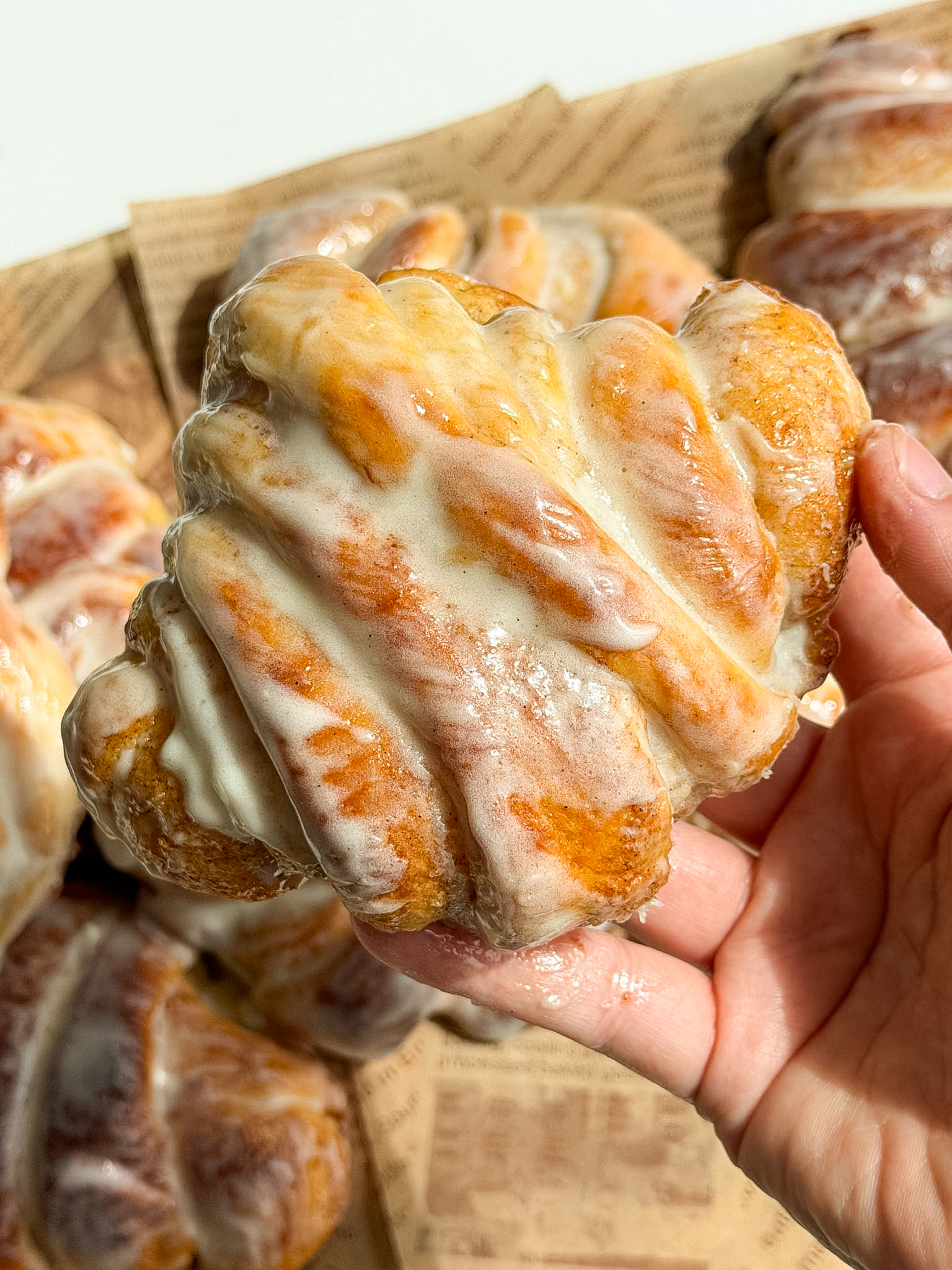
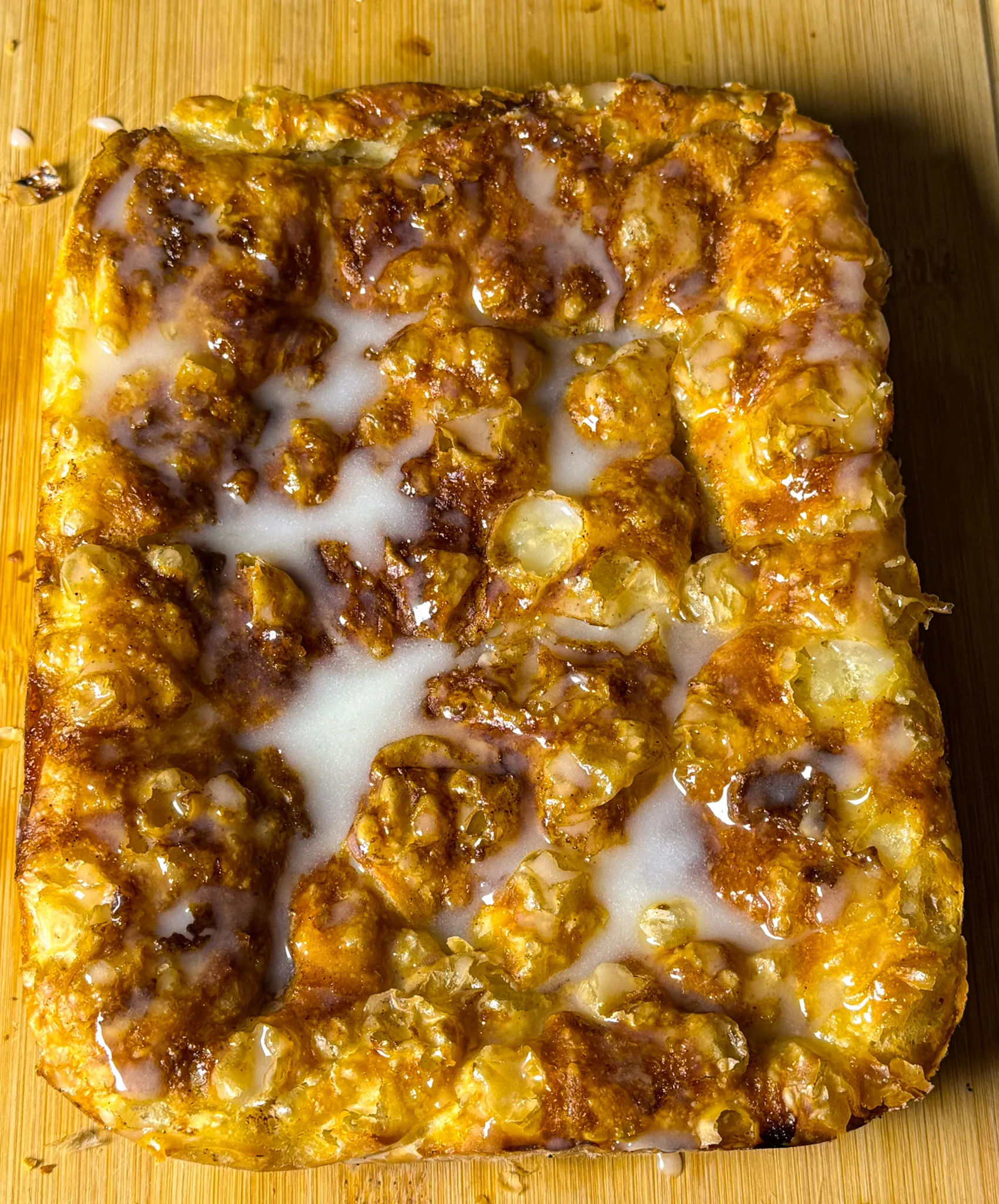
Cinnamon Roll Focaccia represents the perfect marriage between Italian bread-making tradition and classic American comfort food. This innovative recipe combines the airy, olive oil structure of traditional focaccia with the warm, indulgent flavors of cinnamon rolls. Unlike typical sweet breads, Cinnamon Roll Focaccia relies on proper fermentation and gluten development rather than shortcuts. The result is a bread that bakes tall and light, featuring a soft, open crumb with pockets of buttery cinnamon sugar melting into every fold. This comprehensive guide will teach you everything you need to know about creating bakery-quality Cinnamon Roll Focaccia at home.
Why Cinnamon Roll Focaccia is Special
What sets Cinnamon Roll Focaccia apart from ordinary sweet breads is its foundation in solid bread-making principles. This isn’t a quick recipe thrown together with cake mix or shortcut ingredients. Instead, it’s built on high-hydration dough techniques, controlled fermentation, and thoughtful flavor layering. The bread develops its structure through time and gentle handling rather than aggressive kneading. When you bite into properly made Cinnamon Roll Focaccia, you experience an airy texture that stays light despite the rich topping. The cinnamon butter creates pockets of sweetness without weighing down the crumb or making it greasy.
Key Ingredients Overview
The beauty of Cinnamon Roll Focaccia lies in its simple ingredient list. The dough requires only bread flour, water, salt, instant yeast, and olive oil. There are no eggs, milk, or sugar in the base dough itself, which keeps the crumb structure open and light. The sweetness comes entirely from the cinnamon butter topping, which consists of softened unsalted butter, brown sugar, ground cinnamon, and vanilla extract. This separation between dough and topping is crucial for achieving the right texture. After baking, a simple glaze made from powdered sugar, cream, and vanilla adds the final touch.
Understanding What Makes Cinnamon Roll Focaccia Different
Many bakers approach Cinnamon Roll Focaccia expecting it to behave like traditional cinnamon rolls, but this leads to disappointment. Understanding the fundamental differences helps you work with the dough correctly. Traditional cinnamon rolls use enriched dough containing eggs, milk, butter, and sugar mixed directly into the flour. They require rolling, tight shaping, and often include heavy frosting baked into the structure. Cinnamon Roll Focaccia takes an entirely different approach.
High Hydration Dough Principles
The dough for Cinnamon Roll Focaccia contains a higher percentage of water than typical sweet breads. This high hydration serves multiple purposes. First, it creates large, irregular air bubbles that give the bread its characteristic open crumb. Second, it produces a tender mouthfeel that contrasts beautifully with the crisp edges. Third, it allows the bread to stay light even under the weight of butter and sugar topping. Working with high-hydration dough requires patience and proper technique, but the results are worth the effort.
No-Knead Strength Building
Unlike cinnamon rolls that need intensive kneading, Cinnamon Roll Focaccia develops gluten strength gradually through rest periods and folding techniques. This method includes stretch-and-folds during the early stages and coil folds as the dough gains strength. The gentle approach protects the dough’s delicate structure and preserves the gas bubbles created during fermentation. Aggressive kneading would deflate these bubbles and create a dense, tight crumb. By working with the dough rather than forcing it, you achieve superior texture and rise.
Choosing the Right Ingredients for Cinnamon Roll Focaccia
Ingredient quality directly impacts your final results. While the ingredient list is short, each component plays a specific role in creating perfect Cinnamon Roll Focaccia.
Flour Selection and Properties
Bread flour is essential for Cinnamon Roll Focaccia because of its protein content. The higher protein percentage, typically between 12 and 14 percent, provides the gluten strength needed to support a high-hydration dough. All-purpose flour lacks sufficient protein and will produce a flatter, denser bread. Look for unbleached bread flour from reputable brands. The flour should feel slightly coarse when rubbed between your fingers, indicating good protein development potential.
Water Temperature and Quality
Water temperature affects fermentation speed in Cinnamon Roll Focaccia. For overnight cold fermentation, room temperature water works perfectly. If you need faster fermentation, slightly warm water between 75 and 80 degrees Fahrenheit accelerates yeast activity. Avoid hot water above 110 degrees, which can kill the yeast. The water quality matters less than in other breads since the long fermentation develops strong flavors that mask minor water imperfections.
Yeast Considerations
Instant yeast provides the most reliable results for Cinnamon Roll Focaccia. It activates quickly and distributes evenly throughout the dough. The amount of yeast should vary based on your fermentation timeline. For 12 to 24 hour fermentation, use the standard amount. For 48 to 72 hour fermentation, reduce the yeast by half to prevent over-fermentation. Always check your yeast expiration date, as old yeast produces unpredictable results.
Cinnamon Butter Components
The cinnamon butter topping makes Cinnamon Roll Focaccia truly special. Use unsalted butter so you can control the salt level precisely. The butter must be softened to room temperature, not melted. Brown sugar adds moisture and deeper flavor compared to white sugar, while also helping create those delicious caramelized pockets. Use fresh ground cinnamon for the most vibrant flavor. Pre-ground cinnamon that has sat in your cabinet for years will taste flat and woody.
Step-by-Step Instructions for Perfect Cinnamon Roll Focaccia
Success with Cinnamon Roll Focaccia comes from following each step with intention and understanding why it matters.
Day One: Mixing and Initial Rest
Begin by combining all dough ingredients in a large bowl. Mix with a spoon or your hands until no dry flour remains visible. The dough will look shaggy, sticky, and rough at this stage. This appearance is completely normal and expected for Cinnamon Roll Focaccia. Do not add extra flour trying to achieve a smooth dough. Cover the bowl with a damp towel or plastic wrap and let it rest for 30 minutes at room temperature.
This initial rest period, called autolyse, allows the flour to fully hydrate. The water molecules penetrate the flour particles and begin forming gluten bonds without any mechanical action. When you return to the dough after 30 minutes, you will notice it already looks smoother and more cohesive. This rest makes all subsequent folding easier and more effective.
First Set of Stretch and Folds
Wet your hands thoroughly to prevent sticking. Reach under one side of the dough and gently stretch it upward until you feel resistance. Do not pull so hard that the dough tears. Fold the stretched portion over the center of the dough. Rotate the bowl 90 degrees and repeat this stretch-and-fold motion. Continue around the bowl until you have completed four to five folds.
Cover the dough and rest for another 30 minutes. During this rest, the gluten continues developing and the dough relaxes, preparing for the next set of folds. This gentle approach is key to achieving the light, airy texture that makes Cinnamon Roll Focaccia special.
Second and Third Sets: Building Strength
After the second 30-minute rest, assess your dough. If it still tears easily when stretched, perform another set of stretch-and-folds using the same technique. If the dough feels elastic and cohesive, transition to coil folds. For coil folds, wet your hands and slide them under the center of the dough. Lift the entire mass and let the ends fold underneath naturally. Rotate the bowl and repeat on all sides.
Perform two more sets of coil folds, resting 20 to 30 minutes between each set. By the final fold, your Cinnamon Roll Focaccia dough should hold its shape, feel smooth and slightly bouncy, and pull cleanly from the bowl sides. This indicates sufficient gluten development.
Cold Bulk Fermentation
Lightly drizzle olive oil over the dough surface and cover the bowl tightly with plastic wrap. Transfer the bowl to your refrigerator for cold fermentation. The minimum fermentation time is 12 hours, but 24 to 48 hours produces superior flavor and texture in Cinnamon Roll Focaccia. The cold temperature slows yeast activity while allowing enzyme activity to continue, which breaks down complex starches into simpler sugars and develops deeper flavor.
During cold fermentation, the dough becomes more extensible and easier to shape. It also develops better oven spring, meaning it rises more dramatically in the oven. You can ferment Cinnamon Roll Focaccia dough for up to 72 hours if you reduce the initial yeast amount.
Day Two: Preparing the Pan
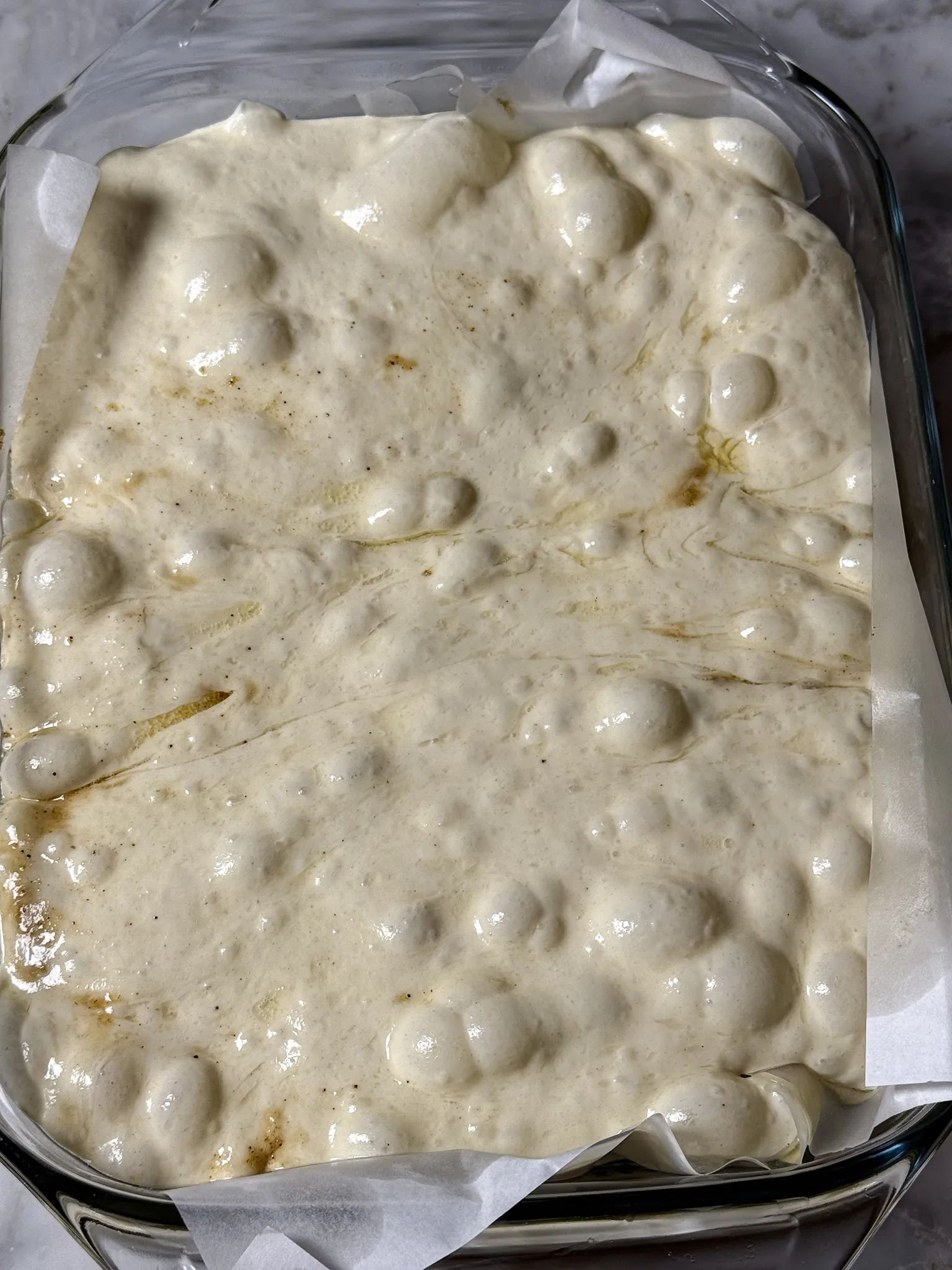
Remove your Cinnamon Roll Focaccia dough from the refrigerator. Generously oil a 9-by-13-inch baking pan or similar size. Pour the oil liberally—do not be shy. The oil prevents sticking and creates the crispy bottom and edges that make focaccia irresistible. Turn the dough out into the oiled pan. Do not stretch it yet. Cover the pan and let the dough rest at room temperature for one to two hours.
This warming period is crucial for Cinnamon Roll Focaccia. Cold dough resists stretching and tears easily, which deflates the air bubbles you worked so hard to develop. Room temperature dough stretches smoothly and maintains its structure. The exact time needed depends on your room temperature. In a warm kitchen, one hour may suffice. In a cool kitchen, allow the full two hours.
Stretching and Dimpling Technique
Once the dough has warmed and relaxed, gently coax it toward the pan edges. Use your fingertips to stretch it gradually. If the dough resists, stop and let it rest for 10 minutes before continuing. Never force Cinnamon Roll Focaccia dough to stretch. Patience yields better results than aggression.
When the dough fills the pan, oil your fingertips generously. Press straight down through the dough to the pan bottom, creating deep dimples across the entire surface. These dimples serve multiple purposes in Cinnamon Roll Focaccia. They trap pools of cinnamon butter, create textural variation, and help control oven spring by providing structured weak points where the dough can expand.
Applying Cinnamon Butter
While the dough finishes its final rest, prepare your cinnamon butter. In a medium bowl, combine softened unsalted butter, brown sugar, ground cinnamon, and vanilla extract. Mix until completely smooth with no sugar lumps. The mixture should be spreadable but not melted.
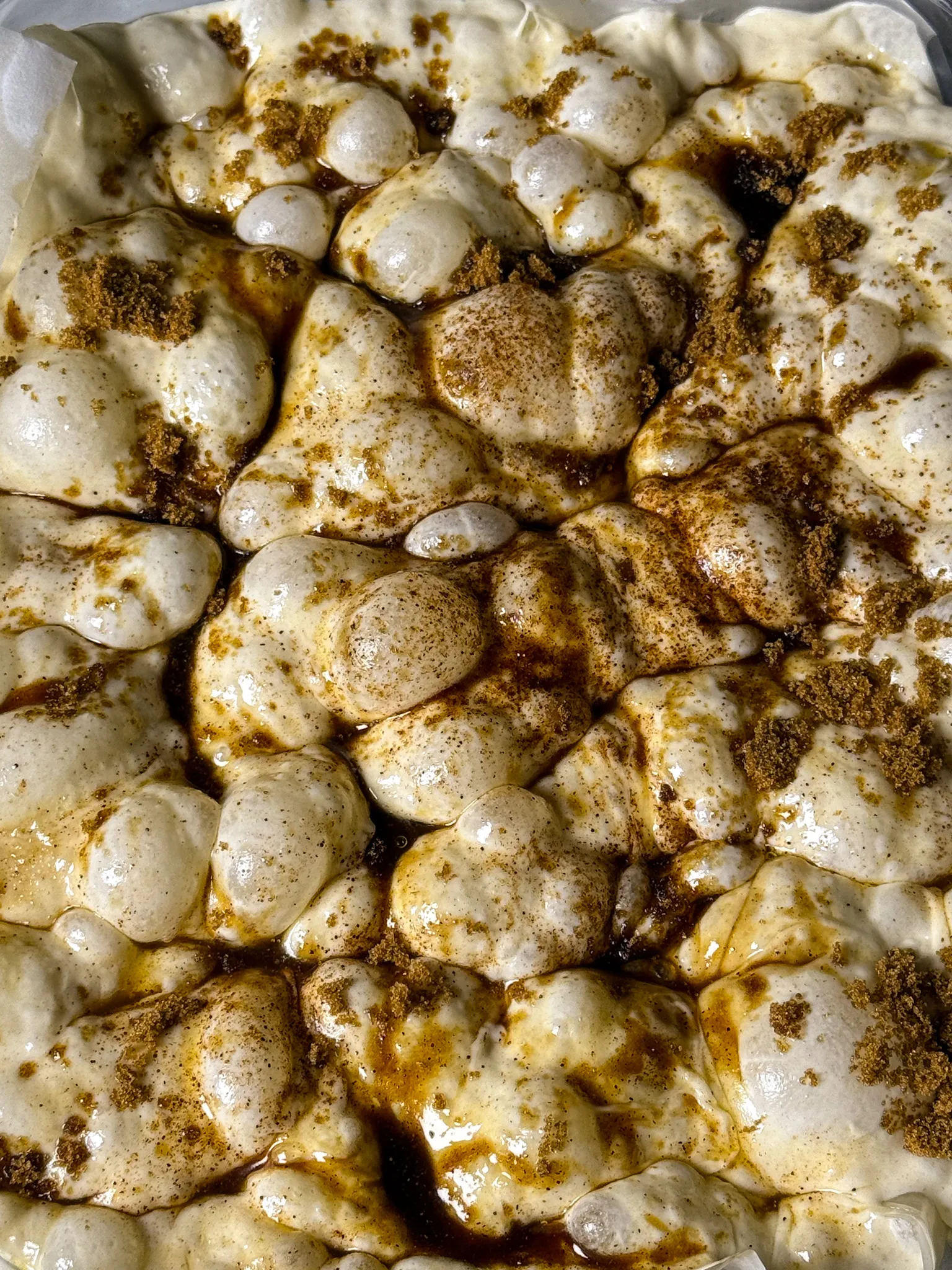
Spread the cinnamon butter evenly over the dimpled Cinnamon Roll Focaccia surface. Use an offset spatula or the back of a spoon to distribute it into all the dimples and depressions. Some butter will pool in the dimples while some coats the raised portions. This uneven distribution creates the beautiful contrast of caramelized spots and softer areas that make each bite interesting.
Baking Your Cinnamon Roll Focaccia to Perfection
Preheat your oven thoroughly to 425 degrees Fahrenheit. A properly preheated oven is essential for good oven spring in Cinnamon Roll Focaccia. Place the pan on the middle oven rack. Bake for 20 to 25 minutes, watching carefully toward the end.
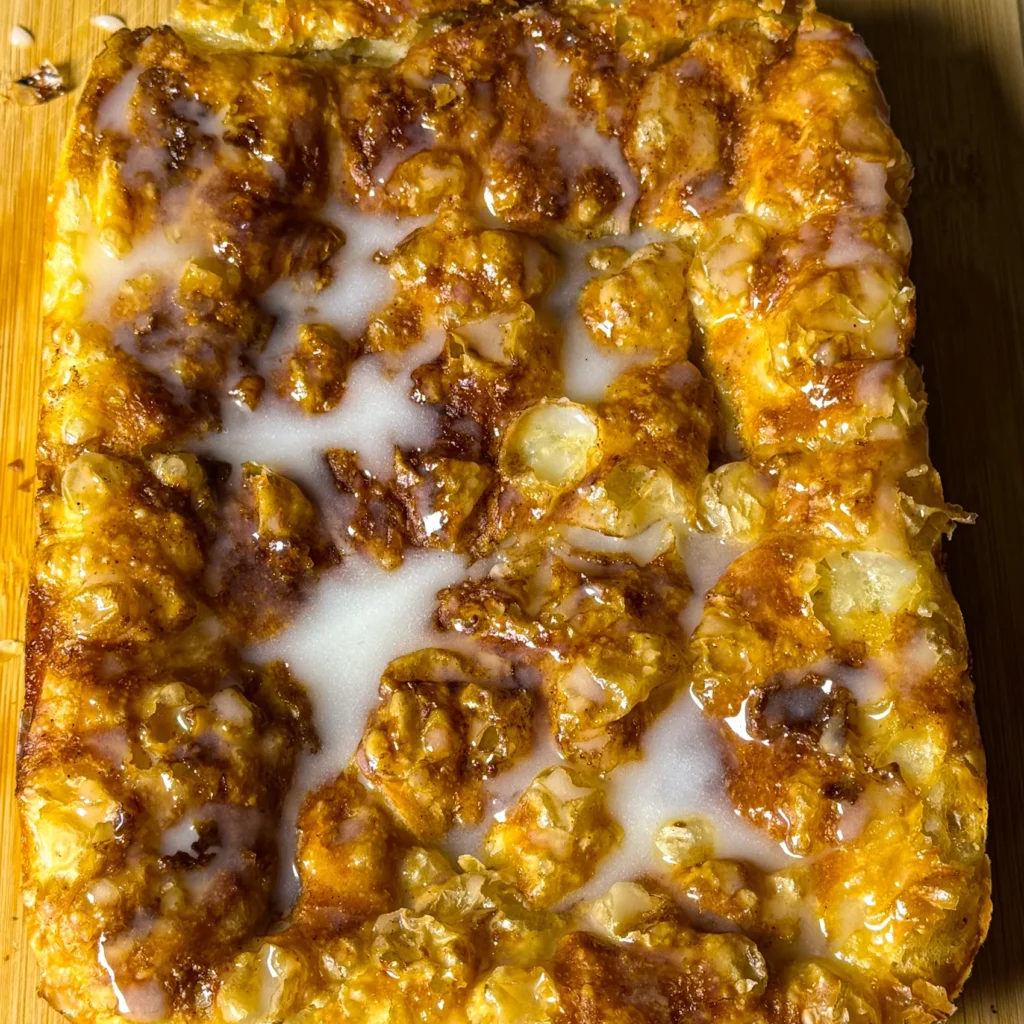
Your Cinnamon Roll Focaccia is done when the top achieves a deep golden color, the edges turn crispy and slightly darker, and the center feels set when gently pressed. The cinnamon butter will bubble and caramelize in the dimples. Some spots may look darker than others—this is normal and desirable. Underbaking creates a gummy interior, while overbaking makes the bread dry.
Remove the pan from the oven and let the Cinnamon Roll Focaccia cool in the pan for 10 minutes. This brief rest allows the structure to set while the bread is still warm enough to release easily. After 10 minutes, run a knife around the edges and transfer the focaccia to a cooling rack.
Professional Tips for Superior Results
These expert techniques will elevate your Cinnamon Roll Focaccia from good to exceptional.
Managing Fermentation Temperature
If your kitchen is very warm, your Cinnamon Roll Focaccia may ferment faster than expected during the room temperature phases. Watch for visual cues rather than relying solely on time. The dough should look puffy and jiggly but not collapsed or overly slack. In hot weather, you might need to shorten rest periods or move directly to cold fermentation after fewer fold sets.
Conversely, in a cold kitchen, give your Cinnamon Roll Focaccia extra time. The dough needs to reach specific developmental stages regardless of the clock. Temperature affects fermentation speed dramatically, so adjust timing based on your environment.
Adjusting Hydration Levels
Flour brands vary in their absorption capacity. If your Cinnamon Roll Focaccia dough feels excessively sticky and never comes together even after multiple folds, reduce the water slightly next time. If the dough feels tight and resists stretching even after proper rest, increase the water. Small adjustments of 10 to 15 grams make a significant difference in high-hydration doughs.
Creating Flavor Variations
While classic Cinnamon Roll Focaccia is delicious, you can experiment with flavor additions. Try adding orange zest to the cinnamon butter for a citrus note. Mix in cardamom with the cinnamon for complexity. Sprinkle chopped pecans or walnuts over the butter before baking for crunch. Just avoid adding too many mix-ins, which can weigh down the delicate crumb structure.
Common Mistakes to Avoid with Cinnamon Roll Focaccia
Learning from these frequent errors will save you frustration and wasted ingredients.
Using Too Much Yeast
Many bakers use excessive yeast hoping for faster results. In Cinnamon Roll Focaccia, too much yeast creates multiple problems. The dough rises too quickly, developing a strong yeasty flavor rather than complex bread flavor. The gluten structure weakens because it develops too rapidly. The crumb becomes irregular with large holes in some spots and dense areas in others. Follow the recipe measurements precisely and adjust only based on fermentation length.
Skipping Rest Periods
Rest periods feel unnecessary when you are eager to finish, but they are critical for Cinnamon Roll Focaccia. During rest, gluten bonds relax, making the dough easier to stretch without tearing. The flour continues hydrating fully. Gas bubbles redistribute evenly throughout the dough. Skipping rests results in tight, resistant dough that tears when stretched and bakes up dense and chewy instead of light and airy.
Overloading Cinnamon Butter
More is not always better with the cinnamon butter topping. Excessive butter creates greasy, soggy spots in your Cinnamon Roll Focaccia that never fully bake. The bread becomes heavy rather than light. Stick to the recommended amounts. The butter should enhance the bread, not overwhelm it.
Rushing Cold Fermentation
The overnight cold fermentation is not optional for quality Cinnamon Roll Focaccia. Some bakers try to skip this step or shorten it to just a few hours. While the bread will technically bake, it lacks the complex flavor and superior texture that cold fermentation provides. Plan ahead and give your dough the time it needs. The difference is dramatic and well worth the wait.
Variations to Try Once You Master Basic Cinnamon Roll Focaccia
After perfecting the classic version, these variations offer exciting new directions.
Chocolate Chip Addition
Scatter mini chocolate chips over the cinnamon butter before baking. Use mini chips rather than regular size, as they distribute more evenly and melt into pleasant pockets rather than creating heavy spots. Dark chocolate pairs beautifully with the cinnamon, while milk chocolate offers sweeter results. White chocolate creates interesting visual contrast against the golden bread.
Cream Cheese Swirl
Soften cream cheese and mix it with powdered sugar and vanilla. Dot this mixture over the cinnamon butter before baking your Cinnamon Roll Focaccia. The cream cheese creates tangy pockets that balance the sweetness and add richness. This variation tastes reminiscent of cream cheese frosted cinnamon rolls but maintains the light focaccia texture.
Apple Cinnamon Version
Dice small apples into quarter-inch pieces and toss them with lemon juice, sugar, and extra cinnamon. Scatter these over the cinnamon butter before baking. The apples soften during baking and create jammy pockets throughout the Cinnamon Roll Focaccia. Choose firm apples like Granny Smith or Honeycrisp that hold their shape when heated.
Storage and Reheating Guidelines
Proper storage preserves the quality of your Cinnamon Roll Focaccia for several days.
Storing Instructions
Allow Cinnamon Roll Focaccia to cool completely before storing. Wrap it tightly in plastic wrap or aluminum foil, or place it in an airtight container. Store at room temperature for up to two days. The bread will gradually lose its crispy edges but remains delicious. For longer storage, freeze individual portions wrapped tightly in plastic wrap and then in aluminum foil. Frozen Cinnamon Roll Focaccia keeps for up to three months.
Reheating Methods
To restore the crispy edges and warm the center, reheat Cinnamon Roll Focaccia in a 350-degree oven for 5 to 8 minutes. You can reheat individual pieces in a toaster oven for similar results. Avoid microwaving, which makes the bread rubbery and tough. If reheating from frozen, let the bread thaw at room temperature first, then warm it in the oven.
Frequently Asked Questions About Cinnamon Roll Focaccia
Can I make this recipe without a stand mixer?
Absolutely. Cinnamon Roll Focaccia requires no mixer at all. The entire dough comes together with simple stirring and develops its structure through folding rather than kneading. This makes it accessible even if you have no special equipment. Your hands and a large bowl are all you need.
Why did my bread turn out dense instead of airy?
Dense Cinnamon Roll Focaccia usually results from one of several issues. Insufficient gluten development from skipping folds, over-fermentation causing the structure to collapse, too little hydration creating tight dough, or aggressive handling that deflated air bubbles. Review each step carefully and ensure you are building strength gradually while respecting rest periods.
Can I use active dry yeast instead of instant yeast?
Yes, but active dry yeast requires activation before use. Dissolve it in a small portion of the recipe water with a pinch of sugar and let it sit until foamy, about 5 to 10 minutes. Then proceed with mixing the Cinnamon Roll Focaccia dough as directed. You may need slightly more active dry yeast than instant yeast, typically 25 percent more.
How do I know when the dough has fermented long enough?
Properly fermented Cinnamon Roll Focaccia dough will have doubled or nearly doubled in size, feel puffy and jiggly when the bowl is shaken, and show visible bubbles under the surface and around the edges. If you poke it gently, the indentation should slowly spring back but leave a slight impression. These signs indicate readiness for the next step.
Can I add the glaze before baking?
No, never add the powdered sugar glaze before baking Cinnamon Roll Focaccia. The high heat will cause the sugar to burn and create a bitter taste. The glaze also needs the moisture from the baked bread to achieve its signature slightly-melted-but-not-disappeared texture. Always apply glaze after baking while the bread is still warm.
Final Thoughts on Mastering Cinnamon Roll Focaccia
Creating exceptional Cinnamon Roll Focaccia requires patience, but the process is straightforward when you understand the principles. This bread teaches you valuable lessons about dough behavior, fermentation control, and the power of time over force. Each step builds on the previous one, creating a final product that feels miraculous in its lightness despite rich toppings.
Once you master Cinnamon Roll Focaccia, you will find yourself making it repeatedly. The recipe is forgiving within reason, allowing you to adjust timing to your schedule. You can prepare the dough on a weeknight and bake it the next morning for an impressive breakfast. You can extend fermentation over a weekend when you have more flexibility. The bread works equally well for special occasions and casual weekend mornings.
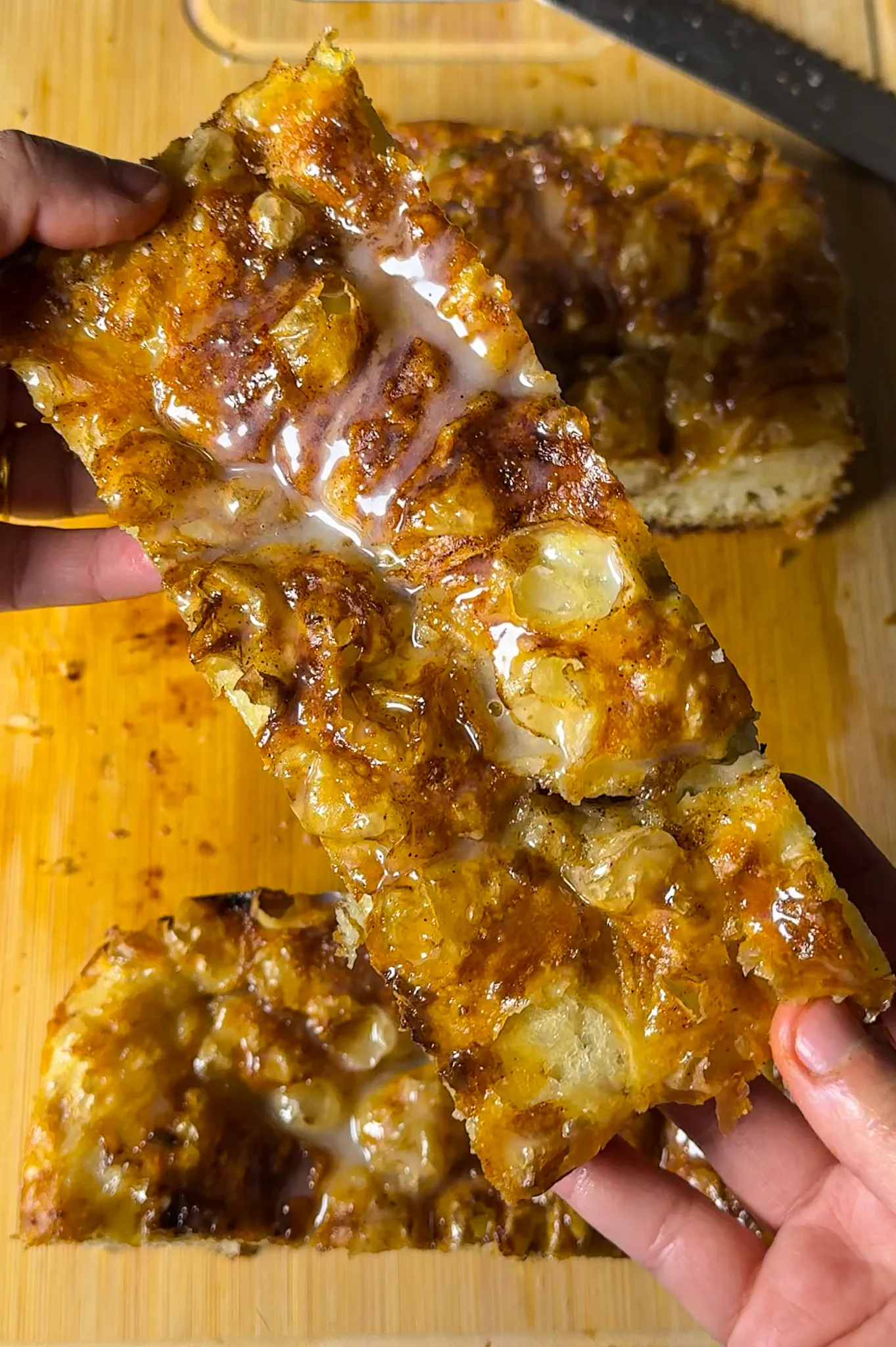
The satisfaction of pulling a pan of golden, fragrant Cinnamon Roll Focaccia from your oven never diminishes. The aroma fills your kitchen with warmth. The first bite reveals that perfect contrast between crispy edges and tender crumb, with pockets of cinnamon butter throughout. You will be proud to serve this bread to family and friends, knowing you created it entirely by hand using fundamental bread-making techniques. Get started today and discover why Cinnamon Roll Focaccia has captured the hearts of home bakers everywhere.
Watch the recipe video for more clarity
People also like our these recipes:
Yield
- 1 large focaccia 9×13-inch / 23×33 cm pan
- Serves 8–12
Dough Ingredients
- 370 g 3 cups bread flour
- 322 ml 1⅓ cups + 2½ tsp water, room temperature
- 7 – 10 g 1½–2 tsp fine sea salt
- 1 g ¼ tsp instant dry yeast
- 3-5 tbsp olive oil
- Tip: Bread flour is recommended for better structure. All-purpose flour can be used but the crumb may be slightly less airy.
Cinnamon Butter (Filling + Topping)
- 113 g ½ cup / 1 stick unsalted butter, very soft
- 100 g ½ cup packed brown sugar
- 2 tbsp ground cinnamon
- 1 tsp vanilla extract
- Tip: Butter should be soft and spreadable not melted. This helps it stay in the dimples instead of pooling at the bottom.
Vanilla Glaze (After Baking)
- 120 g 1 cup powdered sugar
- 1 –2 tbsp 15–30 ml heavy cream or whole milk
- 1 tsp vanilla extract
Mix the Dough
In a large bowl, combine the flour, water, salt, olive oil and yeast. Mix using a spatula or your hands until no dry flour remains and a sticky, shaggy dough forms.
Cover and let rest for 30 minutes to allow full hydration.
Build Strength – Stretch & Folds
With wet hands, perform one set of stretch and folds:
Lift one side of the dough, stretch upward, and fold over itself
Rotate the bowl and repeat 4–5 times
Cover and rest for 30 minutes.
Coil Folds (2–3 Sets)
Assess the dough:
If weak or tearing → do another stretch & fold
If elastic and holding together → switch to coil folds
For coil folds:
Lift the dough from the center
Let the ends tuck under naturally
Rotate the bowl and repeat on all sides
Rest 20–30 minutes between each set.
After the final fold, the dough should be smoother, stronger, and slightly domed.
Cold Bulk Fermentation
Lightly oil the dough, cover tightly, and refrigerate for 12–48 hours.
Fermentation guide:
12 hours → milder flavor, lighter sourness
24–48 hours → deeper flavor, better texture
Prepare Cinnamon Butter
In a bowl, mix the softened butter, brown sugar, cinnamon, and vanilla until smooth and fully combined. Set aside at room temperature.
Pan & Second Rise
Generously oil a 9×13-inch pan.
Transfer the cold dough into the pan and gently stretch to fill most of it. Cover and rest at room temperature for 1–2 hours, until puffy and relaxed.
Dimple & Add Cinnamon Butter
Oil your fingertips and press straight down into the dough to create deep dimples across the surface.
Evenly spread the cinnamon butter over the dough, allowing it to fall into the dimples.
Bake
Preheat oven to 220°C (425°F).
Bake for 20–25 minutes, until:
The top is golden
The edges are crisp
The center feels light and fully baked
Glaze & Finish
Whisk powdered sugar, cream (or milk), and vanilla until smooth and pourable.
Drizzle over the focaccia while warm (not hot).
Let set slightly before slicing.
Storage
Best enjoyed the same day
Store covered at room temperature for up to 24 hours
Reheat briefly before serving for best texture
If you've given this recipe a try and it won you over, please share your thoughts by leaving
a rating and comment below! If you have any questions about this recipe, don't hesitate to ask – I'm here to
help and will respond promptly.