Potato Onion Focaccia: Your New Favorite Homemade Bread
Discovering the perfect Potato Onion Focaccia recipe transforms your baking experience from ordinary to extraordinary. This stunning Italian bread combines crispy golden crust with pillowy soft interior, all topped with tender potato slices and sweet caramelized onions. The best part? This Potato Onion Focaccia requires absolutely no kneading, making it accessible to bakers of all skill levels.
Whether you’re a complete beginner or an experienced baker, this Potato Onion Focaccia delivers professional results with minimal effort. The no-knead method relies on time rather than muscle power, allowing long fermentation to develop incredible flavor and perfect texture. Simply mix the ingredients, let time work its magic, and enjoy bakery-quality bread from your own kitchen.
This Potato Onion Focaccia serves beautifully as a side dish for pasta dinners, makes exceptional sandwiches, or stands alone as a satisfying snack. The combination of earthy potatoes, sweet onions, and fragrant rosemary creates layers of flavor that keep everyone reaching for another piece. Once you master this recipe, you’ll find countless occasions to bake this impressive bread.
Why This Potato Onion Focaccia Recipe Works
What sets this Potato Onion Focaccia apart from other bread recipes? The secret lies in the no-knead technique that allows gluten to develop naturally through hydration and time. Traditional bread recipes require extensive kneading to build gluten structure, but this method achieves the same results through patient fermentation. The dough becomes stretchy and elastic without any strenuous work on your part.
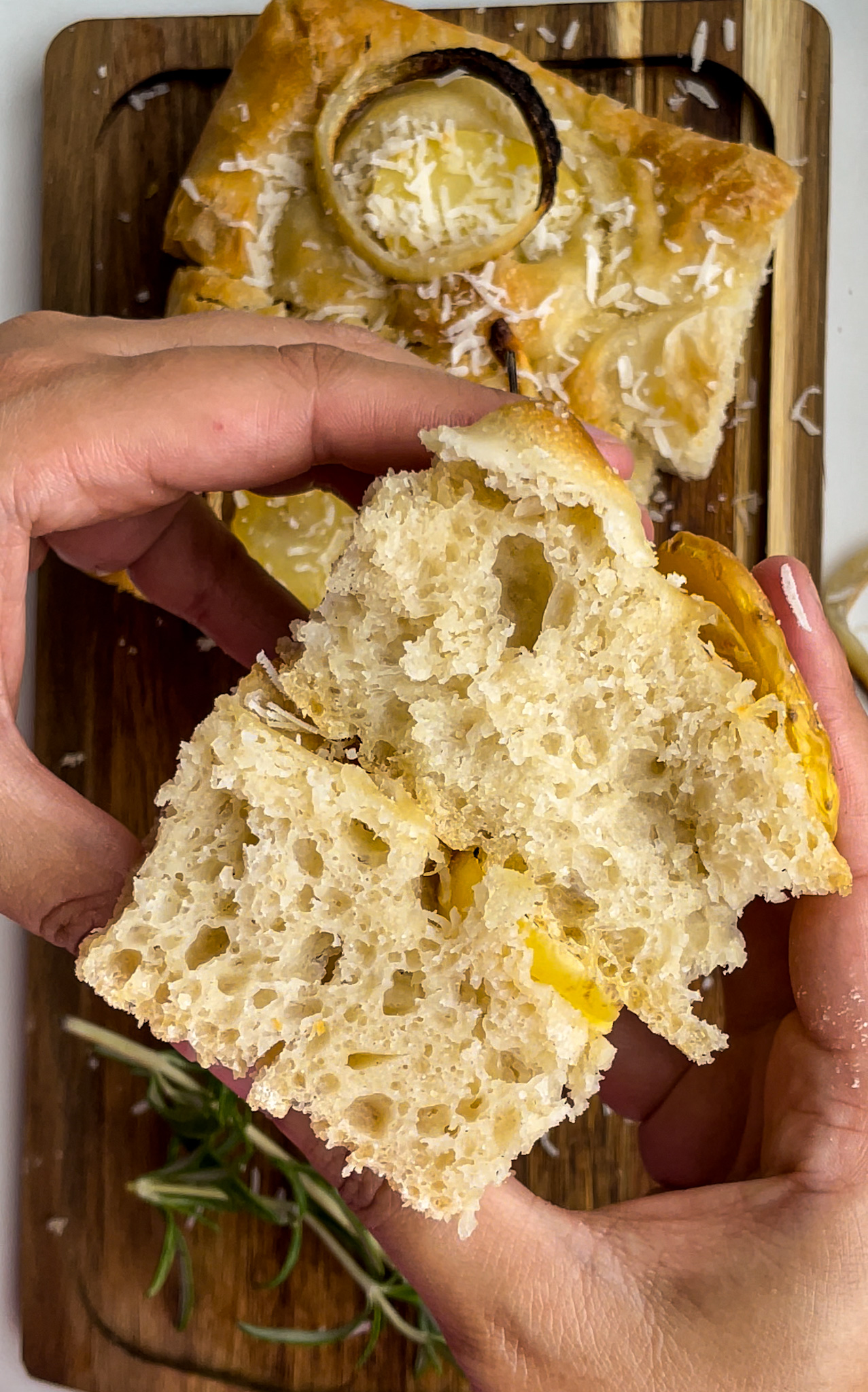
High hydration creates the signature airy crumb that makes Potato Onion Focaccia so delightful. This recipe uses a water-to-flour ratio that produces those characteristic large, irregular holes throughout the bread. These air pockets develop during the long fermentation process as yeast produces carbon dioxide that gets trapped in the gluten network.
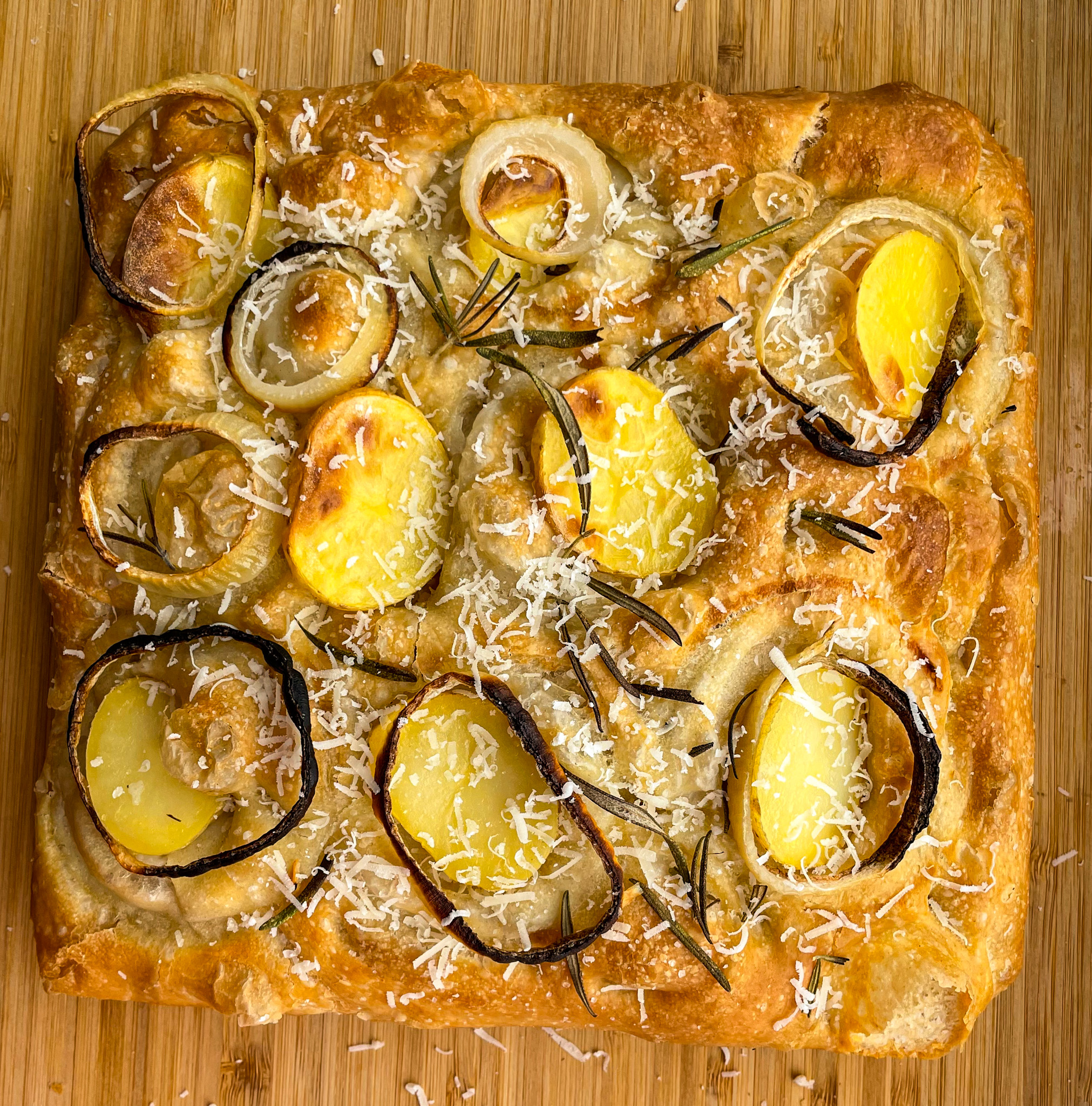
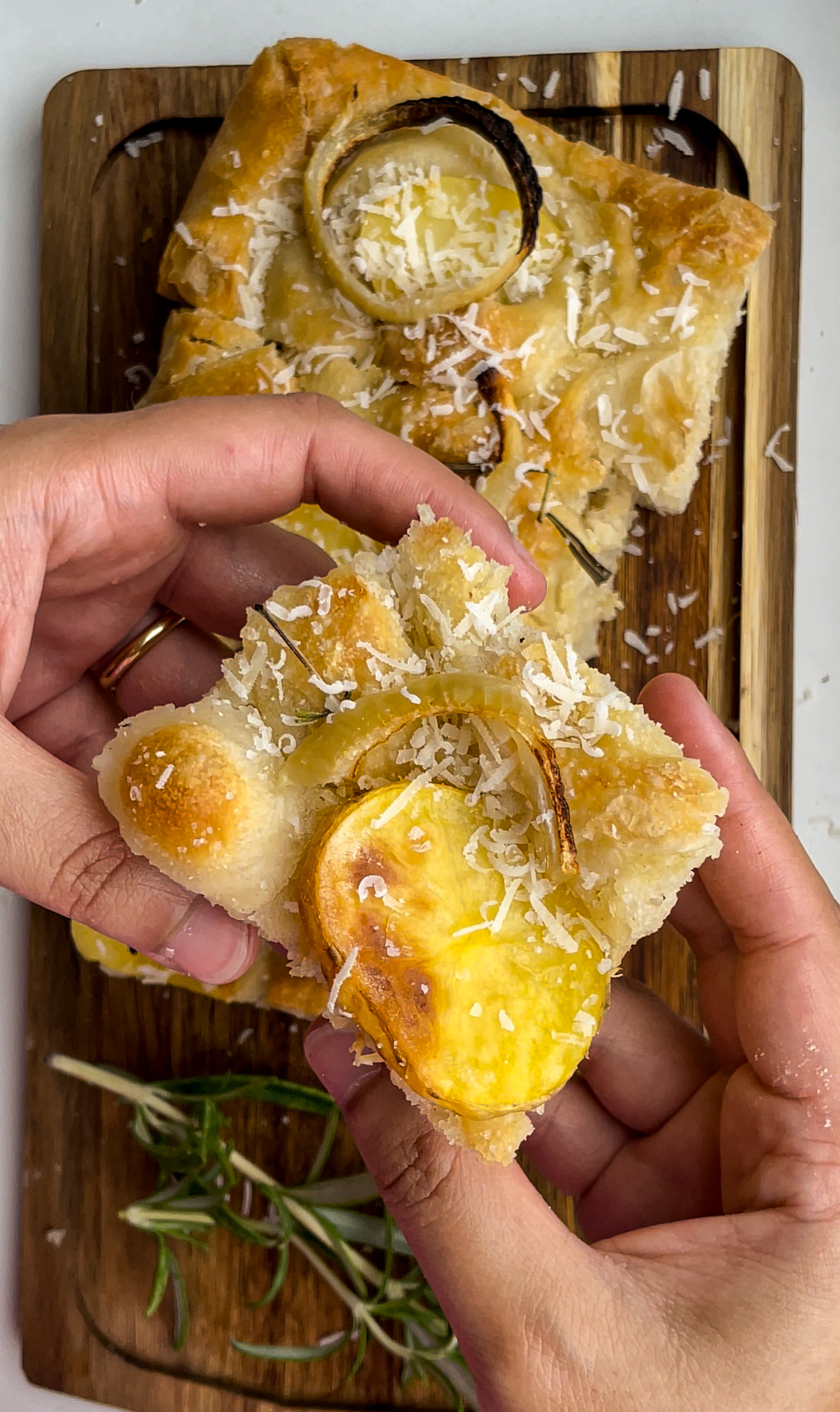
The toppings elevate this Potato Onion Focaccia from simple bread to a gourmet creation. Thinly sliced potatoes become tender and slightly crispy during baking, while onions caramelize and add natural sweetness. Fresh rosemary infuses the entire loaf with aromatic flavor that fills your kitchen with an irresistible scent. Together, these elements create a bread that’s truly special.
The Beauty of No-Knead Baking
The no-knead method revolutionizes bread baking by making it approachable and forgiving. Traditional kneading develops gluten through mechanical manipulation, requiring specific techniques and significant physical effort. The no-knead approach achieves identical results through extended fermentation, where gluten strands form and strengthen naturally as the dough rests.
This technique particularly benefits Potato Onion Focaccia because it creates an open, airy texture that would be difficult to achieve through kneading alone. The gentle handling preserves the gas bubbles formed during fermentation, resulting in that characteristic holey crumb. Additionally, minimal handling means less risk of deflating the dough or developing tough texture.
Time becomes your most valuable ingredient when making Potato Onion Focaccia. Most of the process happens while you sleep or go about your day. Mix the dough in the evening, let it ferment overnight, then shape and bake the next day. This hands-off approach fits easily into busy schedules while producing bread that tastes like it required hours of active work.

Understanding the Perfect Dough for Potato Onion Focaccia
Creating exceptional Potato Onion Focaccia starts with understanding proper dough consistency. The mixture should appear quite wet and sticky compared to traditional bread doughs. This high hydration creates the open crumb structure and tender texture that define great focaccia. Don’t be tempted to add extra flour if the dough seems too wet—trust the process.
Bread flour forms the foundation of outstanding Potato Onion Focaccia due to its higher protein content compared to all-purpose flour. These proteins develop into gluten strands that provide structure and chewiness. The extra protein also helps the dough hold more water, contributing to better oven spring and a lighter final texture.
Water temperature affects fermentation speed when preparing Potato Onion Focaccia. Room temperature water works perfectly for overnight fermentation, allowing yeast to work slowly and develop complex flavors. If you’re in a hurry, slightly warmer water speeds up the process, though the flavor won’t be quite as developed. Cold water slows fermentation, useful if you need to extend timing.
Mixing Techniques That Matter
Proper mixing ensures even distribution of ingredients throughout your Potato Onion Focaccia dough. Start by combining dry ingredients in a large bowl, whisking to eliminate any clumps. This distributes yeast and salt evenly, preventing concentrated pockets that could affect fermentation. Add olive oil and water, then use a wooden spoon or Danish dough whisk to stir until no dry flour remains.
The dough for Potato Onion Focaccia should look shaggy and rough after initial mixing. Don’t worry about achieving smooth consistency at this stage. During fermentation, the dough will transform as gluten develops and the mixture becomes cohesive. Resist the urge to overmix, as gentle handling preserves the delicate structure.
Cover your Potato Onion Focaccia dough with plastic wrap or a damp towel to prevent surface drying during fermentation. The covering traps moisture, keeping the dough surface supple and preventing crust formation. This protection allows even rising and makes the dough easier to handle when you’re ready to shape it.
Fermentation Process Explained
Fermentation represents the most crucial stage in creating excellent Potato Onion Focaccia. During this time, yeast consumes sugars in the flour and produces carbon dioxide gas and alcohol. The gas creates air bubbles that make the bread rise, while alcohol contributes to flavor development. Enzymes in the flour also break down starches into simpler sugars, adding sweetness and complexity.
The overnight rise allows Potato Onion Focaccia dough to develop rich, nuanced flavors impossible to achieve with quick rising. Long fermentation creates organic acids that add subtle tanginess and depth. These compounds also help preserve the bread, keeping it fresh longer than quickly made alternatives. Patience during this stage pays dividends in final flavor.
Temperature control impacts fermentation speed and flavor development. Room temperature around seventy degrees Fahrenheit proves ideal for overnight Potato Onion Focaccia fermentation. Warmer environments speed up the process but may result in less flavor complexity. Cooler temperatures slow fermentation, which can actually enhance flavor if you have extra time.
Preparing Perfect Toppings for Potato Onion Focaccia
The toppings transform simple bread into spectacular Potato Onion Focaccia worthy of any artisan bakery. Selecting the right potatoes makes a significant difference in final results. Waxy varieties like Yukon Gold or red potatoes work best because they hold their shape during baking. These potatoes have lower starch content than russets, preventing them from becoming mushy or falling apart.
Slice potatoes very thinly for your Potato Onion Focaccia, ideally about one-eighth inch thick. A mandoline slicer creates uniform slices that cook evenly, though a sharp knife works if you cut carefully. Thin slices become tender during baking without remaining hard or undercooked. They also create an attractive presentation with slight overlapping that covers the dough beautifully.
Onions add essential sweetness and depth to Potato Onion Focaccia. Yellow onions provide balanced flavor, while sweet onions like Vidalia create more pronounced sweetness. Red onions contribute mild flavor and gorgeous color. Slice onions thinly and separate the rings before arranging on the dough. During baking, they’ll caramelize and develop rich, complex sweetness.
Preparing Vegetables for Optimal Results
Soaking potato slices in cold water for fifteen to twenty minutes removes excess starch, preventing discoloration and helping them crisp slightly during baking. This step ensures your Potato Onion Focaccia toppings look as beautiful as they taste. Pat the slices completely dry with paper towels before using, as excess moisture can make the bread soggy.
Some bakers prefer parboiling potato slices for two to three minutes before topping Potato Onion Focaccia. This partial cooking ensures potatoes become completely tender during baking. It’s not essential for very thin slices but helps if your potatoes are slightly thicker. If parboiling, drain well and pat dry before arranging on dough.
Season your toppings before placing them on Potato Onion Focaccia. Toss potato and onion slices with olive oil, salt, and pepper in a bowl. This pre-seasoning ensures flavor penetrates the vegetables rather than just sitting on the surface. The oil coating also promotes browning and prevents drying during baking.
Herb and Seasoning Choices
Fresh rosemary stands as the classic herb for Potato Onion Focaccia, providing aromatic pine notes that complement potatoes beautifully. Strip leaves from stems and chop roughly, or leave small sprigs whole for rustic presentation. Rosemary’s robust flavor stands up to baking temperatures without becoming bitter or losing potency.
Consider alternative herbs to customize your Potato Onion Focaccia. Fresh thyme offers delicate, earthy flavor that pairs wonderfully with potatoes. Sage provides bold, savory notes perfect for fall and winter baking. Oregano adds Mediterranean character, while basil creates summery freshness. Mix herbs or use single varieties based on your preference.
Flaky sea salt makes the perfect finishing touch for Potato Onion Focaccia. Sprinkle it over the topped dough just before baking for bursts of salinity and pleasant crunch. Maldon or fleur de sel work beautifully, though any coarse finishing salt adds textural interest and flavor enhancement that regular table salt cannot provide.
Step-by-Step Instructions for Potato Onion Focaccia
Creating perfect Potato Onion Focaccia follows a simple timeline that fits around your schedule. Begin the evening before you want to serve the bread. Combine four cups of bread flour, two teaspoons of salt, and two teaspoons of instant yeast in a large bowl. Whisk these dry ingredients together thoroughly to ensure even distribution throughout your dough.
Add one and three-quarter cups of room temperature water and three tablespoons of extra virgin olive oil to the flour mixture. Stir with a wooden spoon until all flour is incorporated and you have a sticky, shaggy dough. This mixing takes only two to three minutes. Don’t worry about achieving smooth consistency—the Potato Onion Focaccia dough improves during fermentation.
Cover the bowl with plastic wrap and let the dough rest at room temperature for twelve to eighteen hours. The mixture will double or triple in size and become bubbly and jiggly. This long fermentation develops the gluten structure and complex flavors that make Potato Onion Focaccia so exceptional. Plan your timing so the dough finishes rising when you’re ready to continue.
Shaping Your Focaccia
After overnight fermentation, generously oil a nine-by-thirteen-inch baking pan or rimmed baking sheet with olive oil. Use about three tablespoons of oil, ensuring the entire bottom and sides are well coated. This oil prevents sticking and creates the crispy, golden bottom crust characteristic of excellent Potato Onion Focaccia.
Gently transfer the risen dough to the prepared pan without deflating it completely. The dough will be very soft and extensible. Use oiled hands to carefully stretch and press it toward the corners of the pan. Don’t worry if it doesn’t reach the edges immediately—let it rest for fifteen minutes, then stretch again. This gradual approach prevents tearing.
Allow the shaped Potato Onion Focaccia to rest for one to two hours at room temperature until puffy and nearly doubled. During this second rise, the dough relaxes and spreads further, filling the pan completely. This proofing develops the final texture and allows the dough to achieve maximum lightness before baking.
Dimpling and Topping
Create the signature dimpled texture of Potato Onion Focaccia by pressing your fingertips firmly into the dough surface. Push straight down to the bottom of the pan, creating deep wells throughout. These dimples trap olive oil and prevent the bread from puffing too much during baking, creating the characteristic flat shape.
Drizzle about two tablespoons of olive oil over the dimpled Potato Onion Focaccia dough, allowing it to pool in the indentations. This oil adds flavor and moisture while promoting beautiful browning. Use high-quality extra virgin olive oil since its flavor comes through clearly in the finished bread.
Arrange your prepared potato and onion slices over the Potato Onion Focaccia surface, overlapping slightly and pressing them gently into the dough. Scatter rosemary leaves over everything and sprinkle with flaky sea salt. Some bakers add a final drizzle of olive oil over the toppings for extra richness and to encourage caramelization.
Professional Tips for Exceptional Results
Temperature management ensures your Potato Onion Focaccia achieves optimal texture and color. Preheat your oven to 450 degrees Fahrenheit for at least twenty minutes before baking. This high temperature creates immediate oven spring, where the dough rapidly expands from heat and steam. The strong initial rise contributes to light, airy texture.
Position your Potato Onion Focaccia on the middle or lower-middle oven rack for even cooking. The bread needs bottom heat to develop that crispy, golden underside while the top browns and the toppings cook through. Avoid placing the pan too close to the top heating element, which can over-brown the surface before the interior finishes baking.
Watch for visual cues that indicate your Potato Onion Focaccia is perfectly baked. The bread should be deeply golden brown on top with darker spots where olive oil has pooled. The potatoes should appear tender and slightly crispy at the edges. The onions will be caramelized and sweet. Baking typically takes twenty-five to thirty minutes.
Achieving the Perfect Crust
The contrast between crispy exterior and tender interior defines exceptional Potato Onion Focaccia. Generous olive oil in the pan creates a fried effect on the bottom, developing intense golden color and satisfying crunch. Don’t skimp on oil—it’s essential for achieving this textural element that makes focaccia so special.
Steam during initial baking helps create a crispy crust on Potato Onion Focaccia. Some bakers place a pan of water on the oven’s bottom rack to generate steam. This moisture keeps the surface from setting too quickly, allowing maximum oven spring. The steam also contributes to a thin, crispy crust rather than a thick, chewy one.
For extra-crispy bottom crust, consider using a baking stone or steel preheated in the oven. Place your pan of Potato Onion Focaccia directly on the hot surface. This intense bottom heat creates exceptional crispiness that regular baking sheets cannot match. If using this method, reduce oven temperature slightly to prevent over-browning.
Timing and Cooling Considerations
Resist cutting into your Potato Onion Focaccia immediately after removing it from the oven, despite the tempting aroma. Allow the bread to cool in the pan for five minutes, which lets the structure set and makes removal easier. The crumb continues cooking slightly during this time through residual heat.
Transfer the focaccia to a wire cooling rack after five minutes to prevent the bottom from becoming soggy. Air circulation around the entire loaf maintains the crispy texture you worked to develop. Let the Potato Onion Focaccia cool for at least fifteen minutes before slicing, allowing flavors to settle and the crumb to finish setting.
Serve your Potato Onion Focaccia while still warm for the ultimate experience. The bread remains at peak texture and flavor for several hours after baking. The exterior stays crispy while the interior maintains perfect tenderness. If making ahead, reheat briefly in a moderate oven to refresh the crust before serving.
Creative Variations to Explore
Once you master basic Potato Onion Focaccia, endless variations await your experimentation. Try different potato varieties like purple potatoes for stunning visual appeal or fingerling potatoes for unique shape. Each type brings slightly different flavor and texture, allowing you to customize based on preference or availability.
Caramelize your onions before topping the Potato Onion Focaccia for even deeper, sweeter flavor. Cook sliced onions slowly in olive oil until golden brown and jammy. These pre-caramelized onions add intense sweetness and rich color. Spread them over the dough before adding potato slices for maximum impact.
Incorporate cheese into your Potato Onion Focaccia for extra richness and savory depth. Crumbled goat cheese, shredded Gruyère, or grated Parmesan work beautifully with potato and onion. Add cheese during the last ten minutes of baking to prevent excessive browning. The melted cheese creates additional layers of flavor and appealing visual appeal.
Seasonal Topping Ideas
Adapt your Potato Onion Focaccia to celebrate seasonal ingredients throughout the year. In spring, add asparagus spears and fresh peas along with the traditional toppings. Summer calls for cherry tomatoes and fresh basil that complement potatoes beautifully. These seasonal additions keep the bread interesting while maintaining the beloved potato and onion base.
Fall and winter invite heartier additions to Potato Onion Focaccia. Roasted garlic cloves scattered over the dough add sweet, mellow flavor. Sautéed mushrooms provide earthy depth that pairs wonderfully with rosemary. Winter squash, thinly sliced and roasted, creates sweet contrast against savory onions.
Mediterranean variations transform Potato Onion Focaccia into entirely new creations. Add Kalamata olives, sun-dried tomatoes, and feta cheese for Greek-inspired flavor. Anchovies and capers create a bold, briny version perfect for adventurous eaters. These variations prove the versatile nature of the basic dough and technique.
Alternative Flavor Profiles
Create spicy Potato Onion Focaccia by adding red pepper flakes or sliced jalapeños to the toppings. The heat contrasts beautifully with sweet caramelized onions while the potatoes provide neutral balance. This variation appeals to those who enjoy bold, assertive flavors in their bread.
Garlic lovers can enhance Potato Onion Focaccia by adding roasted or raw garlic. Mix minced garlic into the olive oil drizzled over the dough, or press whole roasted cloves into the dimples. The garlic mellows during baking, becoming sweet and fragrant rather than harsh.
For herbed variation, create an herb oil by steeping rosemary, thyme, and oregano in warm olive oil for thirty minutes. Brush this infused oil over the Potato Onion Focaccia before adding toppings. The herb essence permeates the bread, creating more complex flavor than fresh herbs alone provide.
Storage and Reheating Guidelines
Proper storage preserves your Potato Onion Focaccia’s quality for several days after baking. Allow the bread to cool completely to room temperature before storing, which prevents condensation from forming and making the crust soggy. Wrap cooled focaccia tightly in plastic wrap or aluminum foil, or place it in an airtight container.
Room temperature storage works well for Potato Onion Focaccia you’ll consume within two days. The bread maintains good texture and flavor at room temperature, though the crust gradually softens. Store in a cool, dry place away from direct sunlight. Avoid refrigerating focaccia, as cold temperatures accelerate staling and create tough texture.
For longer storage, freeze Potato Onion Focaccia for up to three months with minimal quality loss. Wrap the completely cooled bread tightly in plastic wrap, then in aluminum foil to prevent freezer burn. Label with the date and contents. Frozen focaccia thaws quickly at room temperature, usually within two to three hours.
Reheating Methods
Restore freshly baked quality to Potato Onion Focaccia through proper reheating techniques. The oven provides the best results, crisping the exterior while warming the interior. Preheat your oven to 350 degrees Fahrenheit and place unwrapped focaccia directly on the oven rack. Heat for eight to ten minutes until warmed through and the crust crisps slightly.
For smaller portions, a toaster oven works perfectly for reheating Potato Onion Focaccia. Cut the bread into serving-size pieces and toast until warm and slightly crispy. This method takes only three to five minutes and refreshes individual portions without heating your entire oven.
Microwave reheating works in a pinch but won’t restore the crispy texture that makes Potato Onion Focaccia special. If using this method, wrap bread in a slightly damp paper towel and heat in fifteen-second intervals. The moisture prevents excessive drying. Follow with a quick toaster oven crisping if desired.
Serving Suggestions and Pairings
Potato Onion Focaccia shines in numerous serving scenarios beyond simple bread basket duty. Cut into squares and serve alongside soups and salads for satisfying lunch combinations. The bread’s substantial texture and rich flavors complement light, fresh dishes while providing enough heft to create a complete meal.
Transform Potato Onion Focaccia into exceptional sandwiches by slicing horizontally and filling with your favorite ingredients. The bread’s sturdy structure holds up to generous fillings without becoming soggy. Try Italian-style sandwiches with prosciutto, fresh mozzarella, and arugula, or create vegetarian versions with grilled vegetables and pesto.
Serve Potato Onion Focaccia as an appetizer at dinner parties by cutting into small squares and offering with olive oil for dipping. The impressive appearance and complex flavors make it seem far more difficult than it actually is to prepare. Guests will be amazed when you mention the bread required no kneading.
Wine and Beverage Pairings
The savory, herbaceous qualities of Potato Onion Focaccia pair beautifully with Italian white wines. Crisp Pinot Grigio or Vermentino cut through the bread’s richness while complementing the herb and vegetable flavors. These lighter wines don’t overpower the delicate potato and onion notes.
For red wine lovers, light to medium-bodied options work best with Potato Onion Focaccia. Chianti or Barbera offer enough structure to stand up to the bread’s flavors without overwhelming them. These wines’ subtle fruity notes and moderate tannins create harmonious pairings.
Non-alcoholic options like sparkling water with lemon or Italian sodas complement Potato Onion Focaccia nicely. The bubbles cleanse the palate between bites, while citrus notes brighten the bread’s rich, savory character. Herbal teas like chamomile or mint also pair well, especially at afternoon gatherings.
Frequently Asked Questions About Potato Onion Focaccia
Can I Use All-Purpose Flour Instead of Bread Flour?
Yes, all-purpose flour works for Potato Onion Focaccia, though the texture differs slightly from bread flour versions. All-purpose flour contains less protein, resulting in slightly less chewy texture and somewhat denser crumb. The bread will still taste delicious and rise properly, just with subtle textural differences.
If substituting all-purpose flour in your Potato Onion Focaccia, consider adding one to two tablespoons of vital wheat gluten per cup of flour. This addition boosts protein content, mimicking bread flour’s properties more closely. Alternatively, simply accept the slightly different texture, which many bakers actually prefer for its tender quality.
How Do I Know When the Dough Has Fermented Enough?
Properly fermented Potato Onion Focaccia dough should appear very bubbly and jiggly when you gently shake the bowl. The mixture will have doubled or tripled in volume, with visible bubbles throughout. If you pull back a small portion of dough, it should stretch easily without tearing, indicating well-developed gluten.
Timing varies based on room temperature and other factors, so visual and textural cues matter more than strict timeframes. If your Potato Onion Focaccia dough seems under-fermented after twelve hours, simply let it continue rising until it displays the proper characteristics. Conversely, over-fermented dough may smell strongly alcoholic and appear deflated.
Can I Make Potato Onion Focaccia in a Different Pan Size?
Absolutely, though pan size affects the final thickness and baking time of your Potato Onion Focaccia. Smaller pans create thicker bread that requires longer baking, while larger pans produce thinner focaccia that cooks faster. A nine-by-thirteen-inch pan creates ideal thickness, but you can adapt based on available equipment.
For round Potato Onion Focaccia, use a twelve-inch cast iron skillet or round cake pan. The dough adapts easily to different shapes. Just ensure whatever pan you choose has at least one-inch sides to contain the dough during rising and prevent overflow during baking.
Why Is My Focaccia Dense Instead of Airy?
Dense Potato Onion Focaccia usually results from insufficient fermentation, too little water, or deflating the dough too much during shaping. Ensure your dough ferments long enough to develop proper gluten structure and gas production. The mixture should be very bubbly and jiggly before shaping.
Handle the fermented dough gently when transferring to the baking pan. Rough handling deflates the gas bubbles created during fermentation, resulting in dense texture. Use oiled hands and gentle stretching rather than aggressive pressing. Also verify you’re using the correct water amount, as drier dough produces denser Potato Onion Focaccia.
Can I Prepare the Dough in Advance?
Yes, Potato Onion Focaccia dough refrigerates well for up to three days after the initial fermentation. This flexibility allows you to mix dough one day, refrigerate it, then shape and bake when convenient. The extended cold fermentation actually enhances flavor development, creating even more complex taste.
When ready to bake, remove the cold dough from refrigeration and proceed with shaping in an oiled pan. Allow extra time for the second rise since cold dough takes longer to proof. The Potato Onion Focaccia may need an additional thirty to sixty minutes at room temperature before baking.
Final Thoughts on Potato Onion Focaccia
This Potato Onion Focaccia recipe proves that exceptional bread doesn’t require professional training or exhausting physical effort. The no-knead method democratizes artisan baking, making it accessible to anyone with a bowl, a pan, and patience. The results rival anything from expensive bakeries, all achieved in your home kitchen with simple, affordable ingredients.
The beauty of Potato Onion Focaccia lies not only in its delicious flavor but in its versatility and forgiving nature. Adapt the toppings to suit your preferences or available ingredients. Serve it in countless ways from breakfast to dinner. The dough tolerates timing variations, fitting around your schedule rather than demanding rigid adherence to specific timeframes.
Embrace the joy of creating this stunning Potato Onion Focaccia and share it with people you love. The aroma filling your kitchen, the satisfaction of pulling golden bread from the oven, and the smiles on faces as people taste your creation make the minimal effort worthwhile. Start your dough tonight, and tomorrow you’ll enjoy bakery-quality bread that showcases your baking skills beautifully!
Watch the recipe video for more clarity
See our similar recipes:
People also like our these recipes:
THE DOUGH
- 400 g bread flour
- 320 g water
- 7 g salt
- 3 g instant yeast
- 12 g olive oil
THE TOPPINGS
- 1/2 onion ring sliced
- Fresh Rosemary
- 1 potato sliced
In a large bowl, add in the water, yeast, salt, olive oil and flour. Mix well until all is incorporated very well.
Cover and let it set for 30 minutes.
Do 1 set of stretches and fold and cover for another 30 minutes.
Do 1 coil fold and cover for another 30 minutes.
Do another coil fold and cover for another 30 minutes.
Cover and let it sit in the refrigerator overnight.
Pre-heat the oven to 230 degrees Celsius.
The next day, drizzle your baking pan very well with olive oil and transfer the dough to the baking pan. Cover and let it sit until it doubles in size.
Dimple the dough and top with onions, dried rosemary and potatoes.
Bake for 20-25 minutes or until golden.
Serve while warm!
If you've given this recipe a try and it won you over, please share your thoughts by leaving
a rating and comment below! If you have any questions about this recipe, don't hesitate to ask – I'm here to
help and will respond promptly.