Welcome to the World of Authentic New York Style Pizza
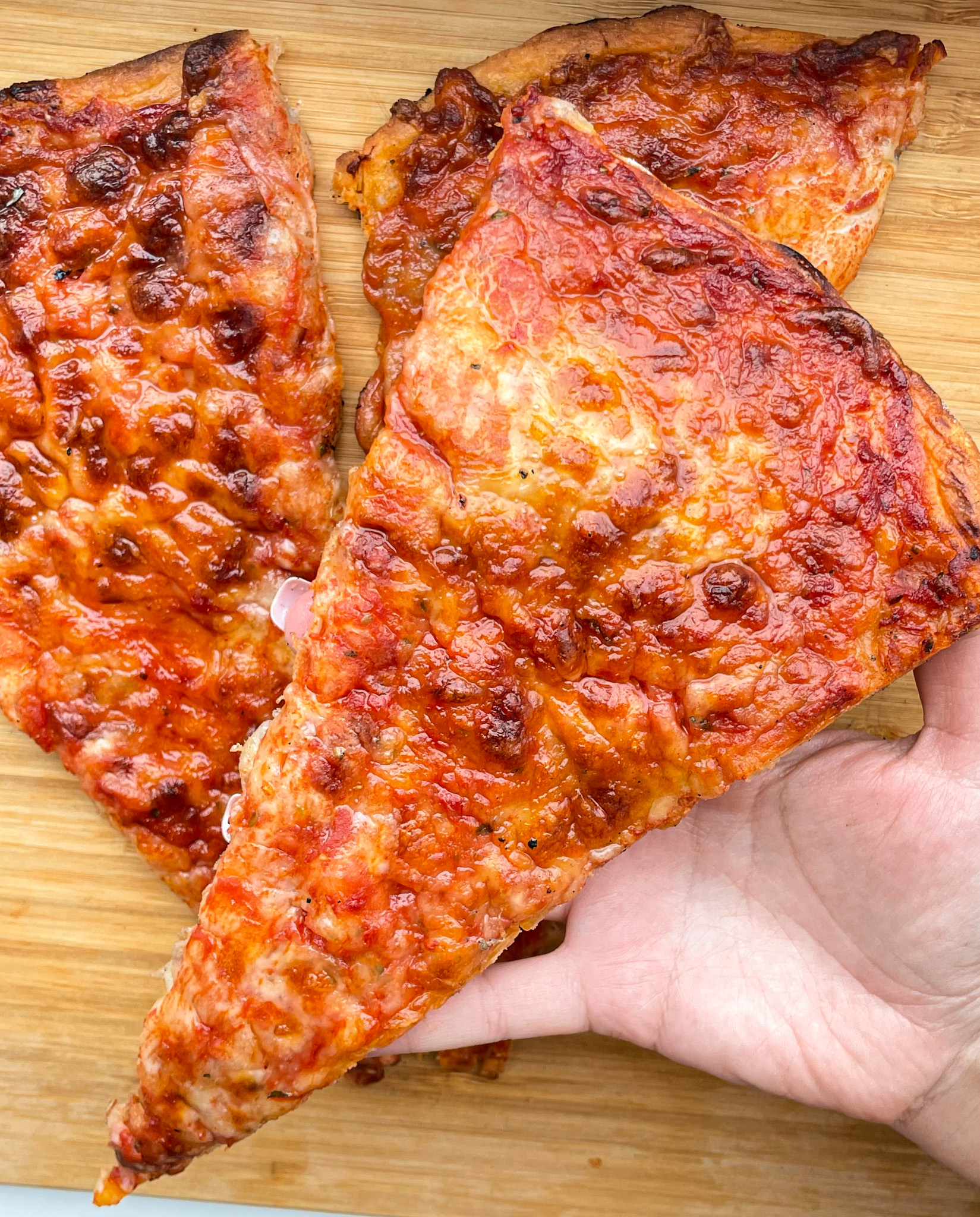
Welcome to the delightful world of homemade New York Style Pizza. If you’ve ever found yourself craving a slice that’s big on flavor and even bigger on personality, you’re in for a treat. Originating from the bustling streets of the Big Apple, New York Style Pizza is renowned for its thin, hand-tossed crust that strikes the perfect balance between crispy and chewy. This iconic pizza features a generous topping of tangy tomato sauce and gooey mozzarella cheese, creating a harmonious symphony of savory goodness in every bite.
The beauty of New York Style Pizza lies in its simplicity and execution. Unlike thick-crust varieties, this pizza celebrates the perfect ratio of crust to toppings, allowing each element to shine without overwhelming your palate. The wide, foldable slices have become synonymous with New York City culture, representing a culinary tradition that spans generations. Whether you’re a local New Yorker or a curious traveler, preparing authentic New York Style Pizza at home brings the taste of NYC directly to your kitchen.
Creating genuine New York Style Pizza requires understanding the fundamental techniques that pizzerias have perfected over decades. From the cold-fermented dough that develops complex flavors to the blistering hot oven that creates that signature char, every step contributes to the final masterpiece. This comprehensive guide will walk you through each element, ensuring your homemade pizza rivals the best slices found on the streets of Manhattan.
Why This Recipe is Special
What sets this New York Style Pizza recipe apart is its commitment to authenticity combined with home-kitchen practicality. Professional pizzerias use specialized equipment and techniques developed over years of experience, but this recipe adapts those methods for your home oven. You’ll learn how to achieve professional results using equipment you already own or can easily acquire, making restaurant-quality pizza accessible to everyone.
This New York Style Pizza recipe emphasizes the importance of time in developing flavor. The extended cold fermentation process transforms simple ingredients into complex, flavorful dough that’s both tender and chewy. This technique, used by the best pizzerias, allows the yeast to work slowly, creating air pockets and developing nuanced flavors that quick-rise doughs simply cannot match. The investment of time pays dividends in taste and texture.
The versatility of New York Style Pizza makes it perfect for any occasion. Whether you’re hosting a casual game night, celebrating a special occasion, or simply enjoying a weeknight dinner, this pizza adapts beautifully to your needs. The recipe yields four generous pizzas, allowing you to experiment with different toppings or feed a crowd with minimal effort. Each pizza bakes in just minutes, making the process efficient once your dough is prepared.
Key Ingredients Overview
The ingredient list for New York Style Pizza is surprisingly straightforward, focusing on quality over quantity. High-protein bread flour forms the foundation, providing the gluten structure necessary for that characteristic chewy texture. This specialized flour contains more protein than all-purpose varieties, creating a dough that can be stretched thin without tearing. The additional protein also contributes to better browning and a more satisfying crust texture.
Water, yeast, and sugar work together to activate fermentation in New York Style Pizza dough. The sugar feeds the yeast, helping it multiply and produce the carbon dioxide that makes the dough rise. Olive oil adds richness and helps create a more tender crumb, while also preventing the dough from drying out during the extended fermentation period. Salt enhances all the flavors and strengthens the gluten structure, contributing to better texture.
Low moisture mozzarella is the cheese of choice for authentic New York Style Pizza. This partially dried cheese melts evenly without releasing excess moisture that would make the crust soggy. The firmer texture creates those signature cheese pulls that make each slice so satisfying. Combining mozzarella with Parmesan adds depth and complexity, with the Parmesan providing nutty, savory notes that complement the milder mozzarella beautifully.

Understanding the Art of New York Style Pizza
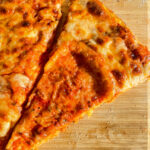
The defining characteristic of New York Style Pizza is its thin, foldable crust that maintains structural integrity despite generous toppings. This balance comes from proper dough hydration, adequate gluten development, and the high-temperature baking process. The crust should be crispy on the bottom, slightly chewy in the center, and puffed around the edges, creating textural variety in every bite.
New York Style Pizza emerged in the early twentieth century as Italian immigrants adapted their traditional recipes to American ingredients and tastes. The large, wide slices became practical for on-the-go eating, allowing busy New Yorkers to fold their pizza and consume it while walking. This convenience factor, combined with exceptional taste, made New York Style Pizza a cultural icon that spread far beyond the city limits.
The technique of hand-stretching dough is central to authentic New York Style Pizza preparation. Unlike rolling pins that compress the dough and eliminate air pockets, hand-stretching preserves the airy structure created during fermentation. This method requires practice but produces superior results, with a lighter, more tender crust that showcases the complex flavors developed during cold fermentation.
The Importance of Cold Fermentation
Cold fermentation revolutionizes New York Style Pizza dough by allowing extended flavor development without over-proofing. When dough ferments slowly in the refrigerator, the yeast produces more complex flavor compounds, creating depth that quick-rise methods cannot achieve. This process also breaks down proteins in the flour, making the dough easier to digest and improving its extensibility for stretching.
The minimum fermentation time for quality New York Style Pizza dough is 24 hours, though 48 hours produces even better results. During this extended period, the dough develops a subtle tanginess reminiscent of sourdough, adding character to the finished pizza. The slow fermentation also strengthens the gluten network, creating a dough that’s both strong enough to support toppings and tender enough to provide pleasant chewing texture.
Extended fermentation up to one week is possible with New York Style Pizza dough, offering remarkable flexibility for meal planning. The dough actually improves over several days as flavors continue developing and the gluten structure relaxes further. This convenience allows you to prepare dough during a free afternoon and bake fresh pizza any night of the week without additional preparation time.
Achieving the Perfect Dough Consistency
Proper dough consistency is crucial for successful New York Style Pizza. The dough should be smooth and elastic, capable of being stretched thin without tearing. When you pull a small piece of dough between your fingers, it should stretch into a translucent membrane without breaking, a characteristic known as the “windowpane test” that indicates adequate gluten development.
Kneading develops the gluten structure necessary for great New York Style Pizza dough. Whether using a stand mixer or kneading by hand, the process aligns protein strands and creates an elastic network that traps gas bubbles during fermentation. Stand mixers accomplish this in five to ten minutes on medium speed, while hand kneading requires about ten to fifteen minutes of consistent work.
Dividing your New York Style Pizza dough into four equal portions ensures consistent baking results. Each portion should weigh approximately the same, creating pizzas of uniform size and thickness. Shaping the portions into smooth balls and coating them generously with olive oil prevents drying and makes stretching easier when you’re ready to assemble your pizzas.
Choosing the Right Equipment for New York Style Pizza
Equipment selection significantly impacts your ability to create authentic New York Style Pizza at home. While you don’t need a professional pizza oven, certain tools make the process easier and improve results dramatically. Understanding the function of each piece of equipment helps you make informed decisions about where to invest your money.
Pizza Steel Versus Pizza Stone
The debate between pizza steel and pizza stone centers on heat transfer efficiency for New York Style Pizza. Steel conducts heat approximately eighteen times better than stone, transferring intense heat to the pizza crust rapidly. This quick heat transfer creates a crispy bottom crust while promoting oven spring, resulting in a light, airy texture with excellent char. Pizza steels are virtually indestructible and maintain their performance indefinitely with minimal care.
Pizza stones offer different advantages for New York Style Pizza preparation. The porous stone absorbs moisture from the dough, helping create a crispier crust with a slightly chewy interior. Stones provide more gradual heat distribution compared to steel, resulting in a slower bake time that some cooks prefer. The versatility of pizza stones extends beyond pizza, making them useful for baking bread, pastries, and other items that benefit from even, dry heat.
Choosing between steel and stone for your New York Style Pizza depends on personal preference and desired characteristics. If you prioritize achieving the quickest bake time and crispiest possible crust, steel is the superior choice. Alternatively, if you prefer a slightly longer bake with a crust that’s crisp outside and chewy inside, stone works beautifully. Both options require preheating to maximum oven temperature for at least one hour before baking.
Essential Tools and Accessories
A pizza peel is indispensable for transferring New York Style Pizza into and out of your hot oven safely. The long handle keeps your hands away from intense heat while the flat surface slides easily under assembled pizzas. Wooden peels work best for launching pizzas into the oven, as dough doesn’t stick to wood as readily as metal. Metal peels excel at retrieving finished pizzas due to their thin profile.
Measuring cups and spoons ensure accuracy when preparing New York Style Pizza dough and sauce. Baking is a science that rewards precision, and small variations in ingredient ratios can significantly affect results. Digital scales provide even greater accuracy for serious pizza makers, allowing you to measure ingredients by weight rather than volume for the most consistent outcomes.
A sharp pizza cutter or large chef’s knife is necessary for portioning your finished New York Style Pizza into slices. Traditional pizza wheels work well for cutting through the thin crust cleanly without dragging toppings. Some prefer large, sharp knives that slice through in one decisive motion, creating cleaner edges. Either option works well, so choose based on what feels comfortable and produces good results for you.
Optimizing Your Home Oven
Maximizing your oven temperature is critical for authentic New York Style Pizza results. Set your oven to its highest temperature setting, typically between 500 and 550 degrees Fahrenheit. This intense heat mimics professional pizza ovens, cooking the pizza quickly and creating proper char on the crust. Some home cooks use the broiler in conjunction with bottom heat to increase temperatures further.
Preheating your oven and baking surface for a minimum of one hour ensures even heat distribution for New York Style Pizza. The thermal mass of the pizza stone or steel requires substantial time to reach full temperature throughout. Rushing this step results in unevenly cooked pizzas with pale bottoms and overcooked toppings. Patience during preheating pays dividends in the quality of your finished pizza.
Oven positioning affects how your New York Style Pizza bakes. Placing the pizza stone or steel on the lowest rack position brings it closest to the heating element, maximizing bottom crust crispiness. Some ovens have hot spots that cause uneven cooking, requiring you to rotate the pizza halfway through baking. Learning your oven’s characteristics helps you adjust for consistent results.
Selecting the Perfect Cheese for New York Style Pizza
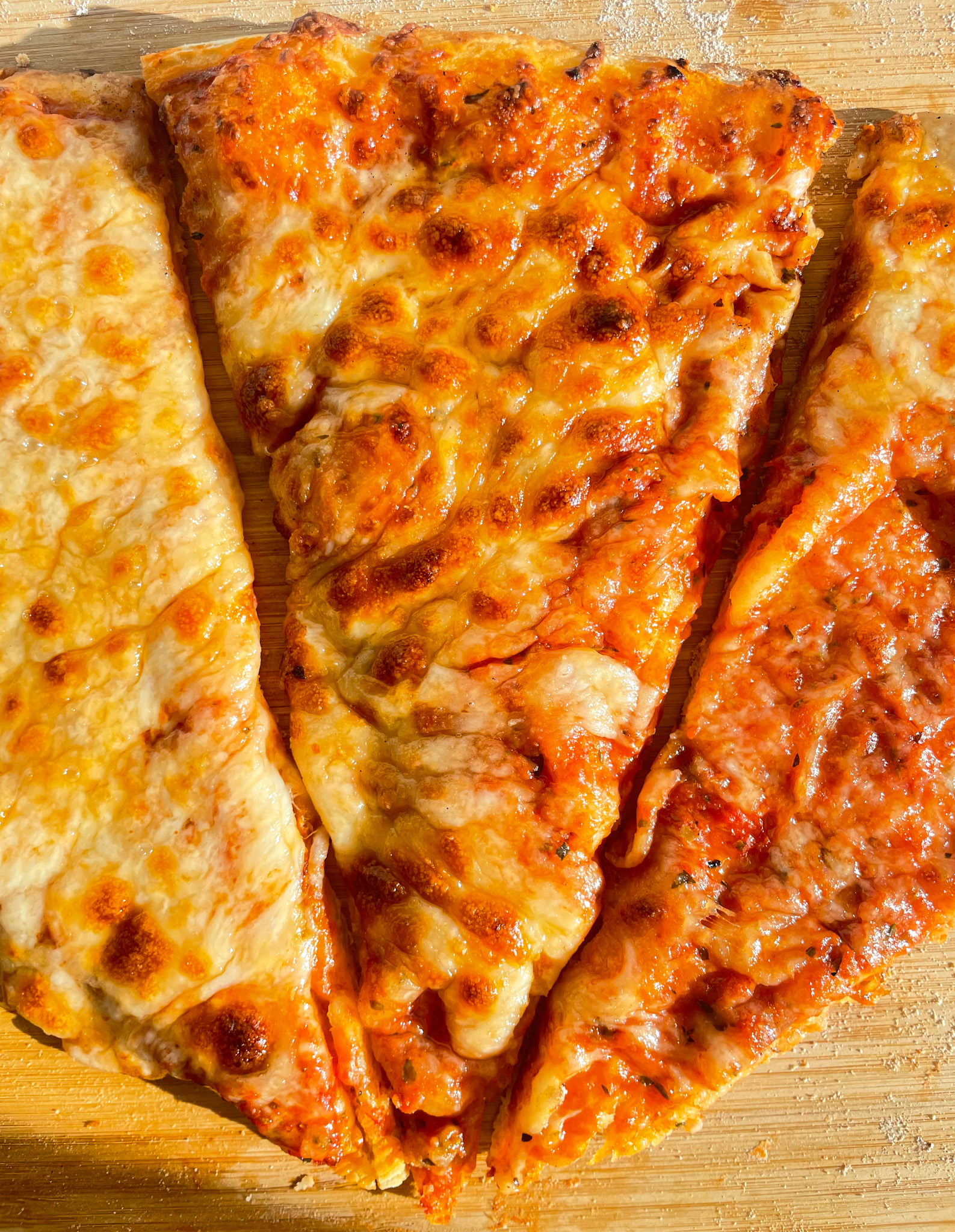
Cheese selection dramatically affects the flavor and texture of New York Style Pizza. The right cheese melts smoothly, creates appealing stretchy strands, and complements rather than overwhelms the other components. Understanding the characteristics of different mozzarella types helps you choose the best option for authentic results.
Why Low Moisture Mozzarella Works Best
Low moisture mozzarella is the definitive choice for New York Style Pizza due to its ideal melting properties. This partially dried cheese contains significantly less water than fresh mozzarella, preventing the dreaded soggy crust that ruins many homemade pizzas. The reduced moisture content allows the cheese to melt evenly across the pizza surface without pooling or creating wet spots.
The texture of low moisture mozzarella contributes to the signature stretchiness of New York Style Pizza. As the cheese melts, its proteins form long chains that create those satisfying cheese pulls when you bite into a slice. The firmer texture before melting also makes the cheese easier to shred and distribute evenly across the pizza surface, ensuring consistent coverage in every bite.
The mild, creamy flavor of low moisture mozzarella allows other ingredients in New York Style Pizza to shine. Unlike strongly flavored cheeses that dominate the palate, mozzarella provides a neutral, pleasant backdrop that enhances the tangy tomato sauce and crispy crust. This balance is essential to authentic New York Style Pizza, where no single element overwhelms the others.
Enhancing Flavor with Parmesan
Adding Parmesan cheese elevates New York Style Pizza with complex, savory depth. The nutty, slightly sharp flavor of aged Parmesan introduces umami richness that makes each bite more satisfying. Sprinkling Parmesan over the mozzarella creates a golden, flavorful crust as it bakes, adding visual appeal and textural variety to the finished pizza.
The combination of mozzarella and Parmesan in New York Style Pizza creates a more sophisticated flavor profile than mozzarella alone. The Parmesan’s bold character complements the mild mozzarella, adding complexity without overpowering the other ingredients. This layering of flavors distinguishes exceptional pizzas from merely good ones, showcasing attention to detail in every element.
Freshly grated Parmesan delivers superior results compared to pre-grated varieties for New York Style Pizza. The pre-grated versions often contain anti-caking agents that affect melting properties and flavor. Investing a few minutes to grate Parmesan from a block ensures optimal taste and texture, contributing to the overall quality of your homemade pizza.
The Cold Cheese Technique
Adding cold mozzarella cheese directly from the refrigerator to New York Style Pizza offers several advantages. Cold cheese melts more slowly than room temperature cheese, giving the crust time to cook properly before the cheese becomes too molten. This prevents the common problem of burnt cheese paired with undercooked dough, ensuring all elements finish simultaneously.
Cold mozzarella maintains better texture during the initial baking phase of New York Style Pizza. Room temperature cheese can become overly soft and spread too much, creating an uneven distribution. Cold cheese holds its shape initially, then melts at the optimal rate to create even coverage with the perfect level of browning by the time the crust finishes cooking.
The temperature regulation provided by cold mozzarella promotes even cooking throughout New York Style Pizza. The cheese acts as an insulator, moderating the heat reaching the center of the pizza and ensuring the crust cooks through without burning. This technique is particularly valuable when using extremely hot ovens or thin dough that could easily overcook.
Crafting the Perfect Sauce for New York Style Pizza
Sauce is the soul of New York Style Pizza, providing the tangy contrast that balances rich cheese and crispy crust. The best sauces achieve a delicate equilibrium of acidity, sweetness, and herbal notes without overwhelming the palate. Understanding each ingredient’s role helps you create a sauce that enhances rather than dominates your pizza.
Essential Sauce Components
Tomato sauce forms the foundation of New York Style Pizza sauce, providing vibrant flavor and appealing color. High-quality canned tomatoes or tomato puree offer the best results, as they’re processed at peak ripeness and deliver consistent flavor year-round. San Marzano tomatoes are particularly prized for their sweet flavor and low acidity, though quality domestic brands also work excellently.
Olive oil enriches New York Style Pizza sauce with depth and creates a silky texture. Extra virgin olive oil contributes fruity, peppery notes that complement the tomatoes beautifully. The oil also helps the sauce spread more easily across the dough and contributes to browning and flavor development during baking. Use a moderate amount to enhance without making the sauce greasy.
Sugar balances the natural acidity of tomatoes in New York Style Pizza sauce, rounding out the flavor profile. A small amount of sugar enhances the tomatoes’ natural sweetness without making the sauce taste obviously sweet. Be conservative with sugar additions, as the goal is balance rather than sweetness. The sauce should taste bright and harmonious, neither too acidic nor too sweet.
Oregano and Seasoning
Oregano brings essential herbal character to New York Style Pizza sauce. The aromatic herb adds complexity and authenticity, creating the familiar pizza flavor that makes the dish so appealing. Dried oregano works better than fresh for sauce, as the concentrated flavor withstands cooking without becoming bitter. Crush dried oregano between your fingers before adding to release its aromatic oils.
Seasoning your New York Style Pizza sauce properly requires tasting and adjusting. Salt enhances all the flavors in the sauce, making the tomatoes taste more tomatoey and bringing the herbal notes forward. Start with a conservative amount and add gradually, tasting after each addition. Remember that the cheese also contributes saltiness, so the sauce alone shouldn’t taste overly salty.
Some cooks add garlic, basil, or red pepper flakes to their New York Style Pizza sauce for additional complexity. While traditional versions keep it simple, these additions can personalize your pizza. Fresh basil added after cooking provides bright, fresh notes, while a pinch of red pepper flakes introduces gentle heat. Experiment to find your preferred balance of flavors.
Sauce Application Technique
Applying sauce correctly is crucial for successful New York Style Pizza. Use a light hand, spreading a thin, even layer that doesn’t pool or create wet spots. Too much sauce makes the crust soggy and overwhelms the other flavors, while too little leaves the pizza dry and unbalanced. Aim for coverage that allows the dough to show through slightly, about three to four tablespoons per pizza.
Leave a border of bare dough around the edge when saucing New York Style Pizza. This uncovered rim becomes the crust, puffing up in the oven’s heat to create the characteristic raised edge. The border should be approximately three-quarters of an inch wide, providing structure and a place to hold the slice without getting sauce on your fingers.
Spreading sauce from the center outward in a spiral motion ensures even distribution on New York Style Pizza. Use the back of a ladle or large spoon to spread the sauce gently, avoiding excessive pressure that could tear the delicate dough. The sauce should reach almost to the crust line but not quite touch it, allowing for slight spreading during baking.
Step-by-Step Instructions for New York Style Pizza
Creating authentic New York Style Pizza at home requires following each step carefully and patiently. The process begins days before baking with dough preparation and ends with perfectly caramelized pizzas emerging from your oven. This comprehensive guide walks you through every stage, ensuring success even for first-time pizza makers.
Preparing the Dough
Begin your New York Style Pizza by combining water, sugar, and yeast in the bowl of a stand mixer fitted with the dough hook. Use water heated to approximately 105 degrees Fahrenheit, warm enough to activate the yeast without killing it. Stir gently and let the mixture sit for five minutes until it becomes frothy, indicating the yeast is alive and active.
Add olive oil, salt, and bread flour to the yeast mixture for your New York Style Pizza dough. Start the mixer on low speed, allowing the ingredients to combine into a shaggy dough. Scrape down the sides of the bowl as needed to incorporate all the flour. Once the mixture comes together, increase the speed to medium and knead for five to ten minutes.
The dough for New York Style Pizza is ready when it becomes smooth, elastic, and pulls away from the bowl sides. Perform the windowpane test by stretching a small piece of dough between your fingers. If it stretches thin enough to see light through without tearing, the gluten is adequately developed. If it tears easily, continue kneading for a few more minutes.
Dividing and Storing Dough
Divide your New York Style Pizza dough into four equal portions using a bench scraper or sharp knife. Weigh each portion if possible to ensure uniformity, aiming for approximately 250 grams per ball. Shape each portion into a smooth ball by folding the edges underneath and rolling against a clean work surface with your cupped hand.
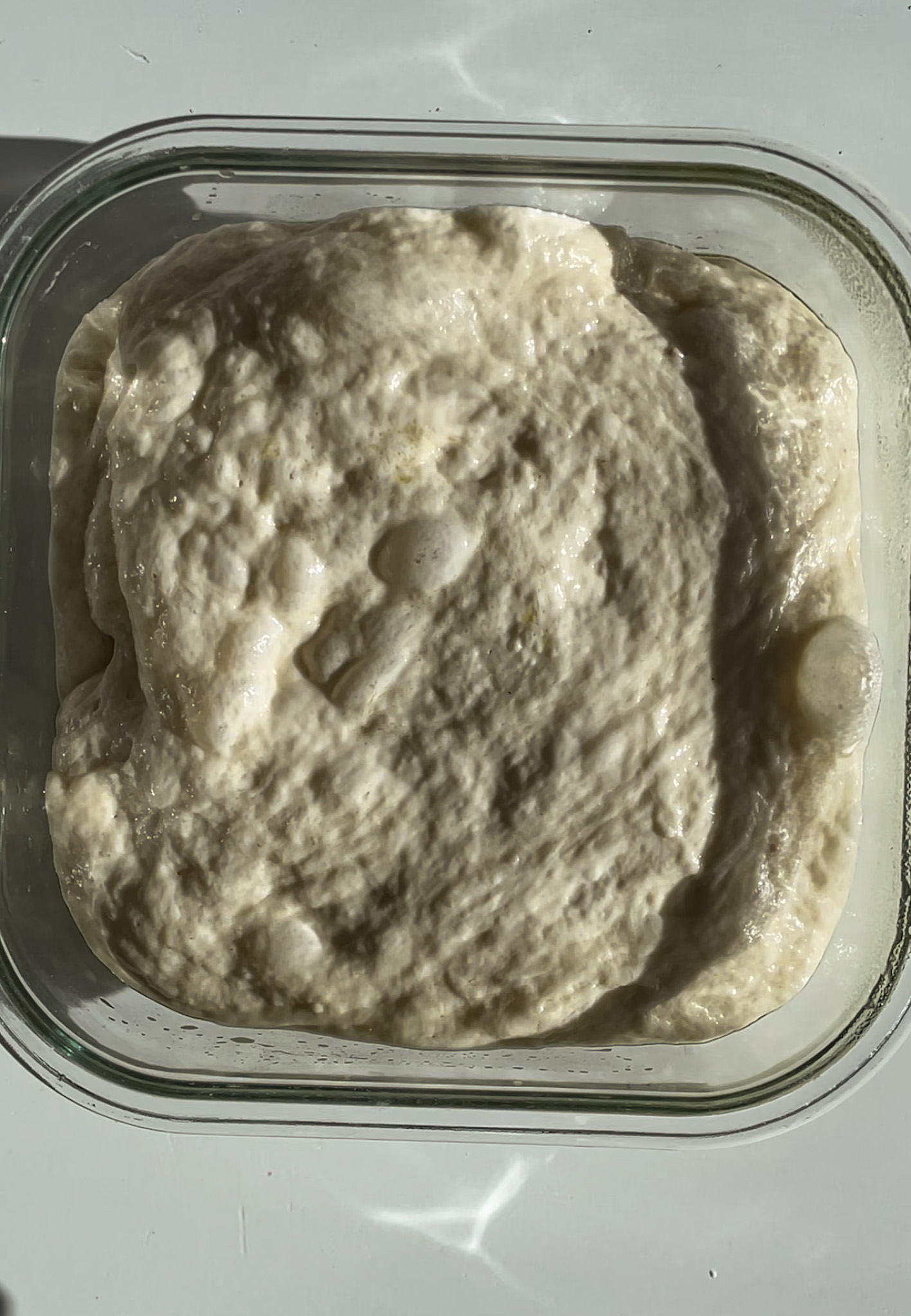
Prepare storage containers for your New York Style Pizza dough by coating them generously with olive oil. The thick layer of oil prevents the dough from drying out and makes removal easier when you’re ready to bake. Place one dough ball in each container, turning it to coat all surfaces with oil, then cover tightly with lids.
At this point, you can choose your fermentation path for New York Style Pizza dough. For same-day baking, leave the containers at room temperature for several hours until the dough doubles in size. For superior flavor and texture, refrigerate immediately and allow the dough to ferment for 24 to 48 hours, or up to one week for maximum flavor development.
Stretching the Dough
Remove your New York Style Pizza dough from the refrigerator at least one hour before stretching to allow it to come to room temperature. Cold dough is difficult to stretch and tends to spring back, making it impossible to achieve the thin crust characteristic of authentic pizza. The warmed dough will be supple and cooperative.
Flour your work surface generously before beginning to stretch New York Style Pizza dough. Press the dough ball flat with your fingertips, leaving a slightly thicker rim around the edge that will become the crust. Work from the center outward, using your fingertips to gently push and stretch the dough without tearing it.
Pick up the New York Style Pizza dough and drape it over your knuckles, using gravity to help stretch it further. Rotate the dough as you work, allowing its weight to pull it thinner gradually. The center should be quite thin while the edges remain slightly thicker. Aim for a diameter of approximately 12 to 14 inches, though exact size matters less than even thickness.
Assembling Your Pizza
Transfer the stretched dough to a floured pizza peel for assembling your New York Style Pizza. Shake the peel gently to ensure the dough moves freely and won’t stick when you try to launch it into the oven. If it sticks, carefully lift the edge and add more flour underneath until it slides easily.
Spread your prepared sauce over the New York Style Pizza dough, leaving the border uncovered as described previously. Work quickly but carefully to avoid tearing the delicate dough. Add your cold mozzarella cheese, distributing it evenly across the sauce. Sprinkle Parmesan cheese over the mozzarella for additional flavor and beautiful browning.
Add any additional toppings to your New York Style Pizza sparingly, remembering that less is more with this style. Traditional versions feature just sauce and cheese, though pepperoni, mushrooms, or Italian sausage are classic additions. Avoid overloading the pizza, as excess toppings prevent proper cooking and make the crust soggy.
Baking to Perfection
Launch your assembled New York Style Pizza onto the preheated pizza stone or steel with a quick, confident motion. Give the peel a sharp jerk forward, allowing the pizza to slide off onto the hot surface. This technique requires practice, so don’t be discouraged if your first attempts aren’t perfect. The key is commitment to the motion rather than hesitation.
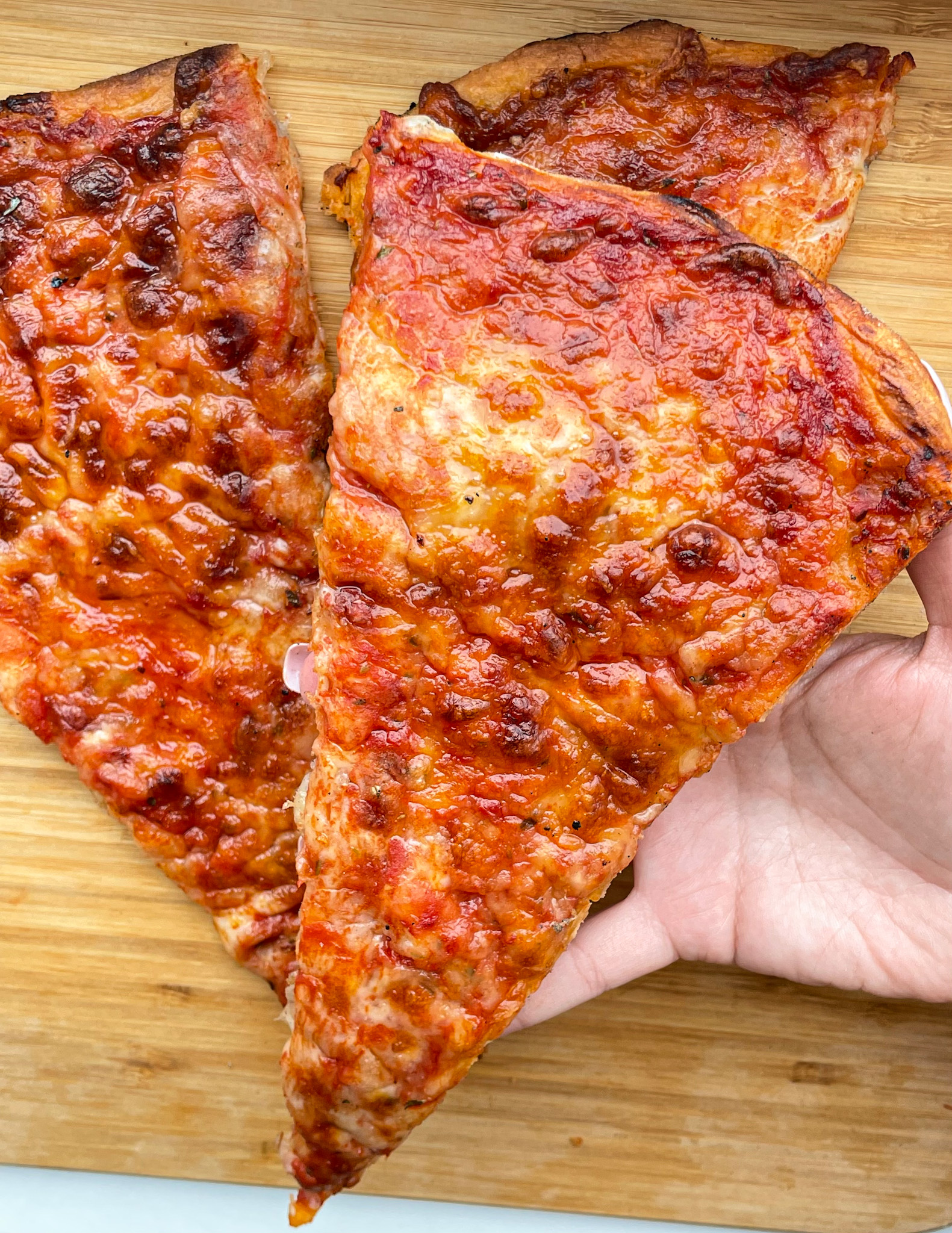
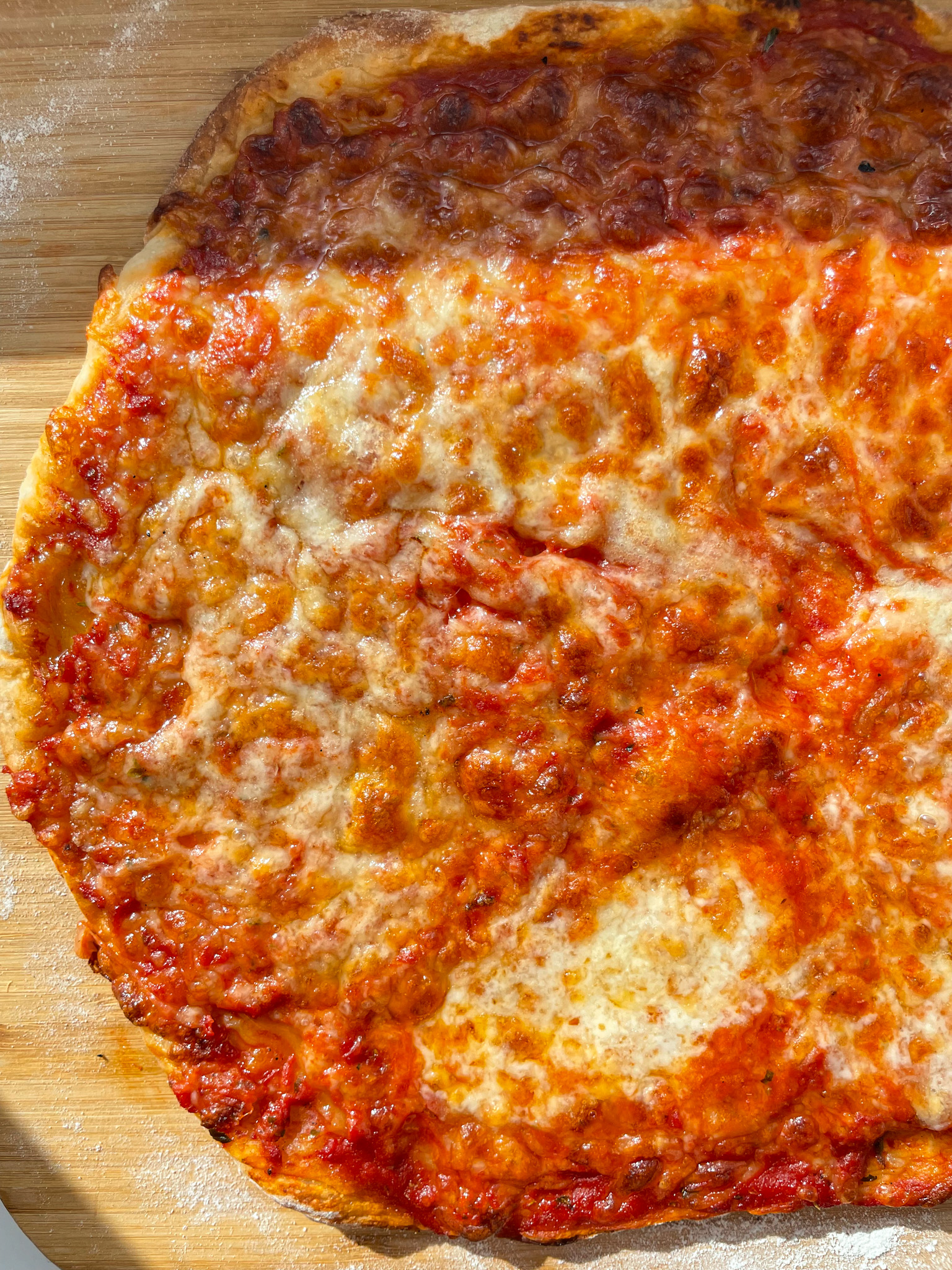
Bake your New York Style Pizza for approximately 8 to 12 minutes, depending on your oven temperature and desired doneness. Watch for the cheese to become fully melted and bubbly, with appealing brown spots indicating caramelization. The crust should be golden brown on the bottom and puffed around the edges, with attractive charring in spots.
Remove the finished New York Style Pizza using the metal pizza peel, sliding it under the pizza carefully. Transfer to a cutting board and let rest for two to three minutes before slicing. This brief resting period allows the cheese to set slightly, preventing it from sliding off when you cut the pizza into slices.
Professional Tips for New York Style Pizza Mastery
Elevating your New York Style Pizza from good to exceptional requires understanding subtle techniques that professional pizzaiolos employ. These expert tips address common challenges and help you achieve consistent, impressive results. Even small adjustments to your process can significantly improve the final product.
Dough Handling Techniques
Avoid using a rolling pin on New York Style Pizza dough, as it compresses the air bubbles created during fermentation. Hand-stretching preserves the light, airy texture that distinguishes exceptional pizza from mediocre versions. The compressed dough from rolling pins results in dense, bread-like crust that lacks character and proper texture.
If your New York Style Pizza dough resists stretching and keeps springing back, let it rest for ten minutes before continuing. This allows the gluten to relax, making the dough more cooperative. Forcing reluctant dough to stretch creates uneven thickness and may tear the dough. Patience during stretching ensures better results than fighting with uncooperative dough.
Practice your stretching technique for New York Style Pizza using inexpensive dough before working with your carefully prepared, cold-fermented versions. The skill develops through repetition, and you’ll gain confidence as you learn how the dough responds to different movements. Even professionals tore dough when learning, so don’t let initial failures discourage your efforts.
Temperature Control Mastery
Invest in an infrared thermometer to measure the actual surface temperature of your pizza stone or steel for New York Style Pizza. This tool provides accurate readings that help you understand when your baking surface is truly ready. Aim for surface temperatures of at least 550 to 600 degrees Fahrenheit for optimal results.
Monitor your oven’s actual temperature using an oven thermometer rather than trusting the built-in temperature gauge for New York Style Pizza. Many ovens run significantly hotter or cooler than indicated, affecting cooking times and results. Knowing your oven’s true temperature helps you make appropriate adjustments to achieve consistent outcomes.
Consider turning on your oven’s convection setting if available when baking New York Style Pizza. The circulating air promotes even cooking and can help achieve better browning on the top of the pizza. Some cooks also use the broiler during the final minute of baking to add extra color to the cheese, though this requires careful monitoring to prevent burning.
Troubleshooting Common Issues
If your New York Style Pizza crust isn’t getting crispy enough, the most likely culprit is insufficient preheating. Ensure your pizza stone or steel reaches full temperature by preheating for at least one hour. Alternatively, your oven temperature might not be hot enough, requiring you to verify actual temperature with a thermometer.
Soggy centers on New York Style Pizza typically result from too much sauce or too many wet toppings. Use a lighter hand with sauce application and avoid watery vegetables unless pre-cooked to remove excess moisture. Pre-cooking mushrooms, for example, drives off water that would otherwise make your pizza soggy.
If the bottom of your New York Style Pizza burns before the top finishes cooking, move your baking stone or steel to a higher rack position. This increases the distance from the heating element, moderating the intense bottom heat while allowing the top more time to cook properly. You might also reduce your oven temperature slightly and extend baking time.
Variations to Try with New York Style Pizza
While traditional New York Style Pizza is perfection in its simplicity, exploring creative variations adds excitement to your pizza-making repertoire. These adaptations maintain the essential characteristics while introducing new flavors and presentations. Experimentation helps you discover personal preferences and keeps the process interesting.
Classic Topping Combinations
Pepperoni remains the most popular topping for New York Style Pizza, with thin slices that cup and crisp during baking. Use high-quality pepperoni and distribute it evenly across the cheese, allowing some overlap for visual appeal. The rendered fat from pepperoni adds flavor and helps brown the cheese beautifully.
Mushroom and sausage create a hearty, satisfying New York Style Pizza perfect for hungry crowds. Pre-cook Italian sausage and slice mushrooms thinly to ensure they finish cooking in the short baking time. The combination of savory meat and earthy mushrooms provides excellent flavor complexity while maintaining the pizza’s characteristic profile.
A simple margherita variation of New York Style Pizza features fresh basil leaves added after baking. Tear the basil just before adding to preserve its vibrant color and fresh flavor. The aromatic herb provides a bright contrast to the rich cheese, creating a lighter, more refreshing version perfect for warmer weather.
Creative Flavor Explorations
White pizza variations of New York Style Pizza replace tomato sauce with ricotta, mozzarella, and garlic. This combination creates a rich, creamy alternative that showcases the quality of your dough and cheese. Finish with a drizzle of good olive oil and fresh herbs after baking for elegant simplicity.
Vodka sauce transforms traditional New York Style Pizza into something special. The creamy, slightly spicy sauce pairs beautifully with the standard mozzarella topping. The sauce’s richness complements the crispy crust perfectly, creating a more indulgent version that still maintains authentic characteristics.
Buffalo chicken provides a contemporary twist on New York Style Pizza that’s become popular in pizzerias nationwide. Toss cooked chicken in buffalo sauce before adding to the pizza, then finish with a drizzle of ranch dressing after baking. The spicy, tangy combination appeals to those who enjoy bold flavors.
Storage and Reheating Your New York Style Pizza
Proper storage techniques extend the life of leftover New York Style Pizza and maintain quality. Understanding the best practices for keeping pizza fresh ensures you can enjoy your creation beyond the initial meal. These methods preserve texture and flavor better than simply throwing slices in the refrigerator.
Storing Leftover Pizza
Allow New York Style Pizza to cool completely before storing to prevent condensation from making the crust soggy. Place a paper towel in an airtight container, then layer pizza slices with additional paper towels between them. The paper absorbs excess moisture while the container prevents the pizza from drying out.
Refrigerated New York Style Pizza keeps for three to four days when stored properly. The cheese and toppings remain safe to eat during this period, though the crust quality gradually declines. For best results, consume leftover pizza within two days when texture and flavor are closest to the original.
Freezing New York Style Pizza extends its shelf life to about two months. Wrap individual slices tightly in plastic wrap, then place them in a freezer bag with air removed. Label with the date to track storage time. Frozen pizza maintains decent quality, though some texture changes are inevitable.
Reheating Methods
The best way to reheat New York Style Pizza is in a skillet on the stovetop. Place cold slices in a dry pan over medium heat, cover with a lid, and heat for three to five minutes. The bottom crisps beautifully while the trapped steam melts the cheese, creating results that rival freshly baked pizza.
Oven reheating works well for multiple slices of New York Style Pizza. Preheat your oven to 375 degrees Fahrenheit and place slices directly on the oven rack or on a preheated pizza stone. Heat for approximately eight to ten minutes until the cheese bubbles and the crust crisps. This method produces excellent results but requires more time than stovetop reheating.
Avoid microwaving New York Style Pizza if possible, as it makes the crust rubbery and tough. If you must use a microwave, place a cup of water in the microwave alongside the pizza to add moisture and help prevent excessive toughening. Even with this trick, microwaved pizza never matches the quality of other reheating methods.
Frequently Asked Questions About New York Style Pizza
Common questions about preparing New York Style Pizza arise frequently among both novice and experienced cooks. These answers address typical concerns and provide solutions to challenges you might encounter. Understanding these issues before they arise helps prevent frustration and ensures better results.
Can I use all-purpose flour instead of bread flour?
While bread flour is strongly recommended for New York Style Pizza, all-purpose flour can work in a pinch. The lower protein content produces a slightly softer, less chewy crust that won’t have quite the same texture as authentic versions. If using all-purpose flour, consider adding vital wheat gluten to boost the protein content and improve gluten development.
The protein content difference between bread flour and all-purpose flour significantly affects New York Style Pizza texture. Bread flour typically contains 12 to 14 percent protein, while all-purpose flour has only 9 to 11 percent. This higher protein creates more gluten structure, resulting in the characteristic chew and strength needed to support toppings without becoming soggy.
If you regularly make New York Style Pizza, investing in bread flour is worthwhile. The cost difference is minimal, and the improvement in texture and flavor is substantial. Many grocery stores stock bread flour alongside regular flour, making it easily accessible for most home cooks.
Why does my dough keep shrinking when I try to stretch it?
Shrinking dough indicates that the gluten is too tight and hasn’t had adequate time to relax. This commonly occurs when working with cold dough straight from the refrigerator or when rushing the stretching process. Allow your New York Style Pizza dough to warm to room temperature for at least one hour before attempting to stretch it.
If warmed dough still resists stretching for your New York Style Pizza, let it rest for ten-minute intervals. After each rest period, the gluten relaxes further, making the dough more cooperative. Some doughs require two or three rest periods before they’ll stretch properly, particularly if they’re highly hydrated or made with very strong flour.
Insufficient fermentation can also cause New York Style Pizza dough to resist stretching. Dough that hasn’t fermented long enough lacks extensibility, making it difficult to work with. Ensure your dough has fermented for at least 24 hours in the refrigerator for optimal handling characteristics and flavor development.
How do I prevent my pizza from sticking to the peel?
Preventing sticking begins with adequate flour on both your New York Style Pizza dough and the peel surface. After stretching the dough, place it on a generously floured peel and shake gently to ensure it moves freely. If it doesn’t slide easily, carefully lift the edge and add more flour underneath.
Work quickly when assembling New York Style Pizza to prevent moisture from the sauce soaking through and causing sticking. Have all your toppings prepared and within reach before placing dough on the peel. The entire assembly process should take less than two minutes to minimize opportunities for sticking.
Some pizza makers use cornmeal or semolina flour on the peel instead of regular flour for New York Style Pizza. These coarser grains act like tiny ball bearings, allowing the pizza to slide more easily. A light dusting provides sufficient lubrication without affecting the flavor or texture of your finished pizza.
Watch the recipe video for more clarity.
People also like our these recipes:
THE DOUGH
- 2 1/4 cups warm water
- 1 tbsp sugar
- 9 g active dry yeast
- 2 tbsp olive oil plus more for greasing the dough
- 1 tbsp salt
- 5 cups bread flour plus more for working the dough
- Cornmeal or semolina or coarse ground whole wheat flour for dusting
THE SAUCE
- 820 ml tomato sauce
- 2-3 tbsp olive oil
- 1 tsp sugar
- 1 tbsp dried oregano
THE TOPPINGS
- 680-900 g low moisture mozzarella cheese
- 10 g grated parmesan cheese for dusting optional
THE DOUGH
To begin the dough, start by combining water, sugar, and yeast in a large bowl. Let it sit for a few minutes; if the yeast becomes foamy, it's alive and ready to proceed (if not, it's dead and requires new yeast). Add olive oil, salt, and 5 cups (600g) of bread flour. Mix until just combined, then begin kneading. Add only enough additional flour to maintain a workable dough (i.e., not too sticky) and knead until the dough can be stretched into a thin sheet without tearing. (Note: You may need to add more flour; the quantity provided is a starting point.)
Divide the dough into four equal balls and place them in containers, ideally glass, lightly coated with olive oil. Cover and let rise at room temperature for two hours, or refrigerate for 1-7 days for a longer, cold rise.
THE SAUCE
In a bowl, mix in the ingredients all together.
ASSEMBLY
When ready to bake, preheat the oven with a pizza stone or steel placed inside, ideally on a high rack position, to the highest possible temperature, preferably convection, for an hour.
Generously dust a pizza peel with cornmeal or a similar substance. Remove the cold dough from the fridge and dust with flour. Stretch it to the widest size and shape that fits on your peel and stone/steel. Top with enough sauce to lightly coat the surface, sprinkle with Parmesan, then cover with mozzarella. Transfer the pizza to the stone/steel and bake until the crust is well-browned and, the cheese has browned slightly (but ideally hasn't started oozing out an orange grease layer), typically 6-7 minutes.
If you've given this recipe a try and it won you over, please share your thoughts by leaving
a rating and comment below! If you have any questions about this recipe, don't hesitate to ask – I'm here to
help and will respond promptly.