The Perfect Salmon Onigirazu Recipe
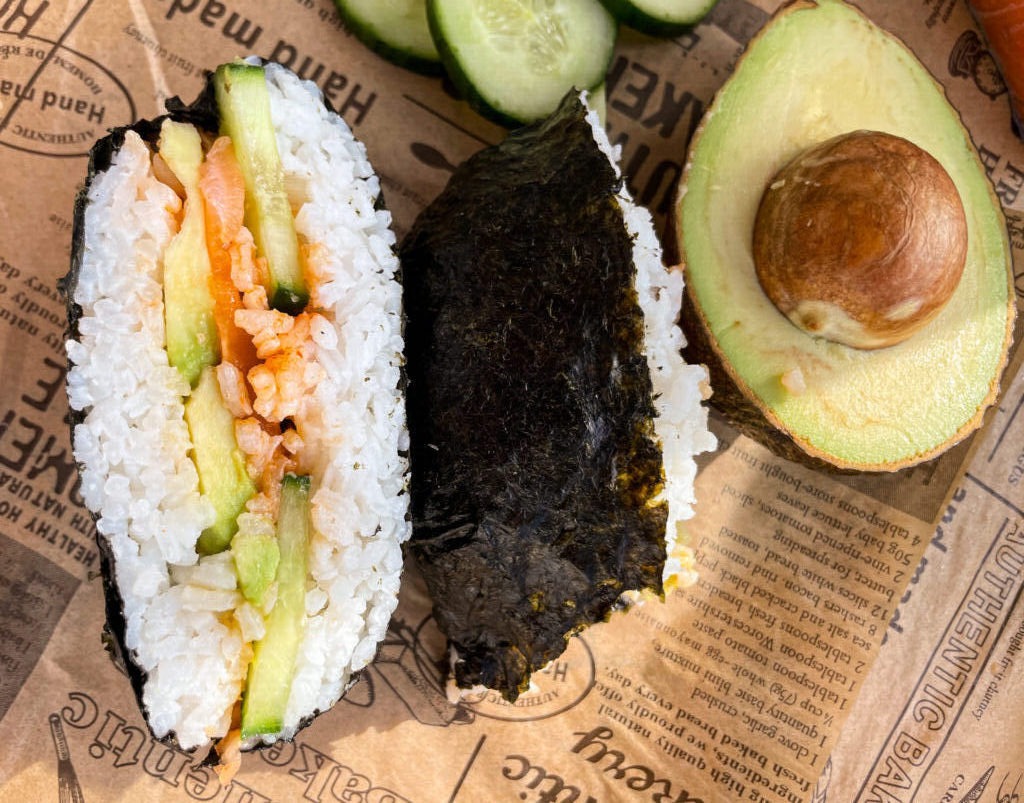
Experience the delightful fusion of sushi and sandwich with this incredible Salmon Onigirazu Recipe. This Japanese culinary creation combines fluffy sushi rice with tender salmon, creamy avocado, crisp cucumber, and spicy sriracha sauce, all wrapped in a sheet of nori seaweed. This Salmon Onigirazu Recipe delivers a light yet satisfying meal that’s perfect for lunch boxes, quick dinners, or portable snacks. Unlike traditional onigiri rice balls that require special shaping techniques, this Salmon Onigirazu Recipe uses a simple layering method that anyone can master.
The square or rectangular shape makes it easy to hold and eat without messy rice falling everywhere. This Salmon Onigirazu Recipe takes just fifteen minutes to prepare, making it ideal for busy weekdays when you crave something fresh and flavorful. Whether you’re new to Japanese cuisine or a seasoned enthusiast, this recipe offers the perfect introduction to onigirazu while showcasing the wonderful combination of salmon and fresh vegetables.
Why This Recipe is Special
This Salmon Onigirazu Recipe stands out because it combines convenience with authentic Japanese flavors in an approachable format. Traditional sushi requires specialized skills, expensive equipment, and years of practice to master properly. This recipe eliminates those barriers while delivering similar flavor profiles and visual appeal.
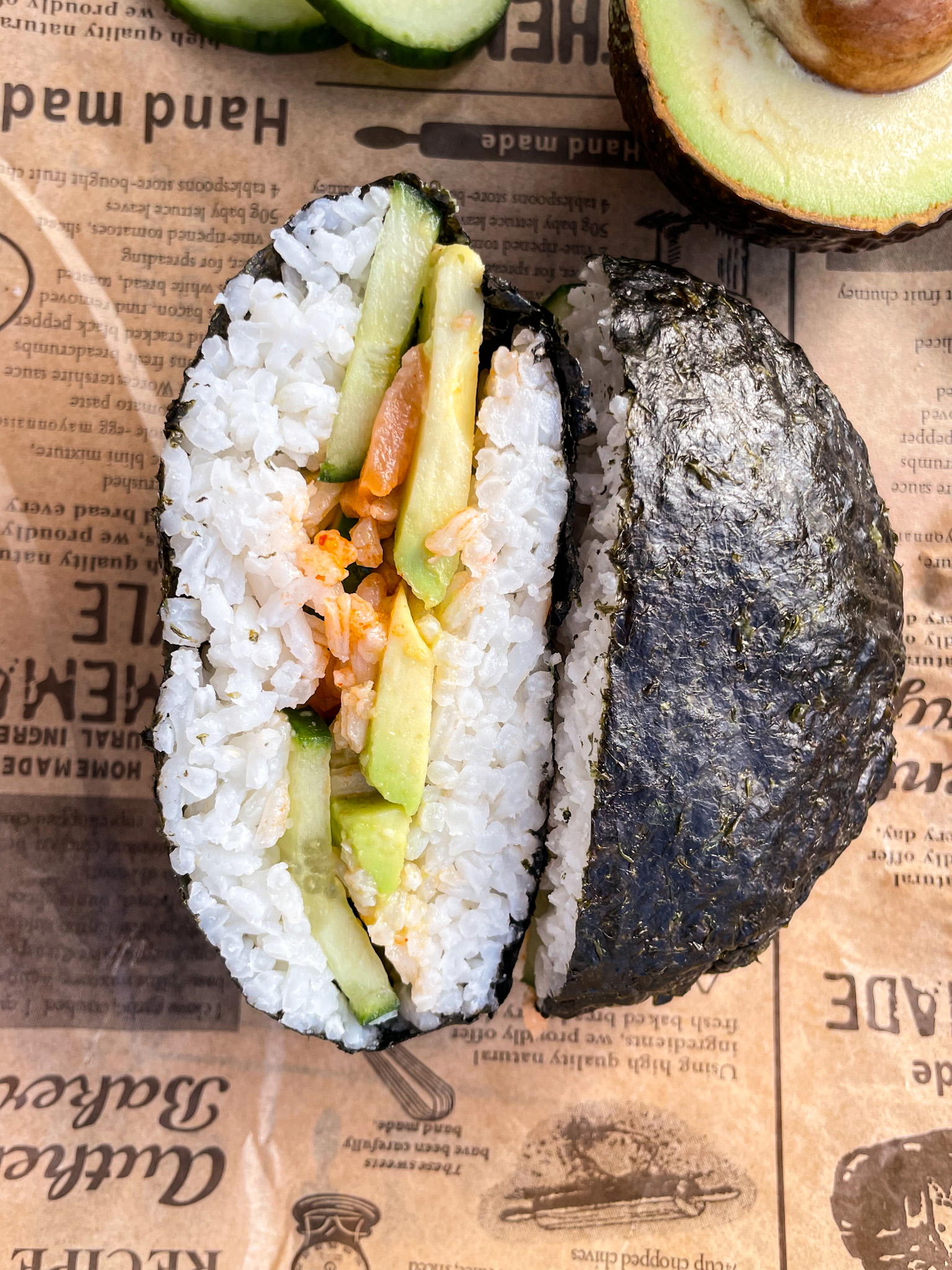
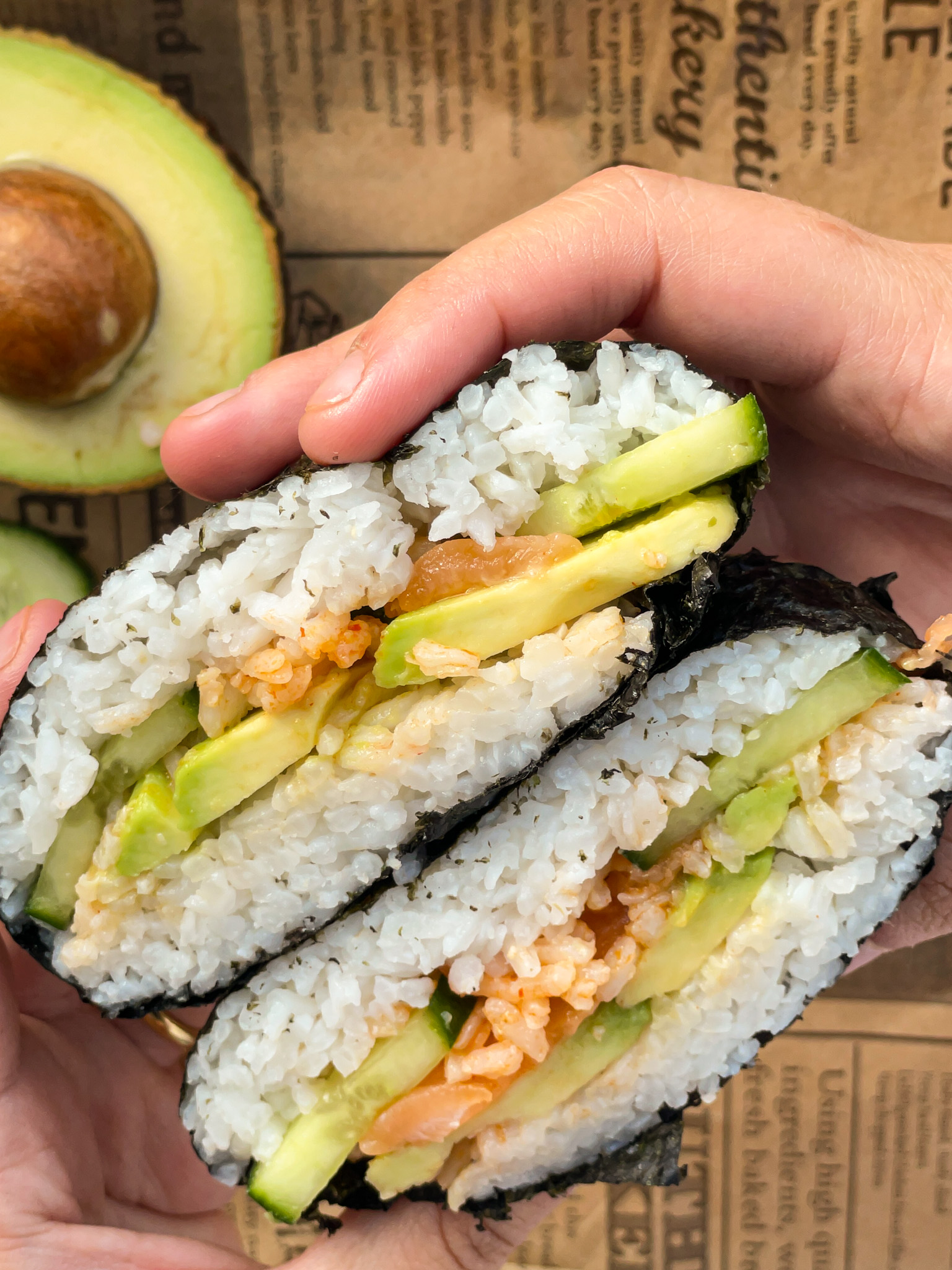
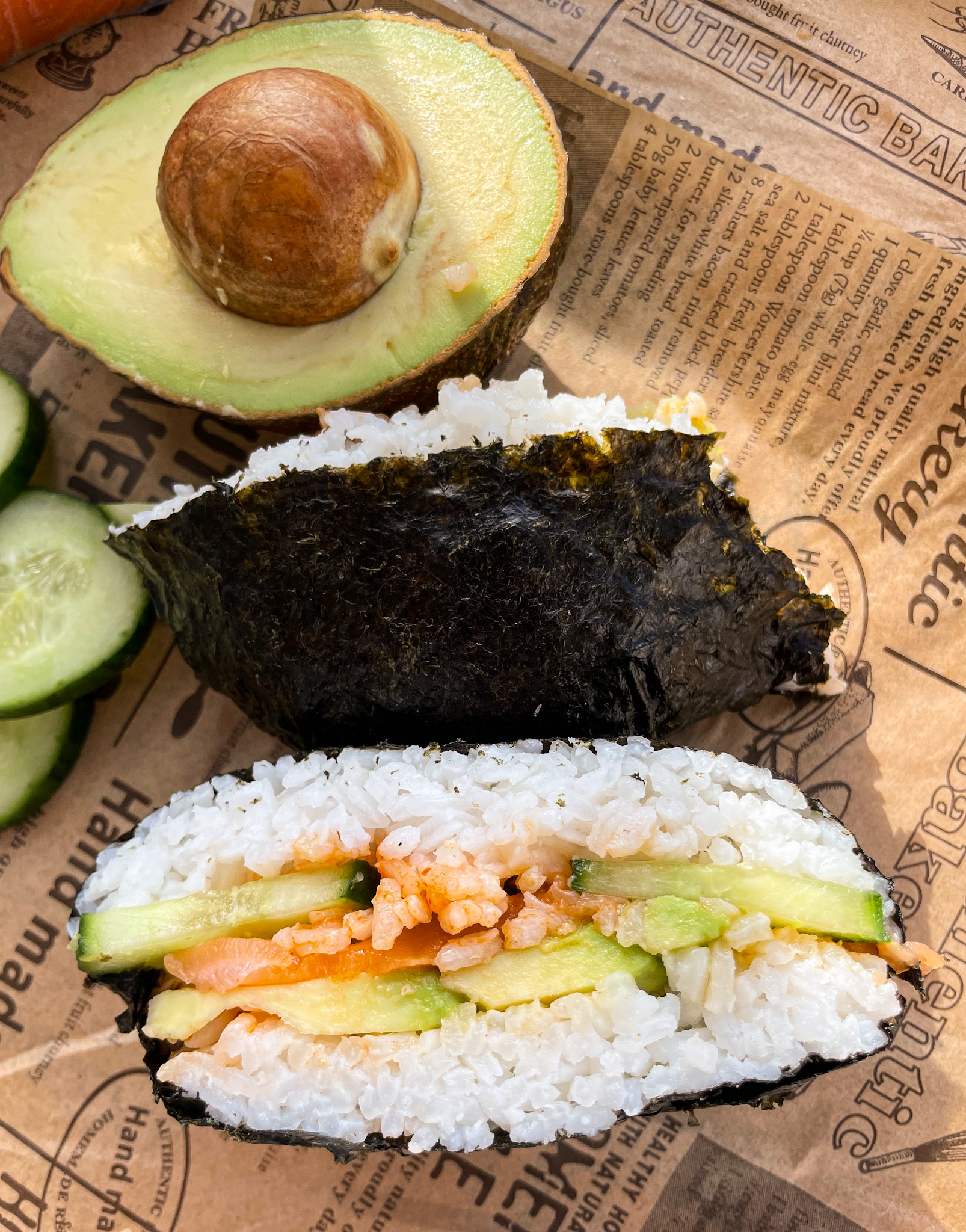
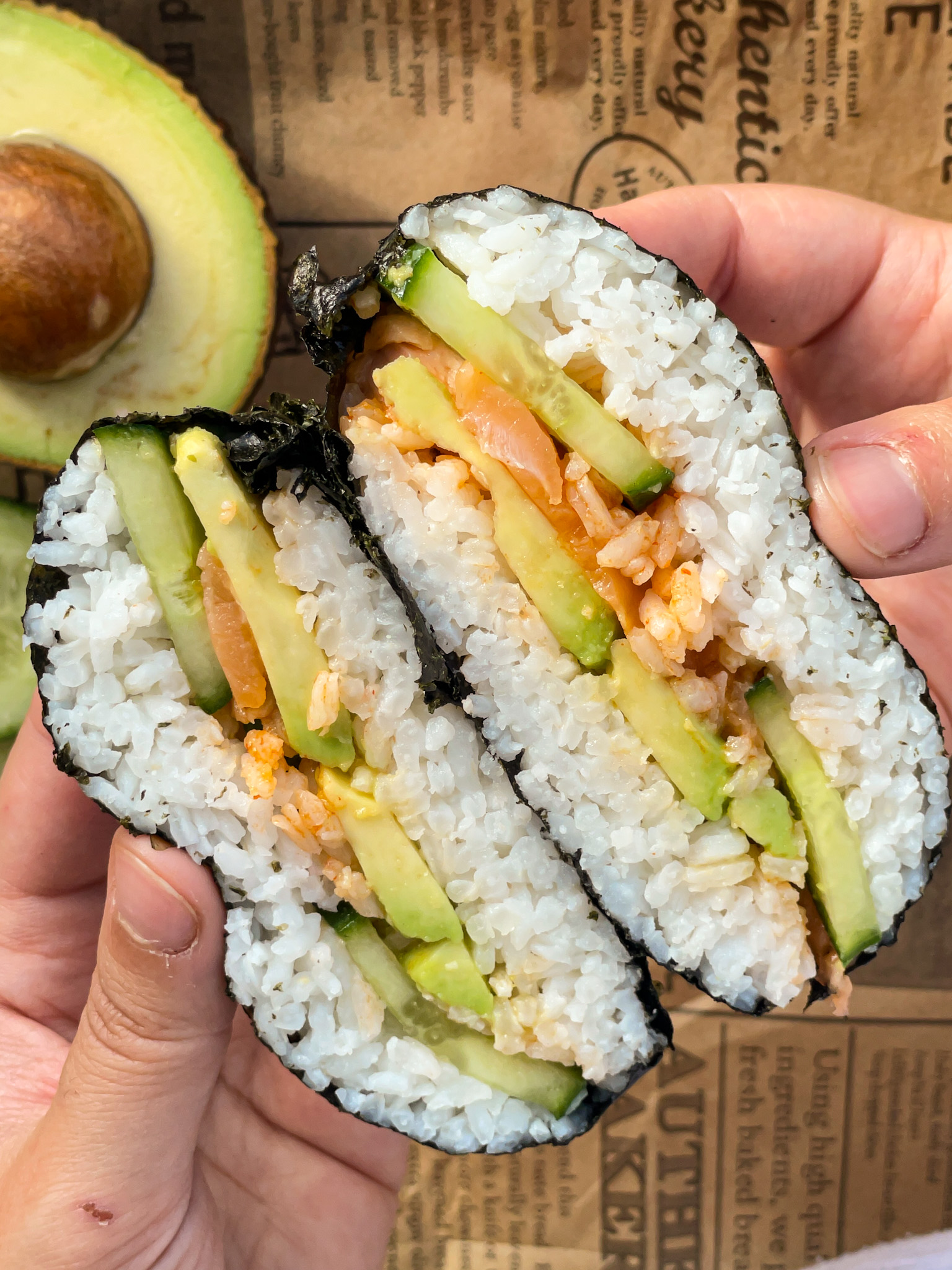
The layered construction allows you to see each colorful ingredient, creating an Instagram-worthy cross-section when cut. The combination of warm rice, cool avocado, crisp cucumber, and rich salmon creates textural contrast in every bite. The sriracha sauce adds a spicy kick that balances the mild rice and fatty salmon. This dish also travels exceptionally well, making it perfect for packed lunches, picnics, or road trips.
Key Ingredients Overview
Success with this Salmon Onigirazu Recipe depends on selecting fresh, quality ingredients that complement each other beautifully. Sushi rice provides the essential sticky texture that holds everything together while delivering mild, slightly sweet flavor. Fresh or cooked salmon offers protein and rich, buttery taste that serves as the star ingredient.
Ripe avocado adds creamy texture and healthy fats that balance the other components. Crisp cucumber provides refreshing crunch and hydration in every bite. Nori seaweed sheets wrap everything together while contributing subtle ocean flavor and essential minerals. Sriracha sauce delivers heat and tanginess that elevates the entire flavor profile. Each ingredient plays a crucial role in creating the harmonious balance that makes this Salmon Onigirazu Recipe so addictive.
Understanding Onigirazu
The Salmon Onigirazu Recipe belongs to a relatively recent innovation in Japanese cuisine. While onigiri rice balls have existed for centuries as portable meals, onigirazu emerged in the 1990s through a Japanese manga called Cooking Papa. The comic introduced this sandwich-style variation that simplified the rice ball making process. The name combines onigiri with nigiru, the verb meaning to grasp or hold.
By removing the nigiru element, the name playfully suggests you don’t need to shape or grasp the rice. Instead, you simply layer ingredients and fold the nori wrapper. This clever construction technique democratized rice ball making, allowing anyone to create beautiful, delicious results. The format quickly gained popularity for its convenience, versatility, and photogenic appearance.
Onigirazu vs Traditional Onigiri
Traditional onigiri requires specific hand-shaping techniques to create the iconic triangle or ball shape. Cooks must wet their hands with salted water, then compress and mold the rice while maintaining the right pressure. Too much pressure creates dense, hard rice balls, while too little results in rice that falls apart. This Salmon Onigirazu Recipe eliminates this challenge entirely through its flat, layered construction.
The nori wrapper does the work of holding everything together, requiring no special shaping skills. Onigirazu also accommodates more filling than traditional onigiri, which typically features a small pocket of ingredients in the center. The layered approach showcases ingredients visually, making each component visible when cut. Both formats offer portability and convenience, but onigirazu provides easier execution for home cooks.
Why Onigirazu Works So Well
The genius of this Salmon Onigirazu Recipe lies in its practical design that solves common rice ball problems. The flat construction distributes fillings evenly throughout, ensuring every bite contains all components. The square or rectangular shape fits perfectly in lunch boxes without wasted space. The nori wrapper creates a natural handle that keeps your hands clean while eating.
The moisture from vegetables and sauce gradually softens the nori to perfect chewiness by lunchtime. The layered structure also makes customization simple, as you can easily add or remove ingredients. This format works equally well with hot or cold fillings, expanding your preparation options. The visual appeal when cut in half creates an impressive presentation that rivals restaurant quality.
Choosing the Right Ingredients
Selecting quality ingredients elevates this Salmon Onigirazu Recipe from good to exceptional. Each component deserves careful consideration for optimal results.
Selecting Your Salmon
The salmon you choose dramatically affects the final flavor and texture of this Salmon Onigirazu Recipe. Fresh wild-caught salmon offers the best flavor with firm texture and vibrant color. Look for salmon with bright, moist flesh without any browning or drying at the edges. The fish should smell fresh and ocean-like, never fishy or ammonia-scented. Farm-raised salmon works well and costs less, though it typically has milder flavor and softer texture. For this recipe, you can use raw sushi-grade salmon if you enjoy the traditional sushi experience. Ensure any raw salmon carries the sushi-grade designation, meaning it’s been frozen to kill parasites. Cooked salmon offers a safer, equally delicious option that most people prefer. Grilled, baked, or pan-seared salmon all work beautifully in this preparation.
Rice Selection and Preparation
Sushi rice forms the foundation of any successful Salmon Onigirazu Recipe, requiring specific varieties and preparation. Short-grain Japanese rice or sushi rice contains higher starch content than long-grain varieties. This extra starch creates the sticky, clumping texture essential for holding the onigirazu together. Brands like Nishiki, Kokuho Rose, or Lundberg Organic Sushi Rice deliver reliable results.
Avoid using jasmine, basmati, or other long-grain rice varieties, as they remain too separate and won’t stick together. Proper rice preparation requires rinsing until the water runs clear to remove excess surface starch. Cook the rice according to package directions, then season with rice vinegar, sugar, and salt while still warm. This seasoning step adds subtle sweetness and tanginess that complements the salmon and vegetables.
Fresh Produce Selection
The vegetables in this Salmon Onigirazu Recipe should be fresh and crisp for optimal texture and flavor. Choose ripe but firm avocados that yield slightly to gentle pressure. Overly soft avocados turn mushy and brown quickly, while hard avocados lack the creamy texture needed. Hass avocados offer the richest, most buttery flavor compared to other varieties. For cucumbers, Japanese or Persian cucumbers work best due to their thin skin and minimal seeds. English cucumbers also work well, offering similar qualities with larger size. Avoid regular cucumbers with thick, waxy skin and large seed cavities that add unwanted moisture. The cucumber should feel firm and heavy for its size, indicating freshness and high water content.
Nori and Sauce Selection
Quality nori seaweed makes a significant difference in this Salmon Onigirazu Recipe. Look for nori labeled as sushi-grade or premium quality, which offers better flavor and texture. The sheets should appear dark green or almost black, indicating proper processing and freshness. Avoid nori with purple or brown tones, which suggests age or inferior quality. Store nori in an airtight container with a moisture-absorbing packet to maintain crispness. For sriracha sauce, the popular Huy Fong Foods rooster bottle offers the classic flavor most people recognize. However, any quality sriracha or similar chili sauce works well. Adjust the quantity based on your heat preference, as sriracha intensity varies by brand.
Step-by-Step Instructions for Perfect Results
Creating this Salmon Onigirazu Recipe requires attention to layering technique and ingredient placement. Follow these detailed steps for beautiful, delicious results.
Preparing Your Ingredients
Begin by cooking your sushi rice according to package directions, typically a one-to-one ratio of rice to water. While the rice cooks, prepare your salmon if using cooked fish. Season a salmon fillet with salt and pepper, then cook using your preferred method. Pan-searing creates a nice crust, baking offers hands-off convenience, and grilling adds smoky flavor. Cook until the salmon reaches an internal temperature of 145 degrees Fahrenheit. Let it cool slightly, then flake into bite-sized pieces, removing any bones or skin. Slice your avocado in half, remove the pit, and scoop out the flesh. Cut the avocado into thin slices lengthwise. Slice your cucumber into thin rounds or matchsticks, depending on your preference. Have your nori sheets and sriracha sauce ready for assembly.
Seasoning the Rice
Once your rice finishes cooking, transfer it to a large, shallow bowl while still hot. The traditional method uses a wooden hangiri bowl, but any wide bowl works. Prepare the seasoning mixture by combining three tablespoons of rice vinegar, two tablespoons of sugar, and one teaspoon of salt in a small bowl. Microwave for thirty seconds or warm gently until the sugar dissolves completely. Drizzle this mixture over the hot rice while using a rice paddle or wooden spoon to fold it in gently. Use a cutting motion rather than stirring, which can break the rice grains. Fan the rice while folding to help it cool and develop a slight sheen. The seasoned rice should taste mildly sweet and tangy, complementing the other ingredients without overwhelming them.
Setting Up Your Workspace
Proper workspace organization makes assembling this Salmon Onigirazu Recipe much easier and more efficient. Lay a large piece of plastic wrap on a clean, flat surface. The plastic wrap should measure roughly twelve inches square, larger than your nori sheet. Place one nori sheet shiny side down in the center of the plastic wrap, positioned like a diamond with corners pointing up, down, left, and right. Have a small bowl of water nearby for moistening your hands when handling rice. Organize your prepared ingredients within easy reach: seasoned rice, flaked salmon, sliced avocado, cucumber, and sriracha sauce. Having everything ready before you start layering prevents the rice from cooling too much and becoming difficult to work with.
Layering Your Onigirazu
Wet your hands lightly with water to prevent rice from sticking, then take about one cup of seasoned rice. Place this rice in the center of the nori sheet, spreading it into a square roughly four inches across. Leave the corners of the nori exposed for folding later. Create a slight indentation in the center of the rice layer to hold the fillings. Add your flaked salmon pieces in an even layer over the rice, staying within the boundaries of the rice square.
Layer your avocado slices on top of the salmon, overlapping them slightly for complete coverage. Add your cucumber slices in a single layer over the avocado. Drizzle sriracha sauce over the vegetables according to your heat preference. Top everything with another cup of seasoned rice, spreading it gently to cover all the fillings completely.
Wrapping and Finishing
Now comes the crucial wrapping step that transforms your ingredients into a proper Salmon Onigirazu Recipe. Fold the bottom corner of the nori up and over the rice layers, pressing gently to adhere. Fold the left corner over, then the right corner, and finally the top corner. The nori corners should overlap in the center, creating a square package. If any corners don’t quite meet, don’t worry as the plastic wrap holds everything together.
Wrap the plastic wrap tightly around the entire package, twisting the corners to seal. This compression helps everything stick together and creates the characteristic square shape. Let the wrapped onigirazu rest for at least five minutes to allow the nori to soften from the rice moisture. This resting period also helps all the layers bond together for easier cutting and eating.
Cutting and Serving
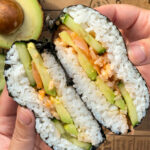
After the resting period, your Salmon Onigirazu Recipe is ready for the dramatic reveal. Keep the plastic wrap on while cutting for the cleanest results. Use a sharp knife, wiping it with a damp cloth between cuts. Cut the square diagonally from corner to corner, creating two triangle halves. The cross-section should reveal beautiful, distinct layers of white rice, orange salmon, green avocado, and pale cucumber. Remove the plastic wrap from each half carefully. The nori wrapper should now be soft and pliable, holding everything together securely. Serve immediately or wrap individually in fresh plastic wrap for later. The onigirazu stays fresh for several hours at room temperature or up to twenty-four hours refrigerated.
Professional Tips for Restaurant-Quality Results
These expert techniques ensure your Salmon Onigirazu Recipe achieves professional standards every time you prepare it.
Rice Temperature Management
The temperature of your rice significantly affects how well this Salmon Onigirazu Recipe holds together. Warm rice remains pliable and sticky, making it easy to shape and adhere to fillings. Cold rice becomes hard and separate, refusing to stick together properly. However, rice that’s too hot can wilt delicate vegetables like avocado and cucumber. Aim for rice that’s warm to the touch but not steaming hot when you begin assembly. If your rice cools too much during preparation, briefly microwave it with a damp paper towel covering. This refreshes the moisture and warmth without overcooking. Work efficiently during assembly to prevent the rice from cooling between layers.
Moisture Balance Techniques
Managing moisture prevents soggy nori and ensures your Salmon Onigirazu Recipe maintains proper texture. Pat your cucumber slices dry with paper towels before adding them to remove excess water. If using raw salmon, ensure it’s very fresh and dry on the surface. Cooked salmon should be at room temperature and not dripping with oils or juices. Don’t add too much sriracha sauce, as excess liquid can make the rice mushy. If preparing onigirazu in advance, consider placing a lettuce leaf between wet ingredients and rice. This barrier absorbs moisture while adding pleasant crunch. The nori will naturally soften over time, which is desirable, but you want to control the rate of softening.
Perfect Portions Every Time
Getting the rice-to-filling ratio right ensures balanced flavor in every bite of this Salmon Onigirazu Recipe. Use roughly equal amounts of rice for the bottom and top layers, about one cup each. This creates stability while ensuring you taste rice in every bite rather than overwhelming filling. Don’t overstuff with fillings, as this makes wrapping difficult and causes ingredients to squish out when cut. Each filling layer should be visible but not excessive. If you’re unsure about portions, start conservatively and add more in subsequent attempts. Taking photos of your cross-sections helps you evaluate and adjust proportions for next time.
Common Mistakes to Avoid
Understanding potential pitfalls helps you create perfect Salmon Onigirazu Recipe results every time you make this dish.
Using the Wrong Rice
The most critical mistake when making this Salmon Onigirazu Recipe is using inappropriate rice varieties. Long-grain rice like jasmine or basmati lacks the starch content needed to create sticky texture. These grains remain separate even when cooked, causing your onigirazu to fall apart when cut or eaten. Brown rice, while healthy, also doesn’t provide adequate stickiness for this application. The firm texture and separate grains can’t hold the package together. Always use short-grain Japanese rice or specifically labeled sushi rice. The investment in proper rice makes the difference between success and frustration with this recipe.
Overfilling or Underfilling
Finding the right filling quantity challenges many first-time makers of this Salmon Onigirazu Recipe. Too much filling creates a bulging package that won’t fold properly, with ingredients squishing out when wrapped. The nori corners won’t meet in the middle, leaving gaps that compromise structural integrity. Too little filling creates a bland, rice-heavy result that lacks the flavor balance that makes onigirazu special. Each bite should contain all components in harmonious proportion. Start with the recommended amounts in this recipe, then adjust based on your preferences. Remember that less is often more, as you can always add more filling next time.
Skipping the Resting Period
Impatience leads many people to skip the crucial resting time after wrapping their Salmon Onigirazu Recipe. Cutting immediately results in ingredients sliding apart and rice that hasn’t bonded properly. The nori remains too crisp and can crack when cut, creating jagged edges. The five to ten minute rest allows the nori to absorb moisture from the rice, becoming pliable and easier to cut. This time also lets all the layers compress and stick together, creating a cohesive package. The rice cools slightly, firming up just enough to hold its shape when sliced. Use this time to clean your workspace or prepare accompaniments rather than rushing to cut.
Improper Cutting Technique
Many people struggle with achieving clean cuts when slicing their Salmon Onigirazu Recipe. A dull knife crushes and tears rather than slices, creating messy edges with rice falling everywhere. Sawing back and forth drags ingredients out of position, destroying the beautiful layered appearance. Always use a very sharp knife and wipe it clean between cuts. A single, confident downward motion creates the cleanest cut. Keep the plastic wrap on during cutting for additional support. Some cooks dip the knife in water between cuts, though this isn’t necessary with proper sharpness. The goal is revealing those gorgeous layers without disturbing their arrangement.
Variations to Try
Once you master the basic Salmon Onigirazu Recipe, these variations add exciting new dimensions to your onigirazu repertoire.
Different Protein Options
While salmon stars in this recipe, numerous proteins create equally delicious variations. Spicy tuna mixed with sriracha mayo delivers the classic sushi roll experience in sandwich form. Teriyaki chicken provides sweet and savory flavors that appeal to those who prefer cooked meat. Grilled shrimp offers sweet, delicate protein that pairs beautifully with avocado. Crispy tofu provides a vegetarian option with satisfying texture and the ability to absorb flavorful sauces. Canned tuna mixed with Japanese mayo and soy sauce creates a budget-friendly, shelf-stable option. Spam, surprisingly popular in Japanese cuisine, delivers salty, savory richness that contrasts nicely with fresh vegetables. Scrambled eggs work for breakfast-style onigirazu, especially with bacon and cheese.
Vegetable and Add-In Variations
Expanding beyond the basic vegetables in this Salmon Onigirazu Recipe opens endless possibilities. Pickled radish or daikon adds tangy crunch and vibrant color. Shredded carrots contribute sweetness and vitamin content. Baby spinach or lettuce provides fresh, green layers that add nutrition. Pickled ginger offers sharp, zingy flavor that cuts through rich ingredients. Sesame seeds sprinkled between layers add nutty crunch. Cream cheese creates richness reminiscent of Philadelphia rolls. Tempura flakes or crispy fried onions deliver addictive crunch. Kimchi brings spicy, fermented complexity for Korean fusion style. The beauty of onigirazu lies in its adaptability to your favorite flavors and textures.
Sauce and Seasoning Variations
While sriracha provides heat in this Salmon Onigirazu Recipe, numerous other sauces create different flavor profiles. Japanese mayo mixed with sriracha creates spicy mayo with creamy texture. Soy sauce adds classic umami saltiness that enhances all ingredients. Teriyaki sauce contributes sweet and savory complexity. Ponzu sauce offers citrusy tanginess that brightens rich ingredients. Eel sauce delivers sweet, thick richness perfect for cooked proteins. Wasabi mayo provides sharp heat for those who love traditional sushi flavors. Sesame oil brushed on rice adds nutty aroma and flavor. Furikake rice seasoning sprinkled between layers contributes multiple flavor and texture dimensions in one ingredient.
Storage and Meal Prep Guidelines
This Salmon Onigirazu Recipe works beautifully for meal prep, making it ideal for busy schedules and packed lunches.
Preparing Onigirazu in Advance
You can successfully prepare this Salmon Onigirazu Recipe several hours or even a day ahead of eating. Wrap each completed onigirazu tightly in plastic wrap immediately after the resting period. Store them in an airtight container in the refrigerator to maintain freshness. The nori will continue softening over time, which many people find desirable for easier eating. However, prepare them no more than twenty-four hours in advance, as the rice begins to harden after that. If making for lunch the next day, prepare the night before and refrigerate. Remove from the refrigerator thirty minutes before eating to take the chill off, or eat cold if you prefer.
Best Storage Practices
Proper storage maintains quality and safety for your Salmon Onigirazu Recipe. Keep onigirazu wrapped individually in plastic wrap to prevent them from drying out or absorbing other refrigerator odors. Place wrapped onigirazu in an airtight container for additional protection. Store in the refrigerator for up to twenty-four hours maximum due to the raw vegetables and rice. Never leave onigirazu at room temperature for more than two hours, as rice provides ideal conditions for bacterial growth. If your onigirazu contains raw fish, consume within twelve hours for optimal freshness and safety. Label containers with preparation dates to track freshness accurately.
Ingredient Prep Strategies
You can streamline preparation by prepping components of this Salmon Onigirazu Recipe in advance. Cook and season a large batch of sushi rice, storing it covered in the refrigerator for up to three days. Reheat portions with a damp paper towel in the microwave when ready to assemble. Cook extra salmon and refrigerate for quick assembly throughout the week. Slice vegetables the night before, storing them in airtight containers with damp paper towels to maintain freshness. Keep all sauces and seasonings organized in a designated area for efficient assembly. This prep-ahead approach allows you to make fresh onigirazu in under five minutes when hunger strikes.
Frequently Asked Questions
Can I use brown rice instead of white sushi rice?
While brown rice offers more nutrition, it doesn’t work well in this Salmon Onigirazu Recipe. Brown rice lacks the sticky texture that holds everything together properly. The individual grains remain too separate, causing the onigirazu to fall apart when cut or eaten. Brown rice also has a chewier texture and nuttier flavor that doesn’t match traditional Japanese flavor profiles. If you prefer whole grains, look for short-grain brown rice and slightly overcook it to increase stickiness. However, expect different results from the traditional version. For authentic onigirazu experience, white sushi rice remains essential.
Is it safe to use raw salmon?
Raw salmon is safe in this Salmon Onigirazu Recipe only if you use sushi-grade fish. Sushi-grade designation means the fish has been frozen to specific temperatures that kill parasites. Purchase raw salmon from reputable fishmongers who specialize in sushi-grade products. Never use regular grocery store salmon raw, as it hasn’t undergone proper freezing protocols. If you’re unsure about raw fish safety or prefer avoiding the risk, cooked salmon works beautifully. Pan-seared, baked, or grilled salmon all create delicious results without food safety concerns. Most people actually prefer cooked salmon in their onigirazu.
How do I keep the nori from getting too soggy?
Nori naturally softens when exposed to moisture from rice and fillings in this Salmon Onigirazu Recipe. This softening is actually desirable, as overly crisp nori can be tough to bite through. However, you can control the rate of softening. Assemble your onigirazu as close to eating time as possible. Pat vegetables dry before adding them to remove excess moisture. Don’t over-sauce, as excess liquid accelerates nori softening. Some people toast their nori sheets briefly over a flame or in a dry pan before using. This extra drying helps it resist moisture slightly longer.
Can I make onigirazu without seafood?
Absolutely! This format works beautifully with countless non-seafood fillings beyond this Salmon Onigirazu Recipe. Teriyaki chicken, grilled vegetables, scrambled eggs, or marinated tofu all create delicious variations. The construction technique remains identical regardless of fillings. Simply substitute your preferred protein and vegetables while maintaining similar proportions. Vegetarian and vegan versions work equally well, using ingredients like avocado, cucumber, pickled vegetables, and seasoned tofu. The versatility of onigirazu makes it suitable for any dietary preference or restriction.
What should I serve with onigirazu?
This Salmon Onigirazu Recipe works as a complete, self-contained meal requiring no accompaniments. However, several sides complement it nicely. Miso soup provides warm, savory contrast to the cool onigirazu. Edamame offers protein-rich snacking alongside. Seaweed salad contributes additional ocean flavors and minerals. Pickled vegetables like tsukemono provide tangy, crunchy contrast. Green tea or Japanese sodas like Ramune make refreshing beverage pairings. For larger meals, consider adding gyoza dumplings or a light cucumber salad. Keep sides simple to let the onigirazu shine as the star.
Final Thoughts
This Salmon Onigirazu Recipe proves that impressive, delicious Japanese cuisine doesn’t require professional training or complicated techniques. With basic ingredients and a simple layering method, you create restaurant-quality results that look as good as they taste. The combination of tender salmon, creamy avocado, crisp cucumber, and spicy sriracha wrapped in seasoned rice and nori delivers satisfaction in every bite.
Whether packing lunches for the week, preparing quick dinners, or exploring Japanese food culture, this recipe offers the perfect entry point. The forgiving nature of onigirazu construction means even first attempts typically succeed. Once you master the basic technique, endless variations await your creativity and experimentation. From different proteins to varied vegetables and sauces, you can customize this format to suit any preference.
The portability makes it ideal for busy lifestyles, picnics, road trips, or anywhere you need convenient, delicious food. Children and adults alike enjoy the fun, hand-held format that makes eating rice neat and tidy. This Salmon Onigirazu Recipe might just become your new favorite lunch solution, combining nutrition, flavor, and convenience in one beautiful package. Gather your ingredients, embrace the simple layering technique, and prepare to discover why onigirazu has captured hearts worldwide. Your kitchen will yield restaurant-worthy results, and your taste buds will thank you for this fresh, flavorful Japanese creation.
Watch the recipe video for more clarity.
See our similar recipes:
People also like our these recipes:
- 100 g sushi rice uncooked
- 3 nori sheets
- 150 g salmon
- 1 cucumber
- 1 avocado
- Siracha sauce
Cook the rice according to your usual method, then let it cool slightly until it’s just warm (not hot). This makes it easier to work with.
Slice your optional fillings like cucumber, avocado, or any veggies you’re using. You can also mix a little mayo with soy sauce or wasabi for an extra flavor boost.
Lay one sheet of nori on a flat surface, shiny side down.
Place a generous spoonful of rice in the center of the nori, spreading it out into a square. Leave about an inch of space on each side for folding.
Place your sliced salmon in the center of the rice, along with any other fillings you want (avocado, cucumber, or pickles) and some siracha sauce.
Add another layer of rice, then add a squared piece of nori.
Fold it very well with plastic wrap and make sure it is very tight.
Slice up and enjoy yourself with some soy sauce!
If you've given this recipe a try and it won you over, please share your thoughts by leaving
a rating and comment below! If you have any questions about this recipe, don't hesitate to ask – I'm here to
help and will respond promptly.