Discover the Magic of This Simple Pesto Orzo Recipe
If you’re searching for a quick, flavorful weeknight dinner that feels restaurant-quality, this pesto orzo recipe is your answer. This dish combines tender, rice-shaped orzo pasta with a luscious, creamy pesto sauce that delivers incredible flavor in just 20 minutes. Whether you’re cooking for your family or meal prepping for the week ahead, this pesto orzo recipe will become your go-to comfort food.
Pesto orzo is a culinary delight that marries tender orzo pasta with vibrant and aromatic basil pesto flavors. This harmonious fusion creates a simple yet utterly delicious dish that will tantalize your taste buds with every bite. The beauty of this pesto orzo recipe lies in its versatility—serve it as a main course, side dish, or cold pasta salad.
Why This Pesto Orzo Recipe is Special
What makes this pesto orzo recipe stand out from other pasta dishes is its perfect balance of creamy texture and fresh herb flavors. Unlike traditional pesto pasta recipes that can be dry or oily, this version incorporates heavy cream to create a silky sauce that coats every grain of orzo beautifully. The addition of fresh garlic and Parmesan cheese elevates the classic pesto flavor profile.
This recipe is incredibly forgiving for beginners yet sophisticated enough to impress dinner guests. The small size of orzo pasta allows it to absorb the pesto sauce more effectively than larger pasta shapes, ensuring every spoonful bursts with flavor. Plus, with minimal ingredients and straightforward techniques, you’ll have a restaurant-worthy meal on the table faster than ordering takeout.
Key Ingredients Overview
The foundation of any great pesto orzo recipe starts with quality ingredients. You’ll need orzo pasta, which resembles large grains of rice and cooks to a tender, satisfying texture. Fresh or store-bought basil pesto provides the signature herbaceous flavor, while heavy cream transforms it into a luxurious sauce.
Additional ingredients include extra virgin olive oil for richness, fresh garlic for aromatic depth, Parmesan cheese for umami and saltiness, and salt and freshly ground black pepper for seasoning. Each component plays a crucial role in building layers of flavor that make this dish irresistible.
Understanding Orzo Pasta and Its Versatility
Orzo is a small, rice-shaped pasta that belongs to the pastina family of Italian pastas. Despite its grain-like appearance, orzo is made from wheat flour just like other traditional pastas. Its unique shape makes it incredibly versatile in the kitchen, working beautifully in hot dishes, cold salads, soups, and casseroles.
What Makes Orzo Perfect for Pesto
The small, uniform shape of orzo makes it ideal for this pesto orzo recipe. Unlike long pasta strands that can be difficult to coat evenly, orzo’s compact size ensures that every piece gets thoroughly covered in the creamy pesto sauce. The texture of properly cooked orzo strikes a perfect balance—tender on the outside with a slight bite in the center.
Orzo also has excellent sauce-holding properties due to its slightly rough surface texture. When tossed with pesto, the sauce clings to each grain rather than pooling at the bottom of the bowl. This characteristic ensures that every forkful of your pesto orzo recipe delivers consistent flavor from start to finish.
Cooking Orzo to Perfection
Cooking orzo is incredibly straightforward, making this pesto orzo recipe accessible even for novice cooks. This small, rice-shaped pasta boils until tender in just eight to ten minutes. Simply bring a large pot of generously salted water to a rolling boil, add the orzo, and cook until it reaches al dente texture.
The key to perfect orzo is using plenty of water and stirring occasionally during the first few minutes to prevent sticking. Orzo has a tendency to clump together if not stirred, especially in the initial cooking phase. Test for doneness by biting into a piece—it should be tender but still have a slight firmness in the center. Once cooked, drain the orzo in a colander and reserve about one cup of pasta water before draining, as this starchy liquid can help adjust the consistency of your pesto sauce later.
The Art of Creating Perfect Pesto Sauce
Pesto sauce is the heart and soul of any pesto orzo recipe. This vibrant green sauce originated in Genoa, Italy, and traditionally consists of fresh basil, pine nuts, garlic, Parmesan cheese, and extra virgin olive oil. The name “pesto” comes from the Italian word “pestare,” meaning to pound or crush, referring to the traditional mortar and pestle preparation method.
Making Homemade Pesto from Scratch
Creating homemade pesto for your pesto orzo recipe is remarkably simple. Just blend fresh basil leaves, toasted pine nuts, peeled garlic cloves, grated Parmesan cheese, and a generous splash of high-quality olive oil in a food processor or blender until smooth and vibrant green. The result is a versatile, fragrant sauce that’s perfect for pasta, sandwiches, or as a dip.
In just a few minutes, you’ll have homemade pesto that will elevate your dishes with its delicious taste and bright color. The key is using the freshest basil you can find—look for leaves that are deep green without any dark spots or wilting. Toast the pine nuts lightly in a dry skillet before blending to enhance their nutty flavor and add depth to your sauce.
Using Store-Bought Pesto Effectively
While homemade pesto is wonderful, store-bought pesto works perfectly well in this pesto orzo recipe, especially when you’re short on time. Look for refrigerated pesto in the deli section rather than shelf-stable jarred versions, as these typically have fresher flavor and better texture. Quality brands will list basil as the first ingredient and contain real Parmesan cheese.
When using prepared pesto, you can still customize it to your taste. Add extra fresh garlic for more punch, stir in additional Parmesan for saltiness, or brighten it with a squeeze of fresh lemon juice. These small adjustments can make store-bought pesto taste homemade and perfectly suited to your preferences.
Choosing the Right Ingredients for Your Pesto Orzo Recipe
The quality of your ingredients directly impacts the final result of your pesto orzo recipe. Investing in good ingredients doesn’t mean breaking the bank, but it does mean being selective about certain key components that make or break the dish.
Selecting Quality Orzo Pasta
When shopping for orzo, look for brands made from durum wheat semolina, which produces pasta with better texture and flavor. Italian or Greek brands typically offer the best quality, though many domestic brands also produce excellent orzo. Avoid orzo that looks dull or has an off-white color, as this indicates it may be past its prime.
Consider trying whole wheat orzo for a nuttier flavor and added nutritional benefits, though it will change the texture slightly. Some specialty stores carry orzo made from alternative flours like chickpea or lentil, which work well if you’re looking for gluten-free or higher-protein options for your pesto orzo recipe.
Heavy Cream Selection
Heavy cream is essential for creating the luxurious, creamy sauce in this pesto orzo recipe. Choose heavy whipping cream with at least 36% fat content for the richest, most velvety texture. Avoid ultra-pasteurized cream if possible, as it can have a slightly cooked taste and doesn’t whip as well if you decide to make variations.
For a lighter version, you can substitute half-and-half or whole milk, though the sauce won’t be as thick and creamy. If using a lighter dairy product, consider adding a tablespoon of butter to compensate for the reduced fat content and maintain the silky texture.
Fresh Garlic and Aromatics
Fresh garlic is non-negotiable in this pesto orzo recipe. Pre-minced jarred garlic simply cannot match the pungent, aromatic quality of freshly crushed cloves. Look for firm bulbs with tight, papery skin and no green sprouts, which indicate age and can impart bitter flavors.
When preparing garlic for your dish, smash the cloves with the flat side of a knife before mincing to release more of their flavorful oils. For a milder garlic flavor, slice the cloves thinly rather than mincing them finely. You can also roast whole garlic cloves until soft and sweet for a more mellow, caramelized garlic taste.
Parmesan Cheese Quality
Real Parmigiano-Reggiano makes a significant difference in this pesto orzo recipe. This Italian cheese has a complex, nutty flavor with crystalline texture that cheap imitations cannot replicate. Look for cheese labeled “Parmigiano-Reggiano” with the official consortium stamp, and always buy it in a wedge rather than pre-grated.
Grate Parmesan just before using for maximum flavor and freshness. Pre-grated cheese contains anti-caking agents that can make your sauce grainy and prevent it from melting smoothly. If Parmigiano-Reggiano is beyond your budget, Grana Padano is an excellent, more affordable alternative with similar characteristics.
Olive Oil Considerations
Extra virgin olive oil adds richness and depth to your pesto orzo recipe. Choose a fruity, mild olive oil rather than a peppery or bitter one, as strong flavors can overwhelm the delicate basil in the pesto. Mediterranean olive oils from Italy, Greece, or Spain work beautifully in this application.
Store olive oil in a cool, dark place and use it within six months of opening for the best flavor. Rancid olive oil will ruin your dish, so smell and taste your oil before using—it should smell fresh and fruity, never musty or reminiscent of crayons.
Step-by-Step Instructions for Perfect Pesto Orzo
Follow these detailed steps to create a flawless pesto orzo recipe that delivers restaurant-quality results every time. Taking care with each stage ensures the best possible texture, flavor, and presentation.
Preparation Steps
Begin by gathering all your ingredients and equipment before you start cooking. This mise en place approach ensures a smooth cooking process without scrambling for ingredients mid-recipe. Fill a large pot with water and add a generous amount of salt—the water should taste like the sea. Place it on high heat and bring it to a rolling boil.
While the water heats, prepare your other ingredients. Mince the garlic finely or use a garlic press for a smoother texture. Grate your Parmesan cheese if using a wedge. Measure out your heavy cream and have your pesto ready to go. Set up your serving bowl or the pot you’ll use for combining everything at the end.
Cooking the Orzo Pasta
Once your water reaches a vigorous boil, add the orzo pasta and stir immediately to prevent sticking. Set a timer for eight minutes and stir occasionally during cooking. Orzo cooks quickly, so stay nearby and test for doneness after seven minutes by tasting a piece. You want it al dente—tender but with a slight firmness in the center.
Before draining, scoop out one cup of the starchy pasta cooking water and set it aside. This liquid gold will help create a silky sauce that clings perfectly to the orzo. Drain the pasta in a colander but do not rinse it, as the surface starch helps the sauce adhere better to each grain.
Creating the Creamy Pesto Sauce
In the same pot you cooked the orzo (or a large skillet), heat olive oil over medium heat. Add the minced garlic and sauté for about one minute until fragrant but not browned—burnt garlic tastes bitter and will ruin your pesto orzo recipe. Keep the heat moderate and stir constantly during this step.
Pour in the heavy cream and bring it to a gentle simmer, stirring frequently. Let it cook for two to three minutes until it thickens slightly. Add the pesto sauce and stir until completely incorporated and heated through. Season with salt and freshly ground black pepper to taste, keeping in mind that Parmesan cheese will add additional saltiness.
Combining Pasta and Sauce
Add the drained orzo to the creamy pesto sauce and toss everything together until each grain is thoroughly coated. If the sauce seems too thick, add reserved pasta water one tablespoon at a time until you achieve your desired consistency. The sauce should coat the orzo generously without being soupy or dry.
Fold in the grated Parmesan cheese, saving some for garnishing. Toss everything together one final time, allowing the residual heat to melt the cheese into the sauce. Taste and adjust seasoning with additional salt, pepper, or a drizzle of olive oil if needed. The pasta should be creamy, flavorful, and perfectly balanced.
Final Assembly and Presentation
Transfer your completed pesto orzo recipe to a serving bowl or individual plates. Garnish with extra grated Parmesan cheese, a drizzle of quality olive oil, and freshly cracked black pepper. For added color and freshness, top with torn fresh basil leaves, toasted pine nuts, or halved cherry tomatoes.
Serve immediately while the dish is hot and the sauce is at its creamiest. Pesto orzo can dry out as it sits, so if making ahead, reserve extra pasta water to refresh the dish when reheating. This ensures your leftovers taste just as delicious as the freshly made version.
Professional Tips for Elevating Your Pesto Orzo Recipe
These expert techniques will take your pesto orzo recipe from good to exceptional. Professional chefs use these methods to achieve superior texture, flavor, and presentation in their pasta dishes.
Temperature Control Techniques
Managing heat properly is crucial for this pesto orzo recipe. When sautéing garlic, keep the temperature at medium—too high and it burns, too low and it doesn’t release its aromatic compounds. The cream should simmer gently, not boil vigorously, which can cause it to break and become grainy.
Toss the orzo with the sauce while both are still hot to ensure the cheese melts properly and the sauce adheres to each grain. If you’re preparing components in advance, warm everything before combining to maintain the silky texture that makes this dish special.
Pasta Water Magic
The reserved pasta water is your secret weapon for achieving the perfect sauce consistency in your pesto orzo recipe. This starchy liquid contains dissolved starches from the orzo that act as a natural emulsifier, helping fat and water-based ingredients blend smoothly together.
Add pasta water gradually—you can always add more but you can’t take it away. Start with just a tablespoon or two and assess the consistency before adding more. The goal is a sauce that’s creamy enough to coat the orzo but fluid enough to move freely in the bowl.
Balancing Flavors
Creating a well-balanced pesto orzo recipe requires attention to all five taste elements: salt, fat, acid, sweet, and umami. The Parmesan provides umami and saltiness, while the cream and olive oil deliver fat. To balance these rich elements, consider adding a squeeze of fresh lemon juice or a splash of lemon zest for brightness.
Taste your dish before serving and adjust seasoning deliberately. If it tastes flat, add salt or lemon juice. If it’s too rich, a splash of pasta water or a handful of fresh herbs can lighten it. If it needs depth, add more Parmesan or a pinch of red pepper flakes.
Texture Optimization
The texture of your pesto orzo recipe should be creamy and cohesive, not dry or swimming in sauce. Achieve this by cooking the orzo exactly to al dente—overcooked pasta becomes mushy and doesn’t hold sauce well. Stir gently when combining components to avoid breaking up the tender grains.
For the best texture contrast, consider adding toasted pine nuts, crispy pancetta, or crushed red pepper flakes as garnish. These elements provide textural interest that makes each bite more engaging and satisfying.
Common Mistakes to Avoid When Making Pesto Orzo
Even simple recipes like this pesto orzo recipe can go wrong without proper technique. Understanding these common pitfalls helps you avoid them and achieve perfect results every time.
Overcooking the Orzo
The most frequent mistake in any pesto orzo recipe is overcooking the pasta. Orzo transitions from al dente to mushy very quickly—often in just one additional minute of cooking. Overcooked orzo becomes gluey and clumps together, creating an unappealing texture that even the best sauce cannot rescue.
Set a timer and start testing for doneness one minute before the package directions suggest. Remember that orzo continues cooking slightly after draining due to residual heat, so removing it from the water when it’s just barely al dente ensures it will be perfect when served.
Using Too Little Water
Cooking orzo in insufficient water is another common error. Orzo releases significant starch during cooking, and without enough water to dilute it, the pasta becomes sticky and clumps together. Use at least four quarts of water for every pound of orzo to ensure proper cooking conditions.
The water should also be well-salted—about two tablespoons of salt per gallon of water. This seasons the pasta from within, ensuring your pesto orzo recipe has flavor in every component rather than just on the surface.
Burning the Garlic
Garlic burns quickly and develops an acrid, bitter taste that will permeate your entire pesto orzo recipe. This happens most often when the pan is too hot or when garlic sits in hot oil unattended. Always sauté garlic over medium heat and stir constantly, removing the pan from heat if you smell any burning.
If you do accidentally burn the garlic, don’t try to salvage it—discard it, wipe out the pan, and start fresh with new oil and garlic. Burnt garlic cannot be masked and will compromise the entire dish.
Sauce Consistency Errors
Making the sauce too thick or too thin is a common problem. Too thick and the orzo will be gloppy and heavy; too thin and the sauce will pool at the bottom of the bowl instead of coating the pasta. The ideal consistency for this pesto orzo recipe is smooth and creamy, like a light Alfredo sauce.
If your sauce becomes too thick, add pasta water one tablespoon at a time. If it’s too thin, let it simmer gently to reduce, or add a bit more cheese which will thicken it as it melts. Always adjust consistency before adding the orzo to avoid overworking the pasta.
Delicious Variations to Try
Once you’ve mastered the basic pesto orzo recipe, experiment with these creative variations that add new dimensions of flavor, texture, and nutrition to the dish.
Protein Additions
Transform your pesto orzo recipe into a complete meal by adding protein. Grilled chicken breast, sliced thinly and tossed with the pasta, is a classic choice that adds heartiness without overwhelming the delicate pesto flavor. Season and grill the chicken separately, then slice and add it just before serving.
Shrimp works beautifully in this dish—sauté them with a bit of garlic and olive oil until pink and opaque, then fold them into the finished pasta. For a vegetarian option, add white beans or chickpeas for plant-based protein and a creamy texture that complements the sauce perfectly. Crispy pancetta or prosciutto adds a salty, meaty element that contrasts nicely with the creamy sauce.
Vegetable Enhancements
Adding vegetables boosts the nutritional value and visual appeal of your pesto orzo recipe. Cherry tomatoes, halved and added at the end, provide bright acidity and color contrast. Roasted red peppers bring sweetness and a subtle smoky flavor that pairs wonderfully with basil pesto.
For a spring version, toss in blanched asparagus, fresh or frozen peas, and baby spinach. In summer, try grilled zucchini and corn kernels. Roasted butternut squash and wilted kale make this a hearty fall dish. Sun-dried tomatoes add concentrated tomato flavor and chewy texture that many people love.
Different Pesto Varieties
While basil pesto is traditional, experimenting with different pesto types creates exciting variations of this pesto orzo recipe. Sun-dried tomato pesto delivers a tangy, slightly sweet flavor profile. Arugula pesto has a peppery bite that adds sophistication. Spinach and kale pesto offer milder flavors with added nutrition.
Pistachio pesto replaces pine nuts with pistachios for a unique twist. Red pesto made with roasted red peppers and almonds creates a completely different but equally delicious dish. Each variation brings its own character while maintaining the creamy, satisfying nature of the original recipe.
Dietary Modifications
This pesto orzo recipe adapts easily to various dietary needs. For a lighter version, replace heavy cream with Greek yogurt stirred in at the end for tanginess and protein. Use nutritional yeast instead of Parmesan for a vegan version, adding extra salt to compensate for the missing cheese.
Gluten-free orzo made from rice, corn, or chickpeas works well for those avoiding gluten. Keep in mind that alternative pastas may cook differently than wheat-based orzo, so follow package directions and test frequently for doneness. For dairy-free diets, use coconut cream and omit the Parmesan, or use dairy-free cheese alternatives.
Storage and Reheating for Best Results
Proper storage techniques ensure your pesto orzo recipe tastes delicious even as leftovers. Follow these guidelines to maintain optimal texture and flavor.
Storing Cooked Pesto Orzo
Store leftover pesto orzo in an airtight container in the refrigerator for up to three to four days. The pasta will absorb sauce and moisture as it sits, so it may appear drier when cold. This is completely normal and easily corrected when reheating.
Before refrigerating, let the pasta cool to room temperature, but don’t leave it out for more than two hours to prevent bacterial growth. Press plastic wrap directly onto the surface of the pasta before sealing the container to minimize air exposure and prevent the top layer from drying out.
Freezing Guidelines
While this pesto orzo recipe can be frozen, the texture of the cream-based sauce may change slightly upon thawing. If you plan to freeze it, undercook the orzo by one minute and use slightly less cream to account for texture changes. Freeze in portion-sized containers for up to two months.
To freeze, cool the pasta completely and transfer to freezer-safe containers, leaving half an inch of headspace for expansion. Label with the date and contents. Thaw overnight in the refrigerator rather than at room temperature for food safety.
Reheating Methods
The stovetop method produces the best results when reheating this pesto orzo recipe. Place the pasta in a skillet over medium-low heat and add a few tablespoons of water, broth, or cream. Stir frequently until heated through, adding more liquid as needed to restore the creamy consistency.
Microwave reheating works in a pinch—place pasta in a microwave-safe bowl, add a splash of liquid, cover with a damp paper towel, and heat in 30-second intervals, stirring between each. The microwave can create hot spots, so stir thoroughly to distribute heat evenly. Add a drizzle of olive oil and extra Parmesan before serving to refresh the flavors.
Refreshing Leftover Pasta
When reheating, treat your pesto orzo recipe as if you’re making a new sauce. Add fresh minced garlic sautéed in olive oil for renewed aromatic intensity. Stir in a spoonful of fresh pesto to brighten the flavors that may have dulled during storage. A squeeze of lemon juice adds freshness and cuts through the richness.
Top reheated pasta with fresh ingredients like torn basil, cherry tomatoes, or toasted nuts to add textural interest and make leftovers feel like a new meal rather than reheated food.
Frequently Asked Questions About Pesto Orzo
These commonly asked questions about this pesto orzo recipe cover everything from ingredient substitutions to troubleshooting common issues.
Can I make this pesto orzo recipe ahead of time?
Yes, you can prepare components of this pesto orzo recipe in advance. Cook the orzo up to one day ahead, toss it with a bit of olive oil to prevent sticking, and store it in the refrigerator. Make the sauce separately and refrigerate. When ready to serve, reheat the sauce gently, warm the orzo, and combine them, adding pasta water to achieve the desired consistency.
For best results, don’t combine the pasta and sauce until just before serving. The pasta continues absorbing sauce as it sits, which can make the dish dry and require extensive adjustment with liquids when reheating.
What can I substitute for heavy cream?
Several alternatives work in this pesto orzo recipe depending on your dietary needs. Half-and-half creates a lighter sauce, though less rich. Whole milk works but produces a thinner consistency—add a tablespoon of flour or cornstarch to help thicken it. For dairy-free options, try coconut cream (use the thick part from a can of coconut milk) or cashew cream made by blending soaked cashews with water.
Greek yogurt stirred in at the end of cooking provides tanginess and creaminess with added protein, though it won’t be as rich as cream. Whatever substitute you choose, add it gradually and adjust consistency with pasta water as needed.
How can I make my pesto orzo recipe more flavorful?
Enhance the flavor of your pesto orzo recipe with these simple techniques. Add a pinch of red pepper flakes for subtle heat that awakens the palate. Squeeze fresh lemon juice over the finished dish to brighten all the flavors. Toast pine nuts until golden and sprinkle them on top for nutty richness and textural contrast.
Use high-quality ingredients—real Parmigiano-Reggiano instead of generic Parmesan, fresh basil added at the end, and premium olive oil drizzled on top make noticeable differences. Don’t forget to season properly with salt, as underseasoning is often the culprit when dishes taste flat.
Is pesto orzo suitable for meal prep?
This pesto orzo recipe works well for meal prep with some considerations. Prepare the recipe as directed but slightly undercook the orzo by one minute and use slightly less cream to account for absorption during storage. Divide into portion-sized containers and refrigerate for up to four days.
When reheating individual portions, add a splash of water or broth and stir well to restore creaminess. Prepare add-ins like grilled chicken, roasted vegetables, or fresh tomatoes separately and add them when reheating to maintain their texture and freshness.
Can I use a different type of pasta?
While orzo is ideal for this recipe due to its shape and texture, other small pasta shapes work reasonably well. Try ditalini, acini di pepe, or small shells for similar results. These shapes hold sauce well and provide a similar eating experience to orzo.
Larger pasta shapes like penne or farfalle also work but create a different dish entirely—you’ll need to adjust the sauce quantity since larger shapes don’t hold as much sauce per serving. Cook larger pasta according to package directions and toss with the same pesto cream sauce for a delicious variation.
Why does my pesto turn brown?
Pesto contains basil, which oxidizes when exposed to air, similar to how cut apples brown. This is natural and doesn’t affect safety or significantly impact flavor. To minimize browning in your pesto orzo recipe, add pesto to the hot cream sauce just before serving rather than making it hours in advance.
If making homemade pesto, blanch the basil leaves in boiling water for five seconds, then shock them in ice water before blending. This preserves the bright green color. Store leftover pesto with plastic wrap pressed directly onto its surface to minimize air exposure.
How do I prevent the orzo from sticking together?
Prevent clumping in your pesto orzo recipe by using plenty of boiling water—at least four quarts per pound of pasta. Stir the orzo immediately after adding it to the pot and occasionally during the first few minutes of cooking when starches are released most actively.
Don’t rinse the pasta after cooking, as the surface starch helps sauce adhere. If cooking orzo ahead of time, toss it with a small amount of olive oil after draining to create a barrier that prevents grains from sticking together during storage.
What wine pairs well with pesto orzo?
Pair this pesto orzo recipe with wines that complement its creamy, herbaceous flavors. Crisp white wines like Pinot Grigio, Sauvignon Blanc, or Vermentino cut through the richness of the cream while their acidity balances the basil. A light, unoaked Chardonnay also works beautifully.
For red wine lovers, choose lighter styles that won’t overwhelm the delicate pesto flavor. Pinot Noir or a light Chianti with bright acidity and moderate tannins complement this dish nicely. Avoid heavy, oaky wines that compete with rather than enhance the food.
Final Thoughts on This Delicious Pesto Orzo Recipe
This pesto orzo recipe represents everything wonderful about Italian-inspired cooking—simple ingredients, straightforward techniques, and absolutely delicious results. The combination of tender orzo pasta with creamy pesto sauce creates a comforting dish that works equally well for busy weeknight dinners and special occasions.
The beauty of this recipe lies in its versatility and forgiving nature. Once you master the basic technique, you can adapt it endlessly with different proteins, vegetables, and pesto varieties to suit your preferences and what’s available in your kitchen. Whether you keep it simple with just pasta and sauce or load it up with grilled chicken and roasted vegetables, this pesto orzo recipe delivers satisfying flavor every time.
Don’t be intimidated by making restaurant-quality pasta at home. With quality ingredients, attention to detail during cooking, and the techniques outlined in this guide, you’ll create a dish that rivals anything you’d order in an Italian restaurant. The entire process takes less than 30 minutes from start to finish, making it perfect for those nights when you want something special without spending hours in the kitchen.
We encourage you to try this pesto orzo recipe and make it your own. Experiment with the variations, adjust seasonings to your taste, and discover which additions become your family favorites. Share it with loved ones, bring it to potlucks, or simply enjoy it as a comforting meal after a long day. This is the kind of recipe that becomes part of your regular rotation, requested again and again by everyone who tries it.
Pesto orzo is a culinary delight that marries the tender orzo pasta with the vibrant and aromatic flavors of basil pesto. This harmonious fusion creates a simple, yet utterly delicious dish that will tantalize your taste buds with every bite!
Heat a medium saucepan over medium-high heat, add 1 tablespoon of olive oil and chopped garlic, and sauté until the garlic turns golden (approximately one minute).
Add the orzo, along with a pinch of salt and freshly ground black pepper, and stir for about 1 to 3 minutes.
Gradually pour in the water while continuing to stir. Keep stirring until the mixture thickens.
Introduce the heavy cream, then reduce the heat. Allow it to simmer for approximately 10 to 12 minutes, stirring frequently.
Cover the saucepan and let it cook for an additional 3 to 5 minutes, making sure to stir regularly.
Take the orzo off the heat and blend in 2-4 tablespoons of the pesto.
Incorporate the Parmigiano Reggiano thoroughly.
Cut the burrata in half. Each half is sufficient for one serving of orzo.
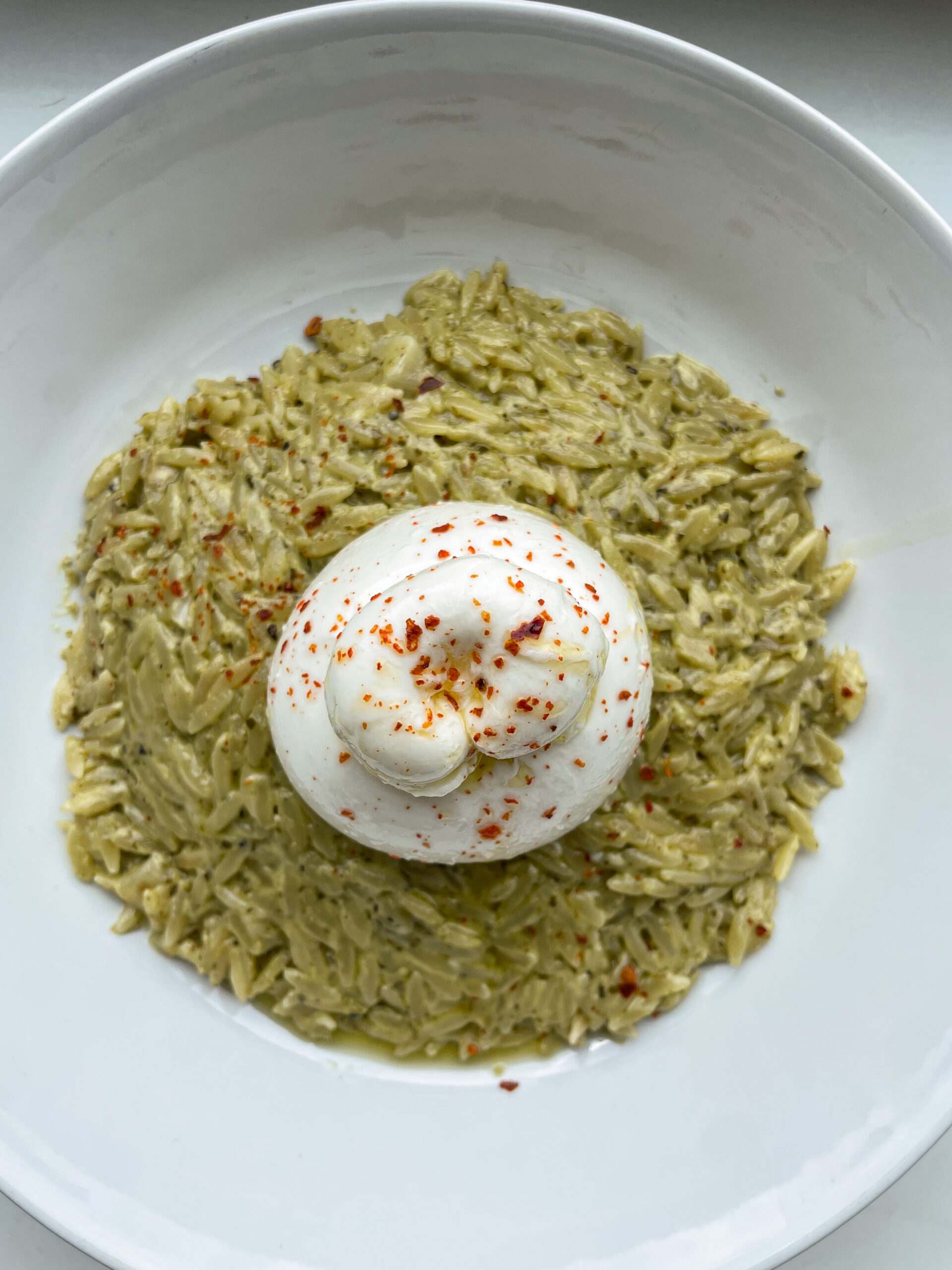
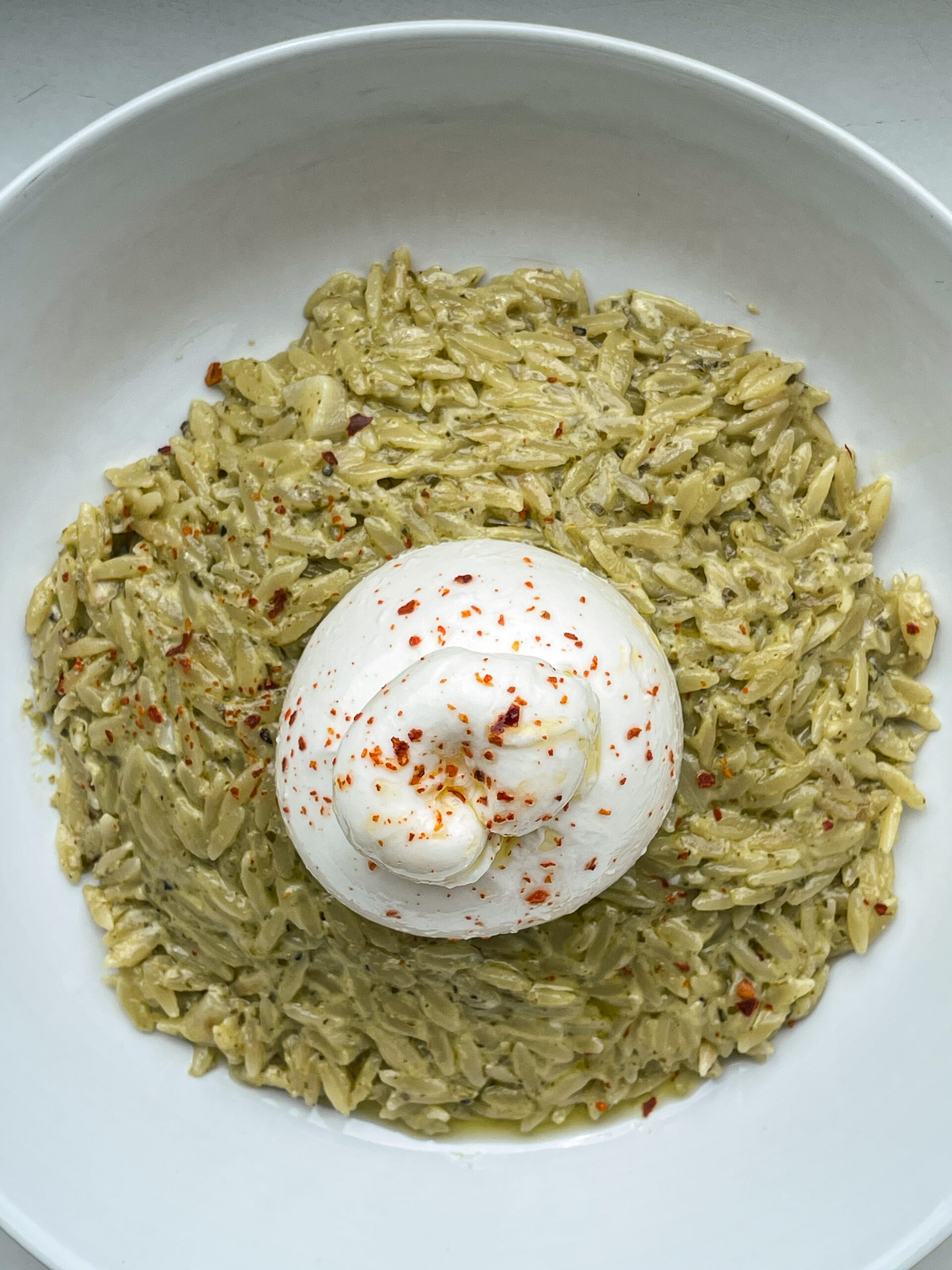
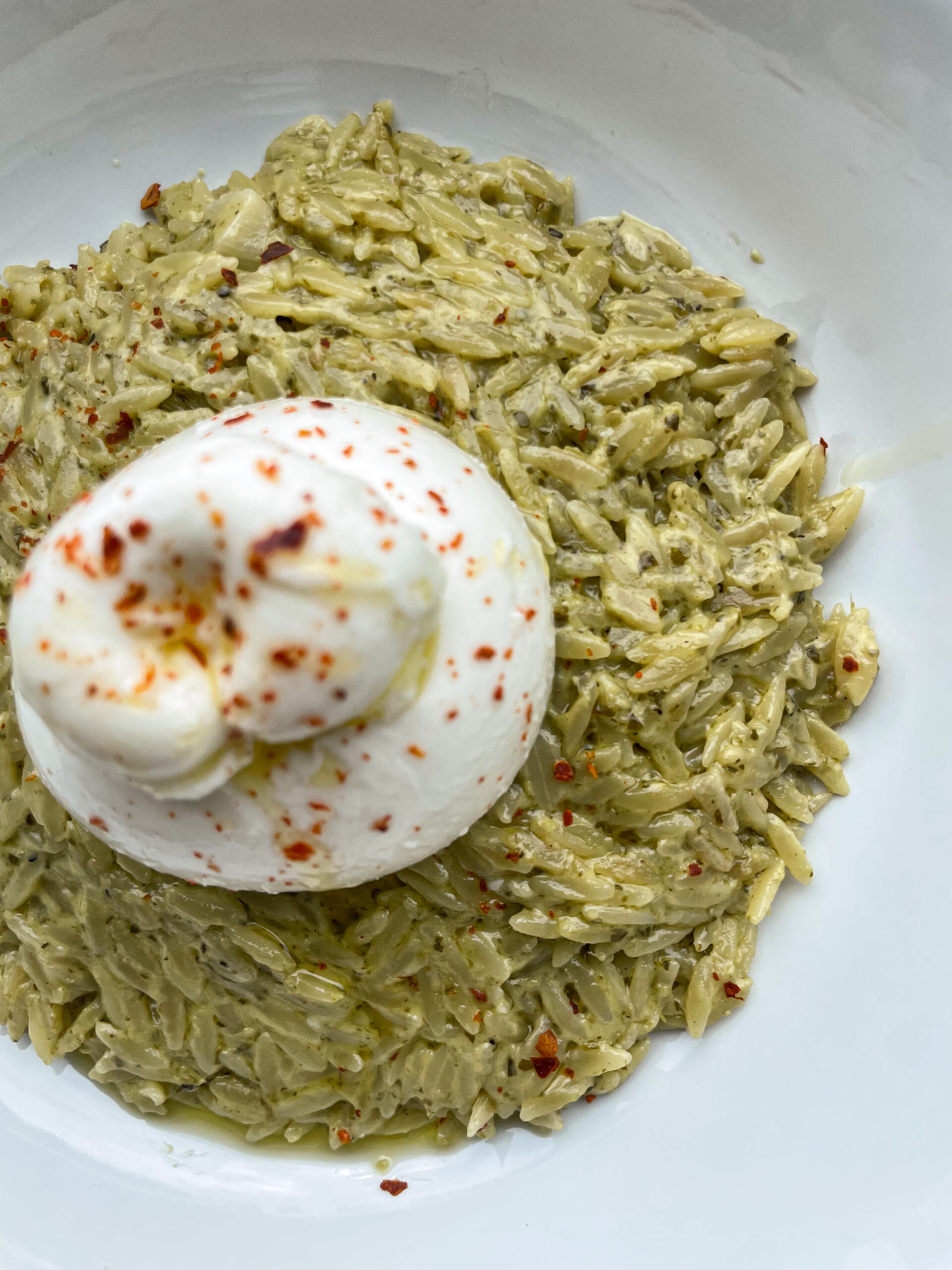
Position the burrata atop the orzo. Carefully open the burrata and garnish with a pinch of salt, a sprinkle of chili flakes, and a drizzle of olive oil, if desired.
If you've given this recipe a try and it won you over, please share your thoughts by leaving
a rating and comment below! If you have any questions about this recipe, don't hesitate to ask – I'm here to
help and will respond promptly.
Pesto orzo is a culinary delight that marries the tender orzo pasta with the vibrant and aromatic flavors of basil pesto. This harmonious fusion creates a simple, yet utterly delicious dish that will tantalize your taste buds with every bite!
Prep Time
10 mins
Cook Time
10 mins
Marination Time
2 hrs
Total Time
2 hrs 20 mins
Course
Appetizer
Cuisine
American
Servings
6 PIECES
Ingredients
1 cup orzo
3 garlic cloves
1/2 cup heavy cream
3/4 cup hot water
3 tbsp olive oil
Salt and pepper
3 tbsp pesto sauce
1/4 cup parmesan cheese
1 burrata ball
Chili flakes
Instructions
Heat a medium saucepan over medium-high heat, add 1 tablespoon of olive oil and chopped garlic, and sauté until the garlic turns golden (approximately one minute).
Add the orzo, along with a pinch of salt and freshly ground black pepper, and stir for about 1 to 3 minutes.
Gradually pour in the water while continuing to stir. Keep stirring until the mixture thickens.
Introduce the heavy cream, then reduce the heat. Allow it to simmer for approximately 10 to 12 minutes, stirring frequently.
Cover the saucepan and let it cook for an additional 3 to 5 minutes, making sure to stir regularly.
Take the orzo off the heat and blend in 2-4 tablespoons of the pesto.
Incorporate the Parmigiano Reggiano thoroughly.
Cut the burrata in half. Each half is sufficient for one serving of orzo.
Position the burrata atop the orzo. Carefully open the burrata and garnish with a pinch of salt, a sprinkle of chili flakes, and a drizzle of olive oil, if desired.
Keywords: simple green salad, green salad, everyday salad