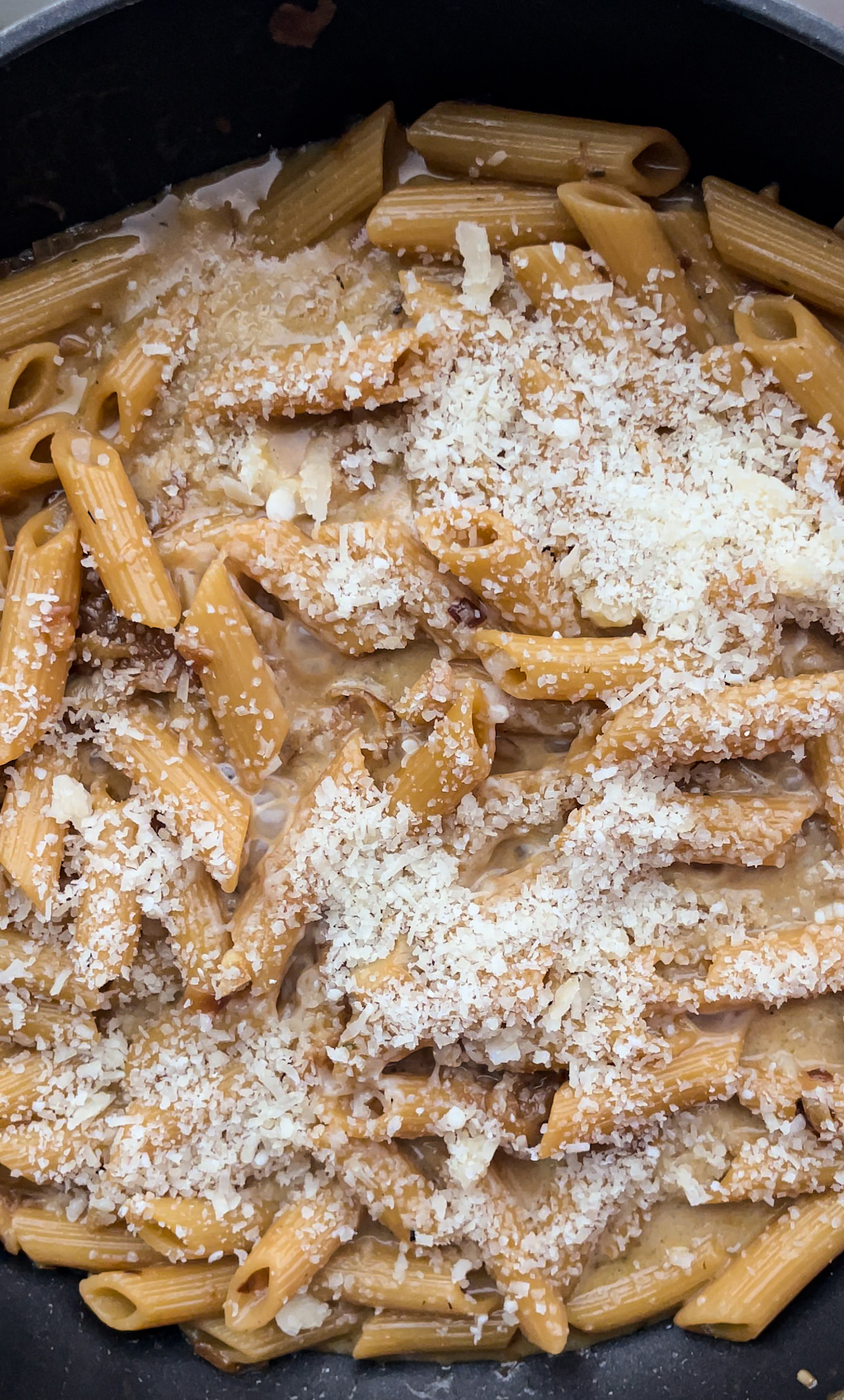
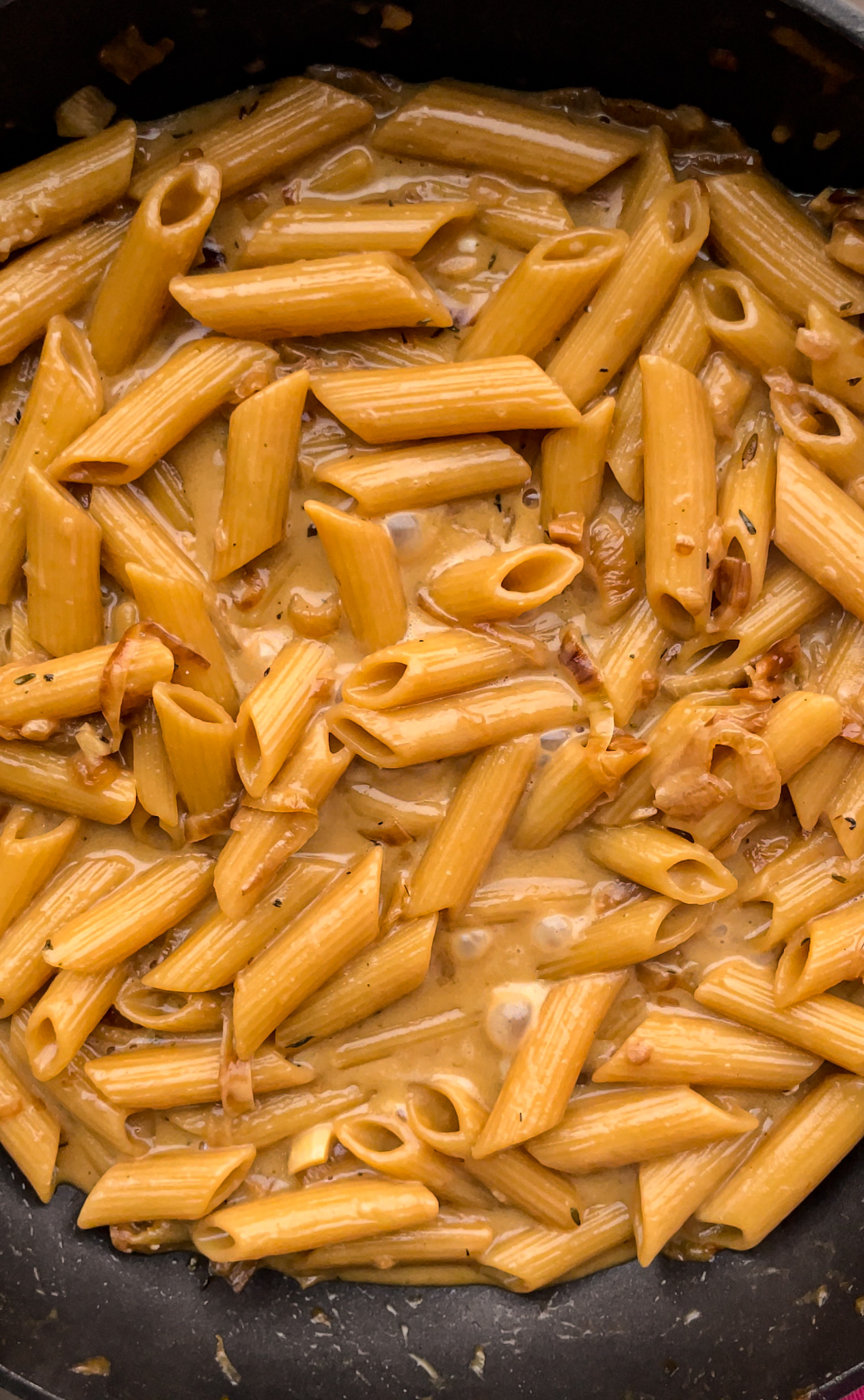
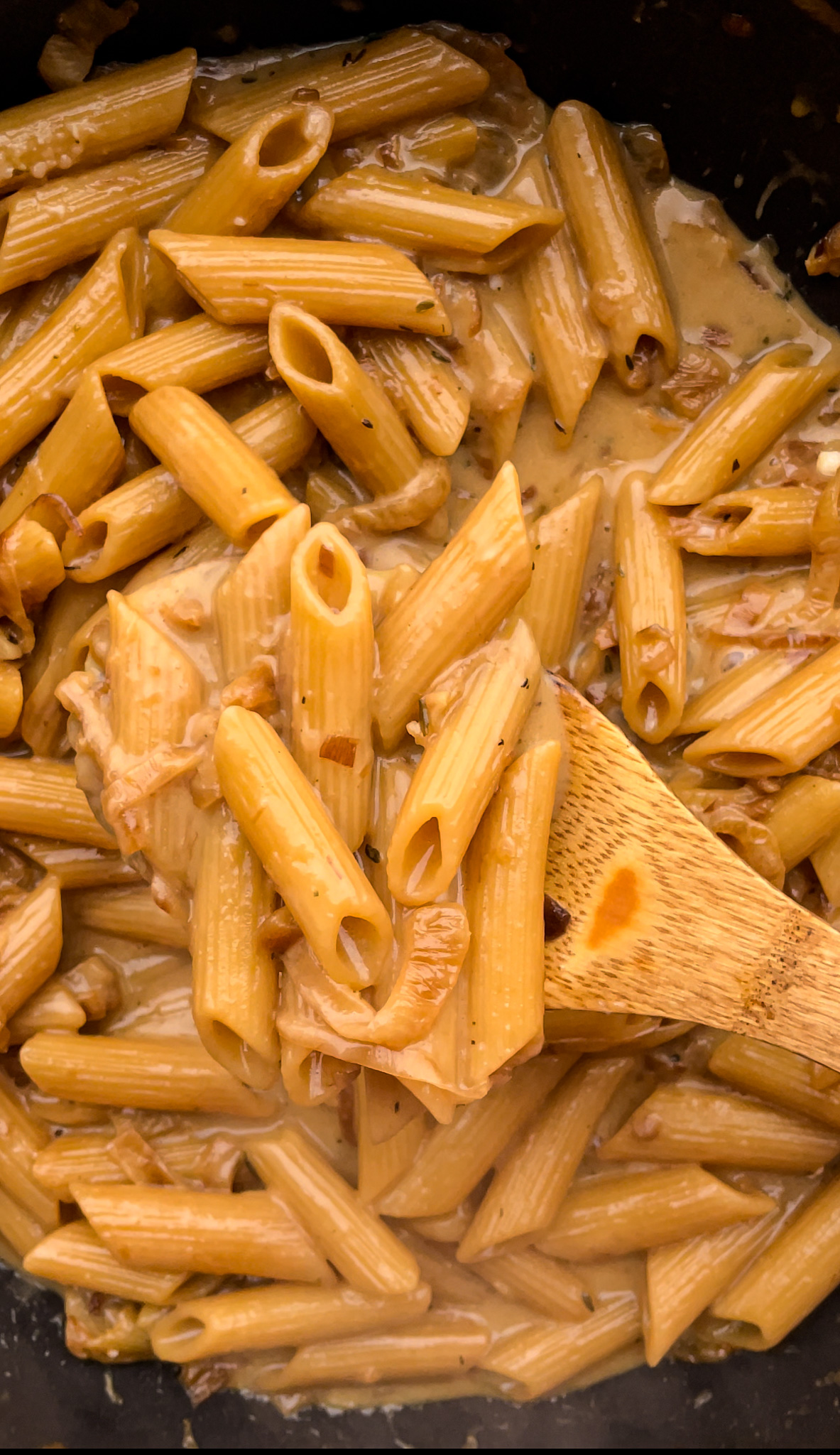
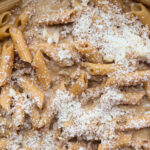
Get ready for a flavor party in a bowl with our French Onion Pasta! Imagine perfectly cooked pasta drenched in cozy, caramelized onion goodness that’s like a warm hug for your taste buds. This dish takes everything you love about classic French onion soup and transforms it into an incredibly satisfying pasta experience that will become your new favorite comfort meal. French Onion Pasta combines the deep, savory sweetness of caramelized onions with creamy, cheesy sauce and perfectly cooked pasta to create something truly extraordinary.
It’s comfort food at its finest, with that amazing French onion soup vibe but in pasta form that’s easier to eat and just as soul-warming. Every bite is a trip to flavor town—savory, cheesy, and oh-so-satisfying. The beauty of French Onion Pasta lies in its simplicity and the way humble ingredients transform into something spectacular through proper technique and patience. Quick to prepare once you understand the method, easy enough for weeknight dinners, and definitely a mood lifter on any day.
This one-pot wonder means minimal cleanup while delivering maximum flavor, making French Onion Pasta perfect for busy households or anyone who wants impressive results without complicated processes. The caramelized onions provide deep, complex sweetness that pairs beautifully with savory beef stock and rich cream. Fresh thyme adds aromatic earthiness, while Parmesan cheese contributes nutty, salty depth that ties everything together. When you combine these elements with pasta cooked right in the flavorful sauce, you get a cohesive dish where every component enhances the others.
Why This Recipe is Special
French Onion Pasta stands out because it captures the essence of beloved French onion soup in a format that’s more substantial and satisfying as a main course. Traditional French onion soup is wonderful, but this pasta version provides more substance while maintaining those iconic flavors everyone loves. The one-pot cooking method means pasta absorbs flavor directly from the caramelized onion base, creating integration you cannot achieve by cooking components separately.
The caramelization process is what makes this dish truly special. Taking time to properly caramelize onions develops natural sweetness and complex flavors through the Maillard reaction. This patient cooking technique transforms sharp, pungent raw onions into tender, sweet, deeply flavored foundations that elevate the entire dish. While it requires 30 minutes of occasional stirring, the result is worth every moment of attention.
Key Ingredients Overview
Creating exceptional French Onion Pasta starts with selecting quality ingredients that work together harmoniously. Yellow onions form the foundation, providing the sweet, savory base when properly caramelized. Butter adds richness and helps onions caramelize without burning. Garlic and fresh thyme contribute aromatic complexity that complements the sweet onions perfectly.
Heavy cream creates luxurious texture and balances the concentrated flavors from caramelization. Beef stock provides savory depth and authentic French onion soup character, though vegetable stock works for vegetarian versions. Parmesan cheese adds nutty, salty complexity and helps create a sauce that clings beautifully to pasta. Your choice of pasta shape determines how well sauce distributes throughout the dish, with certain shapes working better than others.
Understanding French Onion Pasta
French Onion Pasta represents a brilliant fusion of French culinary tradition with Italian pasta culture. It takes the deeply savory, slightly sweet flavor profile of French onion soup and adapts it into a more substantial, fork-friendly format. Understanding the principles behind both French onion soup and pasta preparation helps you appreciate why this combination works so beautifully.
The success of French Onion Pasta depends on mastering onion caramelization and understanding how to build layers of flavor in a single pot. Unlike soup where broth dominates, this pasta version concentrates flavors through reduction and strategic use of cream and cheese to create a sauce that coats every strand or piece of pasta perfectly.
The Science of Caramelization
Caramelization is the chemical process that makes French Onion Pasta special. When you cook onions slowly over medium heat, their natural sugars break down and recombine into hundreds of new flavor compounds. This Maillard reaction creates the characteristic brown color and sweet, complex taste that defines caramelized onions. The process cannot be rushed—high heat burns onions before proper caramelization occurs.
During the 30-minute cooking time, onions release moisture and gradually shrink as water evaporates. The sugars concentrate and begin to brown, developing nutty, sweet, savory notes that transform the entire dish. Salt helps draw out moisture initially, accelerating the process. Occasional stirring ensures even exposure to heat while allowing enough contact time with the pot bottom for browning to occur.
One-Pot Cooking Benefits
The one-pot method used for French Onion Pasta offers multiple advantages beyond just easy cleanup. Cooking pasta directly in the flavored liquid allows it to absorb the caramelized onion essence while releasing starches that naturally thicken the sauce. This creates a cohesive dish where sauce and pasta become one rather than separate components sitting together.
Building layers of flavor in the same pot means each ingredient benefits from what came before. The fond—those browned bits stuck to the pot bottom after caramelizing onions—dissolves into the liquid when you add stock and cream, contributing deep savory notes. This deglazing process captures every bit of flavor development, ensuring nothing goes to waste.
Choosing the Right Ingredients
Every ingredient in French Onion Pasta plays a specific role in creating the final flavor profile and texture. Selecting quality components and understanding their purpose helps you achieve the best possible results. While some substitutions work, certain elements are essential to maintaining the authentic character of this dish.
The beauty of French Onion Pasta is that it relies on accessible, affordable ingredients available at any grocery store. You don’t need specialty items or expensive components, just quality basics treated with proper technique.
Onion Selection
Yellow onions are the best choice for French Onion Pasta because they offer the ideal balance of sweetness and savory depth when caramelized. Their higher sugar content compared to white onions means better caramelization and more complex flavor development. Sweet onions like Vidalia or Walla Walla work beautifully too, though they may produce slightly sweeter results.
Avoid red onions for this recipe, as they have sharper flavor that becomes unpleasant when caramelized for extended periods. White onions lack the sugar content needed for proper caramelization. Use fresh, firm onions without soft spots or sprouting. You’ll need approximately three to four large yellow onions for a standard recipe serving four to six people.
Butter vs. Oil
Butter is the traditional choice for caramelizing onions in French Onion Pasta because it adds rich flavor and helps achieve beautiful browning. The milk solids in butter contribute nutty taste as they lightly brown alongside the onions. However, butter has a lower smoke point than oil, meaning you must watch heat carefully to prevent burning.
Some cooks prefer using a combination of butter and olive oil, which provides butter flavor while the oil’s higher smoke point offers more forgiveness if heat gets too high. Pure olive oil works but lacks the rich flavor butter provides. For the most authentic French onion character, stick with butter and maintain proper temperature control.
Pasta Shape Selection
Choosing the right pasta shape affects how well sauce distributes and how satisfying each bite feels. For French Onion Pasta, medium-sized shapes with surface area to catch sauce work best. Penne rigate offers ridges that trap the creamy onion sauce while tubes capture pieces of caramelized onion. Rigatoni provides larger tubes perfect for chunky sauce.
Campanelle’s ruffled edges hold sauce exceptionally well, while farfalle’s bow shape creates interesting texture contrast. Orecchiette’s cup shape captures sauce and onion pieces beautifully. Avoid delicate shapes like angel hair that get overwhelmed by the robust sauce, or very large shapes like lasagna sheets that don’t work for this application. Short to medium pasta shapes deliver the best experience.
Stock Considerations
Beef stock provides the authentic French onion soup flavor that makes this pasta special. Its rich, savory depth complements caramelized onions perfectly and creates that familiar taste everyone recognizes. Use good quality beef stock for best results—homemade is ideal, but quality store-bought boxes or cartons work well too.
Vegetable stock creates excellent vegetarian French Onion Pasta with slightly lighter, sweeter character. Chicken stock works in a pinch but produces different flavor than traditional French onion soup. Avoid using water, as it provides no flavor contribution and results in bland pasta. If using store-bought stock, choose low-sodium versions so you can control salt levels precisely.
Dairy Components
Heavy cream is essential for creating the luxurious, velvety sauce that makes French Onion Pasta so indulgent. Its high fat content prevents curdling when heated and creates rich texture that coats pasta beautifully. The cream balances the concentrated flavors from caramelization and adds satisfying richness to every bite.
Parmesan cheese contributes nutty, salty, umami-rich flavor that enhances both onions and cream. Use freshly grated Parmesan from a block rather than pre-grated versions, which contain anti-caking agents that prevent smooth melting. Parmigiano-Reggiano offers the best quality and flavor, though any aged hard cheese works. Gruyère makes an excellent addition for more authentic French onion character.
Step-by-Step Instructions for Perfect French Onion Pasta
Creating exceptional French Onion Pasta requires following specific steps in the right order. While the process is straightforward, attention to timing and technique ensures optimal results. Understanding why each step matters helps you execute the recipe confidently and make adjustments if needed.
Organization is key to success with this one-pot recipe. Prepare all ingredients before you start cooking, so everything is ready when needed. This prevents scrambling or letting onions burn while you search for the next ingredient.
Preparing Your Ingredients
Begin by slicing your yellow onions uniformly so they cook evenly. Cut each onion in half through the root, peel away the papery skin, then slice into half-moons approximately one-quarter inch thick. Consistent thickness ensures all pieces caramelize at the same rate without some burning while others remain undercooked.
Mince garlic cloves finely so they distribute evenly throughout the French Onion Pasta. Strip fresh thyme leaves from their woody stems—you’ll need about one tablespoon of leaves. Grate your Parmesan cheese fresh if you haven’t already. Measure out your heavy cream and have beef stock ready. This preparation makes the actual cooking process smooth and stress-free.
Caramelizing the Onions
Heat a large, heavy-bottomed pot over medium heat and add butter, swirling to coat the bottom evenly. Once butter melts and begins to shimmer, add all your sliced onions at once. They’ll seem like too much for the pot initially, but they’ll reduce dramatically during cooking. Sprinkle generously with salt, which helps draw out moisture and accelerates caramelization.
Stir the onions to coat them in butter, then let them cook, stirring every 3 to 4 minutes. This stirring frequency is crucial for French Onion Pasta success—stir too little and onions burn, stir too much and they steam rather than caramelize. You want them to develop contact with the hot pot bottom for browning while preventing burning in any spots.
The caramelization process takes approximately 30 minutes. During this time, onions will release moisture, shrink considerably, and gradually turn from translucent white to golden to deep amber brown. If onions seem dry or begin sticking aggressively, add a tablespoon or two of water to deglaze the pot and continue cooking. The onions are ready when they’re soft, deeply browned, and smell incredibly sweet and savory.
Building Flavor Layers
Once onions reach perfect caramelization, reduce heat to medium-low and add minced garlic and fresh thyme leaves. Stir constantly for 1 to 2 minutes until garlic becomes fragrant but doesn’t brown. Garlic burns easily, so watch carefully during this step. The aromatics transform your French Onion Pasta base from simply sweet to complex and savory.
Add grated Parmesan cheese to the caramelized onion mixture, stirring to combine. The cheese will begin melting into the onions, adding nutty, salty depth. Let this mixture cook together for another minute or two, allowing flavors to meld. Your kitchen should smell absolutely incredible at this point, with layers of sweet onion, earthy thyme, pungent garlic, and rich cheese combining into something irresistible.
Adding Liquids
Pour heavy cream and beef stock into the pot with your caramelized onion mixture. Use a wooden spoon or rubber spatula to scrape up all the brown bits stuck to the pot bottom—this fond contains concentrated flavor that enriches your French Onion Pasta sauce. Stir everything together thoroughly, creating a creamy, onion-studded base.
Bring the mixture to a gentle simmer, stirring occasionally. The liquid will begin reducing slightly and the flavors will concentrate. Taste and adjust seasoning with salt and black pepper. Remember that Parmesan is salty, so you may need less additional salt than expected. This flavorful base is now ready to cook your pasta and transform into complete French Onion Pasta.
Cooking the Pasta
Add your chosen pasta shape to the simmering liquid, stirring to ensure all pieces are submerged. The pasta will absorb liquid and flavor as it cooks, while also releasing starches that naturally thicken the sauce. Bring the mixture back to a gentle simmer and cook according to pasta package directions, typically 10 to 12 minutes for al dente texture.
Stir the French Onion Pasta every 2 to 3 minutes to prevent sticking and ensure even cooking. As the pasta cooks, it will absorb much of the liquid. If the mixture seems too dry before pasta is fully cooked, add small amounts of additional stock or water. You want to finish with a creamy, saucy consistency that coats pasta without being soupy or dry.
Final Adjustments
Once pasta is cooked to al dente, remove the pot from heat. The sauce should be creamy and coat the pasta beautifully with caramelized onions distributed throughout. If the sauce seems too thick, stir in a splash of stock, cream, or pasta cooking water to reach desired consistency. If too thin, let it sit for a few minutes to thicken as it cools slightly.
Taste your French Onion Pasta and adjust final seasoning with additional salt, pepper, or Parmesan as needed. Some people like adding a splash of balsamic vinegar or a squeeze of lemon juice at this stage for brightness, though this is optional. The pasta is now ready to serve immediately while hot and at its best texture.
Professional Tips for Outstanding Results
Mastering French Onion Pasta involves understanding subtle techniques that elevate good to exceptional. These professional insights help you achieve restaurant-quality results at home every time you prepare this dish.
Attention to small details makes a significant difference in the final quality and flavor of your pasta.
Temperature Management
Maintaining proper temperature throughout cooking ensures optimal caramelization and prevents burning. Medium heat is ideal for the long caramelization process—hot enough to develop color and flavor but not so hot that onions burn before caramelizing properly. If you notice rapid browning or burning, reduce heat immediately.
Your stove’s medium setting might differ from others, so watch your onions and adjust accordingly. Heavy-bottomed pots retain and distribute heat more evenly than thin ones, reducing hot spots that cause uneven cooking. Patience is essential—resist the temptation to increase heat to speed up the process, as this ruins the onions and your French Onion Pasta.
Proper Stirring Technique
The stirring frequency for caramelizing onions is crucial to French Onion Pasta success. Every 3 to 4 minutes strikes the perfect balance between allowing browning and preventing burning. When you stir, scrape the bottom of the pot thoroughly to redistribute onions and prevent sticking. Flip and turn onions so different parts contact the hot surface.
Between stirring intervals, leave onions undisturbed so they can develop that crucial browning. If you stir constantly, moisture can’t evaporate properly and onions steam instead of caramelize. If you neglect them too long, they burn in spots. Set a timer to remind yourself to stir regularly, especially if you tend to get distracted.
Enhancing Depth of Flavor
Consider deglazing with a splash of dry white wine or sherry after caramelizing onions and before adding stock. This adds complexity and acidity that brightens the rich, sweet flavors. Add wine, let it simmer and reduce by half, then proceed with stock and cream. This optional step creates more sophisticated French Onion Pasta with restaurant-quality depth.
A small amount of Worcestershire sauce or soy sauce adds umami richness without being identifiable. Just a teaspoon enhances savory depth considerably. Some cooks add a bay leaf during the simmering stage for subtle herbal notes. Fresh cracked black pepper added at the table provides pleasant heat and aromatic complexity.
Achieving Perfect Consistency
The ideal French Onion Pasta has a creamy, flowing sauce that coats pasta without being soupy or dry. Pasta cooking liquid is your secret weapon for adjusting consistency. The starchy water helps bind the sauce while thinning it to the right texture. Add gradually, a few tablespoons at a time, until you reach desired consistency.
Remember that sauce continues thickening as it cools slightly, so aim for consistency slightly looser than your target while still hot. If serving family-style, the pasta will continue absorbing sauce as it sits, so make it a bit saucier than seems ideal. Individual servings should be plated immediately at perfect consistency.
Common Mistakes to Avoid
Even straightforward recipes like French Onion Pasta have potential pitfalls that can compromise your results. Understanding these common mistakes helps you avoid them and achieve perfect pasta every time.
Learning what not to do is just as valuable as learning proper technique when mastering any new recipe.
Rushing the Caramelization
The single biggest mistake when making French Onion Pasta is trying to rush onion caramelization. Impatient cooks increase heat to speed the process, which burns onions before they properly caramelize. Burned onions taste bitter and acrid rather than sweet and complex, ruining the entire dish.
Proper caramelization requires patience and medium heat over approximately 30 minutes. There are no shortcuts that produce equivalent results. If you’re short on time, consider caramelizing onions ahead and refrigerating them until ready to make French Onion Pasta. The time investment is worthwhile because caramelized onions make the dish special.
Using Pre-Sliced Onions
Pre-sliced onions from the grocery store might seem convenient, but they often produce inferior results in French Onion Pasta. They’re frequently cut too thin or too thick for even caramelization. They also may be older and starting to dry out, which affects flavor and texture. The small amount of time saved isn’t worth the compromise in quality.
Slice your own onions fresh for best results. It takes only a few minutes and ensures proper thickness and freshness. The slight inconvenience pays off in superior flavor and texture in your finished French Onion Pasta.
Overcrowding the Pot
Using a pot that’s too small for the amount of onions you’re caramelizing creates problems. Overcrowded onions steam rather than caramelize because they release moisture that can’t evaporate quickly enough. This produces soft, translucent onions instead of the deep brown, sweet ones your French Onion Pasta needs.
Use a large, wide pot or Dutch oven that allows onions to spread out initially. They’ll reduce significantly during cooking, so the pot that seems too large at first will be the right size once caramelization is complete. Proper space allows moisture to evaporate and onions to develop that crucial browning.
Adding Garlic Too Early
Adding garlic at the beginning of the caramelization process means it burns long before onions finish cooking. Burned garlic tastes bitter and unpleasant, negatively impacting your French Onion Pasta. Garlic should be added only after onions are fully caramelized, cooking for just 1 to 2 minutes until fragrant.
This timing ensures garlic contributes its characteristic flavor and aroma without any burnt bitterness. The same principle applies to fresh herbs—add them toward the end rather than at the beginning to preserve their delicate flavors and prevent burning.
Underseasoning
Under-seasoned French Onion Pasta tastes flat despite proper caramelization and good ingredients. Salt is essential at multiple stages—when caramelizing onions, when building the sauce, and in final adjustments. Don’t be afraid to season adequately, tasting and adjusting throughout the cooking process.
Remember that Parmesan cheese contributes saltiness, but you’ll still need additional salt to properly season the dish. Black pepper adds warmth and aroma that enhances other flavors. Taste your pasta before serving and adjust seasoning as needed—this final check ensures optimal flavor in every bowl.
Variations and Customizations
Once you’ve mastered basic French Onion Pasta, exploring variations keeps the recipe exciting and allows personalization. These adaptations maintain the core concept while introducing new flavors, textures, or accommodating dietary needs.
Experimenting with variations helps you understand the recipe’s flexibility and discover your perfect version of French Onion Pasta.
Protein Additions
While French Onion Pasta is substantial enough to serve as a vegetarian main course, adding protein creates even more filling meals. Shredded rotisserie chicken folded in at the end adds lean protein without complicated preparation. Crispy bacon or pancetta contributes smoky, salty richness that complements sweet onions beautifully.
Italian sausage, browned and crumbled, transforms French Onion Pasta into hearty comfort food perfect for cold weather. For elegant occasions, seared steak strips or medallions create bistro-worthy presentation. Sautéed shrimp adds delicate seafood flavor. Add proteins after pasta is cooked, folding them in gently to avoid breaking them apart.
Cheese Variations
While Parmesan is traditional, experimenting with different cheeses creates unique flavor profiles in your French Onion Pasta. Gruyère is the classic French onion soup cheese and works beautifully here, providing nutty, slightly sweet flavor and excellent melting properties. Fontina contributes creamy texture and mild, buttery taste.
Aged white cheddar offers sharper flavor and smooth melting. For ultimate indulgence, stir in cream cheese for extra-creamy texture. Mixing multiple cheeses creates complexity—try combining Parmesan and Gruyère for best-of-both-worlds flavor. Reserve some grated cheese to sprinkle on top of individual servings for visual appeal and extra cheese flavor.
Vegetable Additions
Adding vegetables to French Onion Pasta increases nutrition while introducing color and textural variety. Sautéed mushrooms contribute earthy umami that pairs perfectly with caramelized onions. Baby spinach or kale wilted into the hot pasta adds vibrant color and iron-rich greens.
Roasted cherry tomatoes provide bright acidity that cuts through richness. Sun-dried tomatoes offer concentrated sweet-tart flavor and chewy texture. Roasted red peppers add sweetness and beautiful color. Peas contribute pop and subtle sweetness. These additions make French Onion Pasta more complete and visually appealing while maintaining the signature flavor.
Vegan and Dietary Modifications
Creating vegan French Onion Pasta is surprisingly easy with smart substitutions. Replace butter with olive oil for caramelizing onions—you’ll lose some richness but maintain proper cooking technique. Use vegetable stock instead of beef stock for the cooking liquid. Swap heavy cream with full-fat coconut cream or cashew cream for comparable richness and texture.
Replace Parmesan with nutritional yeast for cheesy, nutty flavor, or use store-bought vegan Parmesan alternatives. The result won’t taste exactly like traditional French onion soup, but it’ll still be absolutely delicious. For gluten-free versions, use gluten-free pasta and skip any flour thickening, though your French Onion Pasta will be slightly less creamy.
Baked Version
Transform French Onion Pasta into a baked casserole for different texture and presentation. Prepare the recipe as directed, then transfer to a baking dish. Top with additional Gruyère or mozzarella cheese and breadcrumbs. Bake at 375°F for 20 minutes until bubbly, then broil for 2 to 3 minutes until golden and crispy on top.
This creates textural contrast between creamy interior and crispy, cheesy top layer. The baked version works wonderfully for potlucks or make-ahead meals, as you can assemble it in advance and bake just before serving. Individual ramekin portions create elegant presentations perfect for dinner parties.
Storage and Reheating
Proper storage extends the life of your French Onion Pasta while maintaining quality as much as possible. Understanding correct storage and reheating techniques prevents food waste and ensures leftovers remain enjoyable.
Like most cream-based pasta dishes, French Onion Pasta tastes best when freshly made, but leftovers can be quite good with proper handling.
Storing Guidelines
Allow leftover French Onion Pasta to cool to room temperature before storing, but don’t leave it out longer than two hours for food safety. Transfer to an airtight container, pressing plastic wrap directly onto the surface before sealing with the lid to prevent skin formation and reduce air exposure.
Refrigerate promptly and consume within 3 to 4 days for best quality. The pasta will absorb more sauce as it sits, resulting in drier texture when reheated. The cream sauce may separate slightly when cold, which is normal and will improve upon reheating. Store French Onion Pasta in portion-sized containers for convenient single servings.
Reheating Methods
The stovetop method produces the best results when reheating French Onion Pasta. Place portions in a skillet or saucepan over medium-low heat. Add a few tablespoons of stock, cream, or milk to help restore creaminess that pasta absorbed during storage. Stir gently but frequently, heating until warmed through completely.
This gentle, moist heat method prevents the cream sauce from breaking and keeps pasta from drying out. Avoid high heat, which can cause dairy to separate and creates rubbery pasta texture. The stovetop method takes slightly longer than microwaving but delivers significantly better results that closely match the original dish.
Microwave reheating works when time is limited, though results aren’t quite as good. Place portions in a microwave-safe bowl and add a tablespoon or two of stock or cream. Cover with a damp paper towel to create steam and prevent drying. Heat in 1-minute intervals, stirring between each, until hot throughout. This prevents hot spots and ensures even heating of your French Onion Pasta.
Frequently Asked Questions
These commonly asked questions address concerns and curiosities people have when preparing French Onion Pasta. Understanding these details helps ensure success and builds confidence in the kitchen.
Can I use red or white onions instead of yellow?
While you can technically use any onion variety, yellow onions are strongly recommended for French Onion Pasta. They offer the best balance of sweetness and savory depth when caramelized. Sweet onions like Vidalia work wonderfully too. Red onions have sharper flavor that can become unpleasant with extended cooking. White onions lack sufficient sugar for proper caramelization. Stick with yellow for best results.
How do I know when onions are properly caramelized?
Properly caramelized onions for French Onion Pasta are deeply golden brown to amber in color, very soft and tender, and smell incredibly sweet and savory. They should have reduced significantly in volume, losing most of their moisture. The process takes approximately 30 minutes—if they’re done faster, your heat was too high and they may have burned rather than properly caramelized.
Can I make this ahead of time?
You can caramelize onions up to three days in advance and refrigerate them until ready to make French Onion Pasta. This significantly reduces active cooking time when you’re ready to serve. However, don’t cook the complete pasta dish ahead, as it becomes mushy and absorbs too much sauce during storage. For best texture, cook pasta in the sauce right before serving.
What if my sauce is too thick or too thin?
If your French Onion Pasta sauce is too thick, thin it gradually by stirring in small amounts of stock, cream, or pasta cooking water until you reach desired consistency. If too thin, let it simmer gently uncovered to reduce and concentrate, or stir in a bit more grated Parmesan which will melt and slightly thicken the sauce. Adjust while the dish is still hot for best results.
Can I freeze French Onion Pasta?
Freezing is not recommended for cream-based French Onion Pasta. Cream sauces often separate and become grainy when frozen and thawed. The pasta texture also deteriorates, becoming mushy rather than al dente. If you must freeze, freeze only the caramelized onions separately, then make fresh pasta when ready to serve for better results.
What wine pairs well with this dish?
French Onion Pasta pairs beautifully with medium to full-bodied white wines like Chardonnay or Viognier, which complement the creamy richness. Light to medium-bodied red wines like Pinot Noir or Beaujolais work wonderfully, echoing the dish’s French origins. The wine’s acidity cuts through the richness while complementing the sweet onions. Choose wines you enjoy drinking, as personal preference matters most.
Serving Suggestions
French Onion Pasta works beautifully as a complete meal or can be paired with complementary sides for more elaborate dinners. Understanding what accompanies this rich, flavorful dish helps you create balanced, satisfying meals.
The key is choosing sides that complement rather than compete with the starring French Onion Pasta.
Simple Accompaniments
A crisp green salad with light vinaigrette provides refreshing contrast to rich, creamy French Onion Pasta. The acidity in the dressing cuts through richness while fresh greens add textural variety. Keep the salad simple—mixed greens, perhaps some cherry tomatoes and cucumber, with a lemon or balsamic vinaigrette.
Crusty French bread or garlic bread is a natural pairing, perfect for soaking up any extra sauce. Toasted baguette slices rubbed with garlic create authentic French accompaniment. A simple vegetable like roasted green beans or steamed asparagus adds color and nutrition without overwhelming the main dish.
Wine and Beverage Pairings
Choose beverages that complement the sweet, savory, creamy character of French Onion Pasta. Medium-bodied white wines with good acidity like Chardonnay balance the richness beautifully. Light red wines like Pinot Noir or Beaujolais work wonderfully, especially if you’ve added beef to your pasta.
For non-alcoholic options, sparkling water with lemon provides palate-cleansing refreshment between bites. Iced tea with a squeeze of lemon offers subtle sweetness that complements caramelized onions. The goal is refreshment that cleanses your palate rather than competing with the complex flavors in your French Onion Pasta.
Presentation Tips
Serve French Onion Pasta in wide, shallow bowls that showcase the beautiful caramelized onions and creamy sauce. Garnish with freshly grated Parmesan, a few fresh thyme leaves, and freshly cracked black pepper for visual appeal and extra flavor. A light drizzle of quality olive oil adds sheen and richness.
For elegant presentation, twirl pasta into neat portions using tongs before placing in bowls. Top with a small amount of microgreens or fresh herbs for color contrast. Serve immediately while hot, as cream-based pasta dishes are best enjoyed fresh. Family-style serving works too—bring the pot to the table for a rustic, inviting presentation that encourages seconds.
Final Thoughts
French Onion Pasta represents comfort food at its absolute best—simple ingredients transformed through proper technique into something extraordinary. The combination of sweet caramelized onions, savory stock, rich cream, and nutty cheese creates layers of flavor that satisfy on every level. Each forkful delivers that warm, cozy feeling that only true comfort food provides.
Whether you’re preparing weeknight dinner for your family or creating something special for guests, this recipe delivers impressive results without requiring professional culinary skills. The techniques you learn while making French Onion Pasta—particularly onion caramelization—transfer to countless other recipes, building your confidence and competence in the kitchen.
The beauty of French Onion Pasta lies in its flexibility and accessibility. Follow the recipe exactly for classic comfort, or customize with your favorite variations to make it uniquely yours. Add proteins for more substantial meals, experiment with different cheeses, or incorporate vegetables for nutrition. Each variation teaches you more about cooking and flavor development while maintaining that signature sweet, savory character.
Don’t be intimidated by the 30-minute caramelization time. The process is mostly passive, requiring only occasional stirring while you attend to other tasks. The deep, complex flavor that results from patience cannot be achieved any other way.
If you’ve given this recipe a try and it won you over, please share your thoughts by leaving a rating and comment below! If you have any questions about this recipe, don’t hesitate to ask – I’m here to help and will respond promptly.
Get ready for a flavor party in a bowl with our French Onion Pasta! Imagine perfectly cooked pasta drenched in a cozy, caramelized onion goodness that's like a warm hug for your taste buds. It's comfort food at its finest, with that amazing French onion soup vibe but in pasta form. Every bite is a trip to flavor town – savory, cheesy, and oh-so-satisfying. Quick, easy, and a definite mood lifter on any day. Treat yourself to a bowl of pure happiness!
Heat the butter in a large skillet over medium heat. When shimmering, add the onions and a generous pinch of salt. Cook, stirring frequently until deeply caramelized. About 25-30 minutes.
Add the garlic and thyme. Sauté for 3-4 minutes .Add the raw pasta in and then add the beef stock until the pasta is all covered.
Bring it to a boil and let the pasta cook for 8-10 minutes. Add in the heavy cream and Parmesan cheese.
Turn off the heat and stir. Serve while warm!
If you've given this recipe a try and it won you over, please share your thoughts by leaving
a rating and comment below! If you have any questions about this recipe, don't hesitate to ask – I'm here to
help and will respond promptly.
Get ready for a flavor party in a bowl with our French Onion Pasta! Imagine perfectly cooked pasta drenched in a cozy, caramelized onion goodness that's like a warm hug for your taste buds. It's comfort food at its finest, with that amazing French onion soup vibe but in pasta form. Every bite is a trip to flavor town – savory, cheesy, and oh-so-satisfying. Quick, easy, and a definite mood lifter on any day. Treat yourself to a bowl of pure happiness!
Prep Time
10 mins
Cook Time
10 mins
Marination Time
2 hrs
Total Time
2 hrs 20 mins
Course
Appetizer
Cuisine
American
Servings
6 PIECES
Ingredients
250 g pasta
2 tbsp butter
3 yellow onions
2 garlic cloves
2 cups beef stock
1/2 cup heavy cream
1 tbsp thyme
Salt and pepper
1 cup parmesan cheese
Instructions
Heat the butter in a large skillet over medium heat. When shimmering, add the onions and a generous pinch of salt. Cook, stirring frequently until deeply caramelized. About 25-30 minutes.
Add the garlic and thyme. Sauté for 3-4 minutes .Add the raw pasta in and then add the beef stock until the pasta is all covered.
Bring it to a boil and let the pasta cook for 8-10 minutes. Add in the heavy cream and Parmesan cheese.
Turn off the heat and stir. Serve while warm!
Keywords: simple green salad, green salad, everyday salad