The Ultimate Guide to Authentic Detroit Style Pizza
If you’re a true pizza lover who craves thick, satisfying slices with crispy edges and a fluffy interior, then Detroit Style Pizza is about to become your new obsession. This iconic American pizza style delivers everything you want in a pizza and more. The dough comes together in just 10 minutes, and the rest of the process is surprisingly simple for such impressive results.
Detroit Style Pizza stands apart from other pizza varieties with its unique rectangular shape, thick airy crust, and distinctive cheese application that creates caramelized edges. Unlike traditional round pizzas, this style is baked in a deep rectangular pan, resulting in a pizza that’s part focaccia, part deep dish, and entirely delicious. The method might seem unconventional if you’re used to traditional pizza making, but trust me, once you try this approach, you’ll understand why Detroit Style Pizza has captured hearts across America.
This recipe will take you straight to the authentic experience without needing special equipment or hard to find ingredients. Whether you’re planning a quick weeknight dinner or hosting friends for game night, Detroit Style Pizza impresses every time. The combination of crispy caramelized cheese edges, fluffy dough, and perfectly seasoned toppings creates a pizza experience that rivals any pizzeria.
Why This Recipe Works
What makes this Detroit Style Pizza recipe truly special is its accessibility. You don’t need years of pizza making experience or professional equipment. The dough is forgiving and easy to work with, even for beginners. The technique focuses on simplicity while delivering professional quality results.
The secret to great Detroit Style Pizza lies in the pan preparation and cheese placement. Generous amounts of olive oil in the pan create those signature crispy, golden edges. The cheese goes all the way to the edges, where it caramelizes against the hot pan, creating a crunchy, flavorful border that’s absolutely addictive.
This recipe also offers flexibility. While traditional Detroit Style Pizza uses specific toppings, you can customize it to your preferences. The method remains consistent whether you stick with classic pepperoni or venture into creative territory with Turkish sucuk or other favorite ingredients.
The Detroit Style Pizza Difference
Understanding what sets Detroit Style Pizza apart helps you appreciate why this recipe produces such outstanding results. This pizza style originated in Detroit in the 1940s, created by Gus Guerra at Buddy’s Rendezvous. The distinctive rectangular shape comes from the automotive industry drip pans that were originally used as pizza pans.
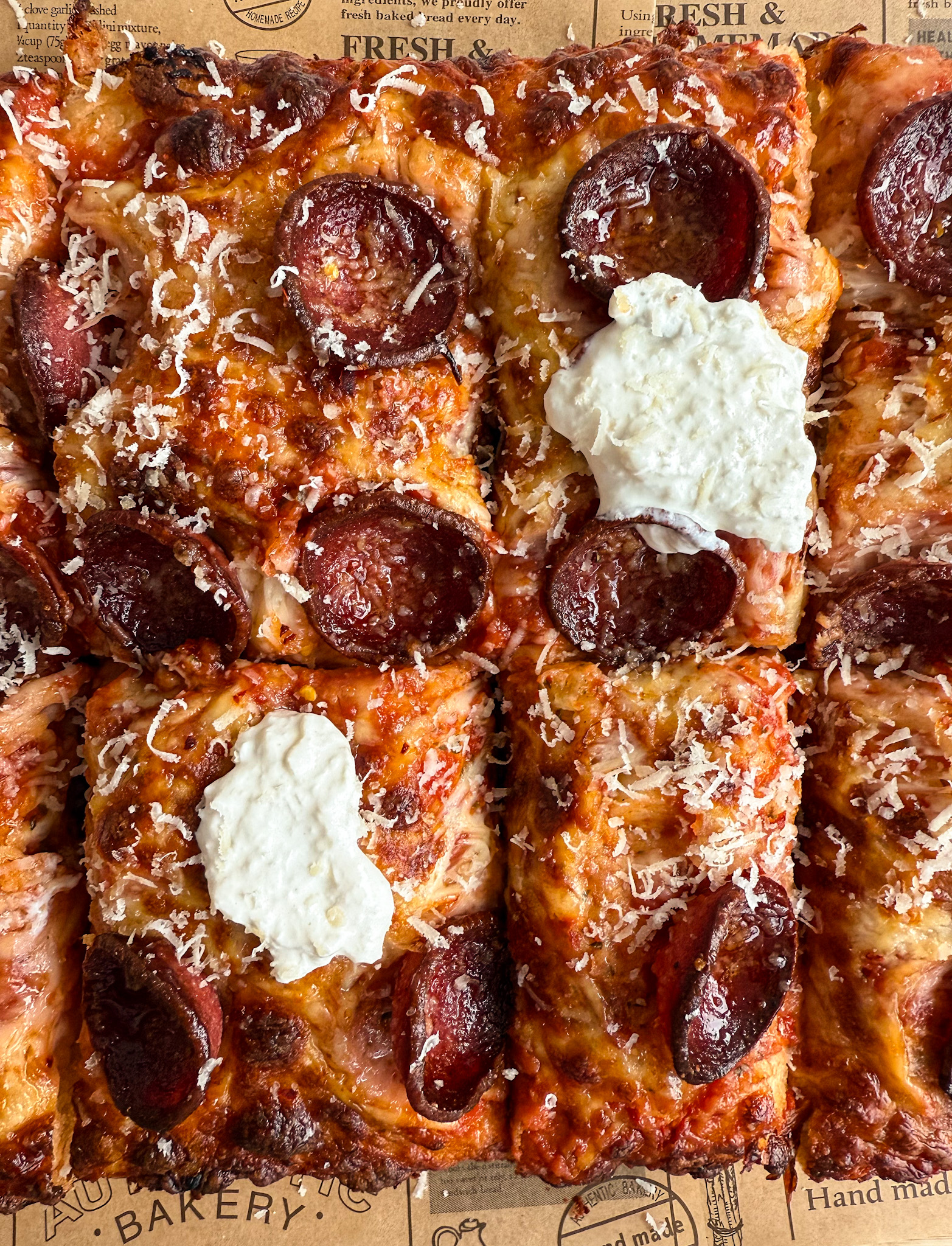
Traditional Detroit Style Pizza features a thick, airy crust that’s crispy on the bottom and edges but light and fluffy inside. The cheese typically goes on before the sauce, and it extends all the way to the pan edges. This technique allows the cheese to caramelize directly against the pan, creating those beloved crispy cheese edges.
The sauce application differs too. Instead of spreading sauce under the cheese, Detroit Style Pizza often features sauce on top in stripes or dollops. This keeps the crust from getting soggy and adds visual appeal. When you master these techniques, your homemade Detroit Style Pizza will taste like it came straight from a Detroit pizzeria.
Understanding the Perfect Pizza Dough
The foundation of exceptional Detroit Style Pizza is the dough. This isn’t your typical thin crust pizza dough. Detroit Style Pizza requires a dough that’s hydrated enough to create an airy, light interior while sturdy enough to support generous toppings.
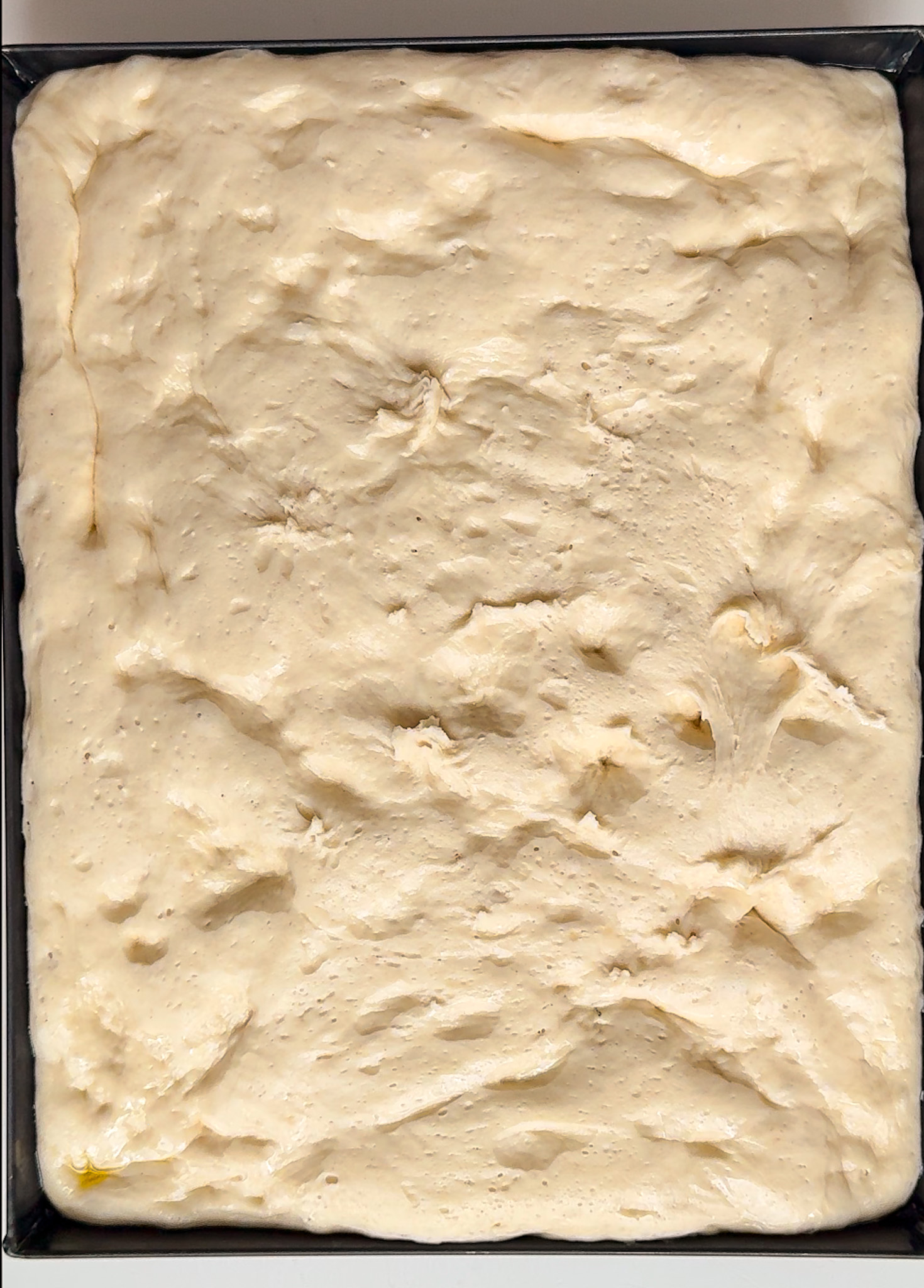
The dough for this recipe is intentionally sticky. Don’t be alarmed when you’re mixing it together. This high hydration level creates the characteristic open crumb structure that makes Detroit Style Pizza so distinctive. As the dough rises, it develops air pockets that result in that perfect light and fluffy texture.
Kneading develops the gluten network that gives your Detroit Style Pizza structure. Whether you use a stand mixer or knead by hand, this step is crucial. The dough should feel smooth and elastic after kneading, even though it remains quite sticky. Resist the urge to add too much extra flour, as this will make your pizza dense rather than airy.
Flour Selection Matters
Choosing the right flour impacts your Detroit Style Pizza significantly. Bread flour is the ideal choice because its higher protein content develops more gluten, resulting in a chewier, more structured crust. The extra protein helps the dough rise higher and creates better texture.
All purpose flour works perfectly fine if bread flour isn’t available. Your Detroit Style Pizza will still be delicious, just slightly less chewy. The difference is subtle enough that most people won’t notice. What matters more is proper kneading and rising time.
Avoid using cake flour or pastry flour for Detroit Style Pizza. These low protein flours won’t develop enough gluten structure to support the thick crust and heavy toppings. Stick with bread flour or all purpose flour for reliable results every time.
Yeast Activation and Timing
Proper yeast activation ensures your Detroit Style Pizza dough rises beautifully. Use warm water, not hot, as temperatures above 120 degrees Fahrenheit can kill the yeast. The water should feel comfortably warm to the touch, similar to bathwater temperature.
Active dry yeast and instant yeast both work for this Detroit Style Pizza recipe. Instant yeast can be mixed directly with the flour, while active dry yeast benefits from a few minutes of proofing in warm water first. Either way, you’ll get excellent results.
The rising time allows the yeast to work its magic. During the first 30 minute rest, the gluten relaxes, making the dough easier to stretch. The second rise develops flavor and creates the airy texture that makes Detroit Style Pizza special. Don’t rush these resting periods, as they’re essential to the final product.
Choosing Quality Ingredients
Great Detroit Style Pizza starts with quality ingredients. While the technique matters, using fresh, flavorful components elevates your pizza from good to extraordinary.
Cheese Selection Strategy
The cheese you choose dramatically affects your Detroit Style Pizza. Traditional recipes call for brick cheese, a Wisconsin cheese with excellent melting properties. However, brick cheese can be hard to find outside the Midwest. Mozzarella makes an excellent substitute and is what this recipe uses.
Use whole milk mozzarella rather than part skim for the best flavor and texture. Fresh mozzarella works, but low moisture mozzarella is actually preferable for Detroit Style Pizza. It has less water content, preventing a soggy crust while still melting beautifully.
Don’t skimp on the cheese quantity. Detroit Style Pizza is known for its generous cheese coverage that extends to every edge of the pan. This abundance creates those signature caramelized edges that make this pizza style so distinctive and delicious.
Sauce Components
The marinara sauce for Detroit Style Pizza should be simple and flavorful. Start with quality canned tomato sauce or crushed tomatoes. San Marzano tomatoes offer superior flavor if your budget allows, but any good quality canned tomatoes work well.
Season your sauce simply. Salt, sugar, oregano, and olive oil are all you need. The sugar balances the acidity of the tomatoes without making the sauce sweet. Dried oregano provides that classic pizza flavor. A good olive oil enriches the sauce and adds depth.
Avoid over seasoning your Detroit Style Pizza sauce. Since it goes on top of the cheese rather than underneath, the flavors concentrate during baking. What tastes slightly underseasoned raw will taste perfect after baking. You can always add more seasoning, but you can’t take it away.
Topping Choices
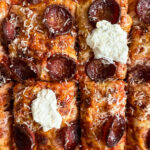
Traditional Detroit Style Pizza often features pepperoni, but this recipe introduces an exciting variation with Turkish sucuk. This spicy, garlicky sausage adds incredible flavor that complements the rich cheese and tangy sauce perfectly. If you can find it, definitely give sucuk a try on your Detroit Style Pizza.
Regular pepperoni remains a classic choice that never disappoints. Look for quality pepperoni that cups slightly when it cooks, creating little pools of flavorful oil. These pepperoni cups are beloved by pizza enthusiasts and add visual appeal to your Detroit Style Pizza.
Feel free to customize your toppings. Jalapeños add heat, mushrooms contribute earthiness, and bell peppers provide sweetness. Just avoid overloading your Detroit Style Pizza with too many wet toppings, as this can make the crust soggy. Choose two to three toppings maximum for best results.
Step by Step Dough Preparation
Making the dough for Detroit Style Pizza is straightforward when you follow these detailed steps. Take your time with each phase for the best results.
Mixing the Dough
Begin your Detroit Style Pizza by combining flour, salt, sugar, and yeast in a large bowl or the bowl of your stand mixer. Whisk these dry ingredients together to distribute the yeast evenly. This prevents clumping and ensures even rising throughout the dough.
Add the warm water and olive oil to the dry ingredients. If using a stand mixer, attach the dough hook and mix on low speed. The mixture will look shaggy at first, then gradually come together into a sticky dough. If mixing by hand, use a wooden spoon initially, then switch to your hands when the dough becomes too thick to stir.
Continue mixing until all the flour is incorporated and the dough looks smooth, even though it feels sticky. This takes about three to five minutes with a stand mixer or slightly longer by hand. The dough for Detroit Style Pizza should be wetter than typical pizza dough, so resist adding extra flour unless absolutely necessary.
Kneading Process
Kneading develops the gluten that gives Detroit Style Pizza its characteristic texture. If using a stand mixer, knead on medium low speed for two to three minutes. The dough should become smooth and elastic, though it will remain quite sticky.
For hand kneading, lightly oil your work surface and your hands rather than using flour. This prevents adding too much flour while still allowing you to handle the sticky dough. Knead by stretching the dough away from you, folding it back, turning it, and repeating. After two to three minutes, the dough should feel smoother and more cohesive.
The windowpane test helps determine if your Detroit Style Pizza dough is properly kneaded. Take a small piece of dough and gently stretch it. If it stretches thin enough to see light through it without tearing, the gluten is well developed. If it tears immediately, knead for another minute and test again.
First Rise Technique
Transfer your kneaded dough to a well oiled bowl, turning it to coat all sides with oil. This prevents the surface from drying out during rising. Cover the bowl with plastic wrap or a damp towel to maintain humidity around the dough.
Let the dough rest for 30 minutes at room temperature. During this time, the gluten relaxes and the yeast begins producing carbon dioxide, causing the dough to expand. This first rise isn’t about doubling in size but rather about developing flavor and making the dough easier to work with.
While your Detroit Style Pizza dough rests, prepare your pan. Generously coat a 9×13 inch baking pan with olive oil, ensuring every corner and side is well covered. This oil is crucial for creating those crispy, golden edges that make Detroit Style Pizza so special.
Stretching and Shaping
After the 30 minute rest, transfer the dough to your oiled pan. Press it gently with your fingertips, stretching it toward the edges. The dough will resist at first due to gluten tension. This is normal for Detroit Style Pizza dough.
If the dough keeps springing back and won’t stretch to the edges, let it rest for another 10 minutes. This additional rest allows the gluten to relax further. After resting, you should be able to press and stretch the dough to fill the entire pan.
Use your fingertips to create dimples across the dough surface. These dimples will hold the garlic butter and create interesting texture in your finished Detroit Style Pizza. Cover the pan and let the dough rise for another hour or until it doubles in size and looks puffy.
Assembling Your Detroit Style Pizza
Proper assembly technique ensures your Detroit Style Pizza turns out perfectly every time. Each layer serves a specific purpose in creating the final masterpiece.
Garlic Butter Preparation
While your dough rises, prepare the garlic butter that will flavor your Detroit Style Pizza crust. Melt butter and combine it with minced garlic, chili flakes, fresh or dried parsley, dried oregano, and grated Parmesan cheese. This mixture adds incredible flavor to the crust.
Mix the garlic butter thoroughly so the seasonings distribute evenly. The butter should be melted but not scorching hot. If it’s too hot, it might deflate the risen dough when you spread it on. Let it cool slightly if needed before using on your Detroit Style Pizza.
The garlic butter does double duty. It flavors the dough and creates steam during baking, helping achieve that light, airy texture inside the crust. Don’t skip this step, as it’s essential to authentic tasting Detroit Style Pizza.
Sauce Making
Creating your own marinara sauce for Detroit Style Pizza takes just minutes and tastes far superior to jarred sauce. Pour quality tomato sauce into a bowl and add a pinch of salt, a small amount of sugar, dried oregano, and a drizzle of good olive oil.
Stir the sauce ingredients together until well combined. Taste and adjust the seasoning if needed. Remember that the sauce will concentrate during baking, so it should taste slightly mild now. A properly seasoned sauce enhances your Detroit Style Pizza without overwhelming the other flavors.
Some people prefer a chunkier sauce for Detroit Style Pizza, while others like it smooth. Either works beautifully. If you prefer chunks, use crushed tomatoes instead of tomato sauce. For a smoother consistency, puree the sauce briefly with an immersion blender.
Layering Technique
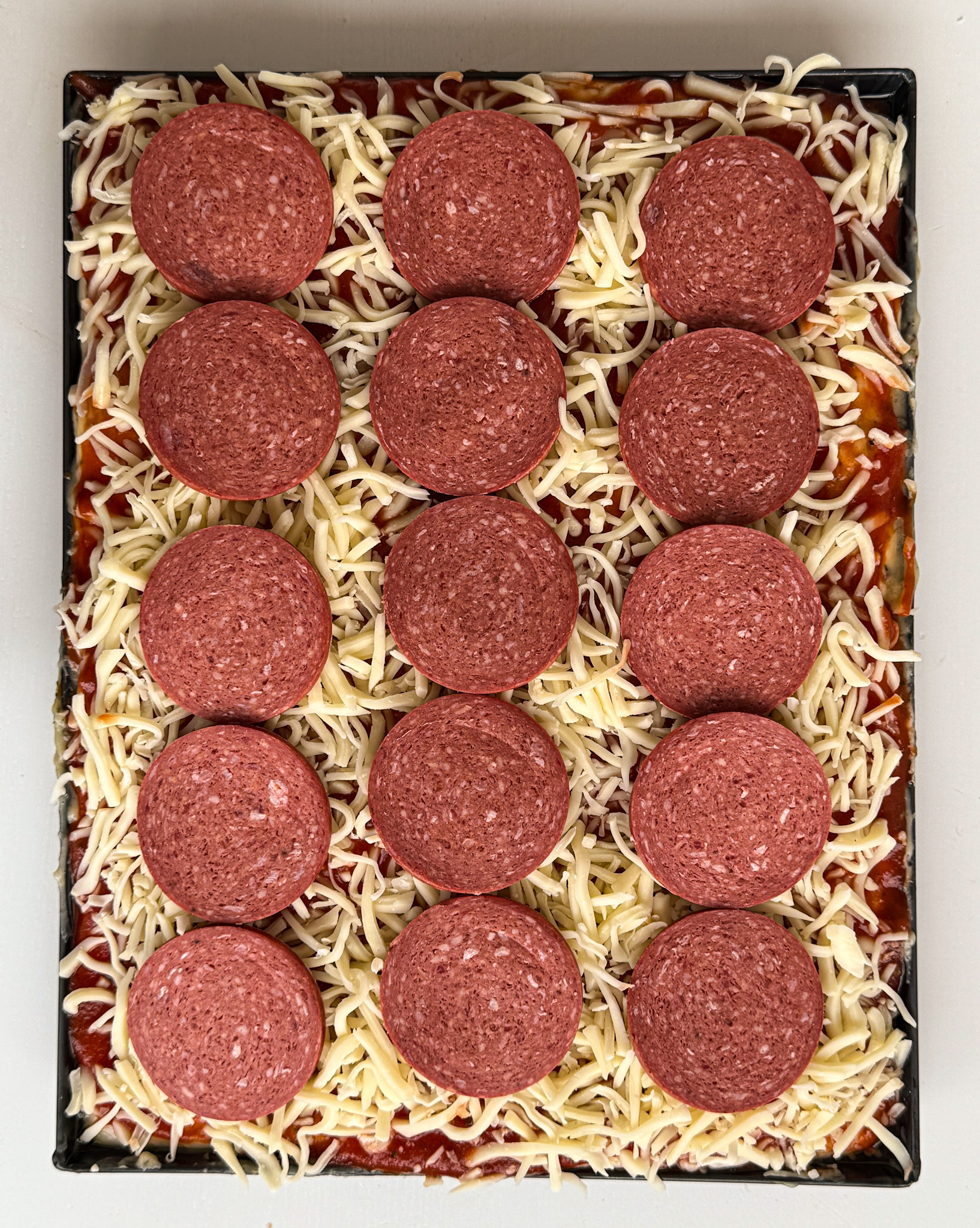
Once your dough has doubled in size, it’s time to build your Detroit Style Pizza. Preheat your oven to 190 degrees Celsius while you assemble. A fully preheated oven ensures even cooking and a crispy bottom crust.
Spread the garlic butter evenly across the entire surface of the risen dough. Use a pastry brush or the back of a spoon to coat every inch. This flavorful layer will soak into the dough during baking, creating incredibly tasty crust.
Next, spread your prepared marinara sauce over the garlic butter. You can cover the entire surface or create the traditional Detroit Style Pizza look by leaving some exposed dough and creating sauce stripes. Either approach works, so choose based on your preference.
Cheese and Toppings
Now comes the crucial cheese application that defines Detroit Style Pizza. Sprinkle a generous amount of shredded mozzarella over the sauce, making sure to cover the entire surface and push cheese all the way to the edges of the pan. This edge to edge coverage is essential.
The cheese that touches the pan edges will caramelize during baking, creating those signature crispy, golden borders that make Detroit Style Pizza so special. Don’t be shy with the cheese. This style is known for its generous cheese coverage.
Add your chosen toppings over the cheese. Whether using traditional pepperoni, Turkish sucuk, or vegetables, distribute them evenly. For Detroit Style Pizza, toppings typically go under any additional sauce rather than on top of everything, though personal preference certainly plays a role.
Baking to Perfection
Proper baking technique ensures your Detroit Style Pizza emerges from the oven with crispy edges, a golden bottom, and perfectly melted cheese.
Oven Temperature and Placement
Bake your Detroit Style Pizza at 190 degrees Celsius as specified in the recipe. This temperature is hot enough to create crispy edges and a golden crust while giving the thick dough time to cook through completely. Higher temperatures might burn the edges before the center cooks.
Place the pan on the middle rack of your oven for even heat distribution. If you have a pizza stone, preheat it and place the pan directly on it for an extra crispy bottom crust. The stone conducts heat efficiently, improving the bottom crust texture of your Detroit Style Pizza.
Avoid opening the oven door frequently while your Detroit Style Pizza bakes. Each time you open the door, heat escapes and the temperature drops. This extends cooking time and can result in uneven baking. Trust the process and let the oven work its magic.
Baking Time Guidelines
Bake your Detroit Style Pizza for 12 to 15 minutes, watching for visual cues rather than relying solely on time. The edges should turn golden brown and crispy. The cheese should be bubbling vigorously and starting to brown in spots. These signs indicate your pizza is ready.
The exact baking time depends on your oven and how thick you stretched the dough. Thicker Detroit Style Pizza might need the full 15 minutes or slightly more. Thinner versions might be done in 12 minutes. Check after 12 minutes and add time as needed.
The bottom crust should be golden brown and crispy when your Detroit Style Pizza is done. Carefully lift an edge with a spatula to check. If the bottom looks pale, continue baking. A properly baked bottom prevents a soggy crust and adds essential texture.
Checking for Doneness
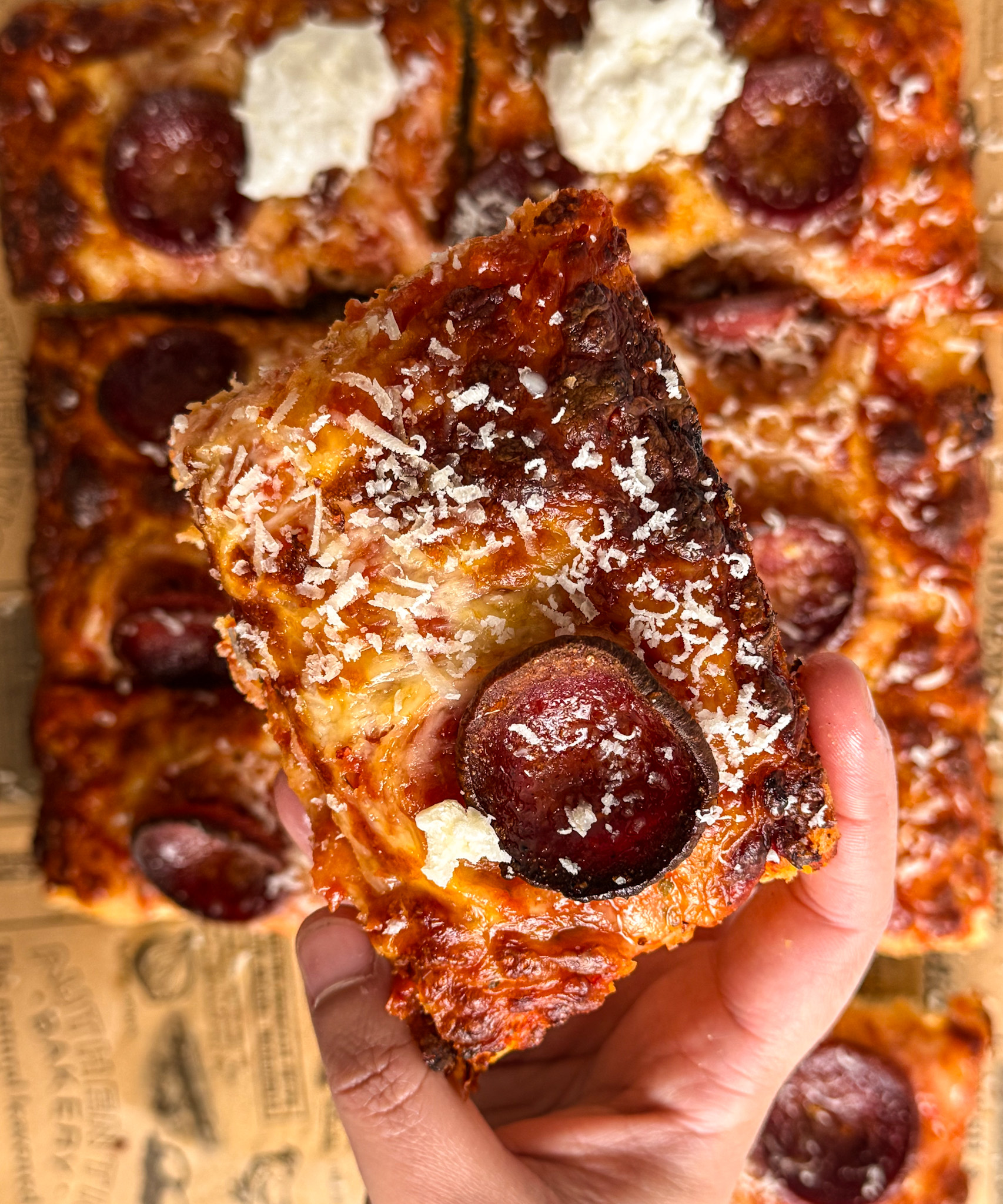
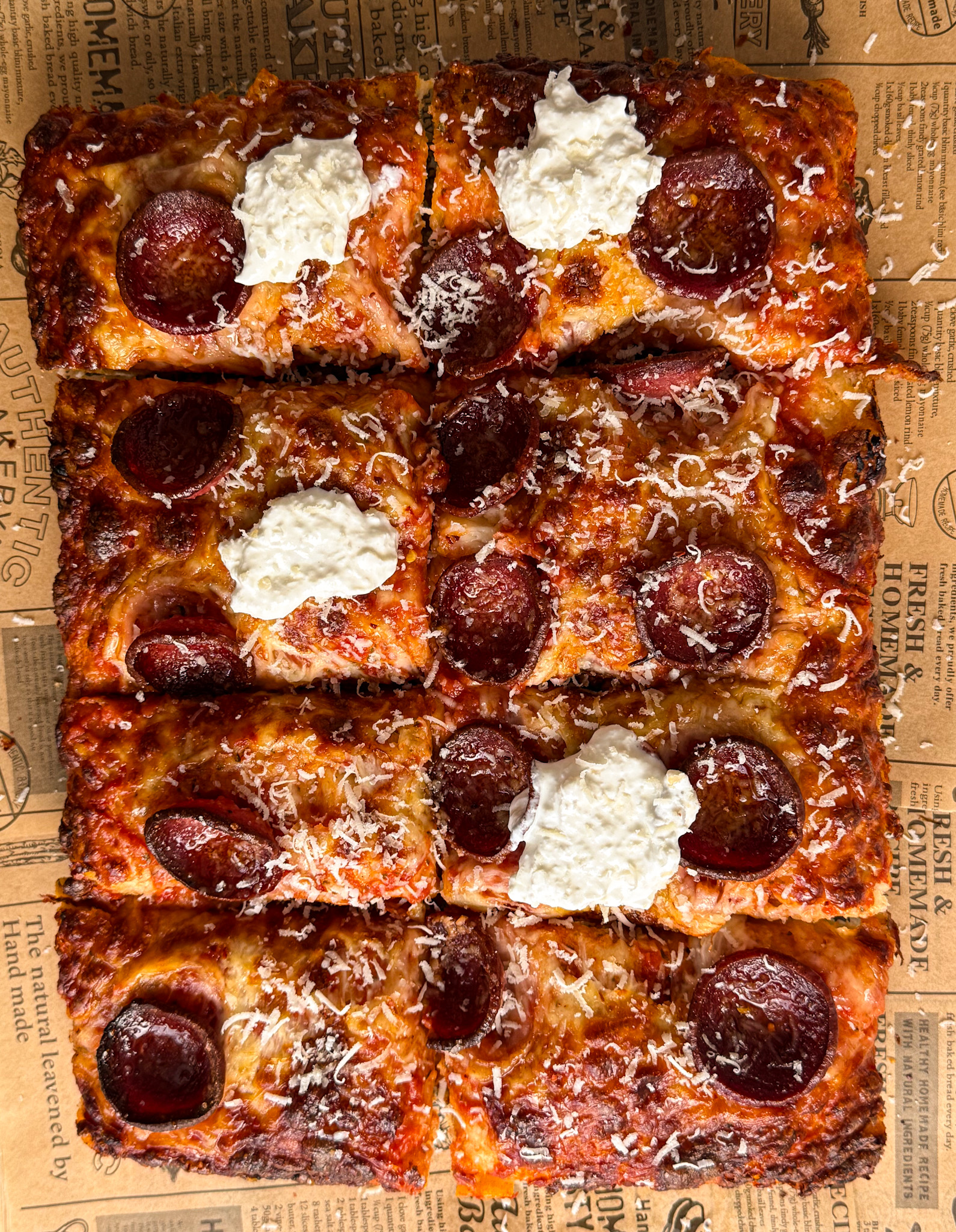
Visual cues tell you when your Detroit Style Pizza is perfectly baked. The cheese should be melted and bubbling with golden brown spots across the surface. The edges should look deeply golden and crispy, with visible caramelization where the cheese meets the pan.
Use a spatula to gently lift one edge of your Detroit Style Pizza. The bottom should be uniformly golden brown. If you see pale spots, continue baking. The crust should release easily from the pan when properly baked, thanks to all that olive oil.
An instant read thermometer provides certainty if you’re unsure. Insert it into the thickest part of the crust. The internal temperature of fully baked Detroit Style Pizza should reach at least 190 degrees Fahrenheit. This ensures the dough is cooked through completely.
Professional Tips and Techniques
These expert tips will help you make Detroit Style Pizza that rivals any pizzeria.
Pan Selection and Preparation
The right pan makes a significant difference in Detroit Style Pizza quality. Traditional recipes use blue steel automotive drip pans, but a 9×13 inch metal baking pan works excellently. Avoid glass or ceramic pans, as they don’t conduct heat as efficiently and won’t produce crispy edges.
Generously oil your pan, even if it’s nonstick. The oil isn’t just for preventing sticking. It creates the fried, crispy edges that define Detroit Style Pizza. Use olive oil for best flavor, coating the bottom and sides completely. Don’t skimp on this step.
If you make Detroit Style Pizza frequently, consider investing in an authentic Detroit pizza pan. These pans are designed specifically for this style and produce outstanding results. However, a standard metal baking pan works perfectly fine for home cooks.
Temperature Management
Room temperature ingredients help your Detroit Style Pizza dough rise more consistently. Take your water and olive oil out of the refrigerator about 30 minutes before making the dough. Cold ingredients slow yeast activity and can result in longer rising times.
If your kitchen is particularly cold, create a warm environment for rising dough. Turn your oven on for just one minute, then turn it off. Place the covered dough inside this slightly warmed oven. The gentle warmth encourages faster, more consistent rising for your Detroit Style Pizza dough.
During baking, resist the temptation to increase oven temperature to speed cooking. Detroit Style Pizza needs time for the thick dough to cook through. Higher temperatures burn the exterior before the interior cooks. Patience produces better results.
Flavor Enhancement Ideas
Elevate your Detroit Style Pizza with creative finishing touches. After baking, drizzle honey over the hot pizza. The sweet honey contrasts beautifully with savory cheese and spicy toppings, adding complexity to each bite. This combination might sound unusual but tastes incredible.
Fresh burrata cheese torn and scattered over hot Detroit Style Pizza creates luxurious richness. The creamy burrata melts slightly from the residual heat, creating pockets of ultra creamy cheese throughout the pizza. This upgrade transforms good pizza into extraordinary pizza.
Grate fresh Parmesan cheese over your Detroit Style Pizza just before serving. The salty, nutty Parmesan adds depth and enhances all the other flavors. For extra indulgence, combine grated Parmesan with dried oregano and chili flakes for a finishing sprinkle.
Cutting and Serving
Let your Detroit Style Pizza rest for five minutes after removing it from the oven. This resting time allows the cheese to set slightly, making cutting easier and preventing burns. The crust also firms up a bit, improving texture.
Cut Detroit Style Pizza into squares rather than wedges. This traditional approach creates corner pieces with extra crispy edges and center pieces that are all cheese and toppings. Use a sharp pizza cutter or large knife, cutting decisively through the layers.
Serve your Detroit Style Pizza immediately while still warm for the best experience. The cheese remains gooey, the crust stays crispy, and all the flavors shine. Leftover Detroit Style Pizza reheats well, but nothing beats fresh from the oven.
Common Mistakes to Avoid
Understanding potential pitfalls helps you make perfect Detroit Style Pizza every time.
Dough Consistency Errors
One common mistake is adding too much flour when the dough feels sticky. Remember, Detroit Style Pizza dough should be quite sticky. Adding excess flour makes the crust dense and tough rather than light and airy. If the dough is unmanageable, add just one tablespoon of flour at a time.
Under kneading produces weak dough that doesn’t rise properly. Make sure you knead for the full two to three minutes. Properly kneaded Detroit Style Pizza dough should feel smooth and stretchy, even though it remains sticky. Take the time to develop the gluten properly.
Rushing the rising times compromises texture and flavor. The dough needs time to develop. Cutting the first rest short makes the dough harder to stretch. Cutting the second rise short results in dense, heavy Detroit Style Pizza. Follow the timing guidelines for best results.
Assembly Pitfalls
Insufficient oil in the pan prevents those signature crispy edges. Don’t be shy with the olive oil when preparing your pan for Detroit Style Pizza. The oil should puddle slightly in the corners. This seems excessive but is essential for authentic results.
Failing to push the cheese to the edges is another mistake. The caramelized cheese edges define Detroit Style Pizza. Make sure cheese reaches all the way to the pan sides so it can caramelize during baking. This creates texture and flavor that set this style apart.
Overloading with toppings can make your Detroit Style Pizza soggy. While this style handles toppings well due to its thick crust, too many wet ingredients release moisture during baking. Stick to two or three toppings and drain any that are particularly wet before adding.
Baking Issues
Baking at the wrong temperature affects your Detroit Style Pizza significantly. Too hot, and the edges burn before the center cooks. Too cool, and you’ll get a pale, soft crust instead of golden and crispy. Stick with 190 degrees Celsius for reliable results.
Removing the pizza too early leaves you with undercooked dough. Detroit Style Pizza has thick crust that needs adequate baking time. Wait for those golden brown edges and bubbling cheese. When in doubt, bake a minute or two longer rather than pulling it out too soon.
Cutting the pizza immediately after baking creates a messy situation. The cheese hasn’t set, so it slides everywhere. The crust is too soft and compresses when cut. Give your Detroit Style Pizza five minutes to rest, and cutting becomes much easier.
Creative Variations to Try
Once you’ve mastered basic Detroit Style Pizza, these variations keep things exciting.
Different Protein Options
While pepperoni and sucuk are fantastic, other proteins work beautifully on Detroit Style Pizza. Italian sausage, either crumbled or in pieces, adds savory richness. Brown it before adding to your pizza for best texture and to render excess fat.
Chicken works well on Detroit Style Pizza when properly prepared. Use seasoned, cooked chicken breast or thighs cut into bite sized pieces. Toss with a bit of olive oil and garlic before adding to prevent dryness during baking.
For a surf and turf approach, shrimp creates an elegant Detroit Style Pizza. Use large shrimp, seasoned with garlic and olive oil. Add them during the last five minutes of baking to prevent overcooking. The shrimp will be perfectly tender and juicy.
Vegetable Combinations
Create vegetarian Detroit Style Pizza with strategic vegetable choices. Roasted red peppers, caramelized onions, and mushrooms form a classic combination. Roast or sauté the vegetables before adding to remove excess moisture.
Mediterranean inspired Detroit Style Pizza features artichoke hearts, sun dried tomatoes, olives, and feta cheese. These robust flavors complement the thick, bread-like crust perfectly. Add fresh basil after baking for brightness.
For something different, try a white Detroit Style Pizza without tomato sauce. Use the garlic butter as your base, then add ricotta cheese dollops, mozzarella, spinach, and mushrooms. Finish with a drizzle of truffle oil for restaurant quality flavor.
Sauce Variations
Experiment with different sauces on your Detroit Style Pizza. A creamy Alfredo sauce creates an indulgent base for chicken, spinach, and mushrooms. The rich sauce pairs beautifully with the thick crust.
Pesto makes an excellent sauce for Detroit Style Pizza. Its herbaceous flavor works particularly well with chicken, sun dried tomatoes, and fresh mozzarella. Use it alone or swirl it with marinara for visual appeal.
BBQ sauce transforms Detroit Style Pizza into something entirely different. Top with BBQ sauce, pulled pork or chicken, red onions, and cheddar cheese instead of mozzarella. The sweet tangy sauce complements the crispy crust perfectly.
Storage and Reheating
Properly storing and reheating Detroit Style Pizza preserves its delicious qualities.
Storing Leftovers
Allow leftover Detroit Style Pizza to cool completely before storing, but don’t leave it at room temperature for more than two hours. Once cooled, transfer slices to an airtight container or wrap tightly in aluminum foil.
Store Detroit Style Pizza in the refrigerator for up to three days. The thick crust holds up better than thin crust pizza, maintaining good texture even after storage. Separate layers with parchment paper if stacking multiple slices.
For longer storage, freeze Detroit Style Pizza for up to two months. Wrap individual slices in plastic wrap, then place in a freezer bag. This double wrapping prevents freezer burn and preserves quality. Label with the date for easy tracking.
Reheating Methods
The oven produces the best reheated Detroit Style Pizza. Preheat your oven to 180 degrees Celsius. Place the pizza slices on a baking sheet and heat for 8 to 10 minutes. The crust will crisp up beautifully while the cheese melts perfectly.
A skillet on the stovetop also works excellently for reheating Detroit Style Pizza. Place slices in a covered skillet over medium low heat. The cover traps steam, melting the cheese, while the bottom crisps from direct heat. This method takes about five minutes.
Avoid the microwave if possible, as it makes the crust soggy. If you must use it, place a cup of water in the microwave alongside the pizza. The water absorbs some microwave energy, preventing the pizza from becoming rubbery. Heat in 30 second intervals.
Frequently Asked Questions
Can I make Detroit Style Pizza dough ahead?
Yes, you can prepare Detroit Style Pizza dough in advance. After the first rise, cover tightly and refrigerate for up to 24 hours. The cold fermentation actually improves flavor. When ready to use, let the dough come to room temperature for 30 minutes, then stretch it in the pan and proceed with the second rise. This flexibility makes Detroit Style Pizza perfect for entertaining.
What if I don’t have a 9×13 pan?
You can make Detroit Style Pizza in different sized pans, though the results will vary slightly. An 8×8 pan creates thicker crust, while a larger pan makes thinner crust. Adjust baking time accordingly. Thicker crusts need a few extra minutes, while thinner versions cook faster. Any metal pan works better than glass or ceramic.
Why is my crust not crispy?
Several factors affect crust crispiness in Detroit Style Pizza. Insufficient oil in the pan is the most common culprit. Make sure you generously coat the entire pan. Underbaking also leaves crust soft. Bake until the edges are deeply golden. Finally, check your oven temperature with a thermometer, as some ovens run cool.
Can I use fresh mozzarella?
Fresh mozzarella contains more moisture than low moisture mozzarella, which can make Detroit Style Pizza soggy. If using fresh mozzarella, drain it well and pat dry with paper towels. Better yet, tear it into pieces and let it drain on paper towels for 30 minutes before using. Low moisture mozzarella remains the best choice.
How do I get cheese to stick to the edges?
Push shredded cheese all the way to the pan edges, even slightly up the sides. The olive oil in the pan helps the cheese stick and caramelize. Don’t worry about cheese falling into the oil. That’s exactly what creates those signature crispy edges that make Detroit Style Pizza so special.
Is Detroit Style Pizza the same as Sicilian?
Detroit Style Pizza and Sicilian pizza share some similarities but differ significantly. Both are thick and rectangular, but Detroit Style Pizza has a lighter, airier texture. The cheese application differs too. Detroit Style Pizza puts cheese to the edges for caramelization, while Sicilian typically doesn’t. The sauce also goes on differently, with Detroit Style Pizza often featuring sauce on top.
Final Thoughts
Detroit Style Pizza represents the perfect combination of accessible home cooking and impressive results. This thick, satisfying pizza style delivers restaurant quality flavor without requiring professional skills or equipment. The crispy edges, fluffy interior, and generous cheese coverage create a pizza experience that’s truly special.
The beauty of this Detroit Style Pizza recipe lies in its simplicity. The dough comes together quickly, uses common ingredients, and forgives minor mistakes. Whether you’re new to pizza making or an experienced home cook, you’ll find success with this method. The techniques are straightforward, and the results are consistently delicious.
Don’t be intimidated by making pizza from scratch. This Detroit Style Pizza recipe proves that homemade pizza can be easy, fun, and incredibly rewarding. Once you taste that first slice with its crispy caramelized edges and fluffy center, you’ll understand why this style has become so beloved across America.
I encourage you to try this Detroit Style Pizza recipe this weekend. Gather your ingredients, set aside a few hours for rising time, and prepare to amaze yourself and anyone lucky enough to share your table. The combination of crispy, cheesy, saucy perfection will make this recipe a permanent part of your cooking repertoire.
So preheat that oven, oil that pan, and get ready to experience authentic Detroit Style Pizza in your own kitchen. Your pizza nights will never be the same. This is the thick, satisfying, incredibly delicious pizza you’ve been craving. Happy baking!
If you’ve given this recipe a try, and it won you over, please share your thoughts by leaving a rating and comment below! If you have any questions about this recipe, don’t hesitate to ask – I’m here to help and will respond promptly.
To see more recipes and behind-the-scenes, follow along on Youtube, Instagram&Tiktok!
Watch the full recipe video on our YouTube channel for more clarity!
See our similar recipes:
People also like our these recipes:
FOR THE DOUGH
- 2 1/3 cups all-purpose flour or bread flour extra if needed
- 1 tsp instant yeast
- 1 1/2 tsp salt
- 1 cup water
- 1 tsp white sugar
- 1 tbsp olive oil
FOR THE TOPPINGS
- mozzarella cheese shredded
- Pepperoni or sucuk
- Parmesan cheese optional
- Honey optional
- Burrata
FOR THE GARLIC BUTTER
- 1/4 cup butter melted
- 1 tbsp dried parsley
- 1 tbsp chili flakes
- 1/2 tsp dried oregano
- 3 garlic cloves minced
- 3 tbsp parmesan cheese
- Salt and pepper to taste
FOR THE TOMATO MARINARA SAUCE
- 1 cup tomato sauce
- 1 tbsp olive oil
- 1 tsp sugar
- Salt to taste
- 1 tbsp dried oregano
In a bowl of a stand mixer, add in the flour, yeast, salt, sugar, water, and olive oil. Mix it till it comes together. If it is too sticky, add 1 tbsp of flour.
Knead for 2-3 mins until it has come together very well.
Cover and let it sit in a well-oiled bowl for 30 mins.
Meanwhile, prepare your pan with lots of olive oil and set it aside.
After 30 mins, add the dough into the pan and stretch it outwards till it is formed into a rectangular shape.
Cover and let it sit for 1 hour or until doubled in size.
Meanwhile, to make the garlic butter, add in the butter, garlic and all the spices. Set aside.
To make the tomato sauce, in a bowl, add in the tomato sauce, and the other ingredients and mix.
After the dough has doubled , spread the garlic butter, then the tomato sauce, top with mozzarella, pepperoni and bake at 190 Celsius degrees for 12-15 mins or until cheese is bubbly and the edges are crispy and set.
Let it cool and then serve warm with some fresh burrata cheese, a drizzle of honey and some parmesan cheese!
If you've given this recipe a try and it won you over, please share your thoughts by leaving
a rating and comment below! If you have any questions about this recipe, don't hesitate to ask – I'm here to
help and will respond promptly.