Pizza Focaccia Recipe: Your New Favorite Homemade Bread
Discovering the perfect Pizza Focaccia Recipe transforms your weeknight dinners from ordinary to extraordinary without requiring hours in the kitchen. This innovative combination marries the pillowy softness of traditional Italian focaccia with the beloved flavors of classic pizza, creating a dish that satisfies both bread and pizza cravings simultaneously. The best part about this Pizza Focaccia Recipe? It requires absolutely no kneading, making it accessible to beginners and convenient for experienced bakers.
Traditional bread recipes often intimidate home cooks with their demanding kneading requirements and precise techniques. This Pizza Focaccia Recipe eliminates those barriers by using time and proper hydration to develop gluten naturally. Simply mix the ingredients, allow the dough to rise, and let chemistry work its magic while you attend to other tasks. The result rivals artisan bakery offerings without the physical effort or specialized skills.
Whether you’re feeding hungry teenagers, hosting casual gatherings, or seeking quick dinner solutions, this Pizza Focaccia Recipe delivers consistently delicious results. The airy, tender crumb pairs beautifully with savory tomato sauce, melted mozzarella, and your choice of toppings. Each bite offers the satisfying chew of authentic focaccia enhanced by pizza flavors everyone recognizes and loves.
Why This Pizza Focaccia Recipe Works Perfectly
What distinguishes an exceptional Pizza Focaccia Recipe from disappointing attempts? The answer lies in proper dough hydration that creates focaccia’s signature open, airy crumb structure. This recipe uses a higher water-to-flour ratio than typical bread recipes, resulting in sticky dough that might initially seem wrong. Trust the process—this wetness is essential for achieving light, pillowy texture.
The no-knead method revolutionizes bread making by allowing extended fermentation to develop gluten strands naturally. Traditional kneading mechanically aligns gluten proteins through physical manipulation. This Pizza Focaccia Recipe achieves identical results through patient waiting as flour absorbs water and yeast produces gases that stretch developing gluten networks. The gentle approach preserves delicate air bubbles that make focaccia so distinctive.
High-quality olive oil plays multiple crucial roles in this Pizza Focaccia Recipe. It enriches the dough with fruity flavor and tender texture while creating the golden, crispy bottom crust that contrasts beautifully with the soft interior. The generous oil coating in the baking pan essentially fries the dough’s underside during baking, developing complex flavors and satisfying crunch that elevates the entire experience.
Understanding Focaccia Fundamentals
Focaccia represents one of Italy’s most beloved flatbreads, enjoyed for centuries across Mediterranean regions. This rustic bread originated as a simple way to use basic pantry staples—flour, water, yeast, salt, and olive oil. Regional variations exist throughout Italy, with some areas preferring thin, crispy versions while others favor thick, pillowy styles like this Pizza Focaccia Recipe produces.
The characteristic dimpled surface of focaccia serves both practical and aesthetic purposes. Pressing fingertips into risen dough creates wells that trap olive oil and seasonings while preventing excessive rising during baking. These indentations also give focaccia its recognizable appearance that signals rustic, homemade quality. The dimpling technique is surprisingly satisfying and fun, making this Pizza Focaccia Recipe enjoyable to prepare.
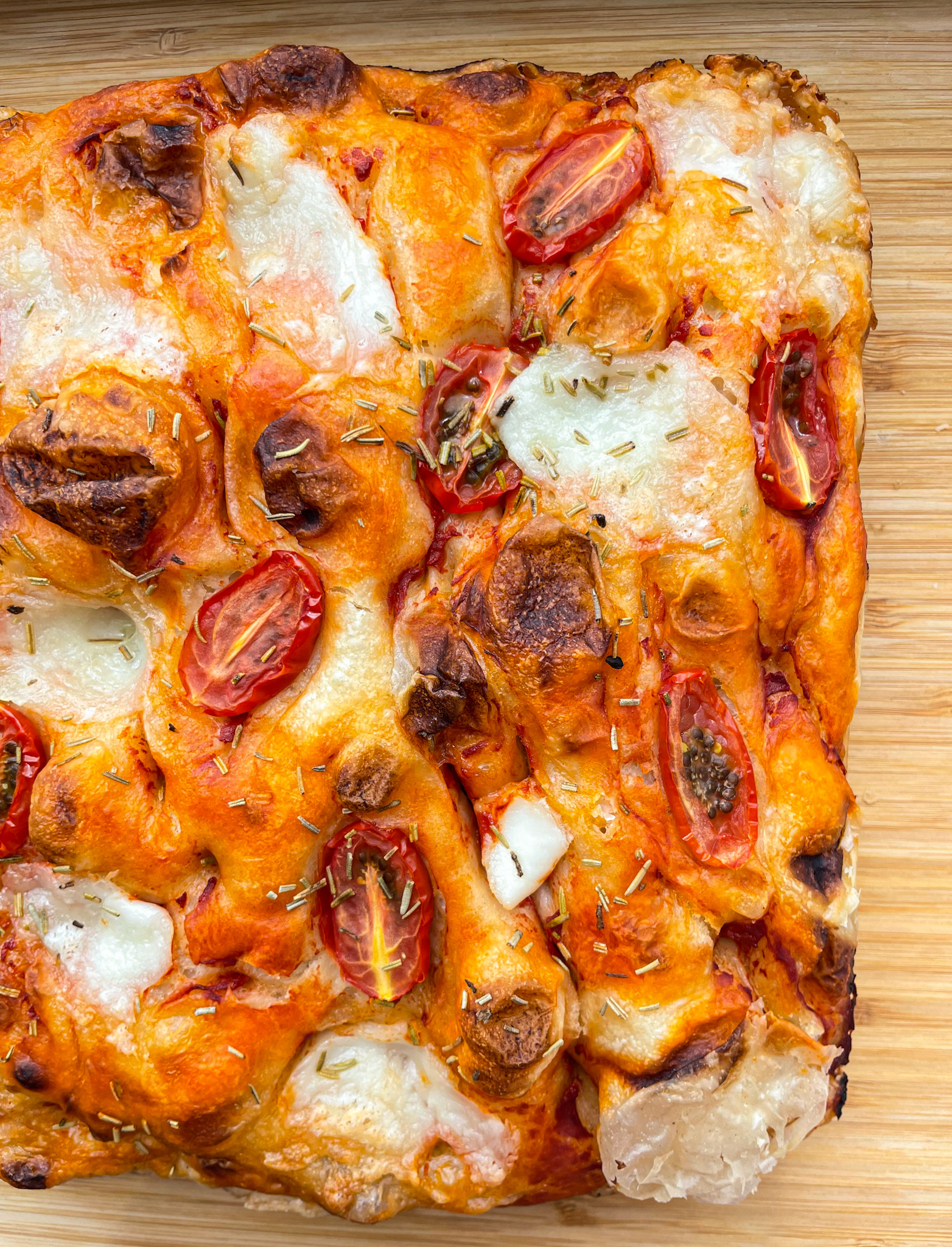
Traditional focaccia typically features simple toppings like fresh rosemary, coarse salt, and perhaps sliced onions or olives. This Pizza Focaccia Recipe takes creative liberty by incorporating classic pizza elements—tomato sauce, mozzarella cheese, and various toppings. This fusion creates something familiar yet novel, combining the best qualities of both beloved Italian foods into one irresistible dish.
Creating Perfect Dough for Pizza Focaccia Recipe
Building exceptional dough forms the foundation of any successful Pizza Focaccia Recipe. Begin by combining four cups of bread flour with two teaspoons of salt in a large mixing bowl. Whisk these dry ingredients together thoroughly to distribute the salt evenly throughout. This step prevents concentrated salt pockets that could inhibit yeast activity or create uneven flavor.
In a separate container, dissolve two and one-quarter teaspoons of instant yeast in one and three-quarter cups of room temperature water. Add one tablespoon of sugar to feed the yeast and encourage active fermentation. Let this mixture sit for five minutes until it becomes foamy, indicating healthy, active yeast. This brief activation ensures your Pizza Focaccia Recipe rises properly.
Pour the yeast mixture and three tablespoons of extra virgin olive oil into the flour bowl. Use a wooden spoon or Danish dough whisk to stir until no dry flour remains visible. The dough will appear shaggy, wet, and quite sticky—this consistency is exactly right for your Pizza Focaccia Recipe. Resist the temptation to add extra flour, as proper hydration creates the desired airy texture.
Fermentation Process Explained
Cover the mixed dough with plastic wrap or a damp towel to trap moisture and maintain humidity. Place the bowl in a warm, draft-free location for the initial rise. Ideal fermentation temperature ranges from 75 to 80 degrees Fahrenheit. If your kitchen feels cool, place the bowl near a warm oven or inside a turned-off oven with just the light on.
Allow the dough for your Pizza Focaccia Recipe to rise for one to two hours at room temperature until it doubles in volume. During this time, yeast cells consume sugars in the flour and produce carbon dioxide gas that creates air pockets throughout the dough. These bubbles expand during baking, creating the light, open crumb that makes focaccia so appealing.
For even better flavor development, consider cold fermentation by refrigerating the dough overnight after the initial room temperature rise. This extended fermentation allows enzymes to break down complex starches into simpler sugars while developing nuanced flavors impossible to achieve quickly. Cold-fermented Pizza Focaccia Recipe variations offer superior taste and improved texture.
Stretch and Fold Technique
While this Pizza Focaccia Recipe requires no traditional kneading, incorporating a few stretch and fold sequences during fermentation improves structure significantly. After the dough rises for thirty minutes, wet your hands to prevent sticking. Gently grab one edge of the dough, stretch it upward, and fold it over the center. Rotate the bowl and repeat from each side.
This gentle manipulation redistributes yeast cells and developing gluten without deflating the dough completely. The stretch and fold technique strengthens gluten networks while maintaining the delicate gas bubbles essential for your Pizza Focaccia Recipe. Perform this process two to three times during the first rise, spacing repetitions thirty minutes apart.
Each stretch and fold takes only thirty seconds but dramatically improves final texture. You’ll notice the dough becoming smoother, more elastic, and better able to hold its shape. These brief interventions transform good Pizza Focaccia Recipe results into exceptional ones without significant time investment or effort.
Preparing the Perfect Baking Pan
Proper pan preparation ensures your Pizza Focaccia Recipe releases easily and develops the characteristic golden, crispy bottom. Choose a rimmed baking sheet or rectangular pan measuring approximately nine by thirteen inches. Larger pans create thinner focaccia, while smaller pans produce thicker versions. Standard half-sheet pans work beautifully for this recipe.
Pour about three tablespoons of extra virgin olive oil into your chosen pan, tilting to coat the entire bottom surface evenly. Don’t skimp on oil—it’s essential for preventing sticking and creating that delicious fried-like crust on the bottom. The oil should form a visible pool across the pan bottom before you add dough.
Some bakers line pans with parchment paper before adding oil, which provides extra insurance against sticking. This step is optional but helpful if your pan has a history of causing problems. The parchment makes transferring finished Pizza Focaccia Recipe results much easier while still allowing bottom crust development through the oil-soaked paper.
Shaping and Second Rise
After the initial fermentation completes, gently transfer the risen dough to your prepared oiled pan. Use oiled hands or a bowl scraper to coax the sticky dough from the bowl without deflating it excessively. The dough will be very soft and extensible, flowing almost like thick batter into the pan.
Gently press and stretch the dough toward the pan corners using oiled fingertips. Don’t worry if it doesn’t reach the edges immediately—let the dough rest for fifteen minutes, then stretch again. This gradual approach prevents tearing and allows gluten to relax between stretching sessions. Most Pizza Focaccia Recipe doughs require two or three rest periods to fill pans completely.
Once stretched to the pan edges, let the dough rest for thirty to sixty minutes for its second rise. It should become noticeably puffy and jiggly, though it won’t necessarily double in thickness. This final proofing allows the dough to recover from handling and develop maximum lightness before baking your Pizza Focaccia Recipe.
Creating Signature Dimples
Just before adding toppings and baking, create focaccia’s characteristic dimpled texture by pressing your fingertips firmly into the dough surface. Push straight down to the pan bottom, creating deep wells throughout. These indentations serve multiple purposes in your Pizza Focaccia Recipe—they prevent excessive rising, create pockets for oil and toppings, and give the bread its distinctive appearance.
Drizzle about two tablespoons of olive oil over the dimpled surface, allowing it to pool in the indentations. This additional oil adds flavor, promotes browning, and keeps the surface from drying during baking. The oil also helps any dried herbs or seasonings adhere to the dough before baking.
The dimpling process feels satisfying and almost therapeutic as your fingers sink into the soft, puffy dough. Children especially enjoy helping with this step, making this Pizza Focaccia Recipe an excellent family activity. The imperfect, rustic dimpling pattern adds to the bread’s homemade charm and artisanal appeal.
Adding Toppings to Pizza Focaccia Recipe
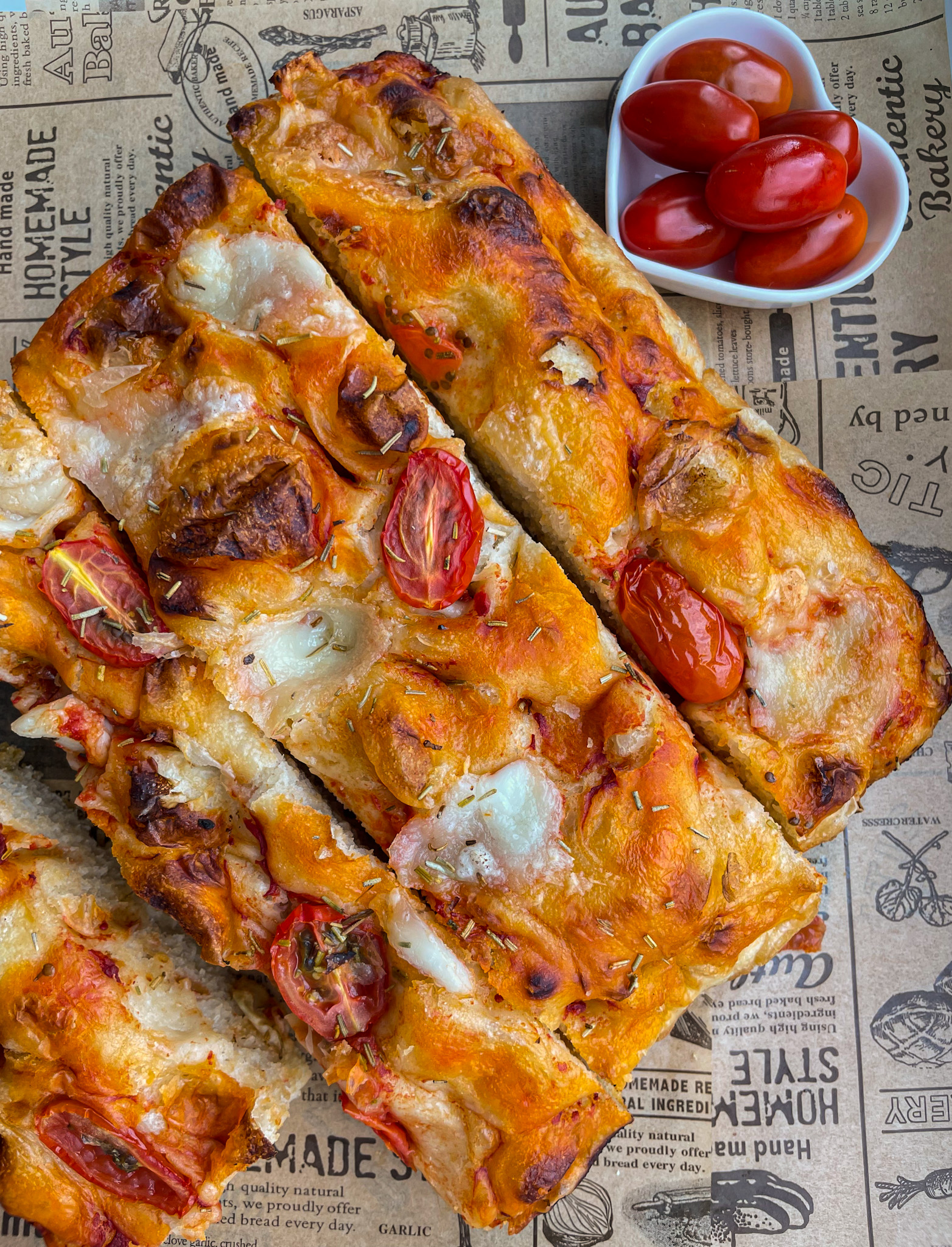
The topping possibilities for this Pizza Focaccia Recipe are nearly endless, limited only by imagination and personal preference. Start with a thin layer of tomato sauce spread evenly over the dimpled dough. Use pizza sauce, marinara, or even pesto as your base. Apply sauce sparingly—about one-half to three-quarters cup total—to avoid making the focaccia soggy.
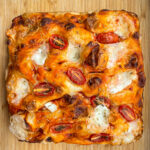
Arrange halved cherry tomatoes across the sauce, pressing them gently into the dough. Cherry tomatoes provide bursts of sweet-tart flavor and beautiful color. Their small size prevents excess moisture from saturating the bread while roasting concentrates their natural sweetness. Space tomatoes evenly for consistent flavor distribution throughout your Pizza Focaccia Recipe.
Tear fresh buffalo mozzarella into irregular pieces and distribute over the tomatoes. Buffalo mozzarella melts beautifully, creating creamy pockets of cheese. Low-moisture mozzarella also works well if buffalo mozzarella is unavailable or too expensive. Plan for about eight ounces of cheese total, though amounts can be adjusted based on personal preference.
Herb and Seasoning Choices
Dried rosemary represents the classic focaccia herb, providing aromatic pine notes that complement olive oil beautifully. Sprinkle about one to two teaspoons over your Pizza Focaccia Recipe before baking. Crush the dried leaves between your palms to release their essential oils and intensify flavor. Fresh rosemary works too but requires more as its flavor is milder.
Consider combining herbs for more complex flavor profiles. Oregano and basil provide classic Italian pizza taste, while thyme adds earthy notes. Garlic powder sprinkled lightly over the surface enhances savory depth without overwhelming other ingredients. Red pepper flakes appeal to spice lovers seeking extra kick in their Pizza Focaccia Recipe.
Finish with a generous sprinkle of flaky sea salt just before baking. Coarse salt crystals add delightful crunch and bursts of salinity that elevate every bite. Maldon or fleur de sel work beautifully, though any finishing salt improves the final Pizza Focaccia Recipe results significantly compared to skipping this step.
Creative Topping Variations
While traditional pizza toppings work wonderfully, don’t hesitate to experiment with this versatile Pizza Focaccia Recipe. Caramelized onions provide sweet depth that contrasts beautifully with salty cheese. Roasted bell peppers add color and mild sweetness. Kalamata olives contribute briny complexity that Mediterranean food lovers appreciate.
For meat lovers, add pepperoni slices, crumbled Italian sausage, or prosciutto pieces. Apply meat toppings after spreading cheese to prevent them from burning. Cooked meats work best, as raw items may not cook through completely during the relatively short baking time this Pizza Focaccia Recipe requires.
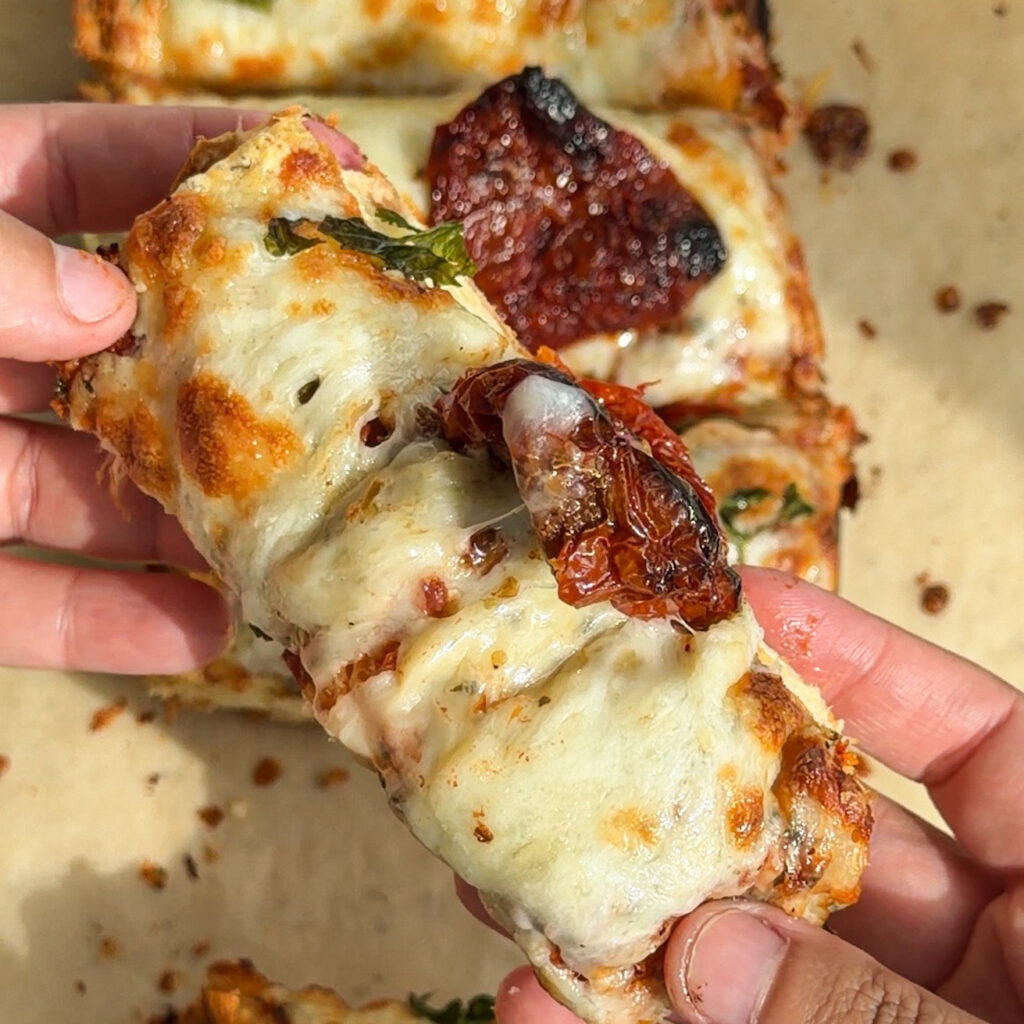
Vegetarian versions shine with roasted vegetables like zucchini, eggplant, or mushrooms. Pre-cook these vegetables to remove excess moisture that could make the focaccia soggy. Artichoke hearts, sun-dried tomatoes, and fresh spinach create gourmet combinations that transform this Pizza Focaccia Recipe into elegant appetizers suitable for sophisticated gatherings.
Baking Perfect Pizza Focaccia Recipe
Preheat your oven to 450 degrees Fahrenheit while the topped dough completes its final rise. High temperature is crucial for this Pizza Focaccia Recipe, creating immediate oven spring where the dough rapidly expands from heat and steam. The intense heat also develops golden color and crispy crust quickly before the interior dries out.
Position your oven rack in the lower third of the oven for optimal bottom crust development. This placement exposes the pan bottom to direct heat, creating the fried-like golden crust that makes focaccia special. Avoid placing the rack too close to the bottom heating element, which can burn the underside before the top finishes baking.
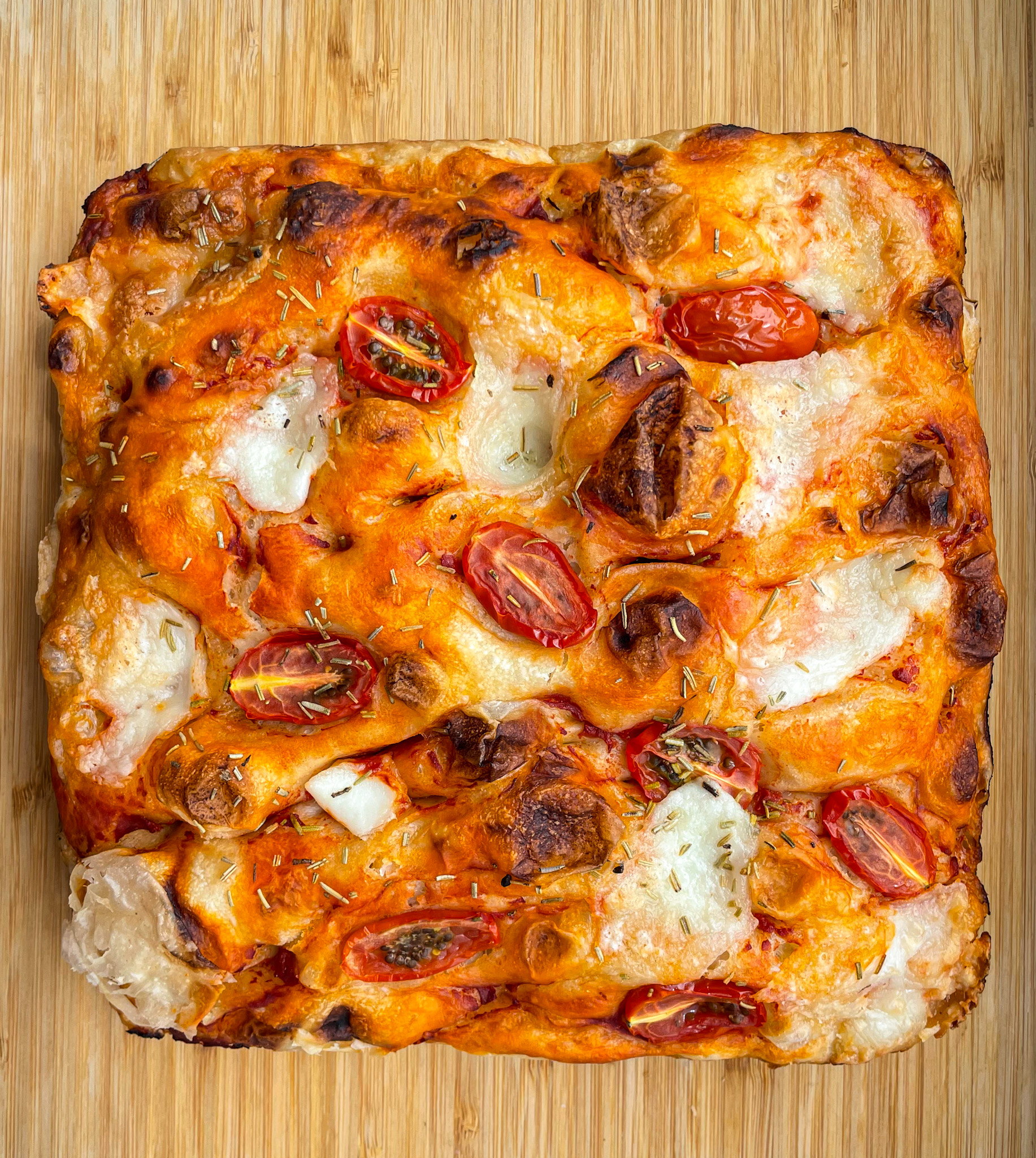
Bake your Pizza Focaccia Recipe for twenty to twenty-five minutes until the top turns deeply golden brown and the edges crisp. The cheese should be melted and bubbly with some browned spots. Cherry tomatoes will soften and caramelize slightly. The focaccia should feel firm when gently pressed and sound hollow when tapped on the bottom.
Visual Cues for Perfect Doneness
Watch for specific visual indicators that signal your Pizza Focaccia Recipe has baked completely. The surface should display varied golden to deep brown coloring across the top. The edges typically brown first and most deeply, while the center may remain slightly paler. Both are normal and indicate proper baking.
Check the underside by carefully lifting one corner with a spatula. The bottom should be deep golden brown, nearly caramelized from the olive oil. If the bottom seems pale while the top has colored adequately, move the pan to a lower rack position for the final few minutes of baking to ensure thorough cooking.
Internal temperature provides the most reliable doneness indicator for this Pizza Focaccia Recipe. Insert an instant-read thermometer into the thickest part of the bread, avoiding toppings. The internal temperature should register at least 200 degrees Fahrenheit, indicating the starches have fully gelatinized and the bread has baked through completely.
Cooling and Serving
Remove the baked Pizza Focaccia Recipe from the oven and let it rest in the pan for five minutes. This brief cooling allows the structure to set slightly, making cutting and serving easier. The cheese will also cool enough to avoid burning mouths eager to taste the delicious results.
Transfer the focaccia to a cutting board using a large spatula or by inverting it onto a cooling rack then flipping right-side up. Cut into squares or rectangles using a sharp knife or pizza cutter. The pieces can be as large or small as you prefer, depending on whether you’re serving this Pizza Focaccia Recipe as a main course or appetizer.
Serve immediately while still warm for the best experience. The contrast between crispy bottom, tender interior, and melted cheese toppings is most pronounced when fresh from the oven. However, this Pizza Focaccia Recipe remains delicious at room temperature, making it excellent for packed lunches or picnic fare.
Professional Tips for Outstanding Results
Using bread flour rather than all-purpose flour significantly improves your Pizza Focaccia Recipe outcomes. The higher protein content develops stronger gluten structure that creates better texture and helps the dough hold its shape during rising and baking. All-purpose flour works in a pinch but produces slightly less impressive results with denser crumb.
Water temperature affects fermentation speed in your Pizza Focaccia Recipe. Room temperature water around 75 degrees Fahrenheit works perfectly for standard timing. Warmer water accelerates fermentation, useful when you’re short on time, though flavor development suffers slightly. Cold water slows the process, beneficial if you need to delay baking.
Don’t rush the rising times even if the dough appears ready before suggested timeframes end. Proper fermentation develops both flavor and texture in your Pizza Focaccia Recipe. Under-fermented dough produces dense, heavy results lacking the characteristic airy crumb. When in doubt, allow extra rising time rather than cutting it short.
Troubleshooting Common Issues
Dense, heavy Pizza Focaccia Recipe results usually stem from insufficient rising time or too little water in the dough. Ensure you measure flour correctly by spooning it into measuring cups rather than scooping, which packs flour and adds excess. Consider weighing ingredients for precise accuracy that eliminates measurement variables affecting texture.
If your focaccia spreads too thin in the pan, the dough may be over-hydrated or insufficiently risen. Allow more time for gluten development through extended fermentation or additional stretch and fold sequences. Using a smaller pan also creates thicker results if you prefer that style for your Pizza Focaccia Recipe.
Soggy centers plagued by excess moisture typically result from too much sauce or wet toppings. Use tomato sauce sparingly and drain any vegetables well before adding them to your Pizza Focaccia Recipe. Pre-cooking vegetables removes excess water that would otherwise saturate the bread during baking.
Enhancing Flavor Complexity
While this Pizza Focaccia Recipe tastes wonderful as written, small additions create interesting variations. Mix dried Italian herbs directly into the dough before the first rise for subtle background flavor throughout. A teaspoon of garlic powder or onion powder in the dough itself enhances savory depth without overwhelming other ingredients.
Brush the finished focaccia with garlic-infused olive oil immediately after removing it from the oven. This adds an extra layer of flavor and creates appealing sheen. Combine melted butter with minced fresh garlic and parsley for an indulgent finishing touch that transforms your Pizza Focaccia Recipe into garlic bread hybrid.
For umami boost, sprinkle grated Parmesan cheese over the focaccia during the final five minutes of baking. The cheese will melt and toast slightly, creating savory depth that complements other toppings. Nutritional yeast offers similar umami enhancement for plant-based versions of this Pizza Focaccia Recipe.
Storage and Reheating Guidelines
Proper storage preserves your Pizza Focaccia Recipe quality for several days after baking. Allow the focaccia to cool completely to room temperature before storing, which prevents condensation from forming and making the bread soggy. Once cooled, wrap tightly in aluminum foil or place in an airtight container.
Store your Pizza Focaccia Recipe at room temperature for up to two days if you’ll consume it quickly. The bread maintains good texture at room temperature, though the crispy bottom gradually softens. Keep it away from direct sunlight and heat sources that could accelerate staleness or promote mold growth.
For longer storage, refrigerate wrapped focaccia for up to five days. Refrigeration slows mold development but accelerates staling, so this option works best if you plan to reheat before eating. The texture changes during refrigeration but can be largely restored through proper reheating techniques.
Freezing for Extended Storage
This Pizza Focaccia Recipe freezes well for up to three months without significant quality loss. Cut the cooled focaccia into serving-size portions before freezing for easier thawing and reheating later. Wrap each piece tightly in plastic wrap, then aluminum foil to prevent freezer burn and protect against absorbing other freezer odors.
Label frozen packages with contents and date so you can track storage duration. Frozen Pizza Focaccia Recipe portions thaw at room temperature in two to three hours. For faster thawing, microwave on defrost setting for one to two minutes, checking frequently to prevent cooking the bread accidentally.
Reheating Methods
Restore fresh-baked quality to your Pizza Focaccia Recipe through proper reheating. The oven provides best results, crisping the bottom while warming the interior and refreshing melted cheese. Preheat your oven to 375 degrees Fahrenheit and place focaccia directly on the oven rack or on a baking sheet. Heat for eight to twelve minutes until warmed through.
For crispier results, place room temperature or thawed focaccia in a cold oven, then turn it on to 375 degrees Fahrenheit. This gradual heating prevents the outside from over-crisping before the inside warms. The slow heat application also helps revive the bread’s texture better than shocking it with high heat immediately.
Microwave reheating works for convenience but sacrifices texture quality. Place Pizza Focaccia Recipe portions on a microwave-safe plate and heat for thirty to forty-five seconds. Cover with a damp paper towel to add moisture and prevent excessive drying. Follow microwave heating with a quick toaster oven crisping if desired.
Serving Suggestions and Pairings
This Pizza Focaccia Recipe shines as a complete casual meal when served with simple green salad. The combination provides satisfying balance—the rich, hearty focaccia contrasted by crisp, fresh vegetables. A basic vinaigrette dressing complements without competing with the bread’s flavors. Add some fresh mozzarella to the salad to echo the focaccia’s cheese.
Cut your Pizza Focaccia Recipe into small squares for excellent party appetizers. The hand-held portions disappear quickly at gatherings, and the familiar pizza flavors appeal to most guests. Arrange pieces on a large platter garnished with fresh basil leaves for attractive presentation that looks far more complicated than the easy preparation suggests.
Pair with soup for a comforting complete meal. Tomato soup provides classic combination that everyone recognizes and enjoys. Minestrone or Italian wedding soup creates cohesive Italian-themed dining. Even simple chicken noodle soup works beautifully alongside this versatile Pizza Focaccia Recipe.
Wine and Beverage Pairings
The savory, herbal qualities of this Pizza Focaccia Recipe pair beautifully with Italian red wines. Chianti offers enough body to stand up to the cheese and tomato without overwhelming the bread’s delicate texture. Sangiovese-based wines provide fruit-forward character that complements rather than competes with the food.
For white wine lovers, Pinot Grigio or Vermentino work wonderfully with this Pizza Focaccia Recipe. These crisp, refreshing wines cut through the richness of olive oil and cheese while their citrus notes brighten the overall experience. Serve well-chilled for maximum refreshment.
Non-alcoholic options include Italian sodas, sparkling water with lemon, or fresh lemonade. These beverages cleanse the palate between bites without adding heaviness to the meal. Herbal iced teas flavored with mint or chamomile also complement this Pizza Focaccia Recipe nicely.
Frequently Asked Questions About Pizza Focaccia Recipe
Can I Use All-Purpose Flour Instead?
Yes, all-purpose flour works in this Pizza Focaccia Recipe though the texture differs slightly from bread flour versions. All-purpose contains less protein, resulting in somewhat less chewy texture and slightly denser crumb. The focaccia will still taste delicious and rise properly, just with subtle textural differences that most people won’t even notice.
If substituting all-purpose flour, consider adding one tablespoon of vital wheat gluten per cup of flour. This addition boosts protein content closer to bread flour levels, improving gluten development and creating texture more similar to the original Pizza Focaccia Recipe specifications.
How Do I Know When Dough Has Risen Enough?
Properly risen dough for this Pizza Focaccia Recipe should appear very bubbly and jiggly when you gently shake the bowl. The volume should have doubled from its original size with visible air bubbles throughout. If you press a finger gently into the surface, the indentation should remain without springing back immediately.
Timing varies based on room temperature and other environmental factors, so visual cues matter more than strict time limits. If your Pizza Focaccia Recipe dough hasn’t doubled after two hours at room temperature, simply continue rising until it displays the proper characteristics rather than forcing it to conform to timing.
Can I Make This Pizza Focaccia Recipe Ahead?
Absolutely, this Pizza Focaccia Recipe adapts beautifully to make-ahead schedules. After mixing the dough, let it rise for thirty minutes at room temperature, then refrigerate for up to two days. The cold fermentation actually improves flavor while fitting around your schedule. When ready to bake, remove from refrigeration and proceed with shaping.
Alternatively, shape the dough in its oiled pan, cover tightly, and refrigerate overnight. The next day, let it come to room temperature for one hour before adding toppings and baking. This approach provides maximum flexibility while maintaining excellent Pizza Focaccia Recipe results.
Why Is My Focaccia Dense and Heavy?
Dense Pizza Focaccia Recipe results typically stem from insufficient rising time, incorrect flour measurement, or expired yeast. Ensure your yeast is fresh by checking expiration dates and verifying it foams when mixed with warm water. Old yeast won’t provide adequate leavening power regardless of other factors.
Proper flour measurement prevents overly dense dough. Spoon flour into measuring cups and level with a knife rather than scooping directly from the bag, which compacts flour and adds excess. Better yet, weigh ingredients using a kitchen scale for precise accuracy that eliminates measurement variables affecting your Pizza Focaccia Recipe.
Can I Double This Pizza Focaccia Recipe?
Yes, doubling works perfectly if you need larger quantities for crowds or meal prep. Use two separate pans rather than one oversized pan to maintain proper thickness and ensure even baking. The Pizza Focaccia Recipe timing remains essentially the same since each pan contains the same depth of dough as the original single batch.
Final Thoughts on Pizza Focaccia Recipe
This Pizza Focaccia Recipe represents the perfect fusion of Italian bread-making traditions and beloved pizza flavors, creating something familiar yet excitingly novel. The no-knead approach makes artisan-quality results accessible to bakers of all experience levels, while the pizza toppings provide customization opportunities that keep the recipe interesting across multiple preparations.
The beauty of this Pizza Focaccia Recipe lies not only in its delicious taste but in its remarkable flexibility. Adapt the toppings to suit dietary preferences, use whatever vegetables need consuming from your refrigerator, or stick with simple classic combinations. The forgiving dough tolerates variations while consistently producing satisfying results that bring smiles to everyone who tastes them.
Share this wonderful Pizza Focaccia Recipe with people you care about and introduce them to the joy of easy homemade bread that doesn’t require kneading or special skills. The combination of soft, airy focaccia texture with familiar pizza flavors creates something truly special that transcends ordinary weeknight dinners. Start mixing your dough today and discover why this recipe will quickly become one of your most-requested and frequently prepared creations!
By following these tips, you’ll be well on your way to making delicious, bakery-quality focaccia at home every time!
Watch the recipe video for more clarity
See our similar recipes:
People also like our these recipes:
THE DOUGH
- 400 g bread flour
- 320 g water
- 7 g salt
- 3 g instant yeast
- 12 g olive oil
THE TOPPING
- 1 cup tomato sauce
- Cherry tomatoes
- Dried rosemary
- Salt
- 1 buffalo cheese ball
In a large bowl, add in the water, yeast, salt, olive oil and flour. Mix well until all is incorporated very well.
Cover and let it set for 30 minutes.
Do 1 set of stretches and fold and cover for another 30 minutes.
Do 1 coil fold and cover for another 30 minutes.
Do another coil fold and cover for another 30 minutes.
Cover and let it sit in the refrigerator overnight.
Pre-heat the oven to 230 degree Celsius.
The next day, drizzle your baking pan very well with olive oil and transfer the dough to the baking pan. Cover and let it sit until it doubles in size.
Dimple the dough and top with tomato sauce, dried rosemary, cherry tomatoes and buffalo cheese.
Bake for 20-25 minutes or until golden.
Serve while warm!
If you've given this recipe a try and it won you over, please share your thoughts by leaving
a rating and comment below! If you have any questions about this recipe, don't hesitate to ask – I'm here to
help and will respond promptly.