Discover the Irresistible French Onion Cheese Bread
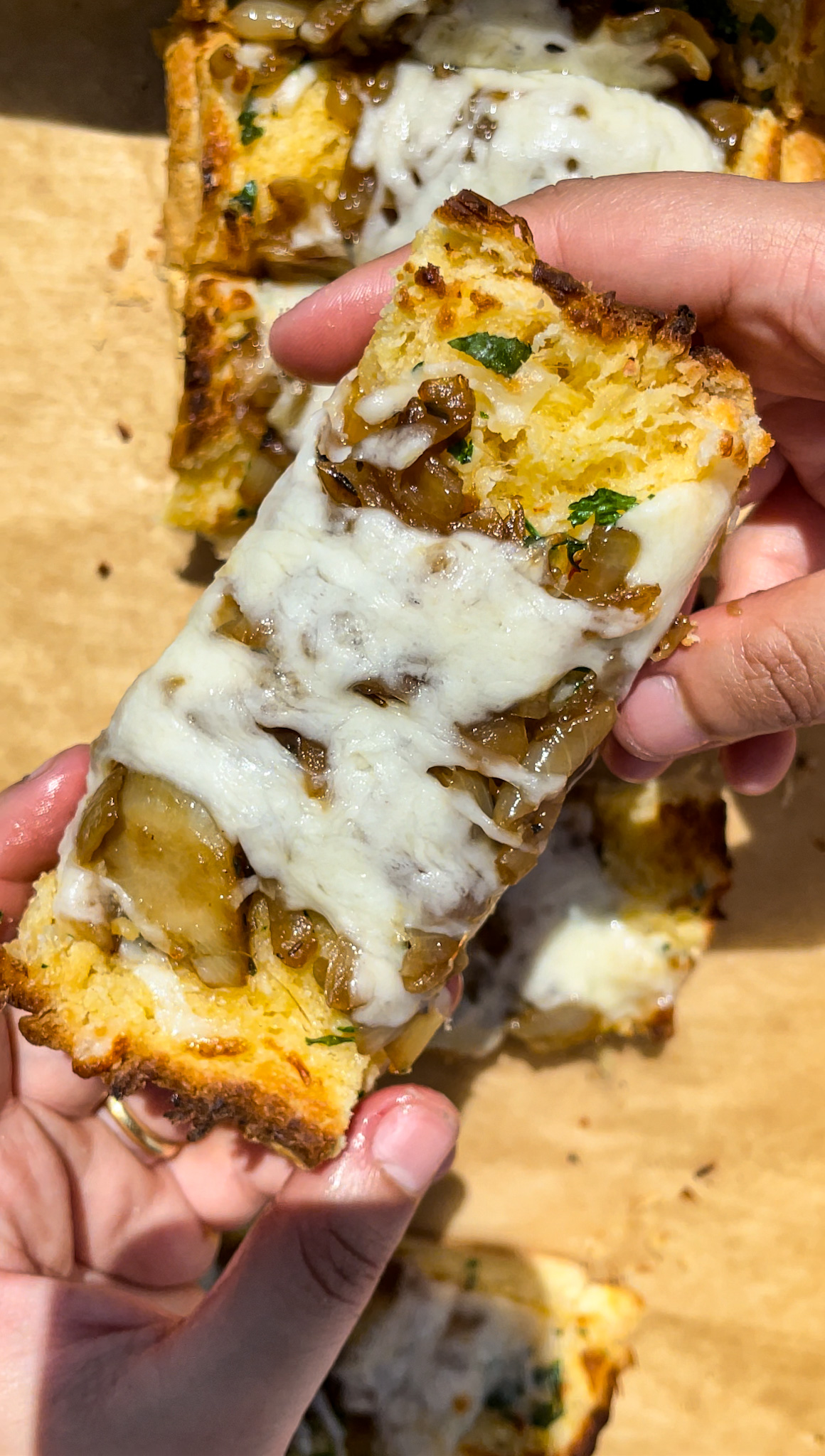
French Onion Cheese Bread combines the beloved flavors of classic French onion soup with the comforting appeal of cheesy garlic bread. This innovative dish features golden caramelized onions layered on buttery brioche, topped with melted mozzarella cheese and finished with fragrant garlic butter. The result is a rich, savory treat that delivers restaurant-quality flavor with surprisingly simple home cooking techniques.
What makes French Onion Cheese Bread so captivating is its ability to transform ordinary bread into an extraordinary culinary experience. The sweet, deeply caramelized onions provide complex flavor depth, while the beef broth adds savory richness reminiscent of traditional French onion soup. Melted mozzarella creates that irresistible cheese pull everyone loves, and the garlic butter soaks into the bread, creating layers of flavor in every bite.
Creating French Onion Cheese Bread at home allows you to enjoy this comfort food masterpiece whenever cravings strike. Whether you’re looking for an impressive appetizer for dinner parties, a satisfying snack for game day, or a quick weeknight meal, this recipe delivers. The combination of familiar flavors presented in a new format makes it appealing to both adventurous eaters and those who prefer classic tastes.
Why This Recipe Works Perfectly
This approach to French Onion Cheese Bread emphasizes proper caramelization technique to develop the sweet, complex onion flavor that defines the dish. Slowly cooking onions in butter transforms their sharp bite into mellow sweetness, creating the foundation for exceptional flavor. The beef broth enriches the onions further, adding umami depth that elevates the entire recipe.
Using brioche bread for French Onion Cheese Bread provides a luxurious base with its buttery, slightly sweet crumb. Brioche’s tender texture contrasts beautifully with the crispy cheese topping and soft caramelized onions. The rich bread complements rather than competes with the flavorful toppings, creating a harmonious balance.
What Sets This Version Apart
Unlike traditional French onion soup served in a bowl with a floating bread and cheese topping, French Onion Cheese Bread presents these elements in an accessible, easy-to-eat format. The open-faced presentation allows you to see all the delicious layers and makes serving simpler at gatherings. Each slice offers perfect proportions of bread, onions, and cheese.
The garlic butter component elevates French Onion Cheese Bread beyond a simple topped bread. Fresh garlic combined with butter, parsley, and chili flakes creates aromatic complexity that enhances every element. This finishing touch transforms the dish from good to extraordinary, adding brightness and warmth that balances the rich cheese and sweet onions.
Understanding French Onion Soup Origins
The classic French onion soup that inspires French Onion Cheese Bread has roots dating back centuries in France. Traditional versions feature slowly caramelized onions in beef broth, topped with crusty bread and melted Gruyère cheese. Understanding these origins helps you appreciate how this bread adaptation captures the essence of the beloved soup.
Caramelization is the heart and soul of authentic French onion preparations. When onions cook slowly over low heat, their natural sugars break down and transform into hundreds of new flavor compounds. This process creates the deep golden color and sweet, complex taste that defines French onion soup and makes French Onion Cheese Bread so delicious.
Key Flavor Components
French Onion Cheese Bread captures the essential characteristics that make French onion soup so beloved. The onions must be properly caramelized to achieve that signature sweetness and rich color. Beef broth provides savory depth and helps deglaze the pan, incorporating all those flavorful brown bits into the onions.
The cheese element in French Onion Cheese Bread serves multiple purposes beyond just adding richness. It binds the ingredients together, creates visual appeal with its melted, bubbly surface, and provides textural contrast. The cheese should melt smoothly and develop golden spots under heat for optimal flavor and appearance.
Modern Adaptation Benefits
Transforming soup into bread format makes French Onion Cheese Bread more versatile and practical for various serving situations. You can easily cut it into portions, serve it at room temperature if needed, and eat it without utensils. These practical advantages make it ideal for parties, picnics, and casual dining.
The bread version of French onion flavors also allows for easier customization with French Onion Cheese Bread. You can adjust the onion-to-cheese ratio, experiment with different bread types, or add extra toppings without compromising the dish structure. This flexibility welcomes creativity while maintaining the core flavor profile.
Selecting Premium Ingredients
Quality ingredients make the difference between good and exceptional French Onion Cheese Bread. Fresh components with robust flavors require less manipulation to taste amazing. Understanding what to look for when shopping ensures you start with the best possible foundation for this recipe.
Choosing the Right Bread
Brioche provides the ideal foundation for French Onion Cheese Bread due to its rich, buttery flavor and tender crumb. This enriched bread contains eggs and butter, creating a luxurious texture that elevates the entire dish. Look for brioche loaves rather than individual buns for easier slicing and more uniform portions.
The slightly sweet nature of brioche complements the savory onions in French Onion Cheese Bread without creating flavor conflict. The bread’s sturdy structure holds up well under generous toppings without becoming soggy. Fresh brioche works best, though day-old bread actually toasts more evenly since it has slightly less moisture.
Onion Selection Matters
Yellow onions work best for French Onion Cheese Bread because they contain the ideal balance of sugars and sulfur compounds. When caramelized, yellow onions develop deep sweetness while maintaining some savory complexity. Their firm texture holds up well during the long cooking process required for proper caramelization.
Sweet onions like Vidalia can substitute in French Onion Cheese Bread for even sweeter results, though they lack some of the complexity yellow onions provide. Avoid red onions, as they don’t caramelize as effectively and can taste slightly bitter. White onions work in a pinch but deliver less sweetness than yellow varieties.
Cheese Options
Mozzarella cheese delivers excellent melting properties for French Onion Cheese Bread, creating that desirable stretchy, gooey texture. Its mild flavor doesn’t overpower the delicate onion sweetness. Use whole milk mozzarella for best results, as part-skim versions don’t melt as smoothly and can become rubbery.
Gruyère offers a more traditional choice for French Onion Cheese Bread, as it’s the classic cheese used in French onion soup. This Swiss cheese has nutty, slightly sweet flavor that complements caramelized onions beautifully. You can use Gruyère alone or combine it with mozzarella for both flavor and optimal melting.
Fresh Aromatics
Fresh garlic is essential for the aromatic butter that finishes French Onion Cheese Bread. Minced fresh garlic cloves provide pungent, complex flavor that jarred garlic or garlic powder cannot replicate. The garlic should be finely minced so it distributes evenly in the butter and doesn’t create overpowering bites.
Fresh parsley adds color and fresh, herbaceous notes to French Onion Cheese Bread. The bright green flecks create visual appeal against the golden cheese and brown onions. Italian flat-leaf parsley has more robust flavor than curly parsley, though either works. Chop it finely just before using for maximum freshness and vibrant color.
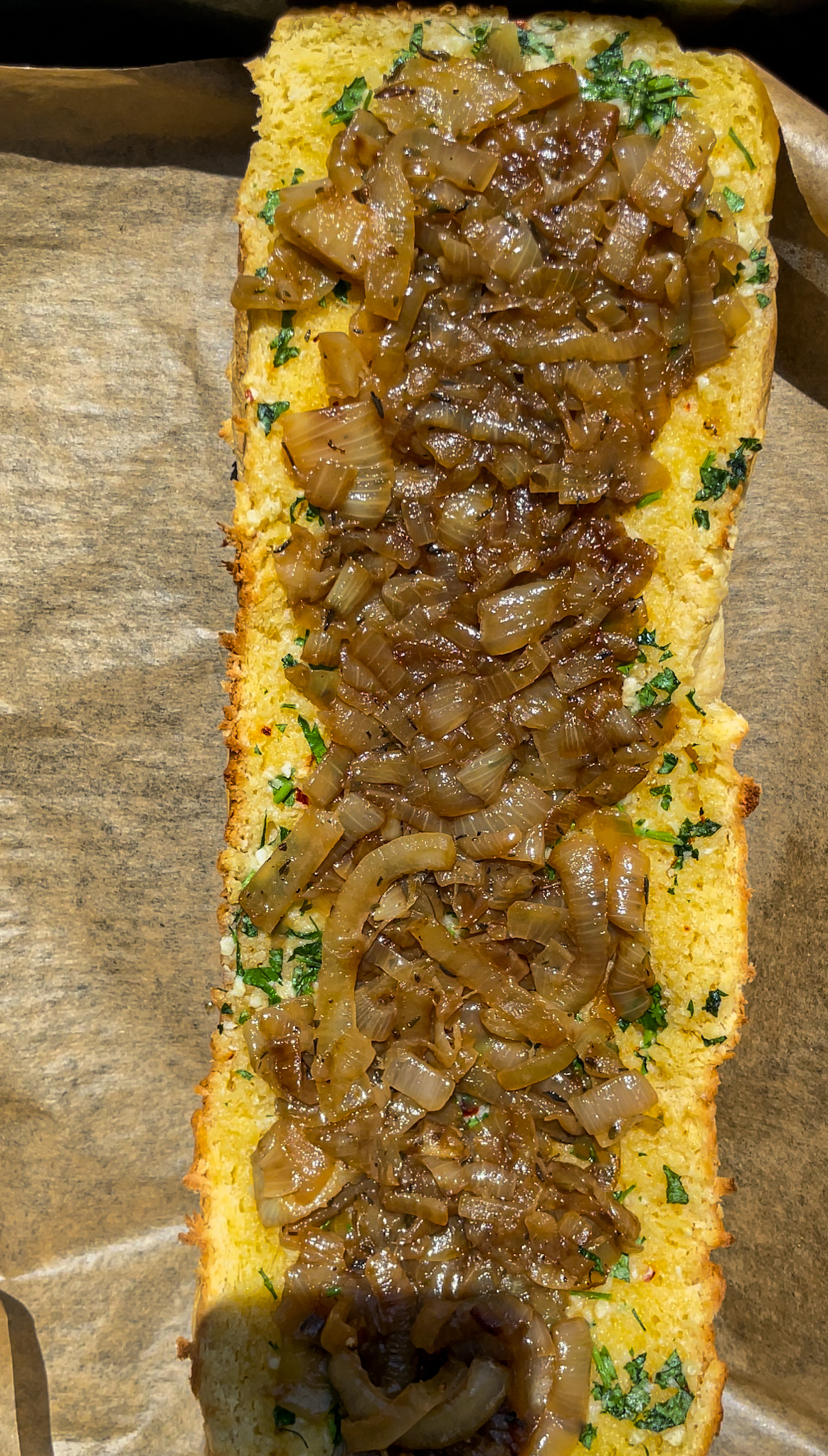
Caramelizing Onions to Perfection
Properly caramelized onions are the foundation of exceptional French Onion Cheese Bread. This process requires patience and attention but rewards you with sweet, golden onions full of complex flavor. Understanding the technique ensures success every time you make this dish.
Slicing Technique
Slice your onions uniformly for French Onion Cheese Bread so they cook at the same rate. Cut onions in half from root to tip, then slice each half into thin half-moons about one-quarter inch thick. Consistent thickness ensures even cooking without some pieces burning while others remain undercooked.
The direction you slice affects the final texture in French Onion Cheese Bread. Slicing with the grain, from root to tip, creates longer pieces that hold their shape better during cooking. Slicing against the grain creates shorter pieces that break down more, becoming softer and sweeter. Either method works based on your texture preference.
Starting the Caramelization
Melt butter in a large skillet over medium heat for your French Onion Cheese Bread. Use a pan with plenty of surface area, as crowding prevents proper caramelization. Add the sliced onions and stir to coat them evenly with butter. The onions should sizzle gently but not aggressively.
Season the onions with salt early in the process for French Onion Cheese Bread. Salt draws out moisture, helping the onions break down and caramelize more effectively. The onions will seem like a huge pile at first but will reduce dramatically as they cook and release moisture.
The Long, Slow Process
True caramelization takes 30 to 45 minutes for the onions in French Onion Cheese Bread. The natural sugars break down slowly, transforming the onions from white and sharp to deep golden and sweet. Rushing this process over high heat burns the onions instead of caramelizing them properly.
Stir the onions occasionally for your French Onion Cheese Bread, allowing them to sit undisturbed for several minutes between stirs. This contact with the hot pan develops color and flavor. If the onions start sticking or browning too quickly, reduce heat slightly and add a splash of beef broth to deglaze.
Deglazing and Finishing
Add beef broth to your caramelized onions for French Onion Cheese Bread during the final stages of cooking. The broth deglazes the pan, lifting all those flavorful brown bits and incorporating them into the onions. It also adds savory richness that enhances the sweet onions.
Cook until the broth mostly evaporates for your French Onion Cheese Bread, leaving the onions glossy and deeply colored. The onions should be very soft, sweet, and jammy in texture. Taste and adjust seasoning with salt and pepper before using them to top the bread.
Preparing the Garlic Butter
The garlic butter component adds aromatic complexity to French Onion Cheese Bread and helps create a golden, crispy bread base. This simple mixture elevates the entire dish with layers of flavor. Proper preparation ensures even distribution and optimal taste.
Butter Base
Soften unsalted butter to room temperature for easy mixing when making French Onion Cheese Bread. The butter should be pliable but not melted, allowing you to incorporate other ingredients smoothly. Softened butter spreads easily on bread without tearing the tender brioche crumb.
Using unsalted butter for French Onion Cheese Bread gives you control over the final salt level. The caramelized onions and cheese already contain salt, so unsalted butter prevents the dish from becoming too salty. You can always add salt to taste after mixing all components together.
Adding Aromatics
Mince fresh garlic very finely for your French Onion Cheese Bread garlic butter. Large pieces of garlic can burn under high heat and create bitter flavor. A microplane grater creates a paste-like consistency that distributes evenly throughout the butter, ensuring garlic flavor in every bite.
Mix minced garlic into the softened butter for French Onion Cheese Bread along with finely chopped fresh parsley. The parsley adds color, freshness, and herbaceous notes that brighten the rich butter. Add a pinch of chili flakes for subtle warmth that doesn’t overpower but adds complexity.
Consistency and Application
The finished garlic butter for French Onion Cheese Bread should be smooth and spreadable. All ingredients should be evenly distributed with no clumps of garlic or parsley. Mix thoroughly but gently to maintain the butter’s texture without overworking it.
Spread the garlic butter generously on brioche slices for your French Onion Cheese Bread, covering the entire surface including edges. The butter creates a barrier that prevents the bread from absorbing too much moisture from the onions while adding essential flavor. Don’t skimp, as adequate butter ensures proper toasting and flavor.

Assembling Your French Onion Cheese Bread
Assembly brings all your prepared components together into the finished French Onion Cheese Bread. Proper layering ensures even distribution of flavors and optimal cheese melting. Taking care during this step results in attractive presentation and delicious results.
Bread Preparation
Slice your brioche loaf horizontally for French Onion Cheese Bread, creating large, flat surfaces perfect for topping. Cut the loaf in half lengthwise rather than into individual slices, which creates more dramatic presentation and easier serving. Each half should be about one to two inches thick.
Place the brioche halves cut-side up on a baking sheet for your French Onion Cheese Bread. The flat surface provides stability and ensures toppings stay in place during baking. Line the baking sheet with parchment paper for easier cleanup and to prevent sticking.
Layering Components
Spread garlic butter evenly across both brioche halves for your French Onion Cheese Bread, making sure to cover all areas including edges. The butter should coat the entire surface generously. This layer adds flavor while creating a protective barrier against moisture.
Distribute the caramelized onions evenly over the buttered bread for French Onion Cheese Bread. Spread them to the edges so every portion includes onions. Press the onions gently into the butter to help them adhere. The onion layer should be generous but not so thick that it slides off.
Cheese Topping
Shred mozzarella cheese fresh from a block for your French Onion Cheese Bread for best melting results. Pre-shredded cheese contains anti-caking agents that prevent optimal melting. Fresh-shredded cheese melts smoothly and creates that beautiful stretchy texture.
Cover the onion layer completely with shredded cheese for your French Onion Cheese Bread. The cheese acts as a blanket that holds everything together while adding richness. Make sure you distribute cheese evenly, covering all the way to the edges for consistent results in every slice.
Baking to Golden Perfection
Proper baking transforms your assembled French Onion Cheese Bread into a golden, bubbling masterpiece. The oven temperature and timing must be correct to achieve bread that’s toasted, cheese that’s melted and golden, and onions that are hot throughout.
Oven Preparation
Preheat your oven to 375 degrees Fahrenheit about 15 minutes before baking French Onion Cheese Bread. Position a rack in the upper third of the oven for optimal cheese browning. A properly preheated oven ensures even cooking and proper cheese melting.
Some bakers finish French Onion Cheese Bread under the broiler for extra cheese browning. If using this method, watch constantly as cheese can go from perfectly golden to burnt in seconds. Broiling for the final one to two minutes creates attractive golden-brown spots on the cheese surface.
Baking Time and Temperature
Bake your French Onion Cheese Bread for 12 to 15 minutes until the cheese melts completely and develops golden spots. The bread edges should be lightly toasted and crispy. The exact time varies based on your oven and bread thickness, so watch for visual cues.
The cheese on your French Onion Cheese Bread should bubble actively and show light browning across the surface when done. If the cheese melts but doesn’t brown, increase oven temperature slightly or finish under the broiler. The bread bottom should feel firm and slightly crispy when you lift it with a spatula.
Cooling Considerations
Remove your baked French Onion Cheese Bread from the oven and let it rest for three to five minutes before slicing. This brief cooling period allows the cheese to set slightly, making cutting cleaner and preventing all the toppings from sliding off. The bread remains hot but becomes easier to handle.
Transfer the French Onion Cheese Bread to a cutting board after cooling slightly. Use a sharp serrated knife to cut it into portions. Clean the knife between cuts for neat edges. The cheese will still be melty and may string as you cut, which is perfectly normal and actually desirable.
Serving Suggestions and Pairings
How you serve French Onion Cheese Bread affects the overall dining experience. Proper cutting, garnishing, and pairing with complementary items enhance enjoyment. These finishing touches transform a delicious dish into a memorable meal.
Cutting and Portioning
Cut your French Onion Cheese Bread into slices appropriate for your serving situation. For appetizers, create smaller pieces about two inches wide. For a meal, cut larger portions that can serve as the main dish. Diagonal cuts create attractive presentation and slightly larger surface area.
Serve French Onion Cheese Bread on a wooden board or platter for rustic, inviting presentation. Arrange the slices with slight overlap, allowing guests to easily grab pieces. The casual presentation suits the comfort food nature of this dish perfectly.
Garnishing
Sprinkle additional fresh parsley over your French Onion Cheese Bread just before serving for color and freshness. The bright green against the golden cheese and brown onions creates visual appeal. A light dusting of chili flakes adds color and hints at the subtle warmth in the dish.
Grated Parmesan cheese over the finished French Onion Cheese Bread adds extra savory depth and creates an elegant presentation. The salty, umami-rich Parmesan complements the sweet onions and mild mozzarella beautifully. Apply it sparingly so it enhances rather than overwhelms.
Perfect Pairings
Serve French Onion Cheese Bread alongside a crisp green salad for a complete meal. The fresh, light salad provides contrast to the rich, heavy bread. A simple vinaigrette with lemon or Dijon mustard cuts through the richness and cleanses the palate.
Soup makes an excellent companion to French Onion Cheese Bread, creating a satisfying lunch or dinner. Tomato soup, vegetable soup, or even French onion soup itself pair beautifully. The bread can be dipped into the soup or enjoyed alongside it.
Professional Tips for Success
Mastering French Onion Cheese Bread becomes easier when you understand professional techniques that ensure consistent results. These tips address common challenges and help you avoid mistakes that can compromise quality. Small adjustments often make significant differences.
Onion Caramelization Secrets
Use a wide, heavy-bottomed pan when caramelizing onions for French Onion Cheese Bread. Greater surface area allows moisture to evaporate more efficiently, speeding the caramelization process. Heavy pans distribute heat evenly, preventing hot spots that cause burning.
Don’t rush the caramelization process for French Onion Cheese Bread by increasing heat excessively. High heat burns the outside of onions before the inside softens and sweetens. Medium to medium-low heat produces the best results, even though it requires more time and patience.
Bread Handling
Toast the buttered bread lightly before adding toppings for French Onion Cheese Bread if you want extra crispiness. Place it under the broiler for one to two minutes until the butter melts and the surface begins to golden. This pre-toasting creates a crispier base that resists sogginess.
Don’t overload your French Onion Cheese Bread with toppings, as excessive weight can make the bread soggy and difficult to eat. Generous layers are fine, but everything should be balanced. The bread should remain structurally sound and easy to pick up and bite.
Cheese Management
Bring cheese to room temperature before using it on French Onion Cheese Bread. Cold cheese takes longer to melt and may not brown properly before the bread over-toasts. Room temperature cheese melts evenly and develops that appealing golden color more easily.
Mix different cheese varieties for more complex flavor in your French Onion Cheese Bread. Combine mozzarella for meltability with Gruyère for authentic French onion flavor. The combination provides both texture and taste advantages that single cheeses can’t match.
Temperature Control
Monitor oven temperature carefully when baking French Onion Cheese Bread. Every oven has hot spots and temperature variations. An oven thermometer helps verify actual temperature versus the dial setting. Rotate your baking sheet halfway through if you notice uneven browning.
Watch the edges of your French Onion Cheese Bread carefully during baking. They brown faster than the center and can burn if you’re not paying attention. If edges brown too quickly, reduce oven temperature slightly or tent them loosely with foil while the center finishes cooking.
Common Mistakes to Avoid
Understanding what can go wrong helps you prevent problems with your French Onion Cheese Bread. Many issues have simple solutions once you identify the cause. Learning from these common mistakes improves your success rate and ensures better results.
Undercooked Onions
Onions that taste sharp or look pale indicate insufficient caramelization in your French Onion Cheese Bread. Properly caramelized onions should be deep golden brown and taste sweet with no harsh bite. If your onions aren’t sufficiently cooked, continue cooking them longer over medium-low heat until they reach the right color and flavor.
Rushing the onion cooking process creates French Onion Cheese Bread with underdeveloped flavor. The complex sweetness only develops through slow, patient cooking. Plan ahead and allow sufficient time for this crucial step, as there’s no shortcut to properly caramelized onions.
Soggy Bread
Bread that becomes soggy in French Onion Cheese Bread results from insufficient butter barrier or onions that are too wet. Make sure you spread garlic butter generously across the entire bread surface. If your caramelized onions seem watery, cook them longer to evaporate excess moisture before assembling.
Using bread that’s too soft or fresh can contribute to sogginess in French Onion Cheese Bread. Day-old brioche has less moisture and creates a sturdier base. If using very fresh bread, toast it lightly before adding toppings to create a protective barrier against moisture.
Cheese Not Browning
Cheese that melts but doesn’t develop golden color indicates insufficient oven temperature or placement in French Onion Cheese Bread. Move the baking sheet to a higher oven rack closer to the heat source. Alternatively, finish under the broiler for one to two minutes, watching constantly.
Using pre-shredded cheese can prevent proper browning on French Onion Cheese Bread. The anti-caking agents added to packaged shredded cheese interfere with melting and browning. Always shred your own cheese from a block for best visual and textural results.
Burnt Edges
Edges that burn while the center remains pale indicate uneven heat distribution in your French Onion Cheese Bread. Rotate the baking sheet halfway through cooking to compensate for oven hot spots. If edges consistently burn, reduce oven temperature by 25 degrees and cook slightly longer.
Butter or cheese dripping onto the baking sheet can burn and smoke during cooking of French Onion Cheese Bread. Line your baking sheet with parchment paper to prevent sticking and make cleanup easier. The parchment also protects drips from burning and creating smoke or unpleasant flavors.
Creative Variations to Try
Once you master basic French Onion Cheese Bread, variations keep the recipe exciting and allow you to customize flavors. These adaptations use the same fundamental technique while introducing new ingredients. Each version offers unique appeal while maintaining the comforting essence.
Mushroom and Onion Version
Add sautéed mushrooms to your French Onion Cheese Bread for earthy depth and meaty texture. Cook sliced mushrooms in butter until golden brown, then layer them with the caramelized onions. Cremini, shiitake, or wild mushrooms add sophisticated flavor that complements the sweet onions beautifully.
Season the mushrooms for your French Onion Cheese Bread with fresh thyme for herbaceous notes. The aromatic herb enhances both mushrooms and onions while adding visual interest with small green leaves scattered throughout. This variation appeals to mushroom lovers and adds nutritional value.
Bacon-Enhanced Option
Incorporate crispy bacon pieces into your French Onion Cheese Bread for smoky richness and textural contrast. Cook bacon until crispy, crumble it, and sprinkle it over the onion layer before adding cheese. The salty, smoky bacon complements the sweet onions and adds another dimension of flavor.
Use some bacon fat to caramelize the onions for intensely flavored French Onion Cheese Bread. Replace half the butter with rendered bacon fat when cooking the onions. The bacon flavor permeates the onions, creating depth that bacon pieces alone can’t achieve.
Caramelized Shallot Upgrade
Substitute shallots for regular onions in French Onion Cheese Bread for more delicate, sophisticated flavor. Shallots caramelize beautifully and provide subtle sweetness with hints of garlic. They’re smaller and more expensive than yellow onions but create an elegant variation worth trying for special occasions.
Combine caramelized shallots with fresh thyme and Gruyère cheese for gourmet French Onion Cheese Bread. This combination creates restaurant-quality flavor that impresses dinner guests. The refined ingredients elevate the humble comfort food into something special.
Spicy Kick Version
Add sliced jalapeños or red pepper flakes to your French Onion Cheese Bread for those who enjoy heat. Fresh jalapeños contribute bright, fresh spiciness while red pepper flakes provide concentrated heat. Adjust the amount based on your tolerance, starting conservatively and increasing as desired.
Mix pepper jack cheese with the mozzarella for spicy French Onion Cheese Bread. The jalapeño-studded cheese provides heat throughout the dish rather than concentrated in specific bites. This variation offers balance between comfort food and exciting spice.
Storage and Reheating Guidelines
Proper storage maintains the quality of your French Onion Cheese Bread for enjoyment beyond the day you make it. Understanding the best methods ensures food safety while preserving as much texture and flavor as possible. These techniques help you make the most of leftovers.
Short-Term Storage
Store leftover French Onion Cheese Bread wrapped in aluminum foil at room temperature for up to four hours if serving later the same day. The foil retains some heat while preventing the cheese from hardening too much. Don’t leave it out longer than four hours due to food safety concerns with dairy.
Refrigerate French Onion Cheese Bread in an airtight container for up to three days if not consuming immediately. Let it cool to room temperature before refrigerating to prevent condensation that makes the bread soggy. The cheese will firm up in the refrigerator but can be restored through proper reheating.
Freezing Considerations
Freeze French Onion Cheese Bread for up to one month if you want longer storage. Wrap individual portions tightly in plastic wrap, then place them in freezer bags with air removed. Label with the date so you can track storage time. Proper wrapping prevents freezer burn and maintains quality.
Freeze French Onion Cheese Bread before or after baking depending on your preference. Freezing before the final baking allows you to complete the dish fresh when needed. Freezing after baking provides ready-to-reheat portions but may result in slight texture changes.
Reheating Methods
Reheat French Onion Cheese Bread in a 350-degree oven for best results. Place pieces on a baking sheet and cover loosely with foil for the first five minutes to prevent excessive browning. Remove the foil and continue baking for five to seven minutes until heated through and the cheese melts again.
Avoid microwaving French Onion Cheese Bread if possible, as this creates rubbery cheese and soggy bread. If you must use the microwave, heat in short bursts and finish under the broiler briefly to crisp the surface. The oven method produces vastly superior results with crispy edges and properly melted cheese.
Refreshing Day-Old Bread
Brush the edges of day-old French Onion Cheese Bread lightly with melted butter before reheating. The additional butter helps restore crispiness and adds moisture that may have been lost during storage. Focus butter on the bread edges rather than the cheese-covered areas.
Place your French Onion Cheese Bread directly on the oven rack when reheating for maximum crispiness. This allows heat to circulate around all sides, crisping the bottom as well as the top. Place a baking sheet on a lower rack to catch any cheese that might drip during heating.
Frequently Asked Questions
Can I use a different type of bread?
While brioche works best for French Onion Cheese Bread, you can substitute other breads based on availability. Italian bread, ciabatta, or sourdough all work reasonably well. Avoid soft sandwich bread, as it becomes too soggy. The bread should have enough structure to hold generous toppings without falling apart.
How do I know when the onions are properly caramelized?
Properly caramelized onions for French Onion Cheese Bread should be deep golden brown in color and taste sweet with no sharp bite. They’ll reduce significantly in volume, becoming soft and jammy in texture. The process takes 30 to 45 minutes of patient cooking over medium-low heat.
Can I make the components ahead of time?
Yes, you can prepare components of French Onion Cheese Bread ahead and assemble just before baking. Caramelize the onions up to two days in advance and refrigerate them. Make the garlic butter and refrigerate it separately. Assemble everything when ready to bake for best texture.
What if I don’t have beef broth?
Chicken or vegetable broth substitutes acceptably in French Onion Cheese Bread if you don’t have beef broth. The flavor will be slightly different, as beef broth provides distinctive savory depth. In a pinch, use water with a splash of soy sauce or Worcestershire sauce for umami richness.
Can I use garlic powder instead of fresh garlic?
Fresh garlic provides superior flavor in French Onion Cheese Bread, but garlic powder works as a substitute in a pinch. Use about one-quarter teaspoon of garlic powder for each clove of fresh garlic called for in the recipe. The flavor will be less pungent and complex but still acceptable.
How spicy is this bread?
The chili flakes in French Onion Cheese Bread provide subtle warmth rather than intense heat. The amount used creates gentle background spice that most people find pleasant. Omit the chili flakes entirely for completely mild versions, or increase them for those who enjoy more pronounced heat.
Final Thoughts
French Onion Cheese Bread represents the perfect marriage of classic soup flavors and beloved cheesy bread comfort food. The sweet caramelized onions, rich beef broth, melted mozzarella, and aromatic garlic butter combine to create something truly special that satisfies on multiple levels. This recipe proves that simple ingredients prepared with care and proper technique produce extraordinary results.
The versatility of French Onion Cheese Bread makes it suitable for numerous occasions, from elegant dinner parties to casual family meals. You can easily scale the recipe up for crowds or make smaller portions for intimate gatherings. The ability to customize with different cheeses, add vegetables, or adjust seasonings means you can tailor it to your exact preferences.
Don’t hesitate to experiment with the variations suggested or create your own adaptations of French Onion Cheese Bread. The foundation of caramelized onions and cheese on quality bread remains constant while allowing room for creativity. Gather your ingredients, take time to properly caramelize those onions, and prepare to enjoy one of the most satisfying comfort foods you can make at home. Your family and friends will request this dish repeatedly once they discover how delicious homemade French Onion Cheese Bread can be.
Watch the recipe video for more clarity
See our latest bread recipe Truffle Garlic Bread
People also like our these recipes
PHILLY STEAK CHEESE BREAD
EASY CHICKEN ALFREDO CHEESE BREAD
SPICY JALAPENO TOMATO CHEESE BREAD
FOR THE FRENCH ONION FILLING
- 4 yellow onions thinly sliced
- 2 tbsp unsalted butter
- Salt to taste
- 1 cup beef broth
FOR THE GARLIC PASTE
- 1 stick unsalted butter softened
- 3 garlic cloves minced
- 1 hanfdul fresh parsley chopped
- Salt and pepper to taste
- Sprinkle of chili flakes
FOR THE ASSEMBLY
- 1/2 brioche bread
- Mozzarella cheese
In a pan over medium heat, add in 2 tbsp of butter, thinly sliced onions and salt. Add in the beef broth and let it cook while stirring until brown and caramelized.
Set aside when cooked.
Pre-heat the oven to 180 degrees.
In a bowl, add in the unsalted butter, minced garlic, salt, pepper, chili flakes and parsley. Mix well till all combined.
Spread the garlic paste over the brioche bread and broil until slightly golden.
Take it out and spread the French onion mixture and mozzarella cheese. Broil again until the cheese is melted.
Serve while warm!
If you've given this recipe a try and it won you over, please share your thoughts by leaving
a rating and comment below! If you have any questions about this recipe, don't hesitate to ask – I'm here to
help and will respond promptly.