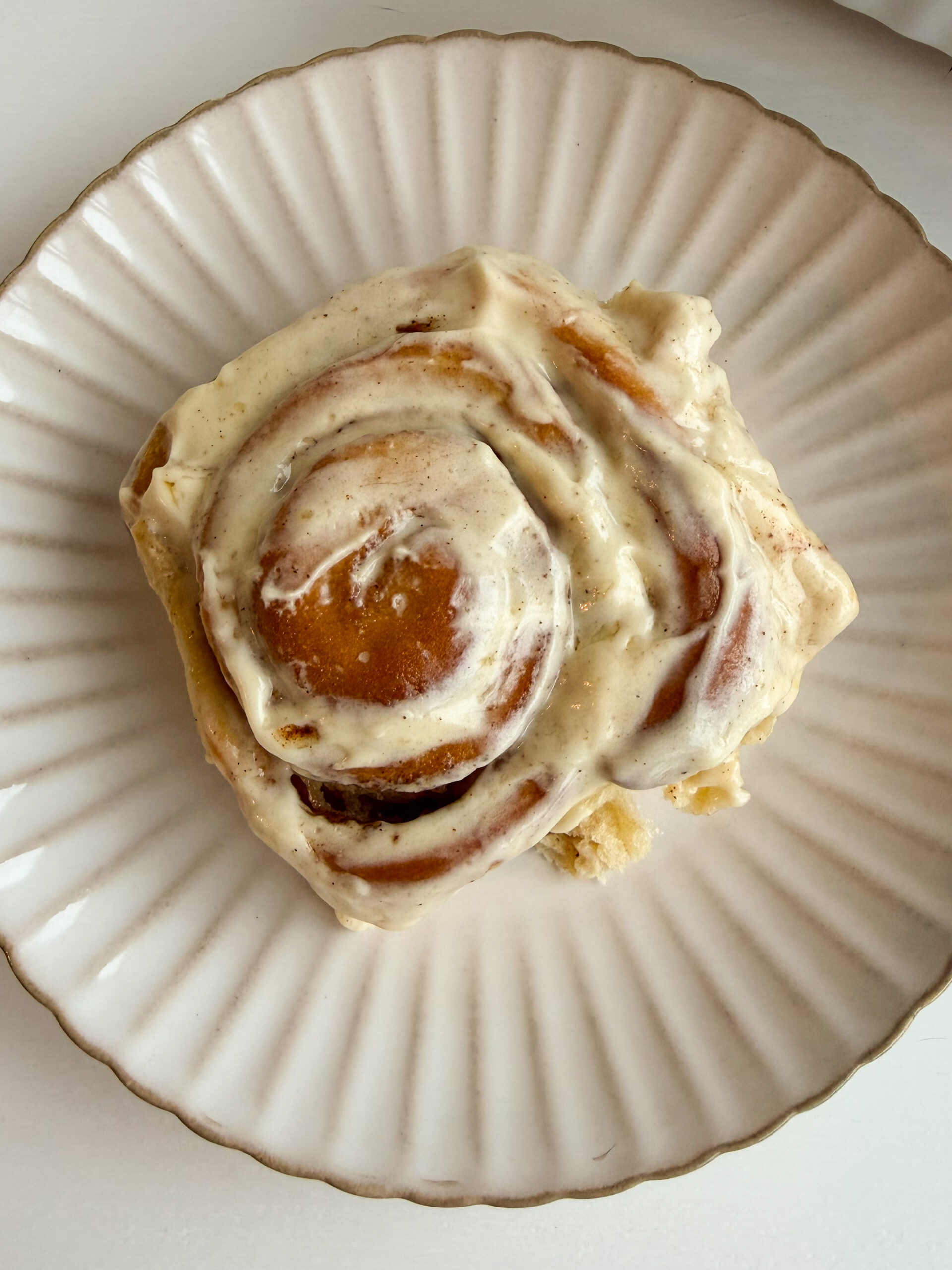
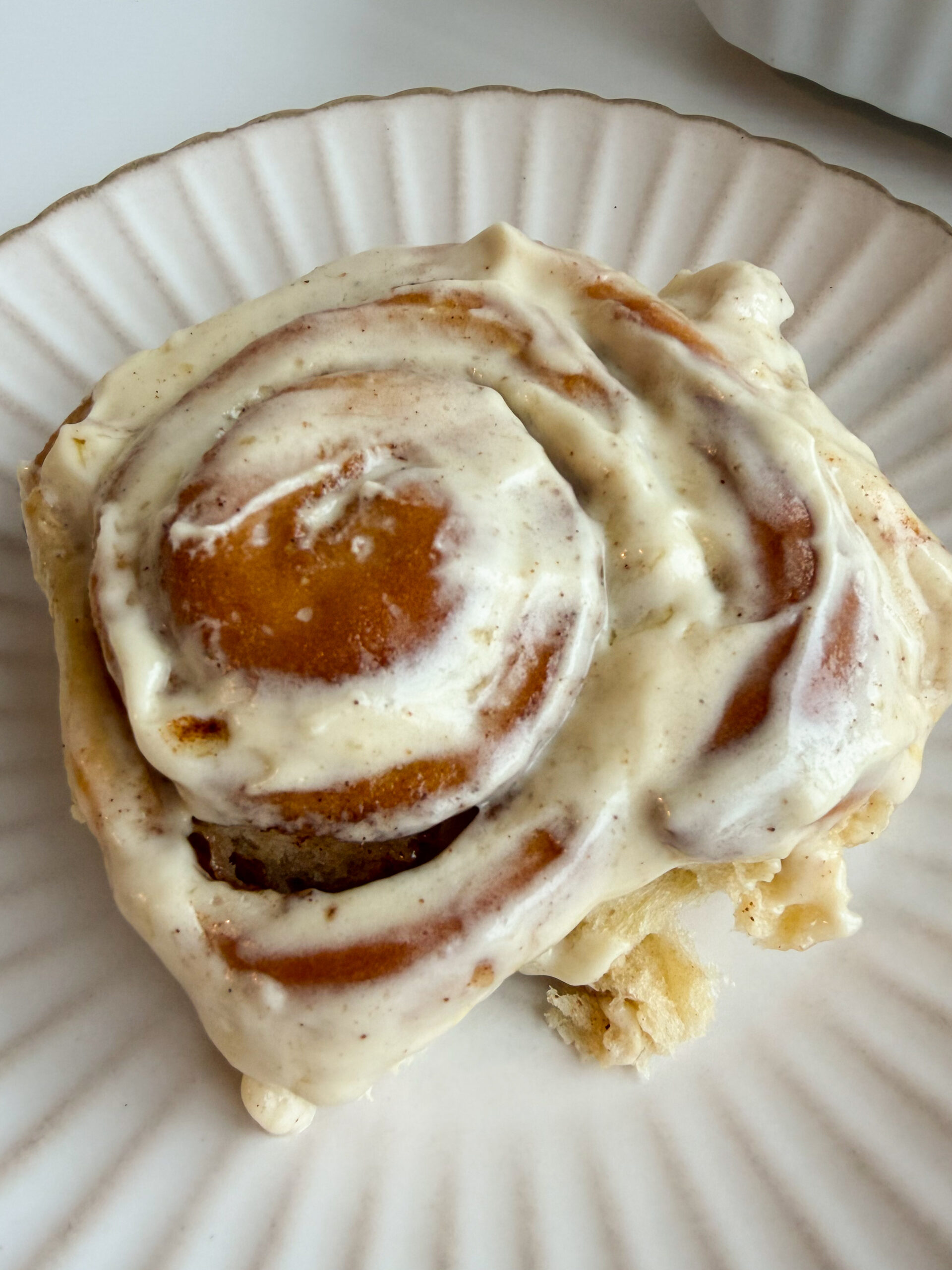
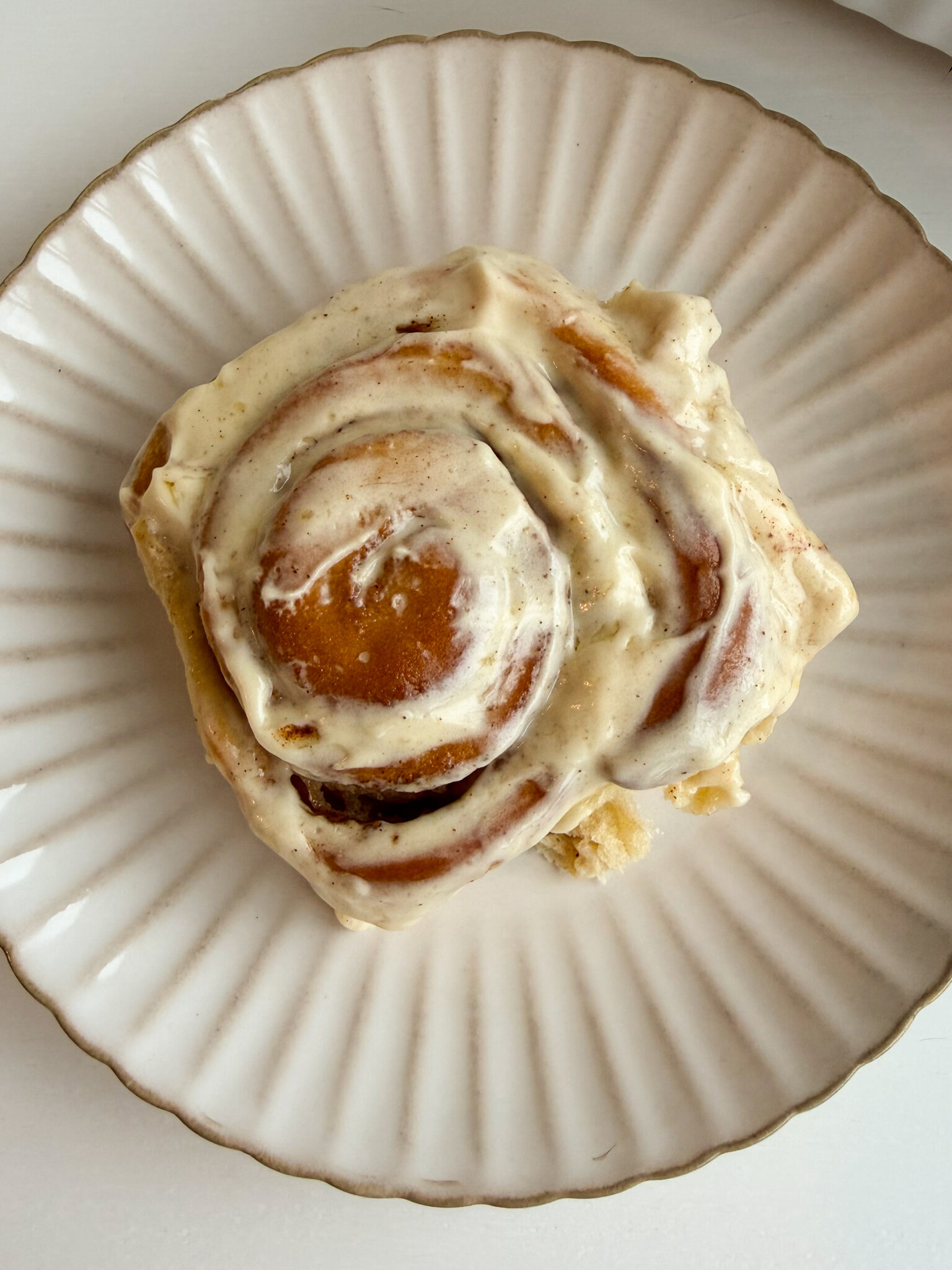
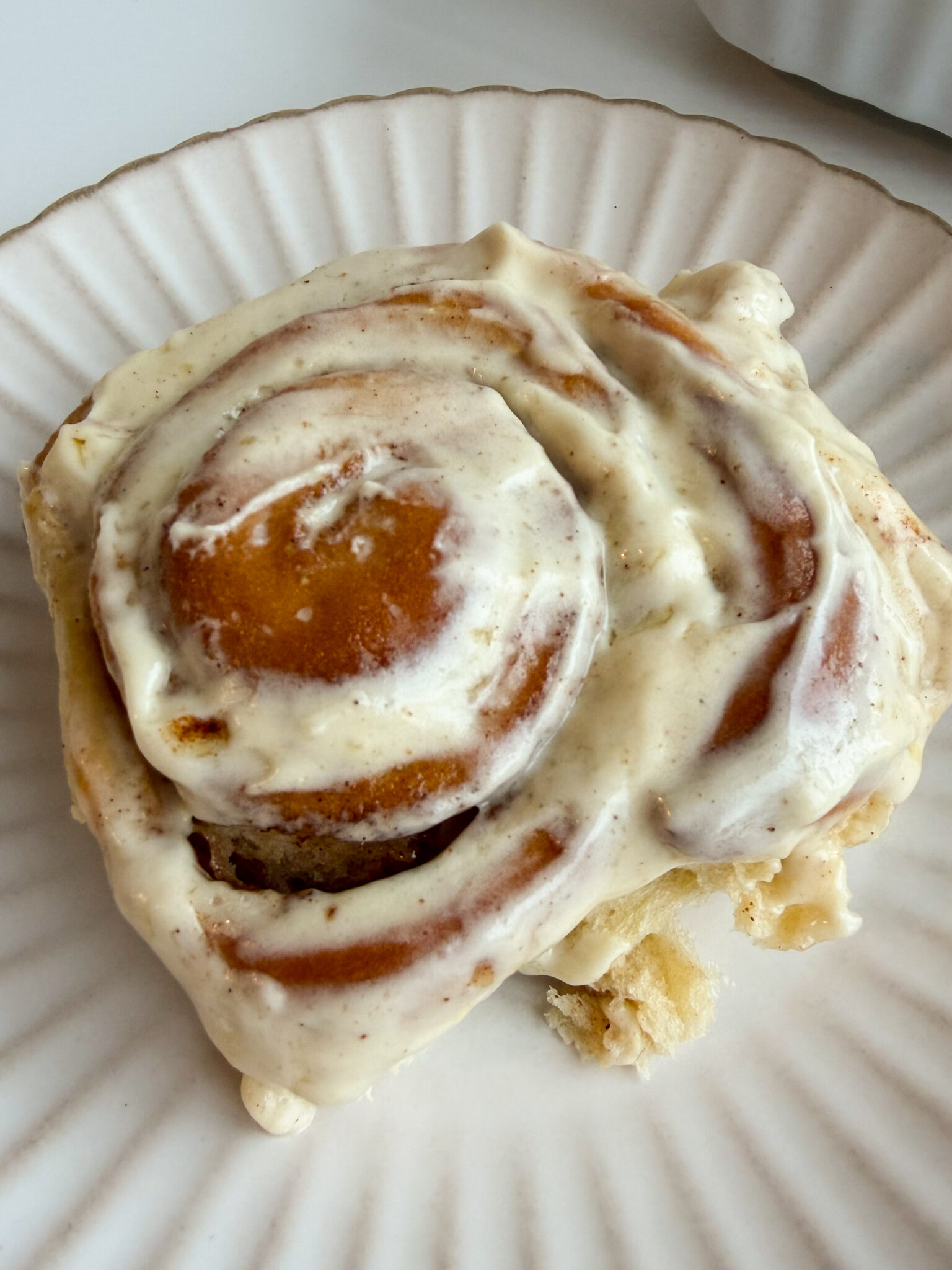
There are cinnamon rolls, and then there are brown butter cinnamon rolls, the kind that make your kitchen smell like a bakery before they even come out of the oven.
Classic cinnamon rolls are already soft, buttery, and comforting, but browning the butter gives them a deeper flavor that you simply can’t get from regular melted butter. The butter develops a toasted, nutty aroma as the milk solids turn golden, adding a subtle caramel-like richness to the dough, cinnamon filling, and cream cheese frosting.
These rolls are made with a soft, fluffy yeast dough, a generous layer of buttery cinnamon sugar, and a smooth brown butter cream cheese frosting. The centers stay tender while the edges become lightly golden and caramelized, making every bite exactly what you want from a homemade cinnamon roll.
And the best part? The nutty flavor comes entirely from the browned butter.
Why Brown Butter Makes These Cinnamon Rolls Better
If you’ve never browned butter before, this is the perfect recipe to try it with.
Brown butter starts as ordinary butter, but when it’s gently cooked, the water evaporates and the milk solids start toasting. Those solids are what create that brown golden color and the nutty smell.
Regular butter gives you richness.
Brown butter gives you richness plus depth.
That difference is especially noticeable in cinnamon rolls because cinnamon and brown butter complement each other beautifully.
You’ll taste:
- Deep buttery flavor
- Toasted, nutty notes
- Hints of caramel
- Warm cinnamon
- Tangy cream cheese
- Soft, fluffy dough
- Slightly crisp, golden edges
We’re using brown butter in the dough, filling, and frosting, so the flavor carries throughout the entire recipe instead of appearing in just one component.
How to Brown Butter Without Burning It
This is the most important step where you need to make sure to make correctly.
Place the butter in a saucepan over medium heat. As it melts, it will start foaming and bubbling.
Continue cooking, swirling the pan occasionally.
You’ll notice the butter change from:
- Solid butter
- Melted butter
- Foamy butter
- Golden butter with toasted brown specks
Once you see brown specks collecting on the bottom and smell a rich, nutty aroma, remove the butter from the heat immediately.
The milk solids can burn very quickly, so don’t wait for the butter to become dark brown.
Transfer it to a bowl to stop cooking and start cooling down.
Important tip
Because browning butter evaporates some of its water, the dough may need a tiny amount of additional milk. Don’t automatically add more liquid, though. Only add extra milk if it feels dry.
Making the Brown Butter Cinnamon Roll Dough
Add the warm milk, yeast and sugar. Then add in the eggs,, followed by the flour, and the cooled brown butter.
Mix until a rough dough forms.
Transfer the dough to a lightly floured surface or use a stand mixer fitted with a dough hook.
Knead until the dough becomes smooth, soft, and elastic, about 8–10 minutes by hand or according to your mixer.
The dough should feel soft and slightly tacky but shouldn’t be wet or impossible to handle.
What should the dough look like?
You want a dough that:
- Feels soft and supple
- Becomes smoother as you knead
- Stretches without immediately tearing
- Pulls away from the bowl
- Feels slightly tacky rather than sticky
Once it’s ready, place it in a lightly greased bowl.
Cover and let it rise in a warm place for 1–1½ hours, or until doubled in size.
Make the Brown Butter Cinnamon Filling
While the dough rises, prepare the filling.
For this recipe, we’re keeping things classic: brown butter, cinnamon, sugar, vanilla, and a pinch of salt.
Brown the butter and allow it to cool.
Mix the brown butter with brown sugar, cinnamon, vanilla, and salt.
The mixture should be thick and spreadable.
Why use both brown and granulated sugar?
Brown sugar brings moisture and a deeper caramel flavor, while granulated sugar gives the filling a slightly lighter sweetness.
Together, they create a cinnamon filling that’s rich without being overly heavy.
Roll Out the Dough
Once the dough has doubled, punch it down to release extra air.
Transfer it to a lightly floured surface and roll it into a large rectangle.
Try to keep the thickness relatively even from one side to the other.
Spread the brown butter cinnamon filling evenly over the entire surface, leaving a small border around the edges.
Don’t skimp on the filling.
You want lots of cinnamon sugar between those layers.
Roll the Dough Into a Log
From the long side of the rectangle, roll the dough into a log.
Keep the roll fairly tight, but don’t squeeze it so hard that you flatten the dough.
A snug roll helps create those beautiful spirals throughout the finished cinnamon rolls.Once you’ve formed the log, cut it into 10–12 equal pieces.
The Second Rise
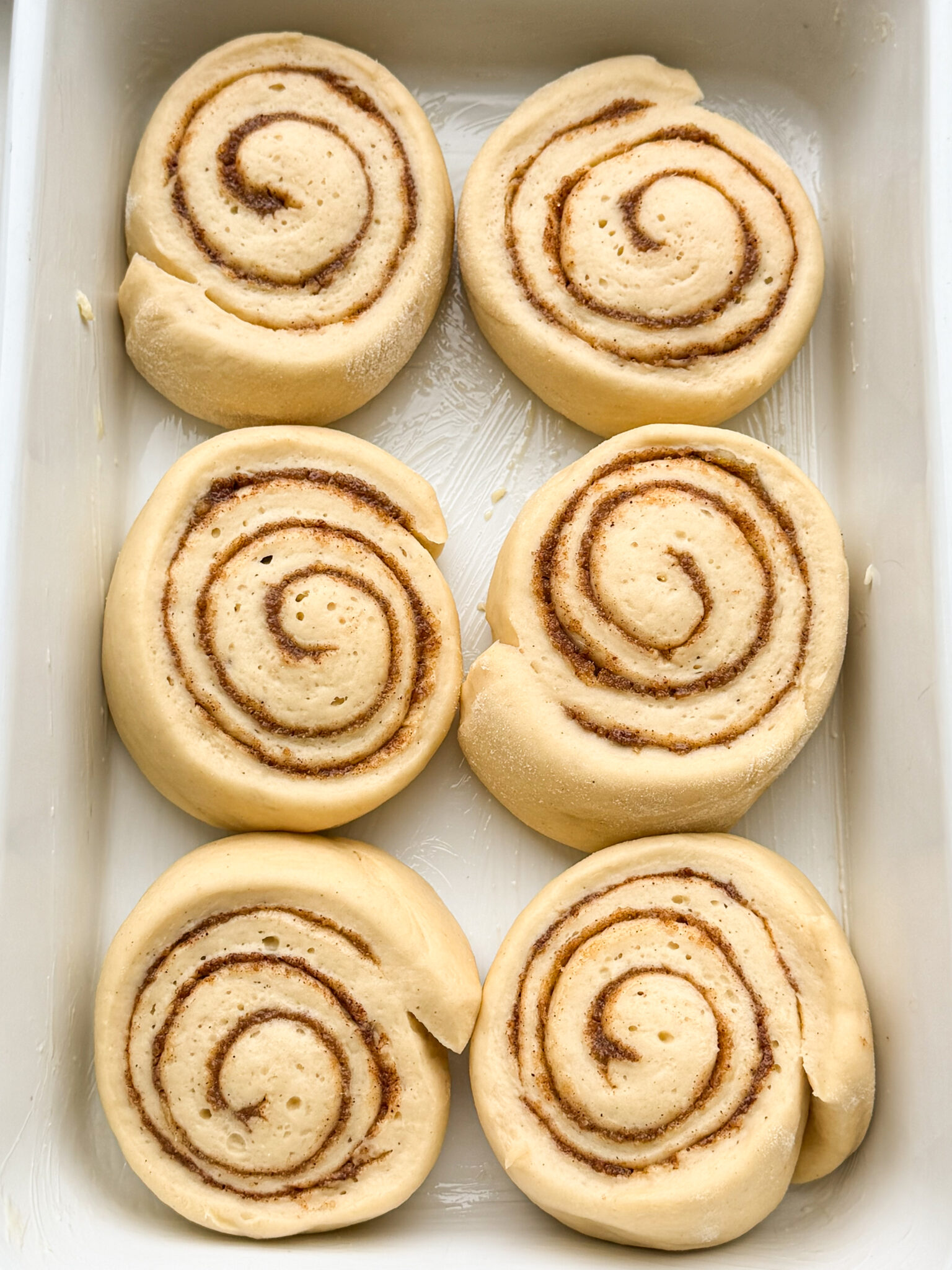
Place the cinnamon rolls into a greased baking dish.
Leave a little space between them so they can expand properly.
Cover loosely and let them rise again for approximately 30–45 minutes.
They should look noticeably puffier by the end of the second proof.
You don’t necessarily need them to completely touch before baking because they’ll continue expanding in the oven.
This second rise is important for achieving that soft, fluffy texture.
Bake Until Golden
Preheat the oven to 350°F (175°C).
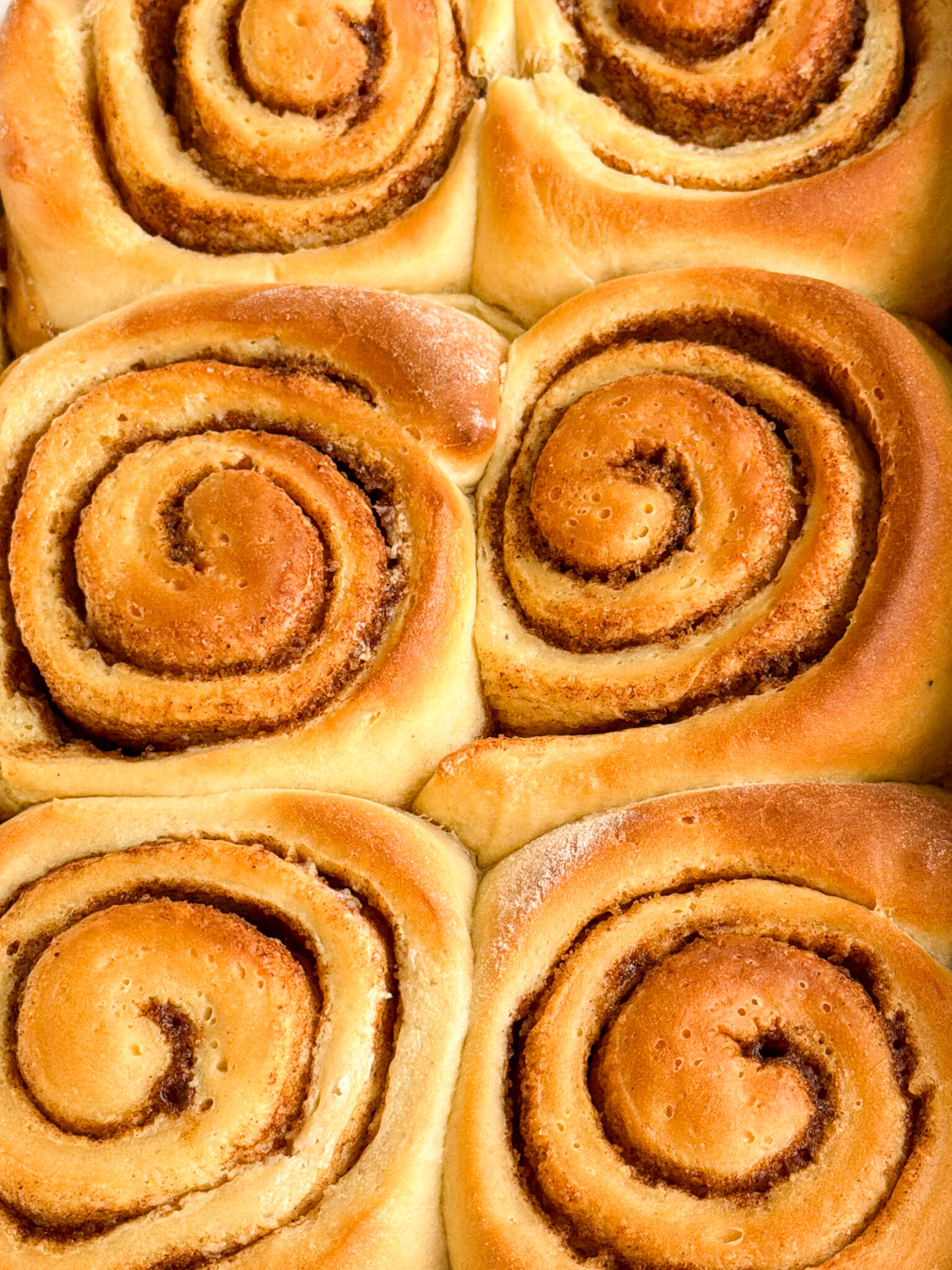
Bake the rolls for approximately 20–30 minutes, depending on their size and your baking dish.
Look for lightly golden tops and centers that are fully cooked but still soft.
Don’t wait until the rolls are deeply browned.
Overbaking is one of the easiest ways to turn fluffy cinnamon rolls into dry ones.
The perfect cinnamon roll should have:
- Golden edges
- Soft centers
- Visible cinnamon swirls
- Lightly caramelized filling
- A tender, fluffy crumb
Let them cool while you make the frosting.
Brown Butter Cream Cheese Frosting
This frosting is what really brings the whole recipe together.
Brown the 50g butter and allow it to cool.
For the smoothest frosting, the butter should be cooled but still soft enough to mix easily.
Beat the room-temperature cream cheese until smooth.
Add the brown butter and mix until combined.
Gradually mix in the powdered sugar.
Add vanilla and a pinch of salt.
Finally, add heavy cream, starting with 1 tablespoon. Add another tablespoon if you want a softer, more spreadable frosting.The finished frosting should be smooth, creamy, and thick enough to sit beautifully on top of the rolls.
Frost Them While They’re Warm
Let the cinnamon rolls cool for around 5–10 minutes after coming out of the oven.
We want them warm, but not piping hot.
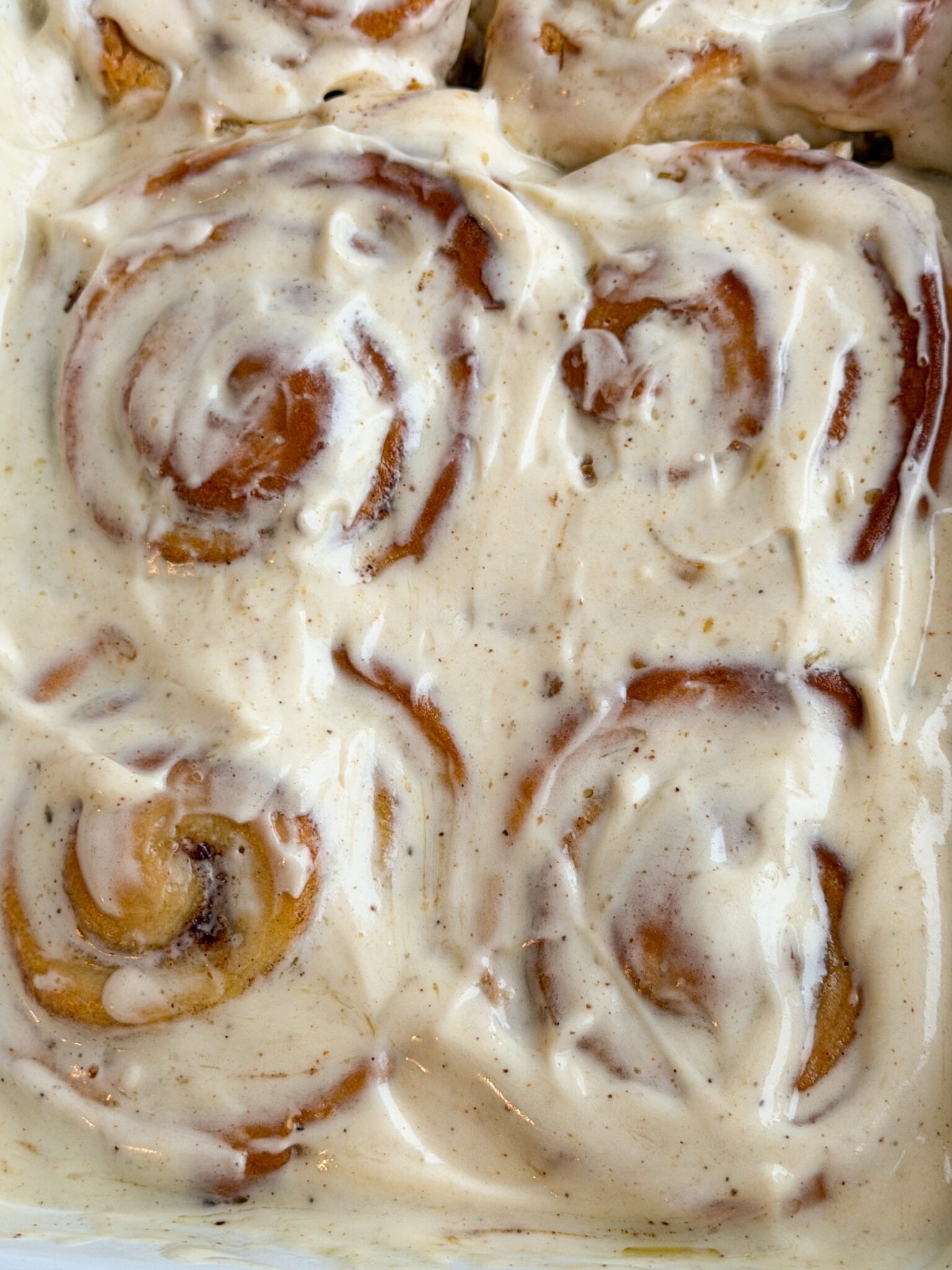
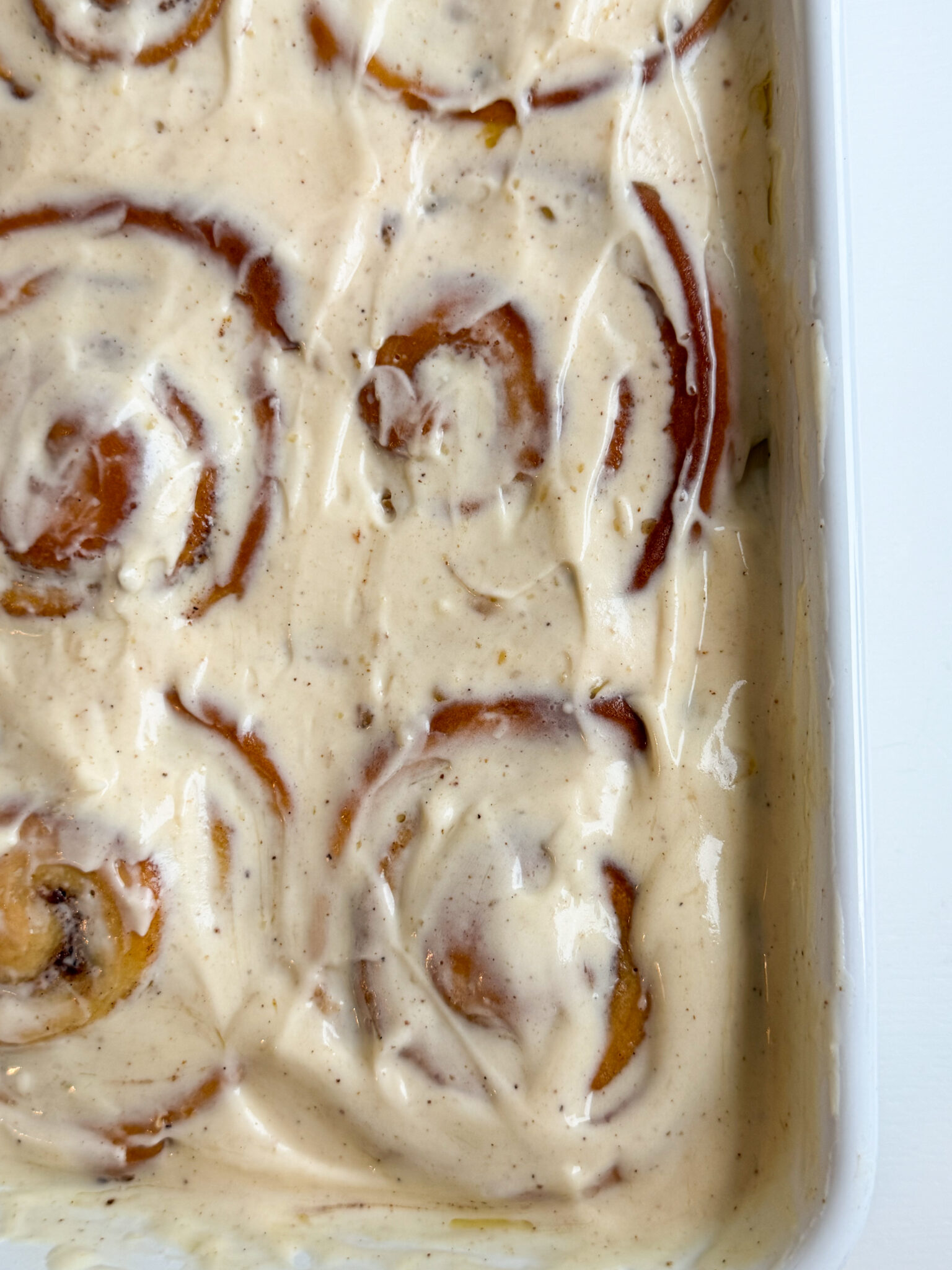
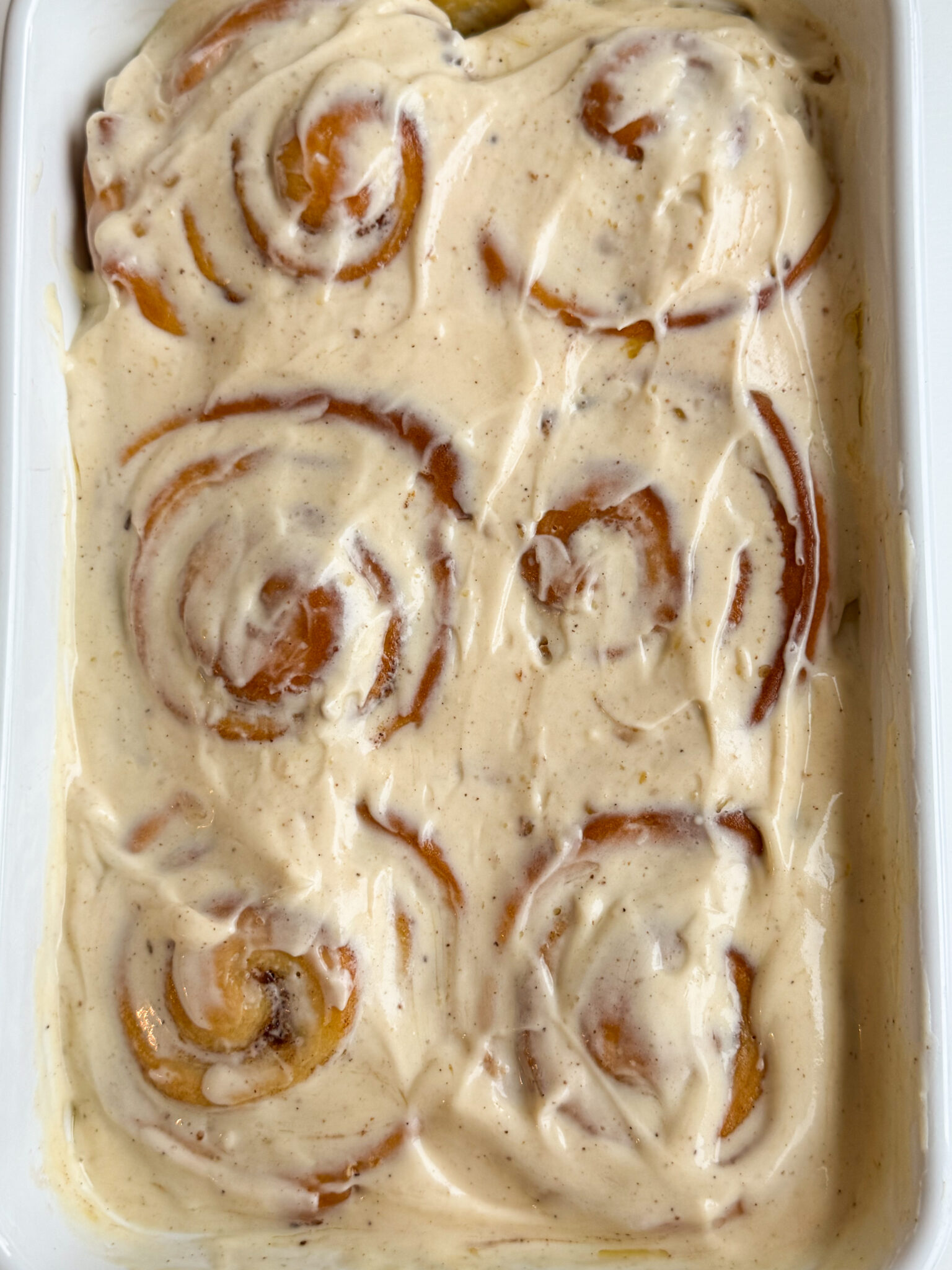
Spread the brown butter cream cheese frosting generously over the tops.
The warmth from the rolls will soften the frosting slightly, allowing it to melt into the cinnamon swirls.
That’s one of the best parts of homemade cinnamon rolls.
You can also add a very light sprinkle of cinnamon on top if you want an extra visual finish, but honestly, these don’t need much decoration.
The golden brown tops and creamy frosting speak for themselves.
Tips for Perfect Brown Butter Cinnamon Rolls
Don’t burn your butter
Watch it carefully as soon as it starts turning golden. The butter can literally burn within seconds.
Cool the butter before adding it to the dough
Hot butter can interfere with the yeast and may cook the egg.
Don’t over-flour the dough
Adding more flour than needed can make the cinnamon rolls too dense. If the dough is slightly tacky, that’s okay.
Knead until elastic
Proper kneading develops the gluten that gives these rolls their soft, stretchy structure.
Give the dough time to rise
Don’t rely only on the clock. The dough should visibly increase in size.
Spread the filling evenly
An even layer means every roll gets plenty of cinnamon flavor.
Don’t overbake
Take the rolls out once they’re golden and cooked through. You want soft centers, not dry bread.
Frost while warm
A slightly warm roll gives you that gorgeous frosting-meets-cinnamon-roll texture.
Can You Make These Cinnamon Rolls Ahead?
Yes.
Place the cinnamon rolls in the baking dish and cover them tightly.
Refrigerate them before the final rise.
The next day, take them out and allow them to come toward room temperature and become puffy before baking.
You can also prepare the frosting ahead of time and refrigerate it separately.
Let the frosting soften before spreading it over the warm rolls.
This makes the recipe especially convenient for weekend breakfasts, holidays, brunches, and mornings when you want homemade cinnamon rolls without doing all the work at sunrise.
How to Store Them
Because the frosting contains cream cheese, store leftover frosted cinnamon rolls in an airtight container in the refrigerator.
To serve them again, gently warm individual rolls in the microwave for a few seconds.
The warmth will soften the dough and bring the buttery cinnamon filling back to life.
If you know you’ll have leftovers, you can also store the frosting separately and frost individual rolls as you eat them.
What Can Be Served With Brown Butter Cinnamon Rolls
These cinnamon rolls are rich and comforting, so they pair beautifully with something simple.
Try serving them with:
- Fresh coffee
- Espresso
- Cappuccino
- Chai latte
- Black tea
- Fresh berries
- Strawberries
- Sliced apples
- Fresh oranges
- A simple brunch spread
Why You’ll Love These Brown Butter Cinnamon Rolls
These cinnamon rolls take everything people love about the classic version and add one simple technique that makes a huge difference.
Brown the butter.
That’s it.
The dough becomes richer, the cinnamon filling becomes more flavorful, and the cream cheese frosting gets that incredible toasted-butter aroma.
There’s no need for complicated ingredients or unusual techniques.
Just soft yeast dough, plenty of cinnamon sugar, brown butter, and cream cheese frosting.
The result is a cinnamon roll that’s cozy enough for a Sunday morning but special enough to serve for a holiday brunch.
And when you pull that baking dish from the oven and spread the frosting over those warm golden rolls, you’ll understand why browning the butter was absolutely worth the extra few minutes.
Brown Butter Dough
- 585 g flour
- 70 g granulated sugar
- 7 g instant yeast
- 6 g salt
- 360 ml warm milk
- 85 g unsalted butter browned
- 1 large egg
- Extra milk only if needed
Brown Butter Cinnamon Filling
- 113 g unsalted butter browned
- 100 g brown sugar
- 1½ –2 tbsp ground cinnamon
- 1 tsp vanilla extract
- Pinch of salt
Brown Butter Cream Cheese Frosting
- 150 g cream cheese room temperature
- 50 g unsalted butter browned
- 150 g powdered sugar
- 1 tsp vanilla extract
- Pinch of salt
- 1-2 tbsp heavy cream
Brown the butter: Brown 85g butter for the dough, 113g for the filling, and 50g for the frosting. Cook until golden and nutty-smelling, then transfer to separate bowls to cool.
Make the dough: Mix flour, sugar, yeast, and salt. Add warm milk, egg, and cooled brown butter. Knead for 8–10 minutes until smooth and elastic. Add a little extra milk only if the dough feels too dry.
First rise: Place dough in a greased bowl, cover, and let rise for 1–1½ hours, until doubled.
Make the filling: Mix cooled brown butter with brown sugar, granulated sugar, cinnamon, vanilla, and salt until smooth and spreadable.
Roll: Roll the dough into a large rectangle and spread the cinnamon filling evenly over the surface.
Shape: Roll tightly from the long side into a log. Cut into 10–12 equal rolls.
Second rise: Place rolls in a greased or parchment-lined baking dish. Cover and let rise for 30–45 minutes, until puffy.
Bake: Preheat oven to 350°F (175°C). Bake for 20–30 minutes, until golden brown and cooked through.
Make frosting: Beat cream cheese until smooth. Add cooled brown butter and mix. Gradually add powdered sugar, vanilla, and salt. Add heavy cream until the frosting reaches your preferred consistency.
Frost: Cool the rolls for 5–10 minutes, then generously spread with brown butter cream cheese frosting.
Serve: Serve warm and enjoy.
- Brown the butter carefully; it can burn quickly once the milk solids begin to brown.
- Always cool brown butter before adding it to the dough.
- If the dough feels dry after kneading, add milk 1 tablespoon at a time.
- Don't overbake—the centers should remain soft and fluffy.
- For the best texture, frost the rolls while they're still slightly warm.
- Store frosted leftovers refrigerated in an airtight container.
If you've given this recipe a try and it won you over, please share your thoughts by leaving
a rating and comment below! If you have any questions about this recipe, don't hesitate to ask – I'm here to
help and will respond promptly.