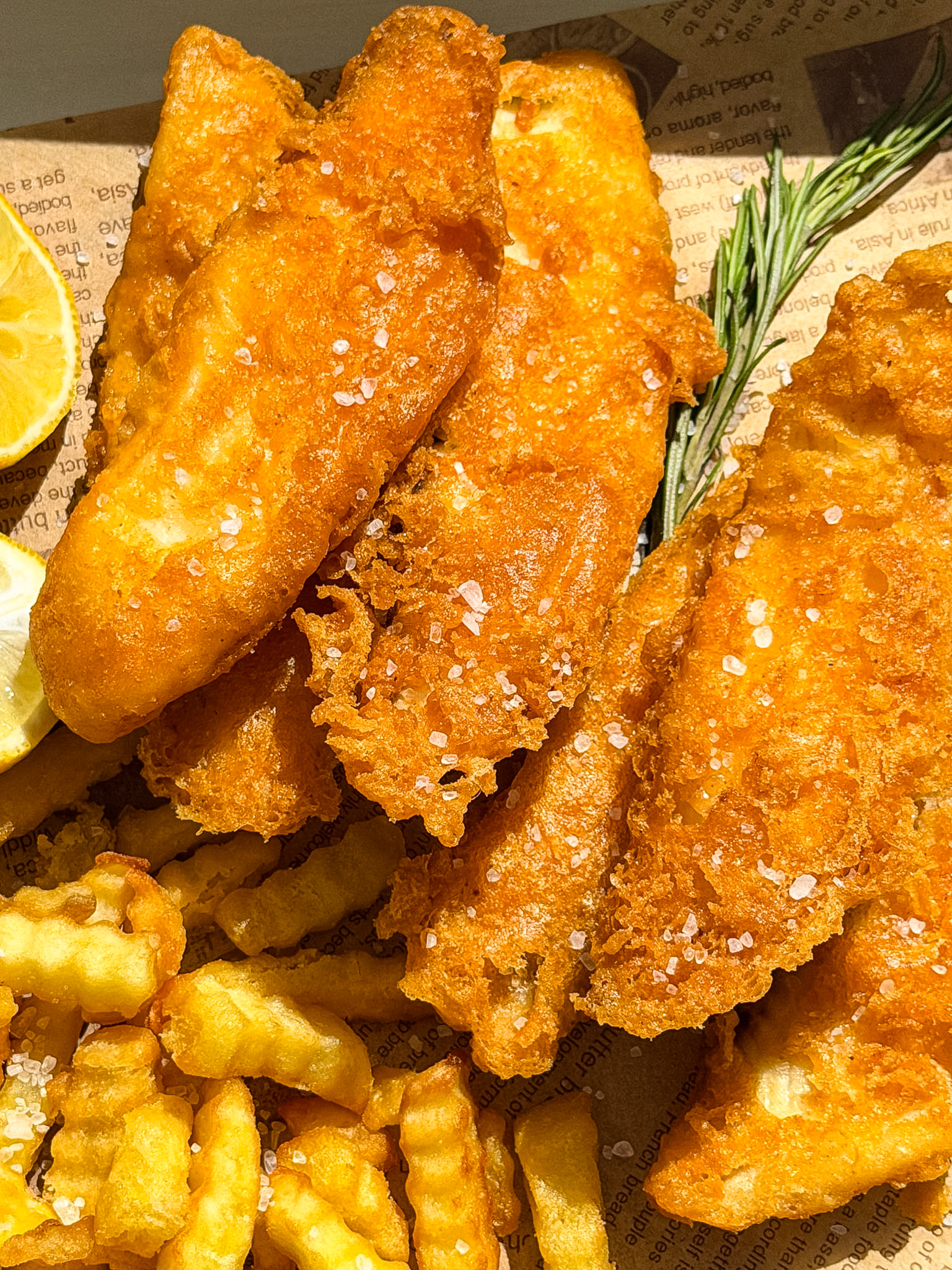
There is something undeniably satisfying about a proper plate of crispy fish and chips. Golden, crunchy battered fish. Hot, salty fries. A squeeze of fresh lemon. It is simple comfort food, but when every part is made properly, it becomes the kind of meal that makes everyone suddenly appear in the kitchen asking, “Is it ready yet?”
This version keeps all the deliciousness of classic fish and chips while making a few changes to suit your recipe. Instead of making thick potato wedges, we are using regular fries, which are easier to serve and give you that familiar crispy chip-shop-style experience. And instead of ginger beer, the fish batter is made with cold soda water, creating a light, airy, beautifully crisp coating around tender pieces of fish.
The secret to really good homemade fish and chips is not complicated. You need good fish, properly seasoned batter, very cold sparkling water, hot oil, and patience when frying. That last part is important because nobody wants pale, greasy fish or soggy fries.
The result? Crispy, golden fish with a light crackly coating, fluffy fries with crisp edges, and a homemade tartar sauce that brings everything together.
Whether you’re making this for a Friday dinner, a weekend family meal, or simply because you’re craving proper homemade comfort food, this recipe is one you will want to keep.
Why You’ll Love This Crispy Fish and Chips Recipe
There are plenty of reasons to love fish and chips, but homemade fish and chips have something extra special about them. You can control the ingredients, season everything exactly how you like it, and eat the fish while it is still incredibly hot and crispy.
Why this version works so well:
- The soda water creates a light and crispy batter.
- Cold sparkling water helps keep the batter airy.
- Cod or haddock stays tender and flaky inside.
- Regular fries make the recipe easy and family-friendly.
- The homemade tartar sauce is creamy, tangy, and fresh.
- The recipe feels restaurant-quality but can be made at home.
- Fresh lemon brightens the richness of the fried fish.
The contrast is what makes this meal so good. The outside of the fish is crunchy while the inside stays soft and flaky. The fries are crispy and salty. Add lemon, and suddenly every bite tastes balanced.
Honestly, this is one of those meals where people usually go back for seconds before they’ve even finished their first plate.
What Makes Soda Water Batter So Crispy?
If you’ve ever wondered why some fried fish has a heavy, thick coating while other fish has a light, delicate crunch, the batter is usually the answer.
For this recipe, cold soda water is the star.
The carbonation in sparkling water helps create little air bubbles throughout the batter. When the battered fish hits the hot oil, those bubbles expand and contribute to a lighter, crispier texture.
For the best results:
- Use very cold soda water.
- Make the batter shortly before frying.
- Do not overmix the batter.
- Make sure your oil is properly heated.
- Fry the fish in batches and don’t overcrowd the pan.
Cold batter meeting hot oil is exactly what helps create that beautiful crisp exterior.
You don’t need a complicated batter with dozens of ingredients. Flour, starch, baking powder, seasonings, and soda water can create an incredibly satisfying coating.
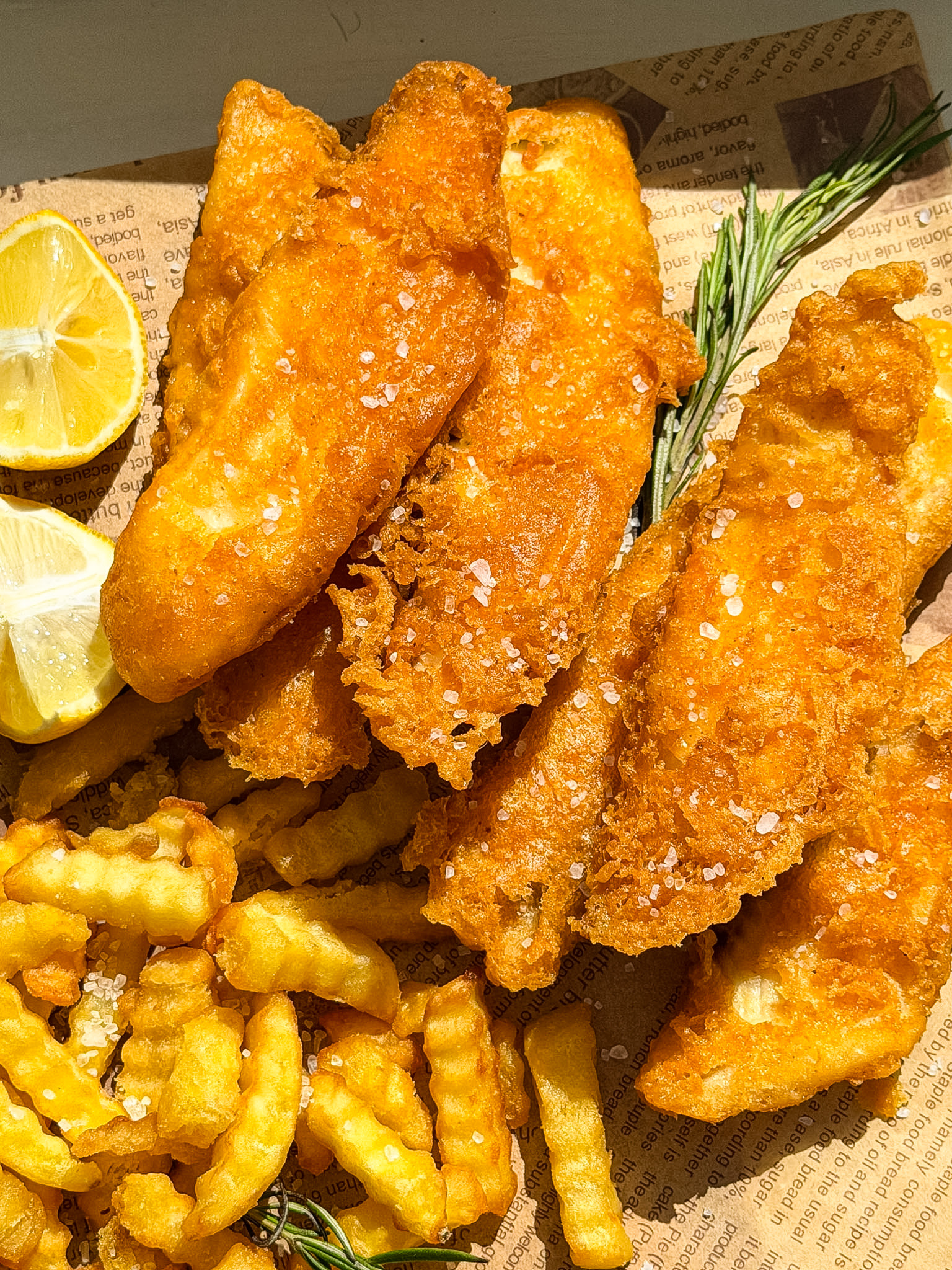
The Best Fish for Homemade Fish and Chips
For traditional fish and chips, cod and haddock are both excellent choices.
Cod is mild, flaky, and has a firm texture that holds up beautifully when fried. Haddock has a slightly stronger flavor and is also wonderfully flaky.
You can cut your fish into larger fillets or into thick strips depending on how you want to serve it.
Look for fish that is:
- Fresh and mild-smelling.
- Firm rather than mushy.
- Boneless.
- Patted completely dry before coating.
Removing excess moisture from the fish is important. If the fish is wet, the flour will not stick as well, and the batter may slide off.
So before you begin, take a few minutes to pat your fish dry thoroughly with paper towels.
Ingredients You’ll Need
For the Crispy Fried Fish
- 1 lb cod or haddock, cut into strips or portions
- 1¼ cups all-purpose flour
- ¼ cup potato starch or cornstarch
- 1 teaspoon baking powder
- ½ teaspoon fine sea salt
- 1 teaspoon ground paprika
- ¼ teaspoon curry powder
- Approximately 2 cups very cold soda water
- Extra flour for dusting the fish
- Neutral oil for frying
The potato starch or cornstarch helps make the coating lighter and crispier. The baking powder gives the batter a little extra lift.
Paprika adds gentle flavor and beautiful color, while the small amount of curry powder adds a subtle depth without making the fish taste strongly like curry.
For the Fries
Since you’re making normal fries instead of potato wedges, you can use:
- Frozen French fries, prepared according to package directions
or make homemade fries using:
- Large potatoes
- Neutral frying oil
- Salt
Frozen fries are completely fine here, especially if you want an easier meal. You can fry them until golden and crispy.
If you’re making homemade fries, cut your potatoes into even strips so they cook evenly.
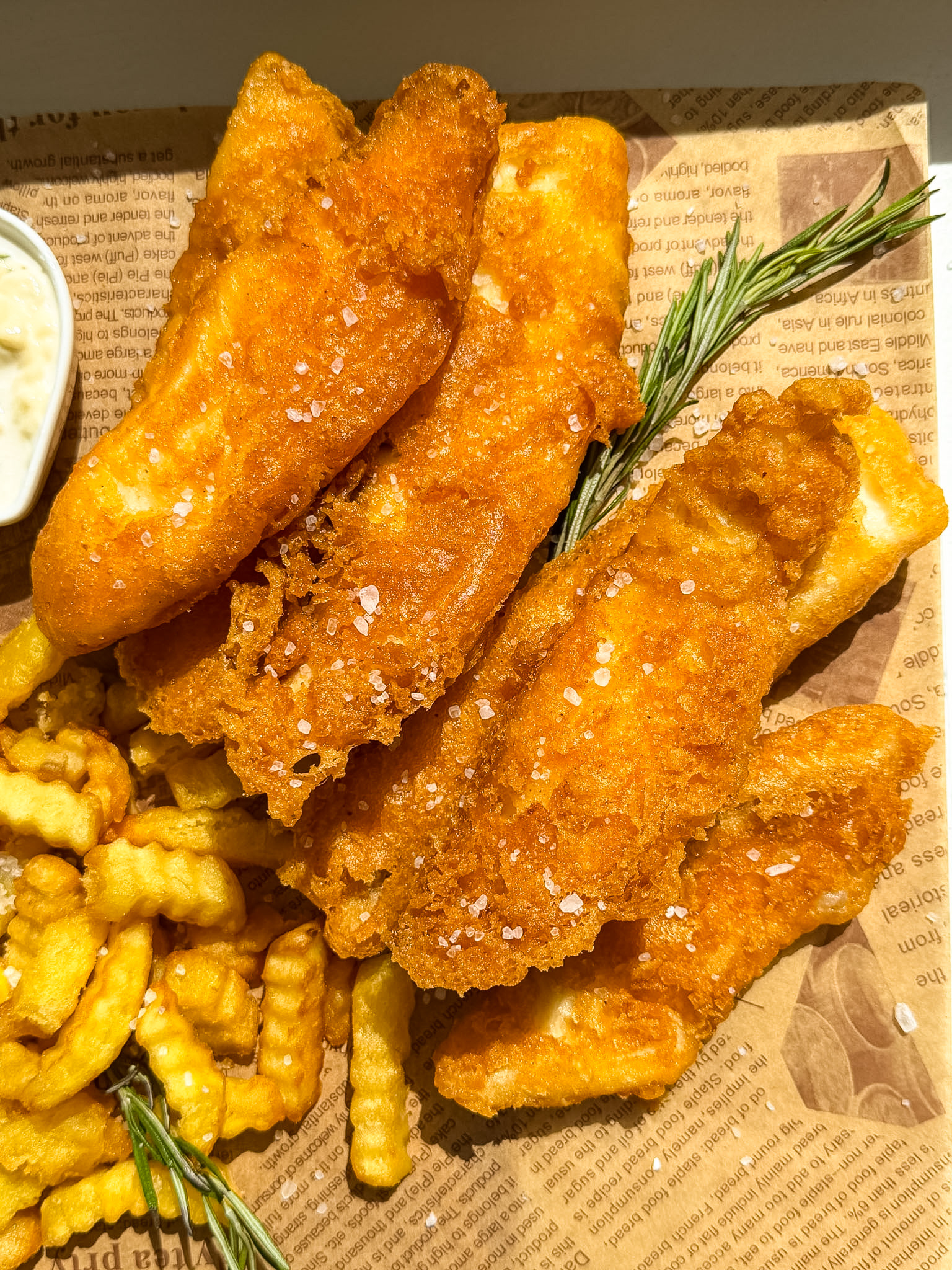
Step-by-Step Instructions
Step 1: Make the Tartar Sauce
Start with the tartar sauce because it actually tastes even better after sitting for a little while.
In a medium bowl, combine:
- Mayonnaise
- Finely diced shallot
- Pickle
- Chopped capers
- Lemon juice
- Dijon mustard
- Fresh parsley
- Tarragon, if using
Mix everything together until well combined.
Taste the sauce and add salt and black pepper as needed.
Cover and let it sit in the refrigerator while you finish everything else.
A little tip:
Finely chopping the ingredients makes the biggest difference. You want the tartar sauce to be easy to scoop and spread rather than full of huge chunks.
The lemon adds brightness, the pickles bring tanginess, and the capers add that salty little burst of flavor that makes tartar sauce so good with fried fish.
Step 2: Prepare Your Fries
If you’re using frozen fries, cook them according to the package instructions until deeply golden and crispy.
If you’re frying homemade fries, heat your oil and fry them in batches.
Do not overcrowd the pan. Too many fries added at once can lower the temperature of the oil, which can leave you with fries that absorb too much oil instead of becoming crisp.
Once cooked, transfer the fries to a paper towel-lined tray or wire rack.
Season immediately with salt while they are still hot.
If you want to keep them warm while frying the fish, place them in a low-temperature oven.
Step 3: Prepare the Fish
Pat your fish completely dry using paper towels.
Cut it into strips or medium-sized portions.
Lightly season the fish with a small pinch of salt if desired, but remember that the batter is already seasoned.
Place a little flour on a plate and lightly dust each piece of fish.
Shake off the excess.
This flour layer gives the batter something to cling to, helping prevent the coating from sliding away during frying.
Step 4: Make the Soda Water Batter
In a large mixing bowl, combine:
- All-purpose flour
- Potato starch or cornstarch
- Baking powder
- Salt
- Paprika
- Curry powder
Whisk the dry ingredients together.
Now gradually pour in the very cold soda water while whisking.
Continue until you have a smooth, thick batter.
You want the batter thick enough to coat the fish but not so thick that it creates a heavy layer.
Don’t overmix!
Once the ingredients come together, stop whisking. Overmixing can make the batter heavier.
If possible, keep the batter cool until you’re ready to fry.
Step 5: Heat the Frying Oil
Pour enough neutral oil into a deep, heavy-bottomed pot or frying pan for deep frying.
Heat the oil to approximately 350°F–365°F (175°C–185°C).
A thermometer is the easiest way to keep the temperature consistent.
If the oil is too hot, the outside can brown too quickly before the fish cooks properly.
Maintaining a steady temperature is one of the biggest secrets to successful frying.
Step 6: Batter the Fish
Take one piece of lightly floured fish.
Dip it into the soda water batter.
Allow any excess batter to drip away for a moment.
Carefully lower the fish into the hot oil.
Always lower food away from yourself to reduce the risk of hot oil splashing toward you.
Don’t overcrowd the pan.
The fish needs room to fry properly. Overcrowding lowers the oil temperature and can make the coating less crispy.
Step 7: Fry Until Golden and Crispy
Fry the fish for approximately 5–6 minutes, depending on the thickness of your pieces.
Turn if necessary so the fish cooks evenly.
The batter should become:
- Deep golden.
- Crisp.
- Puffy.
- Beautifully crunchy.
The fish inside should be opaque and flaky.
Remove the cooked fish using tongs or a slotted spoon.
Transfer it to a paper towel-lined tray.
A wire rack is especially helpful because it allows air to circulate around the fish, helping the bottom stay crispy.
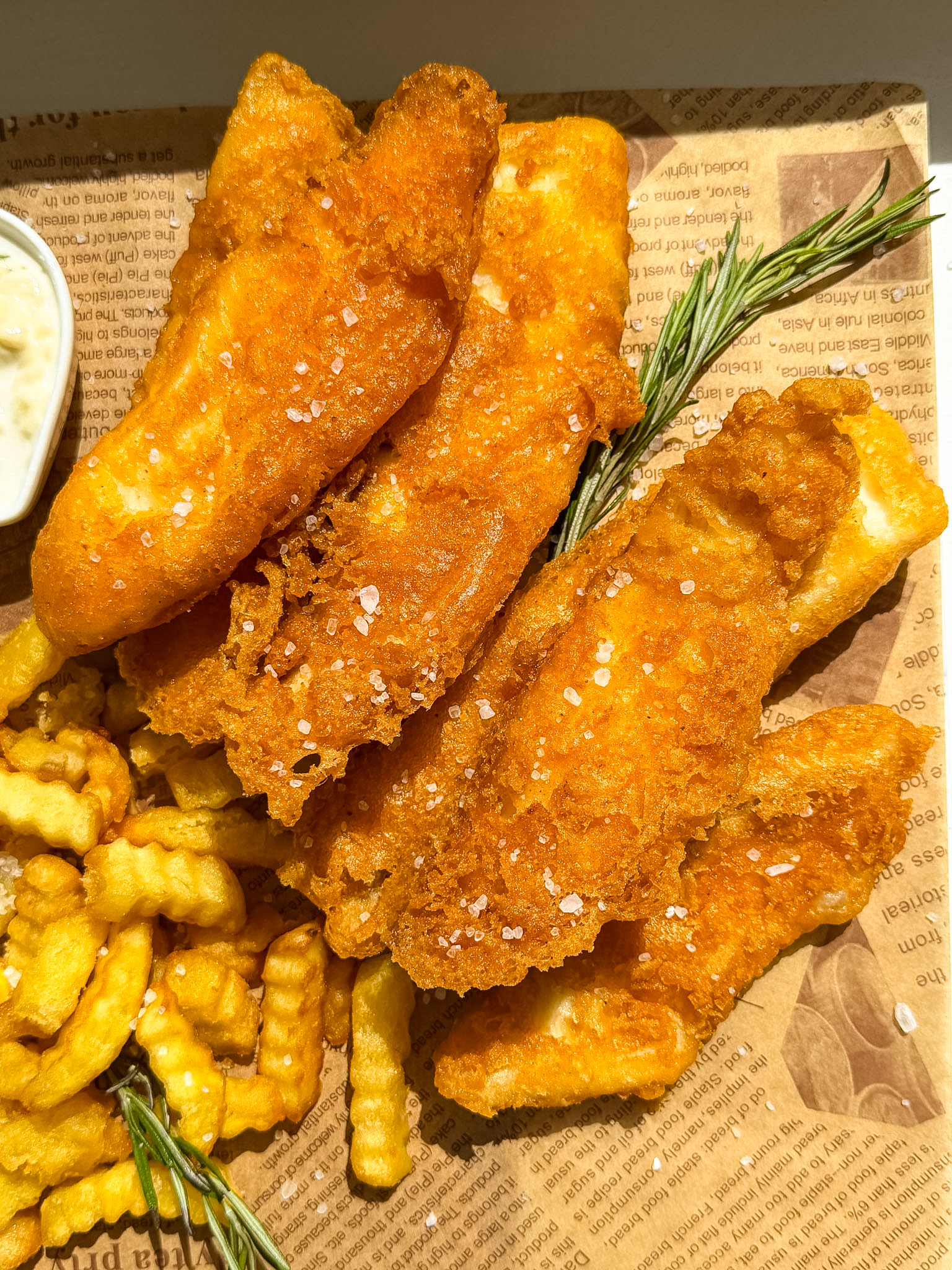
How to Keep Fried Fish Crispy
The worst thing after making beautiful fried fish is watching the crispy coating become soft while you finish the rest.
Here’s how to prevent that:
1. Don’t stack the fish
Stacking traps steam, and steam softens crispy batter.
2. Use a wire rack
A rack allows excess oil to drip away while keeping air circulating.
3. Keep it warm in a low oven
If necessary, place cooked fish on a wire rack over a baking sheet in a low oven.
4. Fry in batches
Don’t try to cook everything at once.
5. Serve as soon as possible
Fish and chips are at their absolute best when freshly cooked.
That first bite while everything is still hot and crispy? Nothing beats it.
Serve Your Fish and Chips
Now comes the best part.
Pile your crispy fries onto a plate.
Add a generous portion of your fried fish.
Serve with:
- Homemade tartar sauce
- Fresh lemon wedges
- Extra parsley, if desired
- Additional flaky salt for the fries
Squeeze fresh lemon juice over the fish right before eating.
The acidity cuts through the richness of the fried batter and makes the entire dish taste brighter and fresher.
Tips for the Best Homemade Fish and Chips
Keep the soda water cold
This is one of the easiest improvements you can make.
Warm sparkling water will not give you the same result as ice-cold soda water.
Keep it refrigerated until the last moment.
Pat the fish dry
Moisture is the enemy of a good coating.
Dry fish helps the flour stick, which makes the batter stick way better.
Don’t skip this simple step.
Check your oil temperature
A thermometer takes away the guesswork.
Try to keep your oil between 350°F and 365°F.
Remember that the temperature may drop when you add food, so give the oil time to recover between batches.
Season the fries immediately
Salt sticks much better to hot fries.
As soon as they come out of the oil, season them.
Don’t make the batter too thin
A very watery batter will slide off the fish.
You want a coating that clings nicely while still remaining light enough to fry into a crisp shell.
Easy Variations
Make it spicy
Add:
- Cayenne pepper
- Chili powder
- Extra paprika
to the batter.
Add more herbs
Fresh dill or extra parsley works beautifully in the tartar sauce.
Use different fish
Depending on what is available, you can also try other firm white fish.
Make the fries extra seasoned
Toss your cooked fries with:
- Garlic powder
- Paprika
- Onion powder
- Black pepper
for extra flavor.
Frequently Asked Questions
Can I use sparkling water instead of soda water?
Yes. Plain, unflavored sparkling water works perfectly.
The important thing is that it is cold and carbonated.
Can I use frozen fish?
Yes, as long as it is completely thawed and patted dry before coating.
Can I use frozen fries?
Absolutely. Frozen fries make this meal quicker and easier.
Why is my fried batter not crispy?
The most common reasons are:
- Oil wasn’t hot enough.
- Batter was too warm.
- The pan was overcrowded.
- The cooked fish was stacked while hot.
Can I make this without a thermometer?
You can, but a thermometer makes frying much easier and more consistent.
Crispy Fried Fish
- 1 lb cod or haddock, cut into strips
- 1¼ cups all-purpose flour
- ¼ cup potato starch or cornstarch
- 1 tsp baking powder
- ½ tsp fine sea salt
- 1 tsp paprika
- ¼ tsp curry powder
- 2 cups very cold soda water, added gradually
- Extra flour for dusting
- Neutral oil for frying
Fries
- Regular fries, homemade or frozen
- Neutral oil for frying, if needed
- Salt, to taste
Homemade Tartar Sauce
- ¾ cup mayonnaise
- 1 shallot, finely diced
- 1 pickle, finely diced
- 2 tbsp tablespoons capers, chopped
- juice 1 lemon
- 1 tbsp Dijon mustard
- 2 tbsp fresh parsley, chopped
- 1 tbsp fresh tarragon, optional
- Salt and black pepper, to taste
Make the tartar sauce: Combine all tartar sauce ingredients in a bowl. Mix well, season to taste, and refrigerate.
Cook the fries: Fry or prepare your regular fries until golden and crispy. Season immediately with salt and keep warm.
Prepare the fish: Pat the fish dry and cut into strips. Lightly dust each piece with flour and shake off the excess.
Make the batter: Whisk together flour, starch, baking powder, salt, paprika, and curry powder. Gradually whisk in very cold soda water until smooth and thick enough to coat the fish.
Heat the oil: Heat neutral frying oil to 350°F–365°F (175°C–185°C).
Coat the fish: Dip each floured piece of fish into the batter, allowing excess batter to drip off.
Fry: Carefully fry the fish in small batches for approximately 5–6 minutes, until deeply golden, crispy, and cooked through.
Drain: Transfer the fried fish to a wire rack or paper towel-lined tray.
Serve: Plate the hot crispy fish with fries, homemade tartar sauce, and fresh lemon wedges.
If you've given this recipe a try and it won you over, please share your thoughts by leaving
a rating and comment below! If you have any questions about this recipe, don't hesitate to ask – I'm here to
help and will respond promptly.