Turkish Eggs: The Authentic Cilbir Recipe That Will Transform Your Breakfast
Discover the incredible world of Turkish Eggs, also known as Cilbir, where perfectly poached eggs meet creamy garlic yogurt and aromatic spiced butter in perfect harmony. This traditional Turkish breakfast dish combines simple ingredients to create a sophisticated, luxurious meal that tastes like something from an upscale brunch spot yet takes just 15 minutes to prepare.
If you’re searching for an authentic Turkish Eggs recipe that delivers restaurant-quality results at home, you’ve found the perfect guide. This foolproof method produces the silky poached eggs, tangy yogurt base, and rich butter sauce that define genuine Cilbir.
Why This Turkish Eggs Recipe Will Become Your Breakfast Essential
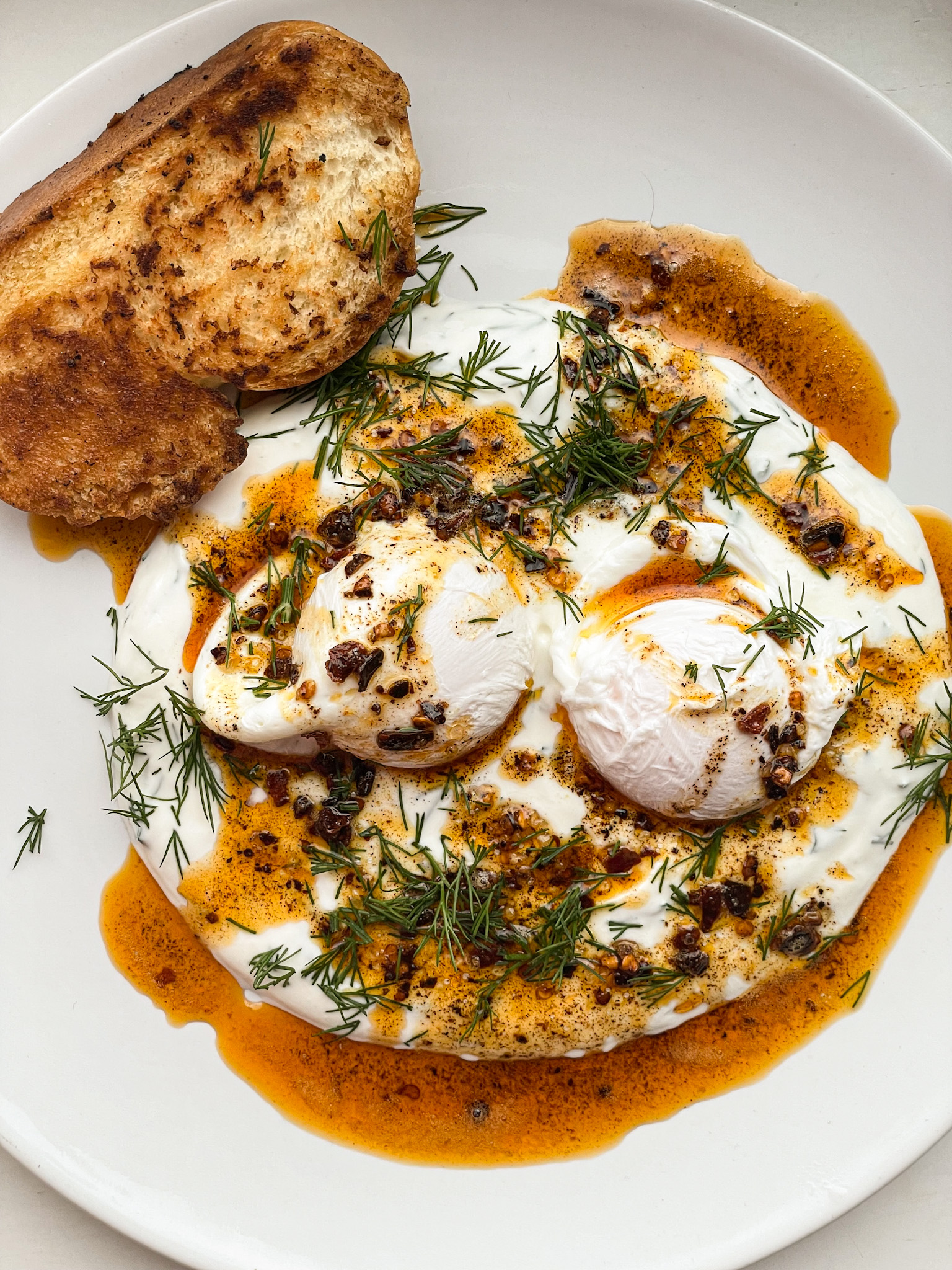
Great Eggs represent more than just another egg dish. It’s the difference between ordinary breakfast and extraordinary dining experiences that feel special without complicated techniques. Whether you’re preparing weekend brunch, hosting guests, or treating yourself to something unique, this recipe delivers consistently perfect results.
The magic of exceptional Turkish Eggs lies in understanding how contrasting elements create perfect harmony. Creamy, tangy yogurt provides cool base while hot spiced butter adds warmth. Runny egg yolks create rich sauce when broken, binding everything together. Best of all, the entire process takes just 15 minutes from start to finish.
Amazing Reasons You’ll Love These Turkish Eggs
Authentically Delicious – This Turkish Eggs recipe showcases genuine Cilbir preparation methods used across Turkey for centuries. The combination tastes exotic yet comforting at the same time.
Quick and Impressive – Your Turkish Eggs will be ready in just 15 minutes despite looking and tasting like something from an upscale restaurant. Perfect for impressing brunch guests effortlessly.
Perfectly Balanced Flavors – Tangy yogurt, rich egg yolk, aromatic garlic, and spiced butter create harmonious Turkish Eggs where every element complements the others beautifully.
Healthy and Protein-Packed – With eggs and Greek yogurt as main components, Eggs provide substantial protein and probiotics to start your day right.
Simple Ingredient List – You need just five basic ingredients to create incredible Turkish Eggs. No exotic shopping trips or complicated preparations required.
Versatile Serving Options – While traditional Turkish Eggs make perfect breakfast, they also work beautifully for brunch, lunch, or light dinner with bread on the side.
Understanding Cilbir: The Traditional Turkish Eggs
Before mastering Turkish Eggs, understanding this dish’s cultural significance and traditional preparation helps you appreciate why this simple recipe has endured for centuries.
What Makes Turkish Eggs Special
Cilbir, pronounced “chil-BEER,” has been a beloved Turkish breakfast staple for hundreds of years. Unlike American-style eggs where components stay separate, Eggs create cohesive dish where each element enhances the others.
The genius of Eggs lies in temperature and texture contrasts. Cold, thick yogurt provides refreshing base while hot butter adds warmth and richness. Soft poached eggs with runny yolks create sauce when pierced, flowing through yogurt and mixing with spiced butter.
This dish showcases how Mediterranean cuisine uses yogurt in savory applications brilliantly. While Western breakfasts typically feature yogurt with fruit and granola, Eggs highlight yogurt’s versatility as savory ingredient that balances rich eggs perfectly.
The History Behind Turkish Eggs
Historical records suggest Turkish Eggs date back to the Ottoman Empire, where this dish graced royal tables. The combination of accessible ingredients prepared with care reflects Turkish culinary philosophy: simple foods elevated through proper technique and quality ingredients.
Today, Turkish Eggs remain breakfast favorite across Turkey and have gained international popularity as more people discover this unique preparation. The dish perfectly represents Turkish hospitality and the country’s rich culinary traditions.
Essential Ingredients for Perfect Turkish Eggs
Understanding each component’s role in your Eggs ensures you achieve the best possible results every time you prepare this dish.
Complete Ingredient Breakdown
Greek Yogurt – The foundation of Eggs. Full-fat Greek yogurt provides thick, creamy base with tangy flavor that balances rich eggs. Use plain, unsweetened yogurt at room temperature for best results. Cold yogurt creates unpleasant temperature contrast.
Fresh Garlic – Two to three cloves of minced garlic infuse the yogurt with aromatic flavor essential to authentic Eggs. Fresh garlic creates superior taste compared to jarred or powdered alternatives.
Fresh Eggs – Four large eggs are traditional for two servings of Eggs. The freshest eggs poach most successfully, maintaining tight whites and perfectly runny yolks.
Butter – Four tablespoons of unsalted butter create the rich sauce drizzled over Eggs. Quality butter makes noticeable difference in final flavor.
Aleppo Pepper – This Turkish red pepper provides gentle heat and fruity flavor distinctive to authentic Eggs. If unavailable, substitute with paprika mixed with small amount of cayenne, though flavor differs.
Salt – For seasoning yogurt and pasta water in your Eggs preparation.
White Vinegar – Optional tablespoon added to poaching water helps egg whites coagulate quickly, creating neater Eggs.
Fresh Bread – While not mixed into Eggs, crusty bread, pita, or simit is essential for soaking up the delicious yogurt and butter sauce.
Professional Tips for Restaurant-Quality Turkish Eggs
Creating exceptional Turkish Eggs requires understanding key techniques that separate mediocre results from outstanding ones. Master these methods for consistently perfect outcomes.
Expert Techniques for Perfect Turkish Eggs
Use Room Temperature Yogurt – Cold yogurt creates unpleasant temperature shock when hot elements are added to Turkish Eggs. Let yogurt sit at room temperature 30 minutes before preparing.
Fresh Eggs Poach Best – The freshest eggs maintain tight whites during poaching, creating neat Turkish Eggs presentation. Older eggs have thinner whites that spread in water.
Master the Poaching Technique – Create gentle whirlpool in simmering water before adding eggs. This helps whites wrap around yolks, forming compact shape essential to beautiful Turkish Eggs.
Don’t Overcook the Eggs – Poach for exactly two to three minutes for Turkish Eggs. The whites should be just set while yolks remain completely runny to create sauce.
Infuse Butter Properly – Heat butter with Aleppo pepper gently until fragrant. Don’t brown the butter, which creates nutty flavor that changes traditional Turkish Eggs character.
Assemble Immediately – Turkish Eggs must be served hot. Have everything ready before poaching eggs so you can assemble and serve immediately.
Adjust Garlic to Taste – Start with less garlic in your Turkish Eggs if unsure about strength. You can always add more, but you cannot remove excess.
Step-by-Step Instructions for Incredible Turkish Eggs
Follow these detailed directions to create the best Turkish Eggs you’ve ever tasted. Each step builds toward perfect final results.
Preparing the Garlic Yogurt Base
Remove Greek yogurt from refrigerator and let sit at room temperature for 30 minutes before preparing your Eggs. Cold yogurt creates unpleasant temperature contrast in the final dish.
In a medium bowl, combine one cup of room temperature Greek yogurt with two to three cloves of finely minced fresh garlic. Add a generous pinch of salt to taste. Mix thoroughly until garlic distributes evenly throughout the yogurt.
Divide the garlic yogurt mixture between two shallow serving bowls, spreading it across the bottom of each bowl. The yogurt layer should be substantial, providing proper base for your Eggs. Set these prepared bowls aside while you poach the eggs.
The garlic flavor will continue developing as the yogurt sits, so if you prefer milder garlic taste in your Eggs, reduce the amount or let the mixture sit for shorter time before serving.
Mastering the Perfect Poached Egg
Fill a medium-sized pot or deep skillet with water about three inches deep. Bring water to gentle simmer over medium heat. The water should have small bubbles rising but not be at rolling boil. Aggressive boiling creates turbulent water that tears delicate egg whites.
Add one tablespoon of white vinegar to the simmering water if desired. The acid helps egg whites coagulate more quickly, creating neater poached eggs for your Eggs. The vinegar won’t affect flavor if you use proper amount.
Crack one fresh egg into a small fine-mesh strainer held over a bowl. Gently swirl the strainer, allowing the thin, watery part of the egg white to drain away. This step creates more compact poached eggs with better shape for Eggs.
Using a wooden spoon, stir the simmering water vigorously in one direction to create a gentle whirlpool effect. This vortex helps the egg white wrap around the yolk, forming the classic poached egg shape essential to beautiful Eggs.
Gently slide the egg from the strainer into the center of the whirlpool. The swirling water will wrap the white around the yolk. Let the egg cook undisturbed for two to three minutes. For Eggs, you want whites completely set but yolks still very runny.
Use a slotted spoon to carefully lift the poached egg from the water. Let excess water drain briefly, then place the egg on a plate lined with paper towels to absorb remaining moisture. Repeat the poaching process for remaining eggs, working one or two at a time depending on your pot size.
Perfect poached eggs are the heart of great Eggs, so take your time with this step. Rushing creates broken whites or overcooked yolks that ruin the dish’s essential character.
Creating the Aromatic Spiced Butter
While your final eggs poach, prepare the spiced butter sauce. In a small saucepan, melt four tablespoons of unsalted butter over medium-low heat. Once butter melts completely, add two teaspoons of Aleppo pepper or your chosen substitute.
Stir the butter and pepper mixture gently, allowing the spices to infuse the butter for 30 to 45 seconds. The butter should become fragrant and take on reddish color from the pepper. Don’t let the butter brown or burn, which creates wrong flavor profile for Turkish Eggs.
Remove the spiced butter from heat and keep warm while you assemble the dish. The butter should be hot when drizzled over your Turkish Eggs for proper presentation and flavor.
Assembling Perfect Turkish Eggs
Working quickly while everything is hot, place one or two poached eggs on top of the garlic yogurt in each prepared serving bowl. The eggs should nestle into the yogurt slightly but remain visible on top.
Immediately drizzle the hot spiced butter generously over the eggs and yogurt in each bowl. The butter should sizzle slightly when it hits the yogurt, creating visual and auditory appeal that makes Turkish Eggs so impressive.
Garnish with a final sprinkle of Aleppo pepper if desired, and add a small pinch of flaky sea salt over the eggs. Some preparations of Turkish Eggs also include fresh herbs like dill or mint, though these are optional.
Serving Your Turkish Eggs
Serve your Turkish Eggs immediately while everything is hot. Provide crusty bread, pita, or traditional Turkish simit on the side for scooping up the delicious yogurt, egg, and butter mixture.
Instruct diners to break the egg yolks with their fork or bread, allowing the rich yolk to flow through the yogurt and mix with spiced butter. This creates the signature sauce that makes Turkish Eggs so incredibly satisfying.

Common Mistakes to Avoid When Making Turkish Eggs
Even experienced home cooks sometimes encounter problems when making Turkish Eggs. Avoid these pitfalls for perfect results every time.
Using Cold Yogurt
Cold yogurt creates unpleasant temperature contrast in Eggs when hot eggs and butter are added. Always bring yogurt to room temperature before preparing this dish.
Overcooking the Eggs
Overcooked poached eggs with firm yolks ruin Eggs completely. The runny yolk is essential for creating the sauce that binds all elements together. Poach for exactly two to three minutes.
Boiling Water Too Vigorously
Rolling boil tears delicate egg whites apart, creating ragged poached eggs that look messy in your Eggs. Always maintain gentle simmer with small bubbles.
Browning the Butter
While brown butter tastes delicious in many dishes, it changes the traditional flavor profile of Eggs. Melt butter gently with spices without allowing it to brown.
Not Having Everything Ready
Eggs must be assembled and served immediately while hot. Not having yogurt prepared and butter ready before poaching eggs results in temperature loss that ruins the dish.
Skipping the Bread
While bread isn’t mixed into Eggs, it’s essential for proper enjoyment. Without bread to scoop and soak up the sauce, you miss half the experience of this dish.
Delicious Variations to Try with Your Turkish Eggs
Once you master basic Turkish Eggs, these creative variations add exciting new dimensions while maintaining the essential character that makes this dish beloved.
Protein Additions for Heartier Turkish Eggs
Crispy Bacon Eggs – Crumble crispy bacon over the top before serving. The smoky, salty crunch complements creamy yogurt in enhanced Eggs.
Spiced Lamb Eggs – Brown ground lamb with cumin and serve alongside. This creates more substantial Eggs perfect for brunch.
Smoked Salmon Eggs – Add thin slices of smoked salmon alongside eggs. The fish pairs beautifully with yogurt and dill in this variation.
Vegetable Additions
Spinach Eggs – Sauté fresh spinach and place beneath eggs. The greens add nutrition and color to your Eggs.
Roasted Tomato Eggs – Top with halved roasted cherry tomatoes. Their sweetness balances tangy yogurt perfectly in this variation.
Sautéed Mushrooms Eggs – Add golden mushrooms for earthy flavor that complements the garlic yogurt in enhanced Eggs.
Herb and Spice Variations
Dill Eggs – Garnish with fresh dill for traditional Turkish flavor. The herb adds brightness to your Eggs.
Mint Eggs – Add fresh mint leaves for cooling contrast. This creates refreshing variation of Eggs.
Sumac Eggs – Sprinkle tangy sumac over the top instead of or in addition to Aleppo pepper for different Middle Eastern character.
Za’atar Eggs – Dust with za’atar spice blend for herbaceous, nutty variation that transforms traditional Eggs.
Perfect Pairings for Your Turkish Eggs
Understanding what to serve alongside Turkish Eggs creates complete, satisfying meals that showcase this dish perfectly.
Ideal Bread Choices
Simit – Traditional Turkish sesame bread rings are the authentic choice for Turkish Eggs. The chewy, sesame-crusted bread provides perfect vehicle for scooping.
Crusty Sourdough – Thick slices of crusty sourdough bread work beautifully with Turkish Eggs when simit isn’t available.
Pita Bread – Warm, soft pita provides excellent scoop for Turkish Eggs while maintaining Middle Eastern theme.
Naan – Though Indian rather than Turkish, naan’s soft, pillowy texture pairs wonderfully with Turkish Eggs.
Beverage Pairings
Serve Turkish Eggs with strong Turkish tea or Turkish coffee for authentic experience. Fresh orange juice provides refreshing contrast to rich yogurt and eggs. For adults, champagne or prosecco creates elegant brunch pairing with Turkish Eggs.
Storage and Reheating Instructions for Turkish Eggs
Understanding proper handling ensures you get the best experience from this dish that’s meant to be enjoyed fresh.
Why Turkish Eggs Don’t Store Well
Turkish Eggs are one of those dishes best enjoyed immediately after preparation. Poached eggs cannot be refrigerated and reheated successfully. The yolks firm up and whites become rubbery, completely changing the dish’s essential character.
The yogurt base can be prepared ahead and refrigerated for up to two days, but once eggs are poached and dish is assembled, Turkish Eggs must be consumed immediately.
Make-Ahead Strategy
If you want to streamline preparation of Turkish Eggs for entertaining, prepare the garlic yogurt mixture ahead and refrigerate. Bring to room temperature 30 minutes before serving.
Have your spiced butter ingredients measured and ready. Poach eggs just before serving for the best Turkish Eggs experience. The poaching takes only minutes, so timing works well even for guests.
Nutritional Information and Health Benefits
Understanding the nutritional profile of Turkish Eggs helps you appreciate this dish as nutritious breakfast option, not just delicious one.
Health Benefits of Turkish Eggs
Each serving of Turkish Eggs provides approximately 300 to 400 calories, depending on exact portions. The dish offers substantial protein from eggs and Greek yogurt, healthy fats from egg yolks and butter, and probiotics from yogurt.
Greek yogurt provides calcium and beneficial bacteria that support digestive health. Eggs contribute vitamins A, D, E, B12, and minerals including selenium and choline. Garlic adds antimicrobial properties and cardiovascular benefits.
While Turkish Eggs contain saturated fat from butter and egg yolks, the dish provides balanced macronutrients that keep you satisfied through morning. The protein content makes Turkish Eggs excellent choice for active individuals or anyone seeking substantial breakfast.
Making Lighter Turkish Eggs
For reduced-calorie version, use low-fat Greek yogurt instead of full-fat. Reduce butter to two tablespoons and use more Aleppo pepper for flavor. These modifications create lighter Turkish Eggs while maintaining core character.
Frequently Asked Questions About Turkish Eggs
Can I use regular yogurt instead of Greek yogurt?
Regular yogurt is too thin for proper Eggs. Greek yogurt’s thick consistency is essential for creating the proper base. If you only have regular yogurt, strain it through cheesecloth for several hours first.
What if I can’t find Aleppo pepper?
Substitute with one teaspoon sweet paprika mixed with pinch of cayenne for Turkish Eggs. While the flavor differs slightly, this combination provides similar color and gentle heat.
How do I know when poached eggs are done?
For perfect Turkish Eggs, whites should be completely set but jiggle slightly when touched gently. Yolks should feel very soft when pressed lightly. This occurs after two to three minutes of poaching.
Can I poach eggs ahead of time?
You can poach eggs up to one hour ahead and hold them in ice water, then reheat briefly in hot water before serving your Turkish Eggs. However, freshly poached eggs taste better.
Is vinegar necessary for poaching eggs?
No, vinegar is optional for Eggs. It helps whites coagulate faster, creating neater shape, but doesn’t affect flavor significantly. If you skip it, ensure water is at proper gentle simmer.
Why do my egg whites spread everywhere?
Very fresh eggs poach most successfully for Eggs. Older eggs have thinner whites that spread. Using the strainer technique to remove thin whites before poaching helps significantly.
Why Turkish Eggs Deserve a Place in Your Recipe Collection
Turkish Eggs showcase how simple ingredients prepared with care create extraordinary results. This isn’t complicated recipe requiring expensive equipment or hard-to-find ingredients. Anyone can master Turkish Eggs with little practice.
The dish teaches important cooking techniques including proper poaching, flavor balancing, and understanding how temperature and texture contrasts create interest. These skills transfer to countless other recipes, making Turkish Eggs valuable addition to your culinary knowledge.
Most importantly, Turkish Eggs deliver restaurant-quality breakfast that impresses guests while feeling achievable for everyday enjoyment. The combination of exotic yet accessible makes this dish perfect for expanding your breakfast repertoire.
Transform Your Breakfast with Perfect Turkish Eggs
Mastering homemade Turkish Eggs elevates your breakfast game significantly. This versatile recipe works for weekend brunch, special occasions, or treating yourself to something unique during the week. The impressive presentation and incredible flavors make you look like a professional chef.
Start making Turkish Eggs this weekend and experience this beloved Turkish tradition yourself. Once you taste the perfect combination of tangy yogurt, rich egg yolk, and aromatic spiced butter, you’ll understand why this simple dish has remained favorite for centuries.
The magic of great Turkish Eggs lies in respecting each component and bringing them together at the proper moment. Quality ingredients prepared with care create something extraordinary that brings joy with every bite.
Your Turn to Create Incredible Turkish Eggs
Now that you understand every detail of creating perfect Turkish Eggs, gather your ingredients and head to the kitchen. The combination of creamy yogurt, perfectly poached eggs, and aromatic butter awaits, ready to transform ordinary breakfast into something truly special.
Remember the key techniques: use room temperature yogurt, poach eggs gently, prepare spiced butter carefully, and serve immediately. Follow these principles, and your Turkish Eggs will rival anything from authentic Turkish restaurants.
Share your creation with family and friends. Watch their faces light up as they taste this unique combination of flavors they’ve likely never experienced before. That moment of shared discovery represents why cooking matters beyond simple sustenance.
Make Turkish Eggs part of your regular breakfast rotation. This reliable recipe solves multiple needs: impressive brunch entertaining, healthy protein-packed breakfast, and craving for something unique and flavorful. Its exotic simplicity means you’ll receive nothing but compliments.
Start your Turkish Eggs journey today. Your kitchen will smell incredible with garlic and spiced butter, your table will look stunning with beautiful plated eggs, and everyone will thank you for introducing them to this delicious Turkish tradition. That’s the power of authentic recipes that truly deserve their legendary status.
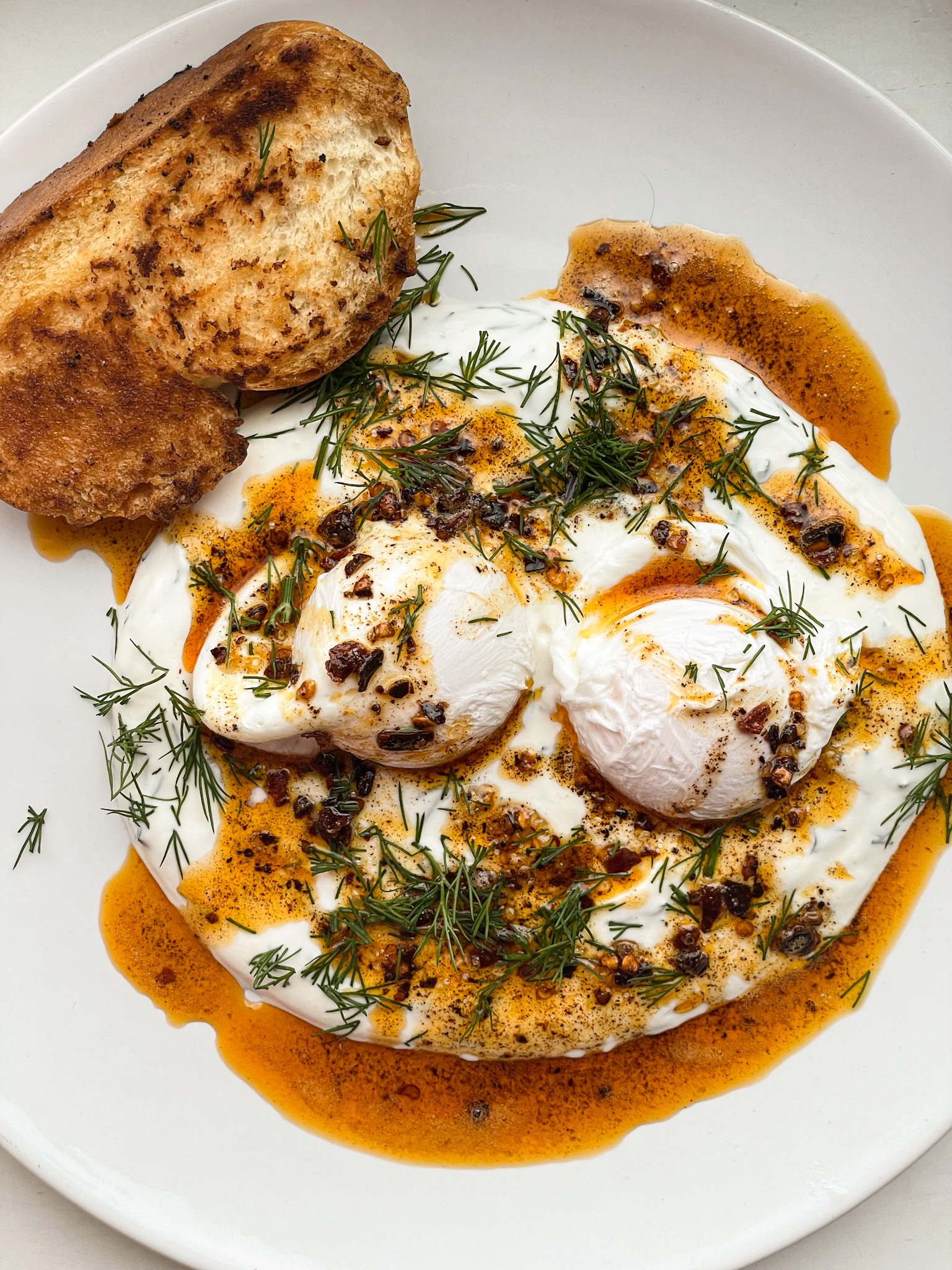
Watch the recipe video for more clarity

See our ALFREDO GNOCCHI recipe
- 2 poached eggs
- 35 g butter
- 1.5 tsp chili pepper flakes or aleppo pepper
- 350 g greek yogurt room temperature
- 1 garlic clove minced
- 1 handful of dill finely chopped.
In a small bowl, add the yogurt, pepper, salt, garlic powder and some dill and mix. Spread this mixture on a plate.
Bring a medium saucepan full of water to a boil. Stir in the vinegar.
Meanwhile, crack an egg into a small fine mesh sieve over a small bowl. Gently swirl the eggs in the sieve to drain the liquid part of the egg whites. Transfer the egg to a ramekin.
When the water is ready, using a wooden spoon, stir the water to create a vortex. Quickly add the egg to the middle of vortex and cook for 2 to 3 minutes. When ready, using a slotted spoon, transfer the egg to a plate that’s been lined with parchment paper.
Prepare and cook the second egg exactly as you did the first.
While the second egg is cooking, quickly make the butter sauce. In a small skillet, warm the butter and Aleppo pepper over medium heat.
In another pan, fry the bread in butter on both sides and set aside.
Add the eggs on top of the yogurt, then add the chili sauce and top with extra dill.
- The yogurt must be at room temperature. You'll want to use thick whole milk yogurt (that's why I chose Greek yogurt) and you'll need to allow it to come to room temperature before stirring in the garlic and other ingredients. Do not refrigerate the yogurt mixture while you are cooking the eggs.
- Serve Cilbir immediately. Cilbir should be served as soon as the eggs are finished cooking.
- Add fresh herbs. This is optional and not traditional, but I love a sprinkle of fresh herbs like dill or mint on top of the dish before serving.
If you've given this recipe a try and it won you over, please share your thoughts by leaving
a rating and comment below! If you have any questions about this recipe, don't hesitate to ask – I'm here to
help and will respond promptly.