Create Authentic Turkish Baklava Recipe at Home
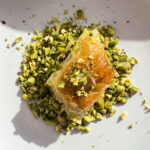
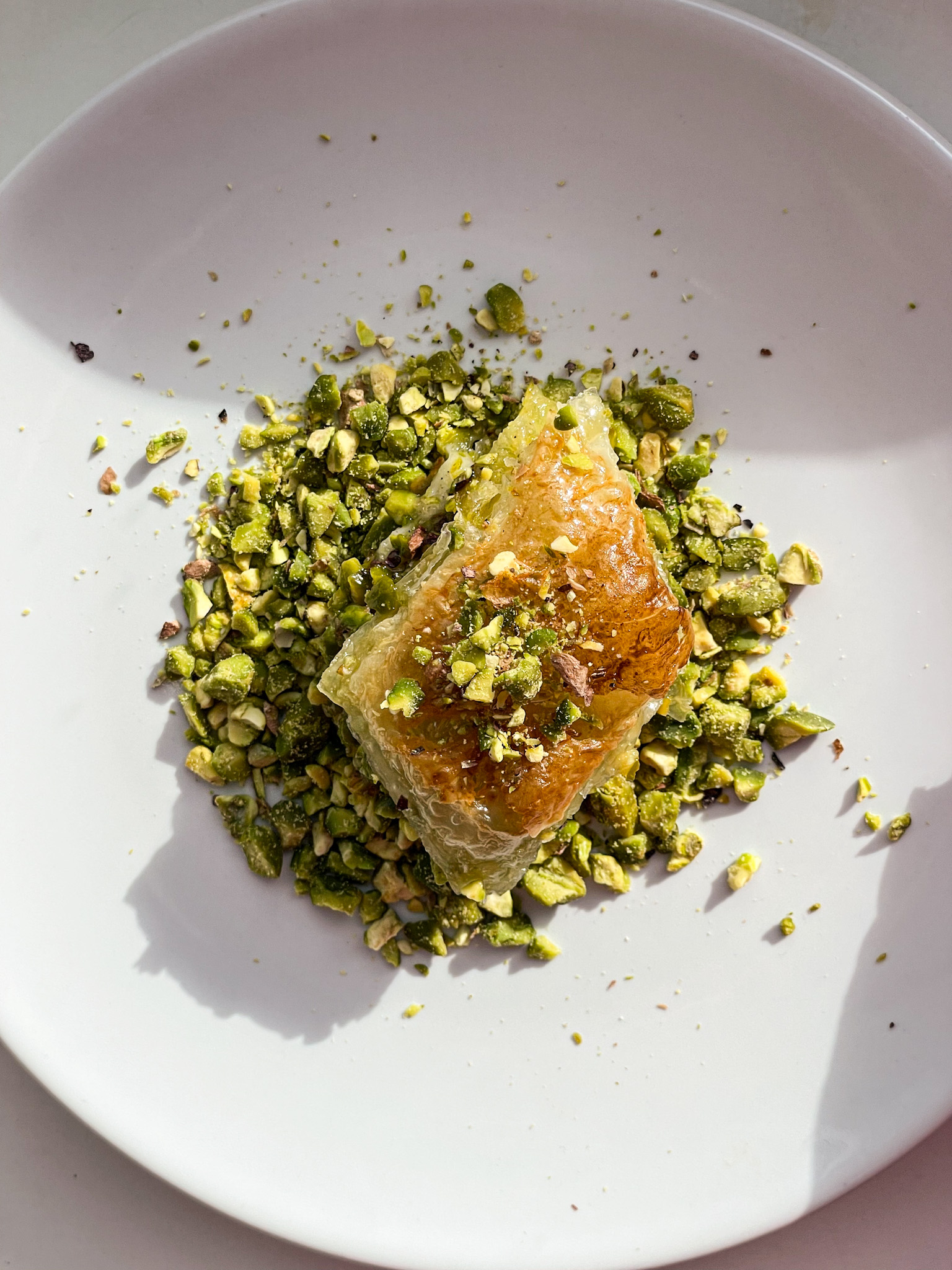
Turkish Baklava Recipe is a timeless dessert that represents the pinnacle of Ottoman pastry artistry. This exquisite sweet features impossibly thin layers of crispy phyllo dough, generously filled with finely chopped pistachios or walnuts, and drenched in fragrant honey or sugar syrup. Each bite delivers a perfect harmony of textures and flavors that has captivated dessert lovers for centuries across the Middle East and beyond.
What makes this Turkish Baklava Recipe truly special is the delicate balance between crispy, flaky pastry and rich, nutty filling. The layers shatter beautifully when you bite into them, giving way to the sweet, aromatic syrup that has soaked into every crevice. This dessert is simultaneously crunchy and tender, sweet yet complex, with the natural flavor of premium nuts shining through.
Learning to master a traditional Turkish Baklava Recipe might seem intimidating at first, but with proper technique and patience, anyone can create this magnificent dessert at home. The process requires attention to detail, from handling delicate phyllo dough to preparing perfectly balanced syrup. However, the results are absolutely worth the effort.
This comprehensive Turkish Baklava Recipe guide will walk you through every step of the process, from selecting quality ingredients to achieving those iconic diamond-shaped pieces. Whether you’re preparing baklava for a special celebration, holiday gathering, or simply craving this beloved sweet, you’ll find everything you need to succeed right here.
Why This Recipe is Special
Turkish Baklava Recipe holds a place of honor in Middle Eastern cuisine, representing centuries of culinary refinement. The Ottoman palace kitchens perfected this dessert over generations, with master pastry chefs developing techniques that are still used today. When you prepare this recipe, you’re connecting with a rich cultural heritage.
Unlike many modern desserts, a traditional Turkish Baklava Recipe relies on simple, quality ingredients rather than complicated techniques or exotic components. The magic happens through careful layering, proper butter application, and perfectly balanced syrup. This simplicity allows the natural flavors of pistachios and phyllo to shine.
The versatility of this Turkish Baklava Recipe makes it suitable for any occasion. Serve it at weddings, holidays, religious celebrations, or casual family gatherings. Baklava always impresses, yet remains approachable and beloved by people of all ages. Its elegant appearance belies the straightforward preparation method.
Key Ingredients Overview
The ingredient list for this Turkish Baklava Recipe is refreshingly short, with each component playing a crucial role. Phyllo pastry sheets form the foundation, creating those signature paper-thin layers that become impossibly crispy when baked. You’ll find phyllo in the frozen section of most grocery stores, typically in one-pound packages.
Pistachios are the traditional choice for authentic Turkish Baklava Recipe, prized for their vibrant green color, delicate flavor, and slight sweetness. Walnuts serve as a popular alternative, offering deeper, earthier notes. Some cooks use a combination of both nuts for complex flavor and beautiful appearance.
Butter is essential in this Turkish Baklava Recipe, providing richness and helping create those flaky layers. Use high-quality unsalted butter for best results. The butter must be completely melted and kept warm throughout the assembly process to ensure easy brushing and even distribution.
Sugar and water combine to create the sweet syrup that transforms this Turkish Baklava Recipe from good to extraordinary. A touch of lemon juice balances the sweetness and prevents the syrup from crystallizing. This simple syrup soaks into every layer, binding the dessert together while adding essential sweetness.
Understanding the Origins of Turkish Baklava Recipe
The history of Turkish Baklava Recipe stretches back centuries to the kitchens of the Ottoman Empire. While the exact origins remain debated among food historians, most agree that Ottoman palace cooks refined and perfected the dessert we know today. These talented chefs experimented tirelessly with dough thickness, nut combinations, and syrup formulations.
Archaeological evidence suggests that layered pastries existed in ancient times, but the Turkish Baklava Recipe as we know it today emerged during the Ottoman era. The palace kitchens in Istanbul employed hundreds of specialized cooks, with some dedicating their entire careers to perfecting a single dessert. Baklava was among the most prized creations.
The thin phyllo dough used in Turkish Baklava Recipe required exceptional skill to prepare by hand. Master dough makers would stretch a small ball of dough across an entire table, creating sheets so thin you could read a newspaper through them. Modern commercially prepared phyllo maintains this tradition of thinness while making this recipe accessible to home cooks.
Cultural Significance
Throughout Turkish culture, this Turkish Baklava Recipe represents hospitality, celebration, and tradition. Serving baklava to guests demonstrates respect and generosity, as the dessert requires time, skill, and quality ingredients. During Ramadan, weddings, and religious holidays, baklava takes center stage on dessert tables across Turkey and neighboring countries.
Different regions developed their own variations of this Turkish Baklava Recipe, with Gaziantep becoming particularly famous for its pistachio baklava. The city’s unique climate and soil produce pistachios with exceptional flavor, making Gaziantep baklava highly sought after. These regional variations maintain the same basic technique while highlighting local ingredients.
Traditional Preparation Philosophy
Experienced bakers emphasize that creating excellent Turkish Baklava Recipe requires patience and attention rather than speed. Each layer of phyllo must be brushed with butter, the nuts must be chopped to uniform size, and the syrup must be prepared with precise measurements. These traditional techniques, refined over centuries, ensure consistent, delicious results.
Choosing the Right Ingredients
Selecting quality ingredients elevates your Turkish Baklava Recipe from good to exceptional. Understanding what to look for when shopping ensures your dessert turns out beautifully.
Phyllo Pastry Selection
The foundation of any Turkish Baklava Recipe is high-quality phyllo dough. Look for phyllo in the frozen section of grocery stores, Middle Eastern markets, or specialty food shops. The package should feel firm and show no signs of damage or ice crystals, which indicate poor storage conditions.
Brand matters when selecting phyllo for your Turkish Baklava Recipe. Established brands tend to produce more consistent thickness and quality. Check the ingredient list, preferring phyllo made with simple ingredients like flour, water, and minimal additives. Some brands add cornstarch, which can affect texture slightly.
Phyllo sheets come in various sizes, typically around thirteen by eighteen inches. For this Turkish Baklava Recipe, standard-sized sheets work perfectly. If you find only larger sheets, you can trim them to fit your baking pan. Store frozen phyllo until needed, and thaw it properly before use.
Nut Selection
Pistachios create the most authentic Turkish Baklava Recipe, offering beautiful green color and delicate, slightly sweet flavor. Choose raw, unsalted pistachios for best results. Shelled pistachios save time, though whole pistachios you shell yourself often taste fresher.
For a traditional Turkish Baklava Recipe, the pistachios should be ground to medium-fine texture. Not too fine like powder, but not chunky either. This consistency allows the nuts to distribute evenly between phyllo layers while maintaining some texture. A food processor makes quick work of chopping nuts to perfect consistency.
Walnuts serve as an excellent alternative or addition to pistachios in this Turkish Baklava Recipe. They offer deeper, earthier flavor and cost less than pistachios. Some cooks combine half pistachios and half walnuts for balanced flavor and economy. Ensure walnuts are fresh, as they can turn bitter when stale.
Butter Quality
The butter used in your Turkish Baklava Recipe significantly impacts the final flavor and texture. Choose unsalted butter so you can control the sweetness precisely. European-style butter with higher fat content produces even richer, flakier results, though standard unsalted butter works beautifully.
Clarified butter, also called ghee, is traditional in some versions of this Turkish Baklava Recipe. Clarified butter has a higher smoke point and produces crisper results. You can clarify butter at home by gently melting it and skimming off the milk solids, or purchase prepared ghee.
Plan on using generous amounts of butter for your Turkish Baklava Recipe. Each phyllo layer needs a light brushing, and with thirty to forty layers in a typical recipe, you’ll use several sticks of butter. This richness is what creates the signature flaky texture everyone loves.
Sugar and Syrup Components
The syrup is crucial to your Turkish Baklava Recipe, transforming individual components into a cohesive, sweet masterpiece. Use granulated white sugar for clean, straightforward sweetness. Some recipes incorporate honey, which adds floral notes and creates slightly different texture.
Lemon juice serves an important purpose in this Turkish Baklava Recipe beyond adding flavor. The acid prevents sugar crystallization as the syrup cools, ensuring smooth, pourable consistency. Fresh lemon juice tastes best, though bottled juice works if that’s what you have available.
Water quality matters in your Turkish Baklava Recipe syrup. If your tap water has strong mineral taste or odor, consider using filtered or bottled water. The syrup is simple enough that off-flavors in water can affect the final taste of your baklava.
Step-by-Step Instructions for Perfect Results
Creating exceptional Turkish Baklava Recipe requires following specific steps in proper sequence. Each phase builds toward the final magnificent dessert.
Preparing Your Workspace
Begin your Turkish Baklava Recipe by organizing your workspace. Clear a large, clean surface for working with phyllo dough. Gather all ingredients and equipment before starting, including a pastry brush, sharp knife, baking pan, and damp kitchen towel for covering phyllo.
Thaw frozen phyllo dough properly for successful Turkish Baklava Recipe. Transfer the package from freezer to refrigerator the night before baking, allowing slow, even thawing. Rapid thawing at room temperature can cause condensation, making the sheets stick together and tear easily.
Melt your butter and keep it warm but not hot when preparing this Turkish Baklava Recipe. If the butter is too hot, it can tear the delicate phyllo; if too cool, it won’t brush on smoothly. Transfer melted butter to a small bowl and place it near your work surface for easy access.
Preparing the Nut Filling
Process your pistachios or walnuts to medium-fine consistency for this Turkish Baklava Recipe. Pulse them in a food processor until they reach the texture of coarse sand. The nuts should hold together slightly when pressed, but not form a paste. Overprocessing releases oils that can make the filling heavy.
Some variations of this Turkish Baklava Recipe include a small amount of sugar or cinnamon mixed into the nuts. While traditional recipes often use plain nuts, a tablespoon or two of sugar enhances sweetness, and a quarter teaspoon of cinnamon adds warmth. Mix these additions thoroughly with the ground nuts if using.
Set the prepared nut mixture aside in a bowl while you work with the phyllo for your Turkish Baklava Recipe. Having the filling ready before you unwrap the phyllo dough ensures efficient assembly and prevents the delicate sheets from drying out during preparation.
Layering the Phyllo
Remove thawed phyllo from its package and unroll it carefully for your Turkish Baklava Recipe. Place the stack of sheets on your work surface and immediately cover with a slightly damp kitchen towel. This prevents drying while you work. Keep the towel damp but not wet, as excess moisture can make sheets stick together.
Brush your baking pan generously with melted butter before beginning to layer phyllo for this Turkish Baklava Recipe. This prevents sticking and adds extra richness to the bottom layers. Use a nine-by-thirteen-inch pan or similar size that matches your phyllo sheet dimensions.
Place one sheet of phyllo in the buttered pan for your Turkish Baklava Recipe, gently pressing it into corners and up the sides. Brush the entire surface lightly with melted butter using smooth strokes. Repeat this process with seven to eight more sheets, brushing each one with butter.
Adding Nut Layers
After layering eight sheets of buttered phyllo, sprinkle a thin, even layer of your prepared nut mixture across the entire surface for this Turkish Baklava Recipe. Use about one-third of your total nut mixture for this first layer. The nuts should cover the phyllo completely but not pile up thickly.
Continue building your Turkish Baklava Recipe by adding more buttered phyllo sheets over the nuts. Layer about four sheets, brushing each with butter, then add another portion of nuts. Repeat this pattern until you’ve used all your nut mixture, creating three distinct nut layers.
Finish your Turkish Baklava Recipe with a final cap of eight to ten phyllo sheets, brushing each one with butter as before. The top layer should be brushed generously with butter to ensure beautiful golden browning during baking. Any leftover butter can be drizzled over the top.
Cutting and Baking
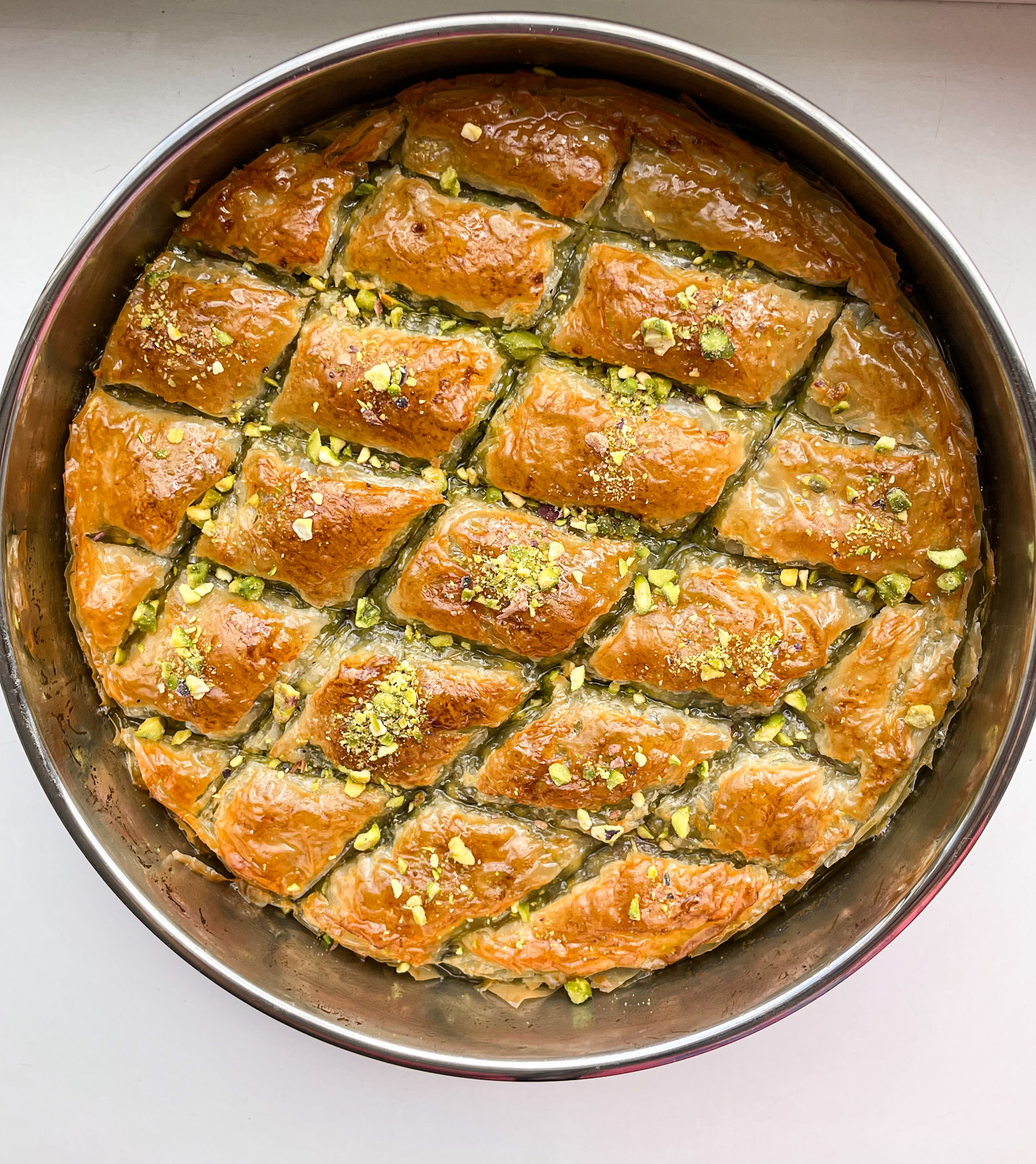
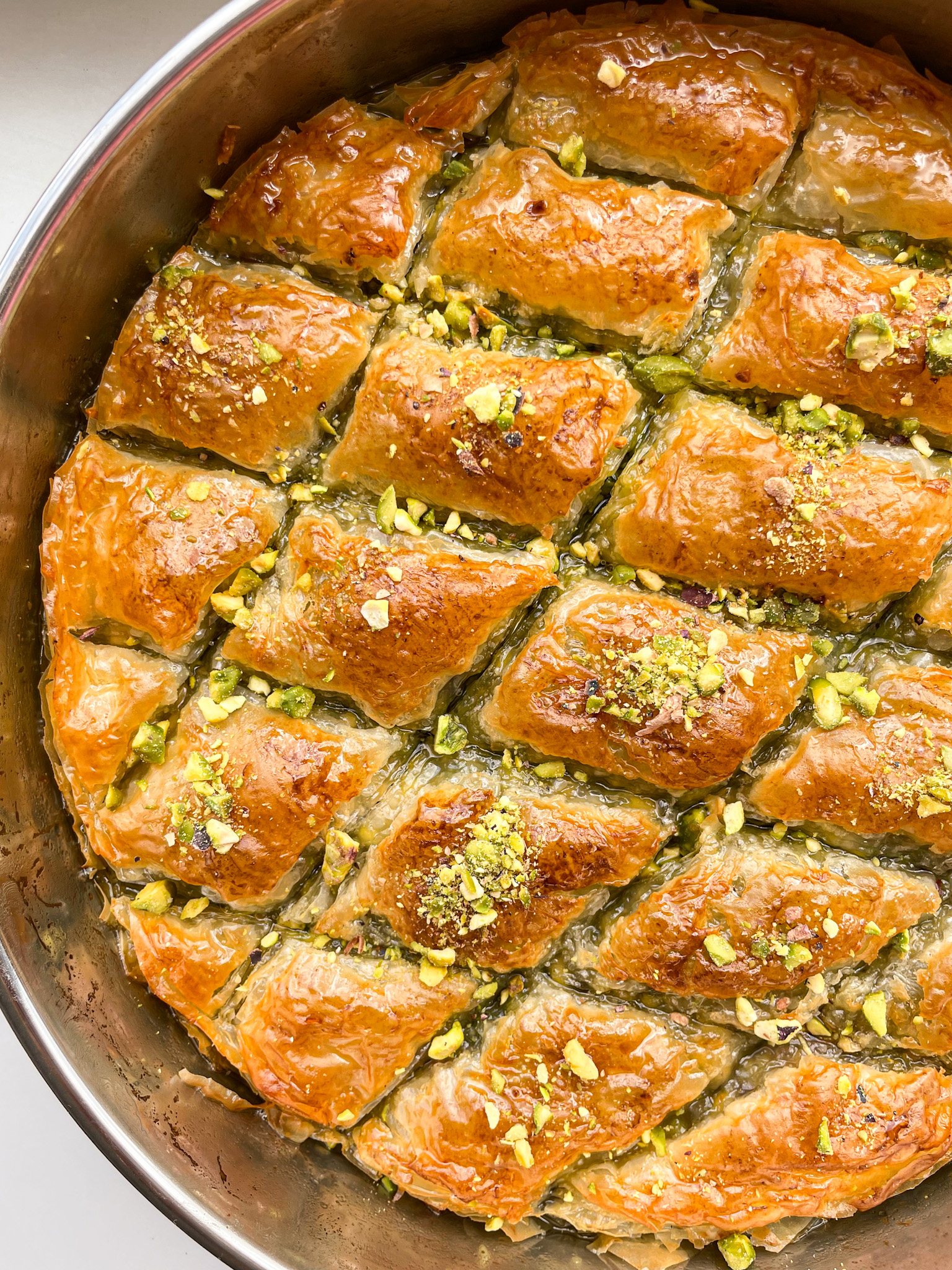
Before baking, cut your assembled Turkish Baklava Recipe into the traditional diamond or square pattern. Use a very sharp knife and cut all the way through to the bottom of the pan. Press firmly but avoid sawing motions, which can tear the layers. Traditional diamonds are cut by making parallel diagonal cuts in one direction, then cutting perpendicular diagonals.
Some cooks prefer cutting this Turkish Baklava Recipe into squares or rectangles instead of diamonds. Either shape works beautifully, so choose based on your preference and serving style. Cutting before baking allows the syrup to penetrate deeply into every layer.
Bake your Turkish Baklava Recipe in a preheated 350-degree Fahrenheit oven for approximately forty-five to fifty minutes, or until the phyllo turns deep golden brown and becomes crispy throughout. The baklava should be fragrant and the layers should appear crispy and separated.
Preparing and Adding Syrup
While your Turkish Baklava Recipe bakes, prepare the sugar syrup. Combine sugar and water in a saucepan over medium heat, stirring until sugar dissolves completely. Bring to a boil, add lemon juice, then reduce heat and simmer for about ten minutes until slightly thickened.
The syrup consistency is crucial for perfect Turkish Baklava Recipe. It should coat a spoon lightly but remain pourable. If too thick, the syrup won’t absorb properly; if too thin, it will make the baklava soggy. Cooking time may vary slightly based on humidity and elevation.
Remove your baked Turkish Baklava Recipe from the oven and immediately pour the warm syrup evenly over the hot pastry. You’ll hear a satisfying sizzle as the syrup meets the hot phyllo. Use all the syrup, distributing it evenly across the entire surface and allowing it to pool in the cut lines.
Professional Tips for Excellence
These expert techniques will help you create restaurant-quality Turkish Baklava Recipe at home every time.
Achieving Perfect Phyllo Layers
The secret to exceptional Turkish Baklava Recipe lies in properly handling phyllo dough. Work quickly but calmly, keeping unused sheets covered at all times. If a sheet tears, don’t worry; simply piece it together or use it as a middle layer where imperfections won’t show.
Brush butter in long, smooth strokes when preparing your Turkish Baklava Recipe. Avoid going over the same area repeatedly, as this can tear the delicate phyllo. Use a soft pastry brush with natural bristles for gentlest application. A light coating on each layer is sufficient.
Temperature control matters when working with phyllo for this Turkish Baklava Recipe. Keep your work environment cool if possible, as warm rooms can cause butter to soak into the phyllo too quickly. If the butter starts to solidify, warm it gently to restore brushability.
Mastering the Syrup
The relationship between hot baklava and syrup temperature is crucial for perfect Turkish Baklava Recipe. Traditional wisdom says one should be hot and the other cool. Most commonly, bakers pour warm or room-temperature syrup over hot baklava fresh from the oven.
Some variations of this Turkish Baklava Recipe reverse this, pouring hot syrup over cooled baklava. Both methods work, but the hot baklava-warm syrup combination is most common in Turkish households. The key is avoiding both components being cold, which prevents proper absorption.
Allow your completed Turkish Baklava Recipe to rest for several hours or overnight after adding syrup. This resting period allows the syrup to distribute evenly throughout all layers and the flavors to meld. Patience during this stage rewards you with perfect texture.
Cutting Techniques
Sharp knives are essential when cutting your Turkish Baklava Recipe before baking. Dull knives tear and compress the delicate layers rather than cleanly separating them. Consider using a thin-bladed knife or even a pizza cutter for the cleanest cuts.
Wipe your knife clean between cuts when working with this Turkish Baklava Recipe. Butter and phyllo can accumulate on the blade, causing dragging and tearing. A damp cloth nearby makes this easy. Clean, precise cuts ensure uniform pieces and professional appearance.
Presentation Excellence
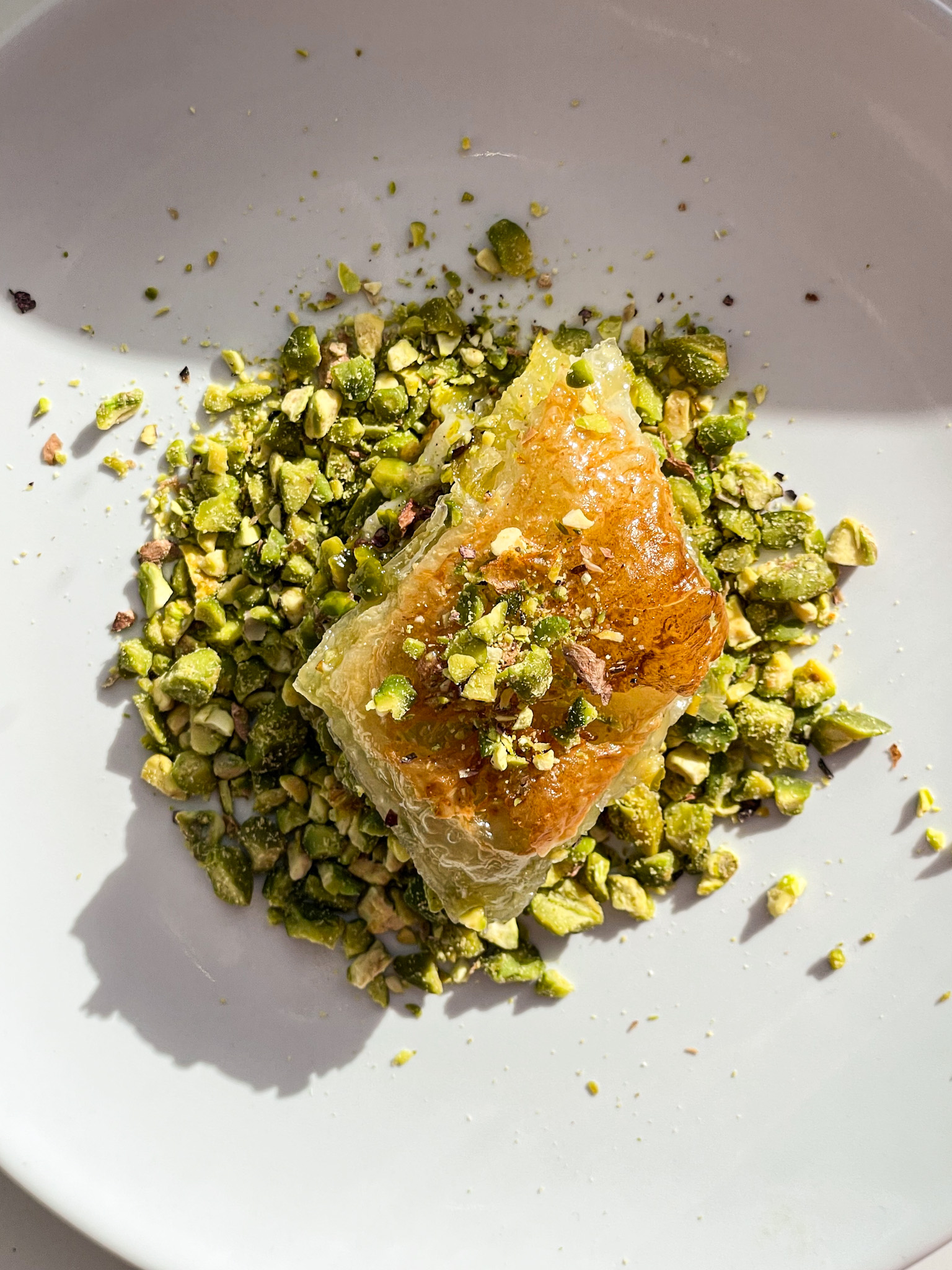
Traditional Turkish Baklava Recipe presentation emphasizes the beautiful diamond cuts and golden color. Serve at room temperature on a decorative platter, perhaps garnished with a few whole pistachios scattered artfully across the top. The natural beauty of baklava needs little embellishment.
For special occasions, this Turkish Baklava Recipe can be presented in individual paper cups like those used in Turkish pastry shops. This method makes serving easier and adds authentic charm. Small decorative plates also work beautifully for formal presentations.
Common Mistakes to Avoid
Understanding potential pitfalls helps you create perfect Turkish Baklava Recipe every time.
Phyllo Dough Disasters
The most common mistake when making Turkish Baklava Recipe is allowing phyllo to dry out during assembly. Exposed phyllo becomes brittle and tears easily within minutes. Always keep unused sheets covered with a damp towel and work as efficiently as possible.
Another frequent error is using too much butter when preparing this Turkish Baklava Recipe. While generous buttering is important, drowning the phyllo creates greasy, heavy baklava rather than light, flaky layers. A light, even coating on each sheet is sufficient.
Syrup Problems
Adding syrup to this Turkish Baklava Recipe while both the pastry and syrup are hot creates soggy results. Similarly, pouring syrup over completely cold baklava prevents proper absorption. Follow the temperature guidelines carefully for best texture.
Making syrup too thick ruins the texture of your Turkish Baklava Recipe. Overly thick syrup sits on top rather than soaking in, creating a sticky exterior with dry interior. If your syrup seems too thick, thin it with a bit of water and simmer briefly.
Cutting Complications
Forgetting to cut your Turkish Baklava Recipe before baking creates a frustrating situation. Attempting to cut through all those crispy layers after baking often results in shattered, broken pieces. Always cut completely through to the bottom of the pan before the baklava goes into the oven.
Cutting pieces too large makes serving and eating this Turkish Baklava Recipe difficult. Traditional diamond pieces are about two inches across at the widest point. This size provides satisfying portions without being overwhelming, as baklava is quite rich and sweet.
Baking Temperature Errors
Baking this Turkish Baklava Recipe at too high a temperature causes the top to brown before the interior layers crisp properly. Conversely, too low a temperature produces pale, undercooked baklava that tastes doughy rather than crispy. Maintain steady 350-degree heat for even baking.
Opening the oven door repeatedly to check on your Turkish Baklava Recipe causes temperature fluctuations that affect even baking. Trust the timing and use your oven light to check progress. Only open the door if you notice uneven browning that requires pan rotation.
Creative Variations to Try
While traditional Turkish Baklava Recipe is wonderful, variations allow customization to your preferences and creativity.
Nut Combinations
Experiment with different nut combinations in your Turkish Baklava Recipe. Try mixing pistachios with walnuts for balanced flavor and beautiful color contrast. Some bakers add cashews for buttery sweetness or hazelnuts for deeper, more complex flavor.
Almonds create a delicious variation of this Turkish Baklava Recipe, offering mild, sweet flavor and wonderful crunch. Toast the almonds lightly before grinding to enhance their natural flavor. Blanched almonds produce cleaner appearance, while almonds with skins add rustic charm.
Spice Additions
While traditional Turkish Baklava Recipe often relies solely on nut flavor, spices can add wonderful complexity. Ground cinnamon is most common, adding warmth without overwhelming the nuts. Use sparingly, about one-quarter to one-half teaspoon for a full recipe.
Cardamom brings exotic, floral notes to this Turkish Baklava Recipe that pair beautifully with pistachios. Freshly ground cardamom from whole pods tastes best. A tiny pinch goes a long way, as cardamom has powerful flavor that can easily overpower.
Syrup Variations
The basic syrup in this Turkish Baklava Recipe can be enhanced with various aromatics. Rose water adds traditional Middle Eastern floral notes that complement the nuts beautifully. Use just a teaspoon or two, as rose water is potent and can taste soapy if overused.
Orange blossom water offers another classic variation for this Turkish Baklava Recipe. Like rose water, it should be used sparingly for subtle floral notes. Some bakers add a strip of lemon peel or cinnamon stick while simmering the syrup, removing it before pouring over the baklava.
Modern Twists
Chocolate lovers can create a chocolate version of this Turkish Baklava Recipe by adding cocoa powder to the nut mixture or drizzling melted chocolate over the finished baklava. Dark chocolate pairs particularly well with pistachios and walnuts.
For a truly indulgent variation of this Turkish Baklava Recipe, add a thin layer of clotted cream or mascarpone between some of the phyllo layers. This creates a richer, more complex dessert that bridges traditional baklava and modern pastry innovations.
Storage and Serving Guide
Proper storage ensures your Turkish Baklava Recipe maintains quality for days or even weeks.
Optimal Storage Methods
Store finished Turkish Baklava Recipe at room temperature in an airtight container or covered tightly with plastic wrap right in the baking pan. Room temperature storage maintains the crispy texture of the phyllo layers. Refrigeration causes the phyllo to absorb moisture and become soggy.
This Turkish Baklava Recipe keeps remarkably well at room temperature for up to one week when properly stored. The high sugar content of the syrup acts as a natural preservative. After a few days, the baklava may actually taste better as the flavors continue to meld.
For longer storage, this Turkish Baklava Recipe can be frozen for up to three months. Cut into pieces, wrap individually in plastic wrap, then store in freezer bags. Thaw at room temperature for several hours before serving. The texture remains remarkably good after freezing.
Serving Suggestions
Serve this Turkish Baklava Recipe at room temperature for best flavor and texture. The syrup and butter set slightly at room temperature, creating the perfect consistency. Cold baklava tastes less sweet and the butter can feel greasy on the palate.
Traditional accompaniments to this Turkish Baklava Recipe include strong Turkish coffee or hot tea. The bitter coffee or tea balances the sweetness of the baklava beautifully. Some people enjoy baklava with a scoop of vanilla ice cream for temperature contrast.
This Turkish Baklava Recipe also pairs wonderfully with fresh fruit. Sliced oranges, strawberries, or pomegranate seeds provide refreshing contrast to the rich, sweet pastry. A dollop of unsweetened whipped cream or yogurt also works well.
Portion Sizes
Because this Turkish Baklava Recipe is quite rich and sweet, small portions satisfy most people. One or two diamond-shaped pieces make an appropriate serving. Cutting the baklava into smaller pieces before serving allows guests to take multiple small portions if desired.
For dessert buffets or special events, arrange this Turkish Baklava Recipe on a large platter with pieces displayed in neat rows. The geometric pattern of diamonds creates beautiful visual appeal. Garnish the platter with a few whole pistachios for color.
Frequently Asked Questions
Common questions about Turkish Baklava Recipe help clarify techniques and address concerns.
Can I make Turkish Baklava Recipe without nuts?
While nuts are traditional and essential to authentic Turkish Baklava Recipe, some people make nut-free versions using toasted coconut, crushed cookies, or sweetened breadcrumbs. However, these variations differ significantly from traditional baklava in both flavor and texture.
Why is my baklava soggy?
Soggy Turkish Baklava Recipe typically results from incorrect syrup temperature or using too much syrup. Ensure you’re pouring warm or room-temperature syrup over hot baklava, and measure the syrup ingredients accurately. Also check that your phyllo was completely crispy before adding syrup.
Can I use homemade phyllo dough?
While traditionally this Turkish Baklava Recipe used handmade phyllo, making phyllo at home requires specialized equipment and considerable skill. Commercial frozen phyllo produces excellent results and saves tremendous time and effort. Focus your energy on proper assembly and technique.
How do I prevent phyllo from tearing?
Keep phyllo covered with a damp towel when preparing your Turkish Baklava Recipe, work in a cool environment, and handle sheets gently. If tears occur, patch them with another piece or use torn sheets as middle layers where they won’t show.
Can I reduce the sugar?
The sugar in this Turkish Baklava Recipe can be reduced slightly if you prefer less sweetness, but don’t reduce it dramatically. The syrup helps preserve the baklava and contributes to its characteristic texture. Reducing sugar by more than one-quarter may affect both keeping quality and texture.
How far ahead can I make baklava?
This Turkish Baklava Recipe can be made one to two days ahead of serving. In fact, many bakers prefer the flavor after the baklava has rested overnight, allowing the syrup to distribute evenly and flavors to meld. Store properly at room temperature.
Final Thoughts and Inspiration
Turkish Baklava Recipe represents one of the world’s most beloved desserts, admired for its incredible layers, nutty richness, and perfect sweetness. This pastry demonstrates how simple ingredients, combined with care and technique, create extraordinary results that have delighted people across centuries and continents.
As you prepare this Turkish Baklava Recipe, embrace the meditative quality of the process. Brushing each phyllo layer with butter, sprinkling the nuts precisely, cutting the diamond pattern, these repetitive actions connect you with countless bakers who have performed these same tasks throughout history.
Don’t be intimidated by this Turkish Baklava Recipe. While it requires attention to detail, the technique is straightforward and forgiving. Your first batch might not be perfect, but it will certainly be delicious. Each time you make baklava, your skills will improve and your confidence will grow.
The beauty of this Turkish Baklava Recipe extends beyond its delicious taste. Sharing homemade baklava demonstrates love, respect, and hospitality. Whether you’re serving it to family, presenting it as a gift, or contributing it to a celebration, your baklava will be received with appreciation and joy.
We encourage you to make this Turkish Baklava Recipe soon and experience the satisfaction of creating this magnificent dessert in your own kitchen. Gather your ingredients, take your time with each step, and enjoy the wonderful aromas that will fill your home as it bakes.
If you’ve given this recipe a try and it won you over, please share your thoughts by leaving a rating and comment below! If you have any questions about this recipe, don’t hesitate to ask – I’m here to help and will respond promptly.
To see more recipes and behind-the-scenes, follow along on Youtube,Instagram&Tiktok!

Watch the full recipe video on youtube

See our latest recipe about Turkish Cheese Börek

People also like our these recipes:
MIDDLE EASTERN CHURROS ( AKA BALAH EL SHAM )
MIDDLE EASTERN LOKMA BITES
New York Cheesecake
MANGO CREAM KUNAFA CUPS
EASY EGYPTIAN BAKED RICE
- 1 phyllo pastry sheet
- 2 cups crushed pistachios
- 226 g unsalted butter
- 1/4 cup vegetable oil
FOR THE SUGAR SYRUP
- 2 cups sugar
- 2 cups water
- 1 tbsp lemon juice
To make the sugar syrup, start by adding the sugar, water, lemon juice in a saucepan on medium heat. Once it simmers, turn the heat down and let it simmer for 15 minutes. Set aside to cool down.
Preheat the oven to 180 Celsius degrees.
Melt the butter and the oil in the microwave. Set aside.
In a baking dish, brush the bottom with the melted butter mixture. Then lay a sheet of the phyllo pastry then brush with butter. Repeat the process with 15 more sheets. Top with a layer of pistachios and brush with some butter.
Continue with a layer of 6 more sheets and then sprinkle with another layer of pistachios.
Top the pistachio layer with one phyllo sheet and butter.
Repeat the same process with the remaining sheets with the remaining sheets and butter.
Brush the final layer of phyllo with butter. Cut it into diamond shapes.
Bake 40-45 minutes until golden brown.
Remove from the oven and pour the sugar syrup over it when it is hot. Set aside and let it cool down.
If you've given this recipe a try and it won you over, please share your thoughts by leaving
a rating and comment below! If you have any questions about this recipe, don't hesitate to ask – I'm here to
help and will respond promptly.